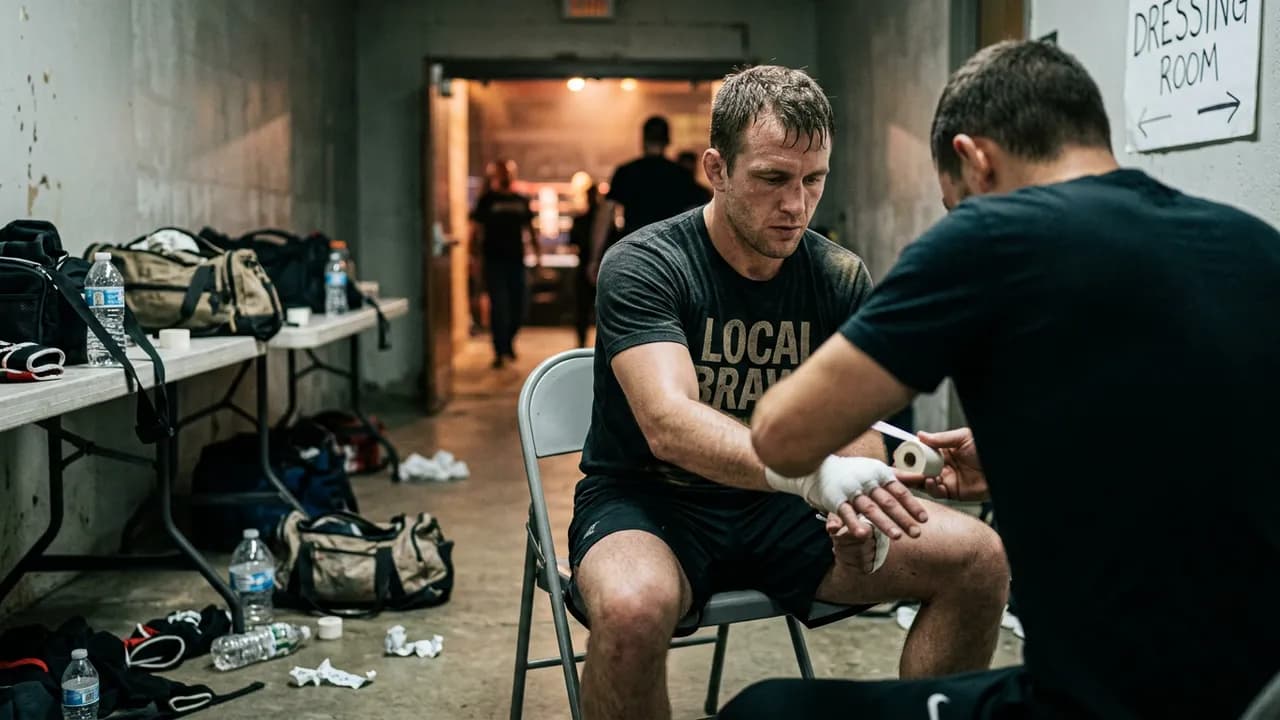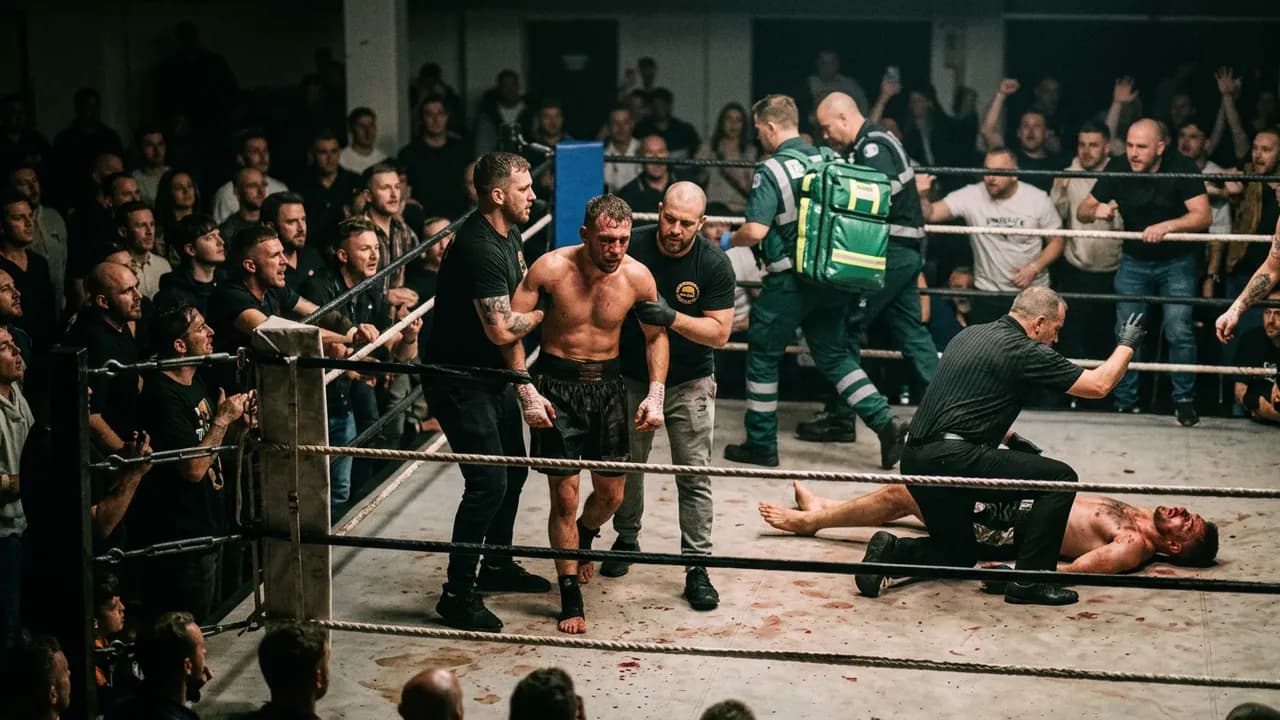
Training for an underground fight is not the same as training for a sanctioned amateur bout or a professional MMA card. The environments are different, the safety nets are thinner, and the margin for error is smaller. You might be fighting in a backyard in Virginia summer heat, in a warehouse in Eastern Europe, or in a ring made of hay bales in Moscow. There will probably not be a ringside physician. There might not be air conditioning. And the fighter across from you is not going to care about your training schedule.
That is the reality. And the only thing standing between you and a bad night is the work you put in before fight day.
This guide is built for fighters preparing for organizations like Streetbeefs, The Scrapyard, Rough N Rowdy, and other underground or semi-sanctioned promotions. Whether you are training for a boxing match, a kickboxing bout, or a full MMA fight, the fundamentals covered here apply across every format.
Building Your Foundation: The Training Split
The most effective training framework for fighters balances three categories of work:
- Technical skill work (60% of training time): Striking, grappling, drilling, and sparring.
- Conditioning (30% of training time): Cardio, metabolic conditioning, and fight-specific endurance.
- Strength training (10% of training time): Compound lifts and functional strength.
This 60/30/10 split keeps the priority where it belongs -- on the skills that will actually win or lose your fight -- while ensuring your body can sustain the output required.
Weekly Schedule Example
| Day | Session |
|---|---|
| Monday | Striking technique (60 min) + strength training (30 min) |
| Tuesday | Sparring or grappling (60 min) + conditioning (20 min) |
| Wednesday | Active recovery -- light shadowboxing, stretching, yoga, or a slow jog |
| Thursday | Striking technique (60 min) + conditioning (30 min) |
| Friday | Sparring (60 min) + strength training (30 min) |
| Saturday | Long conditioning session (45-60 min) or open mat / sparring |
| Sunday | Full rest |
Adjust this template based on your fight format. If you are preparing for a boxing-only fight at Streetbeefs, replace grappling sessions with additional striking work. If you are fighting MMA, keep the grappling sessions in.
Striking Fundamentals
Striking is the backbone of underground fighting. Even in MMA formats, the vast majority of finishes in backyard organizations come from strikes. You need to be sharp, efficient, and defensively sound.
The Orthodox Stance
If you are right-handed, your stance should be:
- Left foot forward, right foot back, feet shoulder-width apart.
- Weight distributed roughly 50/50 between both feet.
- Hands up -- left hand at cheek height, right hand tucked against the chin.
- Chin tucked, eyes on the opponent's chest (to read their movement without fixating on feints).
- Knees slightly bent, stay on the balls of your feet.
Switch everything if you are a southpaw.
The Four Essential Punches
Every striking combination you will ever throw is built from these four punches. Master them before adding anything else.
1. Jab (lead hand) The most important punch in fighting. Sets up everything, controls distance, disrupts your opponent's rhythm. Throw it straight from your guard, rotate your fist so the palm faces down at extension, and snap it back immediately.
2. Cross (rear hand) Your power punch. Rotate your rear hip and shoulder into the punch, driving power from the ground up through your legs and torso. The rear foot pivots as you throw.
3. Hook (lead or rear hand) A short, arcing punch thrown at a 90-degree angle. Rotate your lead foot and hip into the punch. The power comes from the rotation, not the arm. Keep the elbow bent at approximately 90 degrees.
4. Uppercut (lead or rear hand) A short, rising punch thrown from beneath the opponent's guard. Drop your hand slightly, bend your knees, and drive upward using your legs. Effective at close range and against opponents who shell up with a high guard.
Defensive Fundamentals
A fighter who cannot defend will not last. These are the essential defensive skills:
- Blocking: Use your gloves, forearms, and elbows to absorb incoming strikes. Keep your guard tight.
- Slipping: A small lateral movement of the head to evade a straight punch. Slip to the outside of the jab, slip to the inside of the cross.
- Parrying: Redirect incoming punches with a small deflection of the hand. Effective against jabs.
- Footwork: The best defense is not being there. Use lateral movement, angle changes, and pivots to avoid your opponent's attacks and create counter-opportunities.
- Head movement: Small, constant movements of the head make you a difficult target. Do not stand still with your head on the center line.
Conditioning: Building a Fighter's Engine
All the technique in the world is useless if you gas out in the first round. The adrenaline of a real fight amplifies your energy expenditure dramatically -- most first-time fighters describe "hitting a wall" far earlier than they expected. Conditioning is what separates a fighter who is still throwing sharp punches in the third round from one who is leaning on the ropes with their hands at their waist.
Cardiovascular Base
Build your aerobic base with steady-state cardio:
- Running: Three to four times per week, 30-45 minutes at a conversational pace. This builds the aerobic foundation that powers your recovery between explosive exchanges.
- Jump rope: An outstanding conditioning tool that also develops footwork, coordination, and timing. Three to five rounds of three minutes with 30-second breaks.
- Swimming or cycling: Lower-impact alternatives that build the same aerobic engine without the joint stress of running.
High-Intensity Interval Training (HIIT)
HIIT mimics the metabolic demands of a fight -- short bursts of maximum effort followed by brief recovery periods.
Fight-Specific HIIT Circuit (perform three rounds):
| Exercise | Work | Rest |
|---|---|---|
| Heavy bag (max effort) | 30 seconds | 15 seconds |
| Burpees | 30 seconds | 15 seconds |
| Shadow boxing (max speed) | 30 seconds | 15 seconds |
| Mountain climbers | 30 seconds | 15 seconds |
| Sprawls | 30 seconds | 15 seconds |
Rest two minutes between rounds. This circuit targets the anaerobic energy system that fuels high-intensity exchanges during a fight.
Metabolic Conditioning
Metabolic conditioning (MetCon) workouts are designed to push your cardiovascular system to its limits while building muscular endurance:
- Tabata rounds on the heavy bag: 20 seconds of maximum-effort punching, 10 seconds rest, eight rounds (four minutes total). Simple, brutal, and directly applicable to fighting.
- Battle ropes: 30-second intervals of alternating waves, slams, or rotations. Three to five sets with 30-second rest periods.
- Rowing intervals: 500-meter sprints on a rowing machine with 60-second rest periods. Five to eight sets.
Strength Training: Power Without Bulk
Strength training for fighters should prioritize functional power, explosive speed, and injury prevention over pure muscle mass. Train heavy compound movements twice per week and keep the sessions short and focused.
Recommended Exercises
Lower Body (the source of your punching power):
- Back squats: 4 sets of 5 reps
- Romanian deadlifts: 3 sets of 8 reps
- Box jumps: 3 sets of 5 reps (explosive power)
- Walking lunges: 3 sets of 10 per leg
Upper Body:
- Bench press or dumbbell press: 4 sets of 5 reps
- Pull-ups or weighted pull-ups: 3 sets to near-failure
- Barbell rows: 3 sets of 8 reps
- Landmine press: 3 sets of 8 per arm (mimics the punching motion and builds shoulder stability)
Core:
- Hanging leg raises: 3 sets of 10-15
- Ab wheel rollouts: 3 sets of 10
- Pallof press: 3 sets of 10 per side (anti-rotation work that translates directly to clinch work and absorbing body shots)
- Russian twists with a medicine ball: 3 sets of 20
Contrast Training
Contrast training pairs a heavy strength exercise with an explosive movement, leveraging a principle called post-activation potentiation: the heavy lift primes your nervous system so the explosive movement becomes faster and more powerful.
Examples:
- Heavy deadlift (3 reps) immediately followed by vertical jump (5 reps)
- Heavy bench press (3 reps) immediately followed by medicine ball chest pass (5 reps)
- Heavy squat (3 reps) immediately followed by broad jump (5 reps)
This method is exceptionally effective for developing the kind of explosive power that ends fights.
Grappling Basics (For MMA Formats)
If you are preparing for an MMA fight at Streetbeefs, The Scrapyard, or a similar organization, you need at least foundational grappling skills. Getting taken down without knowing what to do on the ground is one of the most helpless positions in fighting.
Essential Grappling Skills
- Takedown defense: Learn to sprawl. A proper sprawl -- driving your hips back and down, landing your weight on the opponent's shoulders -- will stop the vast majority of amateur-level takedowns.
- Getting back to your feet: If you end up on the ground, your number one priority (unless you are a trained grappler) should be getting back to your feet as quickly as possible. Drill technical stand-ups from guard.
- Basic guard: Understand closed guard, how to control your opponent's posture from the bottom, and how to defend against ground-and-pound.
- Position over submission: Learn the basic positional hierarchy (mount > back control > side control > half guard > full guard) and focus on improving your position rather than chasing submissions.
Training Grappling
The best way to learn grappling is to train at a Brazilian jiu-jitsu or wrestling gym. Even two sessions per week over several months will give you a significant advantage over opponents who have never trained on the ground.
Sparring: The Bridge Between Training and Fighting
Sparring is where everything comes together. It is the closest simulation of a real fight that training can provide, and it is absolutely essential for preparing for competition.
Types of Sparring
- Technical sparring (50-60% intensity): Focus on technique, timing, and skill development. Both partners work at a controlled pace, emphasizing clean technique over power.
- Hard sparring (80-90% intensity): Closer to fight conditions. Power is real, combinations are fast, and the pressure is high. Limit hard sparring to once per week maximum to avoid accumulating unnecessary damage.
- Positional sparring: Start in a specific position (e.g., one fighter in mount, one in guard) and work from there. Excellent for developing grappling skills for MMA.
- Conditional sparring: Impose rules that force you to develop specific skills. Examples: jab-only sparring, body-shots-only sparring, or sparring where one partner can only counter.
Sparring Guidelines
- Always wear proper protective equipment: mouthguard, headgear, cup, and 16-ounce gloves (or 7-ounce gloves for MMA sparring with appropriate shin guards).
- Communicate with your partner about intensity before you start.
- Check your ego. Sparring is training, not fighting. Trying to knock out your training partners will leave you without training partners.
- Film your sparring sessions and review them. You will notice habits, weaknesses, and patterns that are invisible to you in the moment.
Mental Toughness: Training the Mind
The physical preparation matters, but the mental game is what separates the fighter who folds under pressure from the one who performs. Develop mental toughness deliberately:
- Train when you do not want to: Show up on the days when motivation is low. That discipline translates directly to the discipline required in the middle of a fight when your body is begging you to quit.
- Push through discomfort in conditioning: When you are on the last round of a brutal HIIT circuit and every fiber of your body wants to stop, keep going. That is the moment when mental toughness is built.
- Visualize daily: Spend 10-15 minutes each day visualizing your fight in vivid detail. See yourself executing your game plan, responding to adversity, and finishing the fight.
- Practice breathwork: Box breathing (inhale four seconds, hold four seconds, exhale four seconds, hold four seconds) is a proven technique for managing anxiety and controlling your physiological state. Use it during training and on fight night.
- Embrace controlled failure: Put yourself in bad positions during sparring on purpose. Practice fighting off your back, fighting when tired, fighting while backing up. The more uncomfortable situations you have navigated in training, the fewer surprises fight night will hold.
Solo Training: When You Cannot Get to a Gym
Not everyone has access to a fully equipped gym or a stable of sparring partners. If you are training alone, here is how to make the most of it:
- Shadowboxing: The single best solo training exercise for fighters. Throw combinations, move your feet, practice defense against an imaginary opponent. Do three to five rounds of three minutes.
- Heavy bag work: If you have access to a heavy bag, it is your best tool for developing power, combinations, and endurance.
- Bodyweight conditioning: Push-ups, pull-ups, squats, burpees, mountain climbers, and planks require no equipment and build genuine fighting fitness.
- Jump rope: Cheap, portable, and one of the most effective conditioning tools available.
- Yoga or stretching: Flexibility reduces injury risk and improves your ability to move fluidly during a fight. Do not skip it.
The Fight Camp: Final 8 Weeks
If you have a fight booked, your final eight weeks of preparation should follow a structured camp that peaks at the right time:
| Weeks | Focus |
|---|---|
| 8-6 weeks out | High volume. Maximum sparring, heavy conditioning, skill development. Push hard. |
| 5-3 weeks out | Maintain volume but increase intensity. Harder sparring sessions. Sharpen combinations. Introduce fight-specific drilling. |
| 2 weeks out | Begin tapering. Reduce sparring intensity to avoid injury. Focus on technique, visualization, and rest. |
| Fight week | Light training only. Shadowboxing, stretching, and mental preparation. Your body needs to recover so you peak on fight night. |
The Bottom Line
Training for an underground fight is not fundamentally different from training for any combat sports competition. The principles are the same: build technical skill, develop conditioning, train with live opponents, and prepare your mind for the intensity of a real fight.
The difference is in the margins. Underground fighting carries higher risk, so your preparation needs to be that much more thorough. Train smart, train hard, and give yourself enough time. The ring will be there when you are ready.
For information on choosing the right organization and what to expect on fight day, read How to Prepare for Your First Underground Fight. For gear recommendations, see Essential Gear for Bare Knuckle Fighting.