Japan's relationship with fighting is paradoxical. On one hand, it is one of the most orderly and law-abiding societies on earth, a country where street crime is rare, social harmony is prized, and public displays of aggression are deeply taboo. On the other hand, Japan has produced some of the most important developments in the history of combat sports, from judo and karate to the creation of PRIDE Fighting Championships, arguably the greatest MMA promotion ever to exist. Between those two poles -- the surface order and the deep fascination with combat -- lies a fighting culture that is as complex and layered as Japanese society itself.
Japan's underground fighting scene does not look like its European or American counterparts. There are no Japanese equivalents of King of the Streets or Streetbeefs -- no YouTube-distributed fight clubs operating in public view. Instead, Japan's underground fighting culture operates through channels that are distinctly Japanese: the yankii (delinquent) subculture and its organized street fighting traditions, the historical connections between the yakuza and combat sports, the amateur fighting circuits that exist beneath the professional level, and the legacy of Vale Tudo and early MMA that grew from Japan's unique willingness to stage no-rules fighting as mainstream entertainment.
To understand Japanese underground fighting, you have to understand that Japan was the country that made MMA a mainstream spectacle before the UFC achieved the same in America. PRIDE FC, which operated from 1997 to 2007, drew crowds of 90,000 to the Tokyo Dome and produced fights of a quality and intensity that have never been surpassed. PRIDE's roots were in the underground -- in street fights, in vale tudo, in the yakuza-connected entertainment industry that funded it -- and those roots tell a story about Japan's fighting culture that goes far deeper than the sanitized version presented by modern combat sports media.
History
Martial Arts Tradition
Japan's martial arts heritage is among the deepest and most formalized in the world. The budo (martial way) traditions -- judo, karate, kendo, aikido, jujutsu -- have been codified, institutionalized, and transmitted through schools (ryu) for centuries. The samurai class developed these arts as practical combat systems, and their evolution into modern sporting disciplines retained the philosophical framework of personal development through combat.
The formalization of Japanese martial arts created a paradox that would prove significant for underground fighting. On one hand, the martial arts were deeply respected cultural institutions with massive participation at all levels of society. On the other hand, the sporting versions of these arts were heavily rule-bound, with strict codes of conduct, ritualized competitions, and philosophical frameworks that emphasized self-improvement over competitive dominance. For Japanese fighters who wanted to test themselves in genuine, unrestricted combat, the formal martial arts world could feel constraining.
This tension between formalized martial arts and the desire for authentic combat created the conditions for Japan's engagement with Vale Tudo and no-rules fighting.
The Professional Wrestling Connection
Japan's professional wrestling (puroresu) scene, which flourished from the 1950s onward, played a crucial role in the development of the country's fighting culture. Japanese professional wrestling was more physical and more combative than its American counterpart, with "strong style" -- a philosophy of real strikes and genuine physical contact -- becoming the defining aesthetic of promotions like New Japan Pro-Wrestling and All Japan Pro-Wrestling.
The line between professional wrestling and legitimate fighting was deliberately blurred in Japan. Antonio Inoki, the most famous Japanese professional wrestler, staged a series of cross-style matches against legitimate fighters, most famously his 1976 bout with Muhammad Ali, which -- while widely considered disappointing as a spectacle -- demonstrated the Japanese appetite for style-versus-style competition.
Inoki's cross-style matches led directly to the creation of fighting events that combined worked (scripted) and shoot (legitimate) matches, eventually producing organizations that staged purely legitimate fights. This evolution from professional wrestling to shoot fighting to MMA was a distinctly Japanese pathway, and it created the organizational and financial infrastructure that would support PRIDE FC.
Shooto, Pancrase, and the Birth of Japanese MMA
Japan was one of the first countries to develop organized MMA, predating the UFC by several years in some formats.
Shooto, founded in 1985 by Satoru Sayama (the original Tiger Mask), was one of the world's first organized MMA promotions, staging fights with a rule set that combined striking and grappling. Shooto produced world-class fighters and established a competitive framework for mixed martial arts that influenced organizations worldwide.
01 / Up next / PRIDE FC: From Underground Roots to Global Phenomenon
Pancrase, founded in 1993 -- the same year as the UFC -- by professional wrestlers Masakatsu Funaki and Minoru Suzuki, staged legitimate fights under rules that prohibited closed-fist strikes to the head (open-palm strikes were allowed). Pancrase attracted top fighters from Japan and abroad, including Bas Rutten, Frank Shamrock, and Ken Shamrock, and produced a generation of fighters who would go on to compete in PRIDE FC and the UFC.
Both Shooto and Pancrase emerged from the gray zone between professional wrestling and legitimate fighting, and both benefited from the Japanese entertainment industry's willingness to stage and promote combat as mainstream content.
PRIDE FC: From Underground Roots to Global Phenomenon
PRIDE Fighting Championships, which operated from 1997 to 2007, was the most important MMA promotion in history outside the UFC, and its origins are deeply connected to Japan's underground fighting culture.
PRIDE was founded by Nobuyuki Sakakibara and produced by Dream Stage Entertainment (DSE), an entertainment company with documented connections to the yakuza. The promotion's first event, PRIDE 1, was held on October 11, 1997, at the Tokyo Dome and featured Rickson Gracie -- the legendary Brazilian Vale Tudo fighter -- defeating Nobuhiko Takada, a professional wrestler making his shoot fighting debut. The event drew 47,000 spectators and demonstrated that no-rules fighting could draw stadium crowds in Japan.
PRIDE's growth was fueled by several factors unique to Japan:
-
Yakuza involvement: The yakuza's role in Japanese entertainment, including combat sports, provided PRIDE with funding, venue access, and connections that would not have been available through legitimate channels alone. This connection was well-documented and eventually contributed to PRIDE's downfall when the Fuji Television network severed its broadcast deal in 2006 following a scandal over DSE's yakuza ties.
-
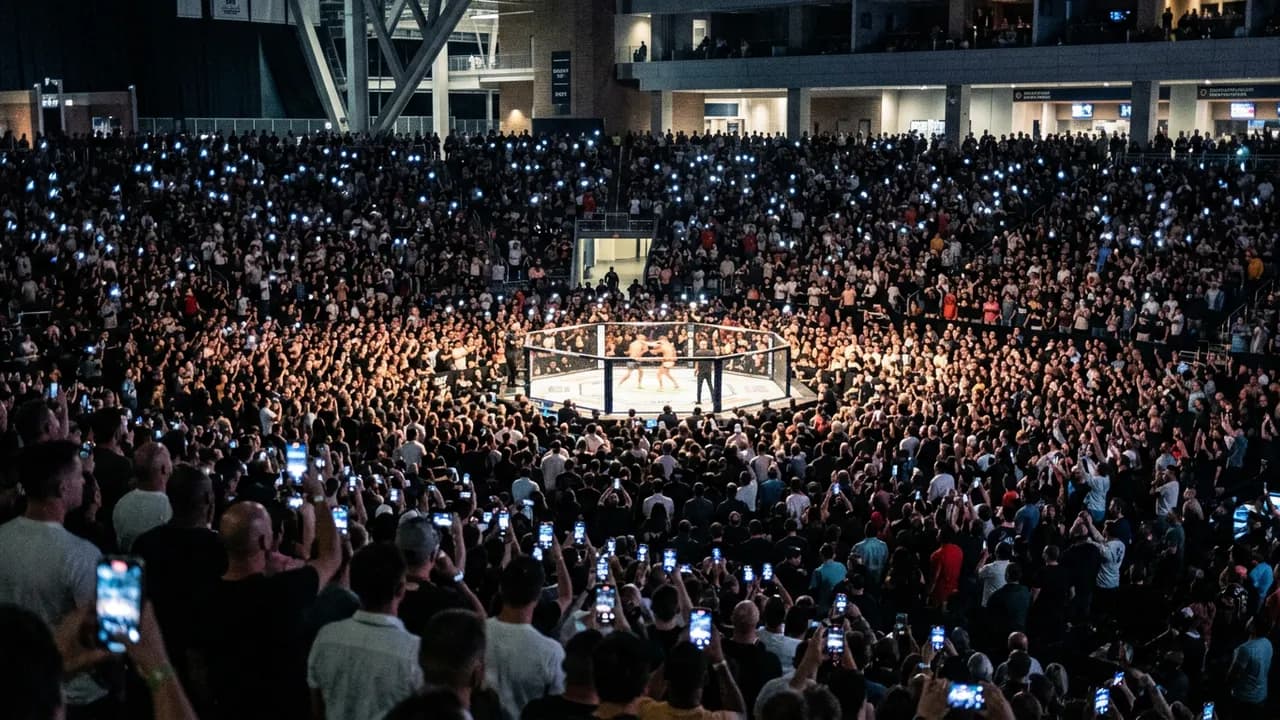
Cultural appetite for combat: Japanese audiences embraced MMA with an enthusiasm that exceeded even the most optimistic projections. PRIDE events at the Tokyo Dome regularly drew 40,000-90,000 spectators, numbers that the UFC would not match in the United States for years.
-
Street fight aesthetics: PRIDE's production and matchmaking embraced the spectacle of street fighting. The Grand Prix tournaments, the mismatches between giant fighters and smaller opponents, the soccer kicks and stomps to grounded opponents that were legal under PRIDE rules -- all of these elements connected PRIDE to the underground fighting tradition more directly than the increasingly regulated UFC.
PRIDE's acquisition by Zuffa (the UFC's parent company) in 2007, following the collapse of the Fuji TV deal, ended the promotion but cemented its legacy as the golden age of Japanese MMA.
Yankii Culture and Street Fighting
Japan's yankii (delinquent youth) subculture has maintained a street fighting tradition since the postwar period. Yankii culture -- characterized by dyed hair, modified school uniforms, loud motorcycles, and organized fighting -- peaked in the 1970s and 1980s but continues in modified form today.
Yankii street fighting was organized around territory, school rivalries, and personal honor. Fights between yankii groups (soushiki, literally "organization-style" fighting) followed informal rules and hierarchies, with leaders (banchou) coordinating confrontations and maintaining discipline within their groups. The tradition was extensively documented in Japanese manga, particularly in series like Crows, Worst, and GTO, which fictionalized and romanticized yankii fighting culture for a mass audience.
While the yankii subculture has declined significantly from its peak, its legacy persists in the street fighting traditions of certain urban areas and in the broader cultural memory. The yankii tradition also fed into the professional fighting world, with fighters from delinquent backgrounds entering professional kickboxing, MMA, and professional wrestling.
Active Organizations
Amateur and Semi-Pro MMA Circuits
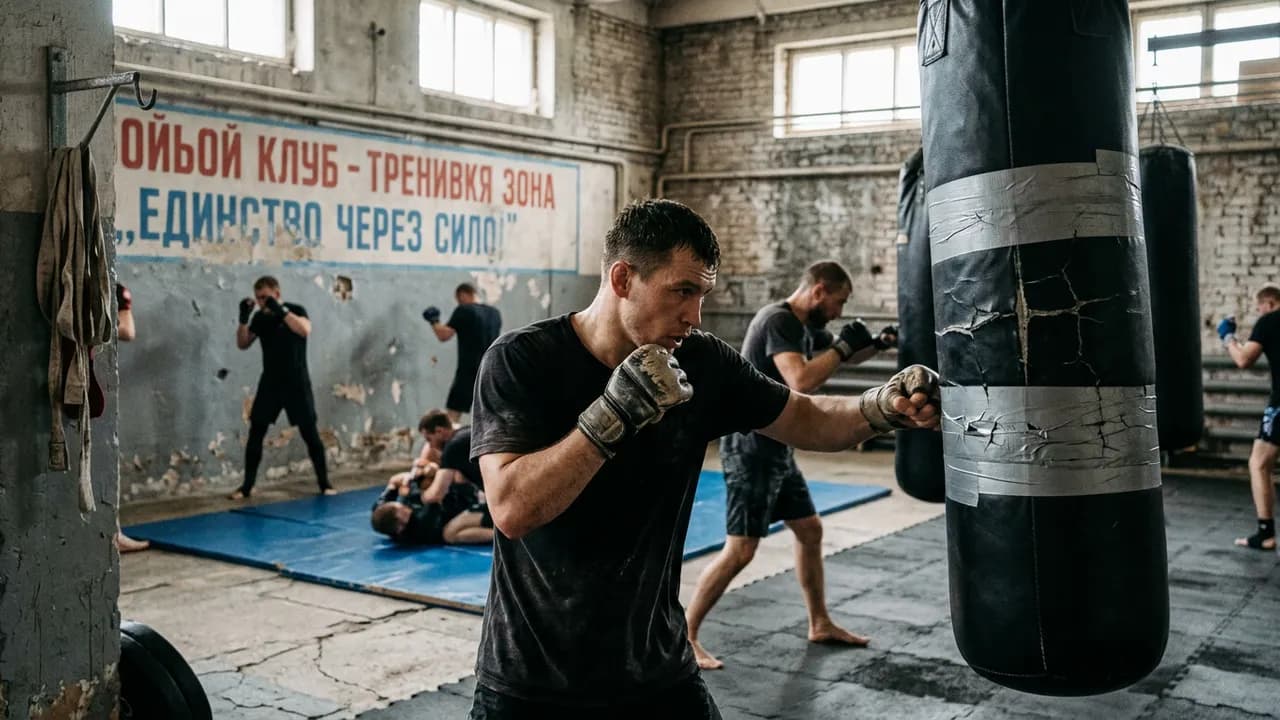
Japan maintains a robust amateur MMA infrastructure that operates beneath the professional level. Organizations like Shooto's amateur division and various regional promotions stage events across the country, providing competitive opportunities for fighters who are not yet ready for professional competition.
Format: Amateur MMA with varying rule sets. Some events closely mirror professional rules, while others restrict certain techniques (such as ground strikes or submissions) to reduce injury risk.
What makes it significant: Japan's amateur MMA circuit serves as the primary development pathway for professional fighters. The circuit's depth and quality reflect Japan's long history with organized MMA and its continued relevance as a fighting nation despite the decline of PRIDE FC.
Underground Fight Events
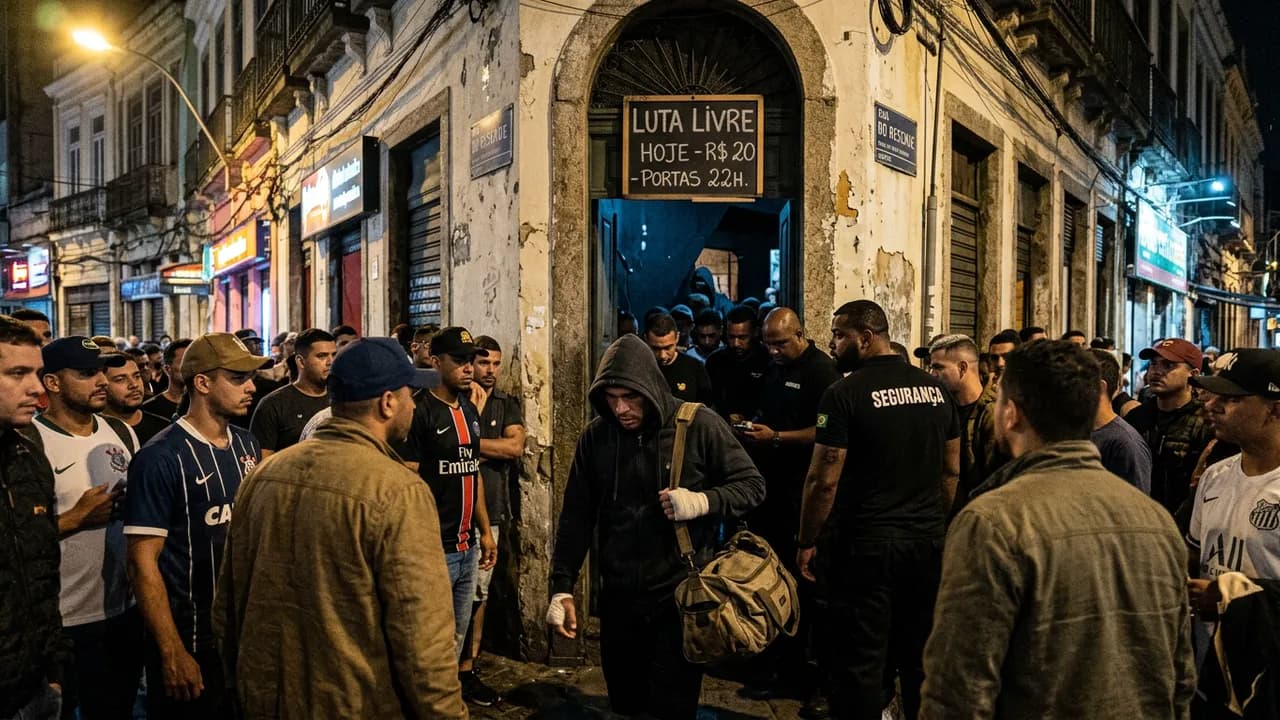
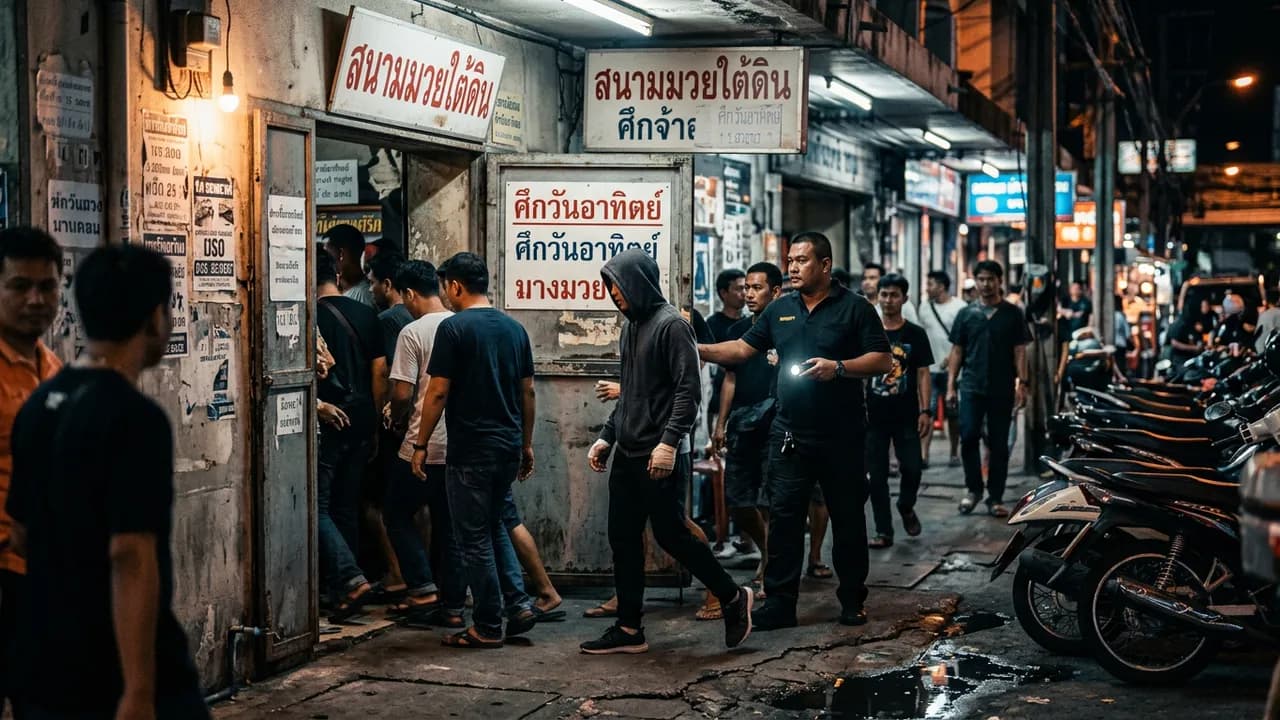
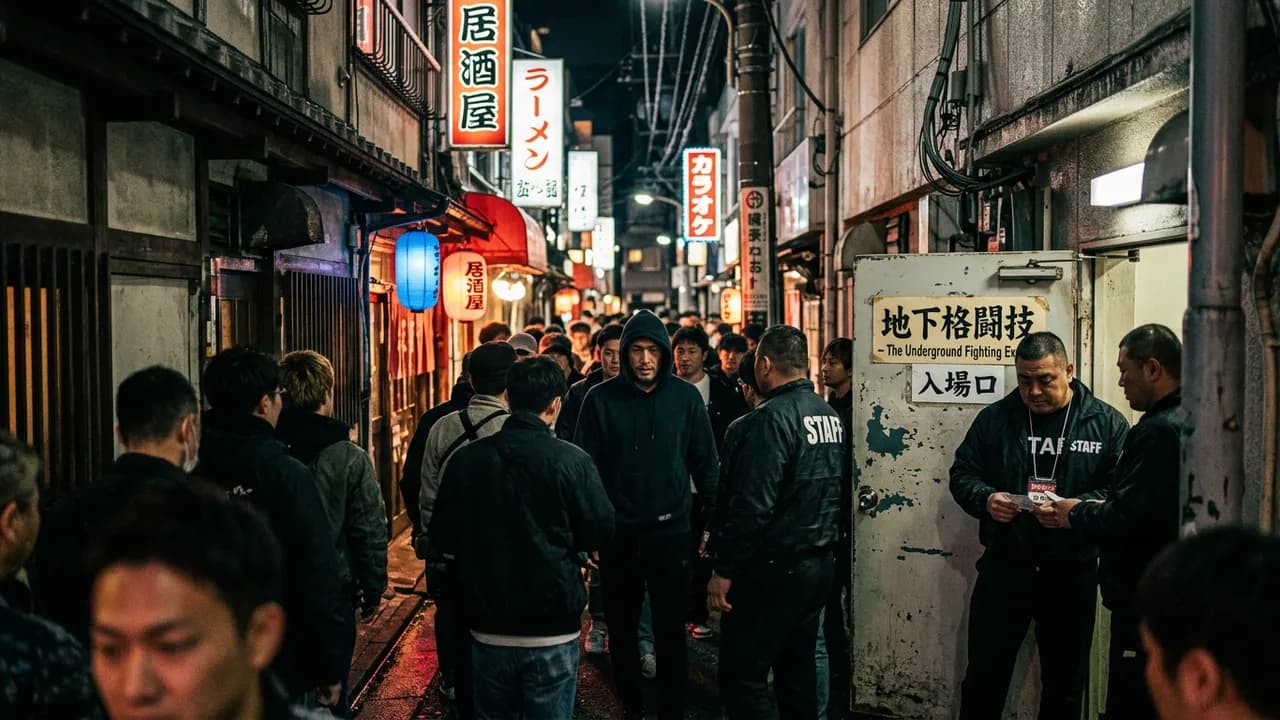
Japan's underground fight events operate with far greater secrecy than their Western counterparts. The Japanese legal system takes a strict approach to organized violence, and the social stigma associated with criminal behavior in Japan is severe. As a result, truly underground fighting events -- those organized outside any sanctioning framework -- are extremely clandestine.
Events that do exist tend to be organized through personal networks, with information shared only among trusted participants.
Events that do exist tend to be organized through personal networks, with information shared only among trusted participants. The events draw from the martial arts community, the former yankii network, and the broader population of men who train in combat sports but seek competitive outlets beyond sanctioned amateur circuits.
Bare Knuckle Interest
Japan's bare knuckle fighting scene is minimal compared to the US, UK, or Russia. The cultural and legal environment in Japan does not favor the development of bare knuckle promotions, and there is no Japanese equivalent of BKFC or Top Dog FC.
However, Japanese fighters have competed in bare knuckle events internationally, and the global growth of the bare knuckle movement has generated interest within the Japanese combat sports community. Japan's deep striking traditions -- particularly in karate, which historically trained for bare-fist impact -- provide a natural foundation for bare knuckle fighting.
The legacy of kard chuek (rope-wrapped hand) fighting in Japanese kickboxing, which was influenced by Thai traditions, represents another historical connection to ungloved fighting. While modern Japanese kickboxing uses gloves, the cultural memory of fighting without them persists.
Notable Fighters
Japan has produced an extraordinary roster of fighters who emerged from the intersection of underground culture and organized combat sports:
-
Kazushi Sakuraba -- "The Gracie Hunter." Sakuraba, a professional wrestler turned MMA fighter, defeated four members of the Gracie family in PRIDE, shattering the myth of Gracie invincibility that had persisted since the first UFC. His unorthodox style and willingness to fight opponents far larger than himself made him a national hero.
-
Wanderlei Silva -- While Brazilian by birth, Silva's career was made in Japan, where his ultraviolent fighting style found its perfect audience. His PRIDE middleweight championship reign and his trilogy with Kazushi Sakuraba are among the defining moments of Japanese MMA. His connection to Japan's fighting culture is deep -- he was adopted by Japanese fans as one of their own.
-
Mirko "Cro Cop" Filipovic -- The Croatian kickboxer and MMA fighter became a superstar in PRIDE, where his devastating left high kick produced some of the most spectacular knockouts in MMA history. His career in Japan, like Silva's, illustrates how PRIDE created a global fighting community with Japan at its center.
-
Genki Sudo -- Known as "The Neo Samurai," Sudo was a Japanese MMA fighter whose eclectic style, philosophical approach, and cross-cultural persona embodied the best of Japanese fighting culture. His career spanned K-1, PRIDE, and the UFC.
-
Norifumi "Kid" Yamamoto -- A wrestler turned MMA fighter who became one of Japan's most popular fighters through his explosive knockout power and aggressive style. His career bridged the PRIDE era and the modern Japanese MMA scene.
These fighters represent the professional pinnacle of a fighting culture that extends deep into Japan's amateur circuits, gym culture, and street fighting traditions.
Legal Status
Japan's legal framework for combat sports is well-developed for sanctioned activities but strict for unsanctioned fighting.
Professional MMA, boxing, and kickboxing operate under the oversight of various athletic commissions and governing bodies. The Japan MMA Federation, the Japan Boxing Commission, and other organizations regulate their respective sports with standards that meet international norms.
Unsanctioned fighting is illegal under Japanese assault laws (boko-zai, assault and battery provisions of the Penal Code). The social consequences of criminal prosecution in Japan are severe -- arrest, prosecution, and conviction carry a level of social stigma that goes far beyond the legal penalties -- which serves as a powerful deterrent against organized underground fighting.
The yakuza's historical involvement in combat sports has been a source of ongoing regulatory concern. Japanese authorities have taken aggressive action to sever the connections between organized crime and combat sports, and promotions suspected of yakuza involvement face intense scrutiny and potential shutdown. The Fuji TV scandal that contributed to PRIDE's demise was a watershed moment in this regard, demonstrating that even the most successful and popular fighting promotion could be destroyed by association with organized crime.
The strict legal and social environment explains why Japan's underground fighting scene is far less visible than those in Russia, the US, or Europe. The costs of detection and prosecution are simply higher in Japan than in most other countries.
How to Get Involved
As a Spectator
Sanctioned combat sports events in Japan are accessible and well-organized. Major promotions like Rizin Fighting Federation (the spiritual successor to PRIDE) stage events at large venues that are open to the public. Professional boxing, kickboxing, and karate events are staged regularly across the country.
Underground events, to the extent they exist, are not accessible to outsiders and are not promoted through public channels.
For grassroots and amateur events, information is available through gym networks and martial arts community channels. Japan's amateur MMA and kickboxing circuits hold events regularly, and spectator access is generally straightforward.
Underground events, to the extent they exist, are not accessible to outsiders and are not promoted through public channels.
As a Fighter
Japan offers world-class training in virtually every combat discipline. Tokyo, Osaka, and other major cities have extensive gym networks covering boxing, MMA, judo, karate, kickboxing, and jiu-jitsu. Many gyms welcome international students, though the language barrier can be significant for non-Japanese speakers.
For competitive experience, Japan's amateur MMA and kickboxing circuits provide structured pathways from beginner to advanced competition. Foreign fighters who train at Japanese gyms can typically access these amateur circuits through their gym's connections.
Professional opportunities in Japan require a higher level of bureaucratic navigation than in some other countries, but the system is functional and well-established. Fighters with professional records from other countries can seek bookings through Japanese promotions, though relationships with Japanese management companies or gyms are typically necessary.
Related Countries
- Brazil -- The Brazil-Japan fighting connection is one of the most important in combat sports history. Rickson Gracie's Vale Tudo victories in Japan helped create the conditions for PRIDE FC, and Brazilian fighters were central to PRIDE's roster throughout its existence. The cultural exchange between Brazilian and Japanese fighting traditions has enriched both countries' combat sports cultures.
- Thailand -- Japanese kickboxing developed in direct dialogue with Muay Thai, and the cross-pollination between the two countries' striking arts has been continuous since the 1960s. Thai fighters have competed extensively in Japanese promotions, and Japanese fighters have trained and competed in Thailand.
- United States -- The UFC and PRIDE represented the two poles of MMA's global development, and the exchange of fighters, techniques, and organizational models between the US and Japan shaped the modern sport. The UFC's acquisition of PRIDE in 2007 unified the two lineages.
- Russia -- Russian fighters, including Fedor Emelianenko (widely considered the greatest heavyweight MMA fighter ever), were central to PRIDE's roster. The Russia-Japan fighting connection continues through modern promotions and the shared cultural appreciation for combat sports.
- Australia -- Australian fighters have competed in Japanese promotions, and the training exchange between the two countries is active, particularly in MMA and kickboxing.
FAQ
What happened to PRIDE FC?
PRIDE Fighting Championships operated from 1997 to 2007, staging some of the greatest MMA events in history. The promotion collapsed following a scandal over its production company's ties to the yakuza (Japanese organized crime), which led Fuji Television to sever its broadcast deal. PRIDE was subsequently acquired by Zuffa, the UFC's parent company, and its events ceased. Rizin Fighting Federation, founded in 2015, is considered PRIDE's spiritual successor.
Were PRIDE FC's origins really connected to street fighting?
PRIDE's origins are connected to the broader Japanese tradition of cross-style combat that evolved from professional wrestling into shoot fighting into MMA. The promotion itself was not a street fighting organization, but its founding event -- featuring Rickson Gracie, the greatest Vale Tudo fighter in history -- was explicitly rooted in the no-rules fighting tradition. The yakuza connections that funded PRIDE also linked the promotion to Japan's underground world.
Is there underground fighting in Japan today?
Japan's underground fighting scene exists but is far less visible than in most other countries. The combination of strict legal enforcement and severe social stigma associated with criminal behavior in Japan drives underground fighting deep into secrecy. Amateur and semi-pro MMA circuits provide legal competitive outlets that absorb much of the demand for fighting that might otherwise fuel an underground scene.
What is yankii fighting?
Yankii refers to Japan's delinquent youth subculture, which peaked in the 1970s and 1980s. Yankii groups organized street fights along territorial and school-rivalry lines, with hierarchies and informal rules governing the confrontations. The tradition has declined but its legacy persists in Japanese popular culture and in the fighting traditions of certain communities.
Can foreigners fight in Japan?
Yes. Japan's amateur MMA and kickboxing circuits are accessible to foreign fighters who train at Japanese gyms. Professional opportunities require navigating the Japanese promotional system, typically through a Japanese management company or gym. The language barrier is the primary practical challenge for non-Japanese speakers.
How does Japan's underground scene compare to Russia's or Europe's?
Japan's underground scene is far less visible and smaller in scale than Russia's or Europe's, despite Japan's deep martial arts heritage and massive combat sports participation. The key difference is legal and cultural: Japanese society imposes severe consequences -- both legal and social -- for participation in organized violence outside sanctioned frameworks, which suppresses the kind of public-facing underground organizations that thrive in Russia, Sweden, or the UK.