Is KOTS Legal? Where Is KOTS Located?
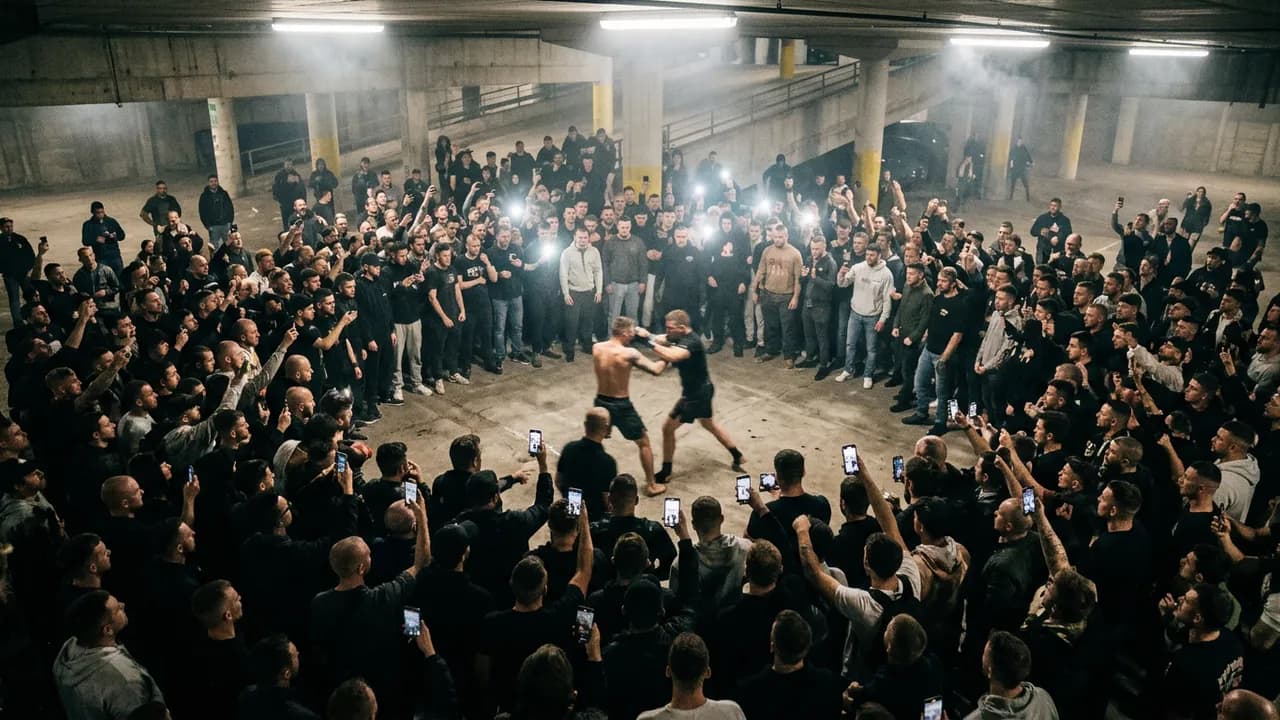
King of the Streets (KOTS) is one of the most notorious underground fighting organizations in the world. Founded in 2013 in Gothenburg, Sweden, it stages no-rules fights on concrete floors in abandoned warehouses, drawing millions of YouTube views and widespread controversy. The two questions asked most frequently about KOTS are whether it is legal and where exactly it operates.
The short answers: KOTS is almost certainly illegal under Swedish law, and its events take place at secret locations across Sweden and Europe.
Is KOTS legal?
No. KOTS is almost certainly illegal under Swedish criminal law. Swedish assault legislation (Brottsbalken, Chapter 3) criminalizes causing bodily injury to another person, and consent is not a valid defense when the resulting harm rises to a certain severity. Fights that take place on concrete with no gloves, no rules, and no time limits routinely produce injuries -- broken noses, lacerations, concussions -- that exceed the threshold where consent can serve as a legal shield.
Unlike regulated combat sports, KOTS is not sanctioned by any Swedish sporting federation, athletic commission, or governmental body. There is no medical staff present, no formal licensing, and no regulatory oversight. Under Swedish law, the fights staged by KOTS would likely be classified as assault (misshandel) or aggravated assault (grov misshandel), depending on the severity of injuries sustained.
Why hasn't KOTS been shut down?
Several factors explain why KOTS continues to operate despite its apparent illegality:
Operational secrecy. KOTS events are held at secret locations that rotate between events. The Hype Crew -- the anonymous collective that runs the organization -- communicates event details to fighters and attendees through encrypted channels. Locations are shared only shortly before events begin, making it difficult for law enforcement to intervene in real time.
Anonymity of organizers. The Hype Crew operates under aliases. The identities of the individuals who organize, fund, and manage KOTS are not publicly known, which makes investigation and prosecution significantly more difficult.
Jurisdictional complexity. KOTS events have taken place across multiple countries in Europe. When an organization operates across borders, no single law enforcement agency has clear jurisdiction, and international coordination on underground fight clubs is not a priority for European police forces.
Prosecutorial priorities. Swedish police and prosecutors face the same resource constraints as law enforcement everywhere. Investigating and prosecuting an underground fighting operation where all participants consent voluntarily ranks low relative to violent crime, drug trafficking, and organized crime.
Where is KOTS located?
KOTS was founded in Gothenburg, Sweden, and Gothenburg remains its base of operations. However, the organization does not have a fixed location. Events take place in abandoned warehouses, industrial buildings, and other disused spaces across Sweden and, increasingly, across Europe.
The organization has staged events in multiple European countries, drawing fighters from across the continent -- including hooligans, street fighters, and martial artists from Scandinavia, the UK, Germany, the Netherlands, and Eastern Europe. The specific venues are never publicly disclosed; locations are shared through encrypted communications shortly before each event.
What country is KOTS from?
KOTS originated in Sweden. The organization was founded in 2013 in Gothenburg, Sweden's second-largest city, by the anonymous collective known as the Hype Crew. While KOTS has expanded its operations across Europe, its roots and primary base remain Swedish.
Could KOTS become legal?
Theoretically, yes -- but it would require a fundamental transformation of the organization. To operate legally, KOTS would need to:
- Obtain sanctioning from a recognized sporting federation or create one
- Introduce gloves, rounds, weight classes, and safety rules
- Provide ringside medical personnel and pre-fight medical screening
- Comply with venue safety regulations
- Submit to regulatory oversight and inspections
This is essentially what BKFC accomplished in the United States when it secured state athletic commission sanctioning and transformed bare knuckle fighting from an underground activity into a regulated sport. However, KOTS's identity is built on the absence of rules, the rawness of concrete surfaces, and the secrecy of its operations. Pursuing sanctioning would mean abandoning the core elements that define the brand.
How does KOTS compare to other underground fighting organizations legally?
KOTS occupies the most extreme end of the legality spectrum among major underground fighting organizations:
- BKFC: Fully legal, sanctioned by state athletic commissions in the United States
- Streetbeefs: Operates in a legal gray area -- unsanctioned but uses safety measures and avoids money exchanging hands
- King of the Ring: Likely illegal under UK law but operates with gloves, a referee, and round structure
- KOTS: Almost certainly illegal -- no rules, no gloves, concrete surface, secret locations
KOTS is the organization that most closely resembles the popular image of an illegal fight club. Its format, secrecy, and refusal to adopt safety measures place it firmly outside any legal framework for combat sports.
Have there been arrests related to KOTS?
No arrests directly connected to KOTS events have been publicly reported as of early 2026. This is a function of the organization's operational security rather than an indication that the activity is legal. The anonymity of the Hype Crew, the rotating locations, and the encrypted communications create barriers to law enforcement action that have, so far, proven effective.
However, the risk of prosecution remains real. A serious injury or death at a KOTS event could trigger a police investigation that pierces the organization's anonymity. The larger and more visible KOTS becomes -- with over 1 million YouTube subscribers as of 2026 -- the greater the likelihood that law enforcement will eventually act.
For more on the rules and format of KOTS, see our KOTS rules FAQ. For the broader legal landscape of underground fighting, see our bare knuckle legality FAQ.