Bare knuckle fighting was the original form of professional boxing -- the sport that existed before gloves became mandatory in the late 19th century. For over a century after the adoption of the Marquess of Queensberry Rules in the 1860s, bare knuckle fighting was effectively illegal everywhere. Its return to legality in the 21st century is primarily the story of one man -- BKFC founder David Feldman -- and a state-by-state regulatory campaign that transformed a banned activity into a sanctioned sport.
When was bare knuckle fighting banned?
Bare knuckle fighting was never explicitly "banned" by a single law. Instead, it was displaced through a combination of:
- The Marquess of Queensberry Rules (1867): These rules mandated the use of padded gloves, timed rounds, and other safety measures. As boxing commissions adopted these rules, bare knuckle fighting was excluded from sanctioned competition.
- State athletic commission regulations: As US states established athletic commissions in the early 20th century, they adopted rules requiring gloves for all professional boxing. Bare knuckle fighting, by default, became unsanctioned and therefore illegal as a professional sporting event.
- Criminal assault statutes: Without athletic commission sanctioning, bare knuckle fights were treated as mutual combat or assault under criminal law.
By the early 1900s, bare knuckle fighting had been pushed completely underground. It survived in illegal prize fights, traveller bare knuckle boxing in the UK and Ireland, and informal settings -- but not as a legal, regulated sport.
When did bare knuckle fighting become legal again?
The modern legalization of bare knuckle fighting began in 2018 when BKFC staged its first event -- BKFC 1 -- on June 2, 2018, in Cheyenne, Wyoming. This event was sanctioned by the Wyoming State Board of Mixed Martial Arts, making it the first legal, state-sanctioned bare knuckle boxing event in the United States since 1889.
The choice of Wyoming was strategic. Wyoming had a relatively permissive regulatory environment and a state athletic commission willing to consider sanctioning a new combat sport format. BKFC worked with the commission to establish rules, safety protocols, and regulatory standards specific to bare knuckle boxing.
How did David Feldman get bare knuckle fighting sanctioned?
David Feldman's approach to legalizing bare knuckle fighting followed the playbook that MMA promoters had used to legalize mixed martial arts in the 1990s and 2000s:
- Identify a willing jurisdiction. Feldman found Wyoming's athletic commission receptive to the concept of regulated bare knuckle boxing.
- Develop a comprehensive ruleset. BKFC created detailed rules covering:
- Round structure (five two-minute rounds)
- Permitted and prohibited techniques
- Hand wrapping specifications
- Referee duties and fight-stopping criteria
- Medical requirements (pre-fight physicals, ringside physicians)
- Demonstrate safety infrastructure. BKFC showed that bare knuckle events could be conducted with the same safety measures required for gloved boxing and MMA -- medical screening, licensed referees, ringside doctors, and post-fight evaluations.
- Make the regulatory case. Feldman argued that regulating bare knuckle fighting was preferable to the alternative -- underground, unregulated bare knuckle events with no safety measures. By bringing the sport under commission oversight, safety could be monitored and enforced.
- Expand state by state. After the successful Wyoming debut, BKFC applied for and received sanctioning in additional states.
Which states have legalized bare knuckle fighting?
Following the Wyoming debut, BKFC secured sanctioning in multiple US states. The expansion has been state by state, with each state's athletic commission independently evaluating and approving the sport. States that have sanctioned bare knuckle boxing events include:
- Wyoming -- the first state (2018)
- Mississippi -- an early adopter
- Florida -- a major BKFC market
- New Hampshire, Montana, and other states -- progressive expansion
The list of sanctioning states continues to grow. Each approval follows a process where BKFC presents its ruleset and safety protocols to the state athletic commission, which evaluates whether the sport meets its standards for fighter safety and event regulation.
Not all states have approved bare knuckle fighting, and some have explicitly declined to sanction it. The patchwork of state regulations mirrors the early history of MMA legalization, where some states embraced the sport while others resisted for years.
What rules did BKFC establish to get sanctioned?
The BKFC ruleset was designed to satisfy athletic commission safety requirements while preserving the essence of bare knuckle fighting:
- Five rounds of two minutes each for championship and main event bouts
- Hand wraps permitted (providing structural support without the padding of gloves)
- Boxing rules -- punches only, no kicks, knees, elbows, or grappling
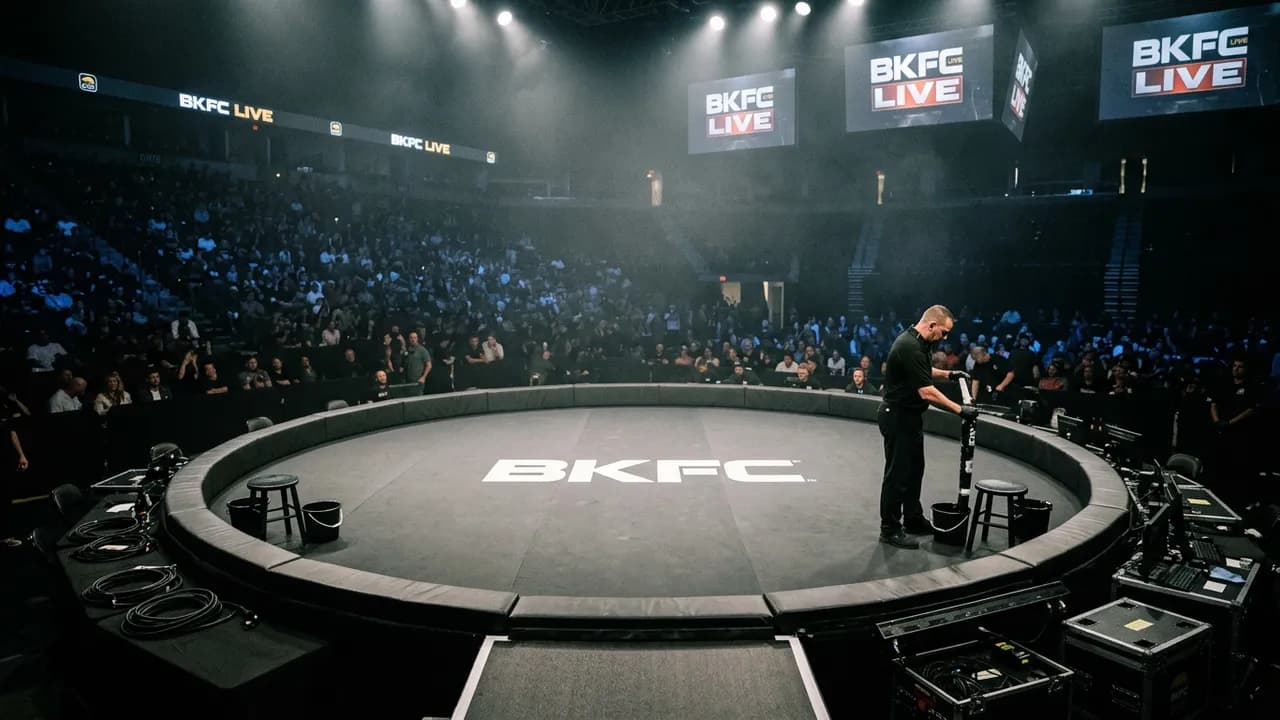
- Circular ring rather than traditional square ring or cage
- Full medical requirements -- pre-fight physicals, blood work, brain imaging, ringside physicians, post-fight evaluations
- Licensed referees with fight-stopping authority
- Weight classes matching standard boxing divisions
- Medical suspensions for fighters who sustain significant injuries
These rules transformed bare knuckle fighting from an unregulated brawl into a structured sport with safety standards comparable to gloved boxing and MMA.
How is modern legal bare knuckle different from historical bare knuckle?
The differences are enormous:
| Feature | Historical (pre-1889) | Modern BKFC |
|---|---|---|
| Rounds | Unlimited (fight to finish) | 5 x 2 minutes |
| Rest periods | 30 seconds between rounds | 1 minute between rounds |
| Medical staff | None | Ringside physician mandatory |
| Referee | Informal or absent | Licensed, trained referee |
| Pre-fight medical | None | Blood work, brain imaging, cardiac |
| Weight classes | None | Standard boxing divisions |
| Duration | Could last hours | Maximum 10 minutes of action |
| Technique | Wrestling and grappling common | Boxing (punching) only |
Historical bare knuckle fights under the London Prize Ring Rules could last dozens of rounds, sometimes continuing for hours. Fighters were permitted to wrestle and throw their opponents. Deaths and permanent injuries were not uncommon. Modern BKFC bears almost no resemblance to this historical format.
Did the UK follow the same legalization path?
The United Kingdom has a different regulatory framework. Bare knuckle fighting in the UK operates under a patchwork of sanctioning bodies and local authority approvals rather than a centralized state athletic commission system.
Coney (1882) -- holds that consent is not a defense to assault causing actual bodily harm.
Key developments in UK bare knuckle legalization include:
- UBKB operates with sanctioning from WSBKB (the world's foremost sanctioning body for bare knuckle boxing)
- Spartan BK claims to be the UK's only fully licensed and legal bare knuckle hay bale fight club
- BKFC's acquisition of the British Bare Fist Boxing Association (BFBA) in 2022 was a step toward expanding regulated bare knuckle boxing in the UK
- BTTB (Bad to the Bone) has operated as one of the UK's largest bare knuckle promotions
However, the legal status of bare knuckle fighting in the UK remains more ambiguous than in the US. The controlling legal precedent -- R v. Coney (1882) -- holds that consent is not a defense to assault causing actual bodily harm. Whether sanctioned bare knuckle events fall within the "properly conducted games and sports" exception has not been definitively tested in court.
What role did MMA legalization play in bare knuckle's return?
The legalization of MMA in the United States (completed state by state between 1997 and 2016) created the regulatory framework and cultural precedent that made bare knuckle legalization possible:
- Regulatory precedent. MMA proved that a combat sport initially viewed as "too dangerous" and "barbaric" could be regulated safely under athletic commission oversight. BKFC used the same argument -- that regulation is safer than prohibition.
- Public acceptance. MMA's mainstream acceptance shifted the cultural window of what combat sports the public would tolerate. Bare knuckle fighting is less diverse in its techniques than MMA but appeals to the same appetite for raw combat.
- Commission infrastructure. State athletic commissions that had been established or expanded to regulate MMA already had the expertise, staff, and processes to evaluate and sanction a new combat sport.
In a real sense, bare knuckle fighting's legal return was built on the foundation that MMA promoters constructed over the preceding two decades.
Is bare knuckle fighting legal everywhere now?
No. Bare knuckle fighting is legal only in jurisdictions where it has been specifically sanctioned by the relevant athletic commission or regulatory body. In the United States, this is a state-by-state determination, and many states have not yet sanctioned the sport.
Internationally, the legal status varies widely:
- Legal and regulated in states/countries where BKFC or equivalent promotions have obtained sanctioning
- Gray area in jurisdictions where bare knuckle events operate without explicit commission approval but are not actively prosecuted
- Effectively illegal in jurisdictions where no sanctioning body has approved the sport and assault laws would apply
The trend is toward broader legalization, but bare knuckle fighting is far from universally legal. The sport remains in the early stages of the same state-by-state, country-by-country legalization process that MMA went through over two decades.
For more on bare knuckle legality, see our bare knuckle legal FAQ. For how bare knuckle compares to other combat sports, see our BKFC vs UFC comparison.