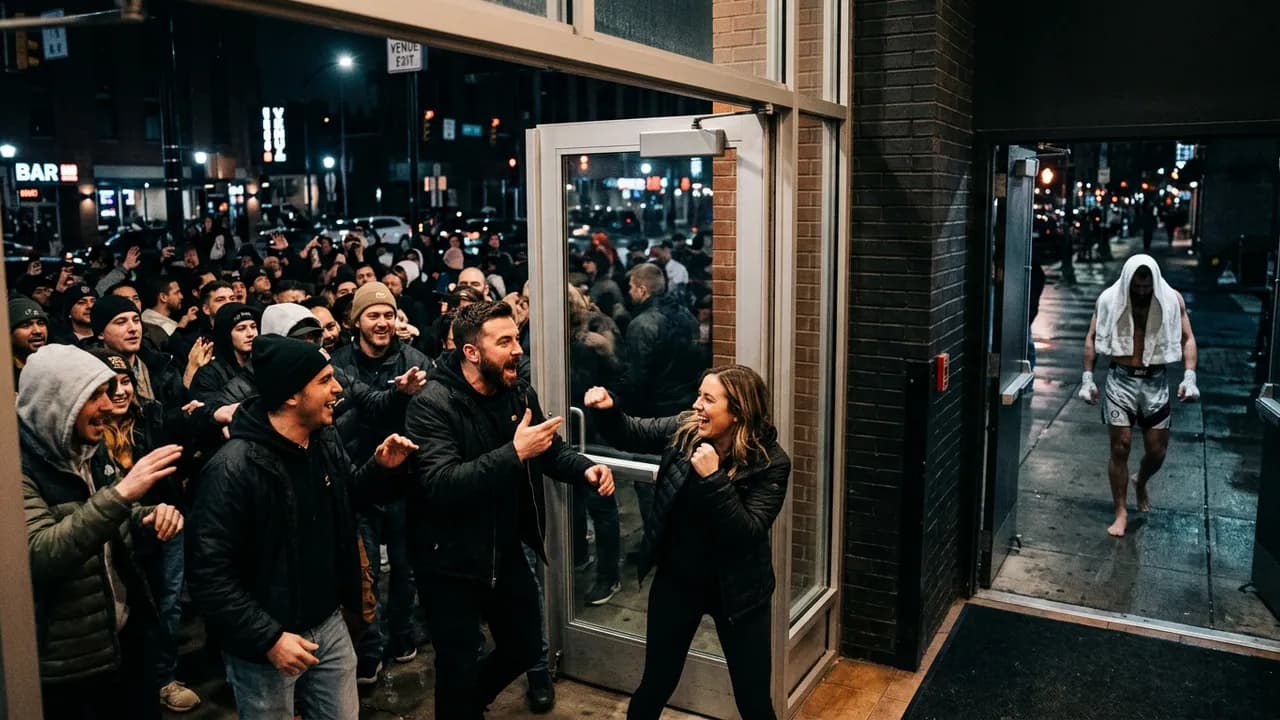
KOTS Major Events: Blood Money, Copenhagen, War Cry & Every Big KOTS Card
There is a line in combat sports that separates the sanctioned from the unsanctioned, the regulated from the lawless, the arena from the concrete floor. On one side, you have organizations like BKFC and Top Dog FC, which operate within legal frameworks -- however loose -- with medical oversight, licensed venues, and athletic commission involvement. On the other side, there is King of the Streets.
KOTS -- as it is universally known -- is the most notorious underground fight club in Europe. Founded in 2013 in Gothenburg, Sweden by an anonymous collective known as the Hype Crew, KOTS has spent over a decade staging no-rules fights on concrete floors in undisclosed locations across the continent. The fights are bare knuckle. Headbutts are legal. Strikes to the spine are permitted. Eye gouging and biting are acceptable. There are no rounds, no judges' decisions, and -- in many events -- the only way a fight ends is by knockout or submission. For a full profile of the organization, see our King of the Streets guide.
This is not a promotion that issues press releases or courts mainstream media attention. KOTS operates in the shadows by design. Yet its events have been watched by millions online, spawned a documentary film, and birthed an entire subculture of no-rules fighting across Europe. This is the guide to KOTS's most significant fight cards -- the events that built the legend.
Understanding the KOTS Event Structure
Before diving into specific events, it is important to understand how KOTS numbers and organizes its fight cards, because the system does not resemble anything from the traditional combat sports world.
The Numbering System
KOTS events are numbered sequentially, with the count now well into the triple digits. Events have been tracked as high as King of the Streets: 140 (Matador) and beyond. However, not every numbered event is a major production. Some are smaller cards with three or four fights, while the marquee events -- the ones that carry a title name in addition to the number -- are the full-scale productions that draw the largest audiences and the most dangerous fighters.
The HC Tags
Many events carry an "HC" designation -- a reference to Hype Crew, the organization behind KOTS. This branding connects the events back to the founders and serves as a marker of authenticity. KOTS: 28, for instance, was "Presented by Hype Crew," and the HC tag appears throughout the promotion's social media presence.
The Titled Events
The most significant KOTS events carry a name alongside or instead of a number: Unrivaled, The Euro Connection, Blood Money, WarCry. These are the tentpole events -- the fight nights that feature the deepest cards, the most dangerous matchups, and the highest production value (relative to the underground context).
Fight Rules
KOTS operates under two primary rule sets, depending on the event:
- No Rules (K.O. or Submission) -- Everything is legal. Headbutts, elbows, knees, strikes to the back of the head, ground and pound -- all permitted. A fight ends by knockout or submission only.
- No Rules (K.O. Only) -- Everything is legal except submissions. The only way a fight ends is by knockout. No decisions, no stoppages, no mercy.
The "No Decisions, No Rules, No Rounds" tagline is the KOTS brand distilled to its essence.
KOTS: Unrivaled
Unrivaled is perhaps the most widely referenced KOTS event and the one that best encapsulates the promotion's ethos. The numbers tell the story:
- 13 fights
- 13 knockouts
- 400 hooligans
- No decisions. No rules. No rounds.
Every single fight on the Unrivaled card ended by knockout. Not a single bout went to any kind of judgment or stoppage -- every fighter either put his opponent down or was put down himself. In a sport where finishing rates are the primary currency, a perfect 100% knockout rate across a full card is almost unprecedented at any level of combat sports.
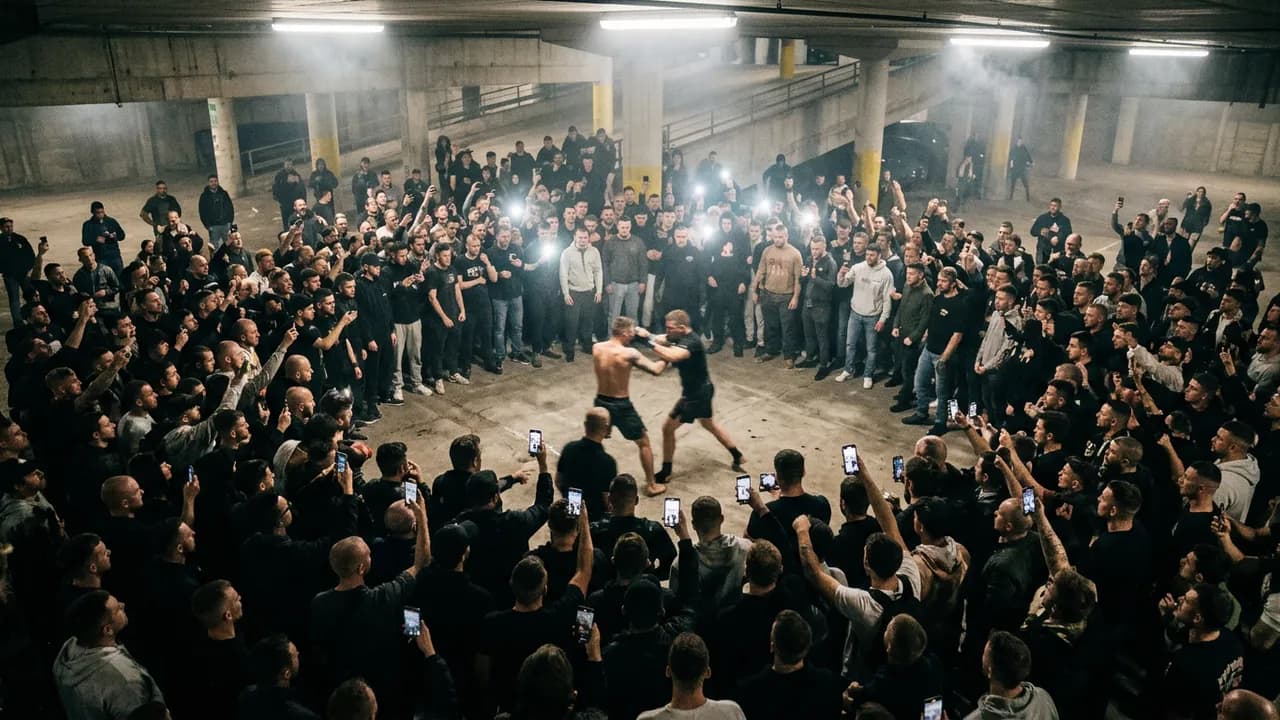
The event featured 400 spectators -- described openly as "hooligans" in the promotion's own marketing -- packed into the venue. The atmosphere at KOTS events is a defining characteristic: dense crowds, extreme noise, the energy of a football firm rather than a traditional fight night audience. The fighters compete on concrete, with no ring, no canvas, and no padding. When a man goes down, he hits a surface that offers no forgiveness.
Highlight clips from the event spread across YouTube and social media, introducing millions of viewers to the concept of no-rules fighting on concrete.
Unrivaled became the KOTS calling card. Highlight clips from the event spread across YouTube and social media, introducing millions of viewers to the concept of no-rules fighting on concrete. For many international fans, Unrivaled was their first exposure to KOTS, and the reaction was a mix of fascination and horror that drove engagement to extraordinary levels.
KOTS: The Euro Connection
The Euro Connection represented KOTS's most ambitious cross-border event, bringing together street fighters and hooligans from across the European continent for a clash of national fighting cultures. Held in the late summer of 2020, The Euro Connection featured fighters from multiple countries in what amounted to an unofficial European championship of underground fighting.
The event's significance lies in its demonstration of KOTS's reach. By 2020, the promotion had evolved from a Swedish local phenomenon into a pan-European network. Fighters from Scandinavia, Western Europe, and Eastern Europe traveled to compete, bringing their respective fighting styles and hooligan firm loyalties with them. The result was a fight card that felt less like a sporting event and more like a summit of Europe's most dangerous subcultures.
The Euro Connection also showcased the evolution of the KOTS fighter. The early events featured men who were primarily street fighters -- tough, durable, but technically limited. By the time of The Euro Connection, the caliber of competitor had risen significantly. Many fighters had formal training in boxing, kickboxing, or MMA, and they brought that technical foundation into the no-rules environment. The fights were not just brawls; they were tactical engagements between trained fighters operating without the constraints of traditional rule sets.
KOTS: Blood Money
Blood Money was another of KOTS's titled events that generated significant attention in the underground fighting community. The full fight card was released in advance on social media -- a rarity for an organization that typically operates with maximum secrecy -- and featured a lineup designed to deliver violence at every weight class.
The event was made available both as a pay-per-view through the KOTS website and later as a full replay on platforms like Rumble, where it accumulated substantial viewership. Blood Money represented the promotion's growing sophistication in its digital distribution strategy. While KOTS began as an organization that uploaded grainy fight footage to YouTube and social media, events like Blood Money demonstrated a more structured approach to content monetization -- PPV sales for the live event, followed by free or reduced-price replays to build the audience for future events.
The name itself -- Blood Money -- captured the transactional nature of what KOTS offers. Fighters are compensated for competing, though fighter pay in the underground circuit operates very differently from the sanctioned world. The pay structure, like most things about KOTS, is not publicly disclosed in detail.
KOTS: WarCry
WarCry was one of KOTS's most recent major titled events and featured eight no-holds-barred fights across a range of weight classes, drawing competitors from across Europe.
The Fight Card
The WarCry card was publicly revealed in advance and featured the following matchups:
| Fighter 1 | Fighter 2 | Weight (KG) |
|---|---|---|
| Mikolaj Zlomancuk | Ivan Santana | 95.5 |
| AN1MAL | Hugo | 95 |
| CocaineCharli | Sam Farok | 70 |
| Joseph Hapgood | Madalin Elisie | 81 |
| Hamza | Marvin | 84 |
| Lucas Sontgen | Martin Lukac | 77.5 |
| Panzer | Alman | 83 |
| Ufol | Abner Lloveras | 81 |
Several elements of the WarCry card are worth noting. First, the fighter names -- many competitors use pseudonyms or fight names rather than their legal identities, which is standard practice in underground fighting where participants may have reasons to avoid public identification. Second, the international diversity of the card: fighters with Polish, Spanish, German, Romanian, French, and other European backgrounds competing on a single event. Third, the weight class distribution, which leans heavily toward middleweight and light-heavyweight -- the divisions where KOTS has traditionally featured its deepest and most competitive matchups.
The Numbered Events: Building the KOTS Legacy
Beyond the titled events, KOTS's numbered fight nights form the backbone of the promotion's output. With events numbered well past 100, the volume of content produced by KOTS is staggering for an underground operation. Key numbered events include:
KOTS: 28 (Presented by Hype Crew)
One of the early events to gain significant traction on social media, KOTS: 28 carried the official Hype Crew branding and helped establish the visual and atmospheric template that would define the promotion going forward.
KOTS: 91 (Rooftop Fights)
A departure from the standard format, KOTS: 91 took the fights to a rooftop setting, adding a new dimension of danger and visual spectacle to the already extreme environment. The event featured a fight between Tom, a Hype Crew member, and Cyrus, a street fighter, in what became one of the more widely shared KOTS clips.
KOTS: 140 (Matador)
Among the most recent numbered events, Matador represented the current state of the KOTS product -- more polished in its production while maintaining the raw, unregulated fighting that defines the brand.
The Concrete Floor: Why It Matters
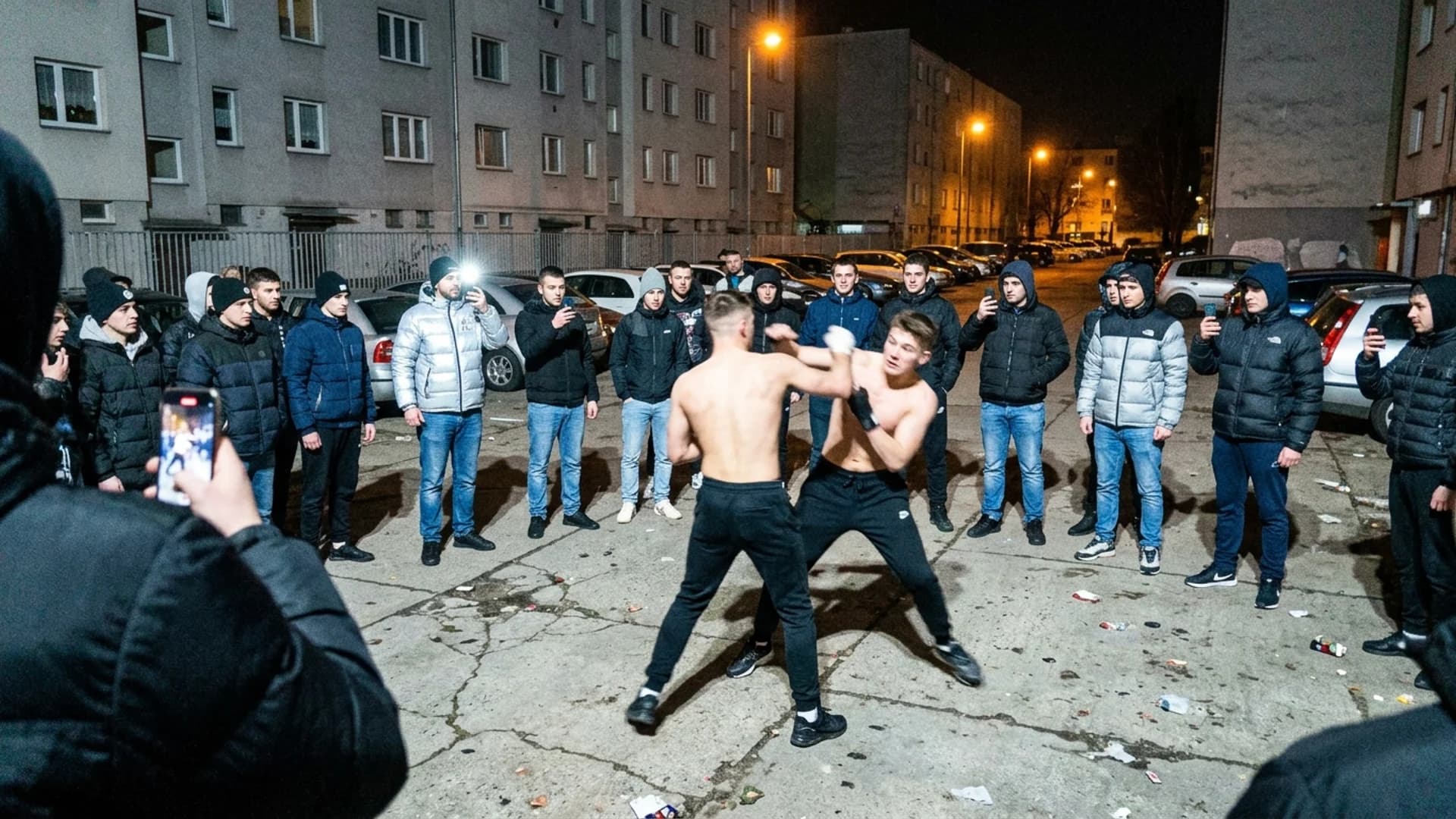
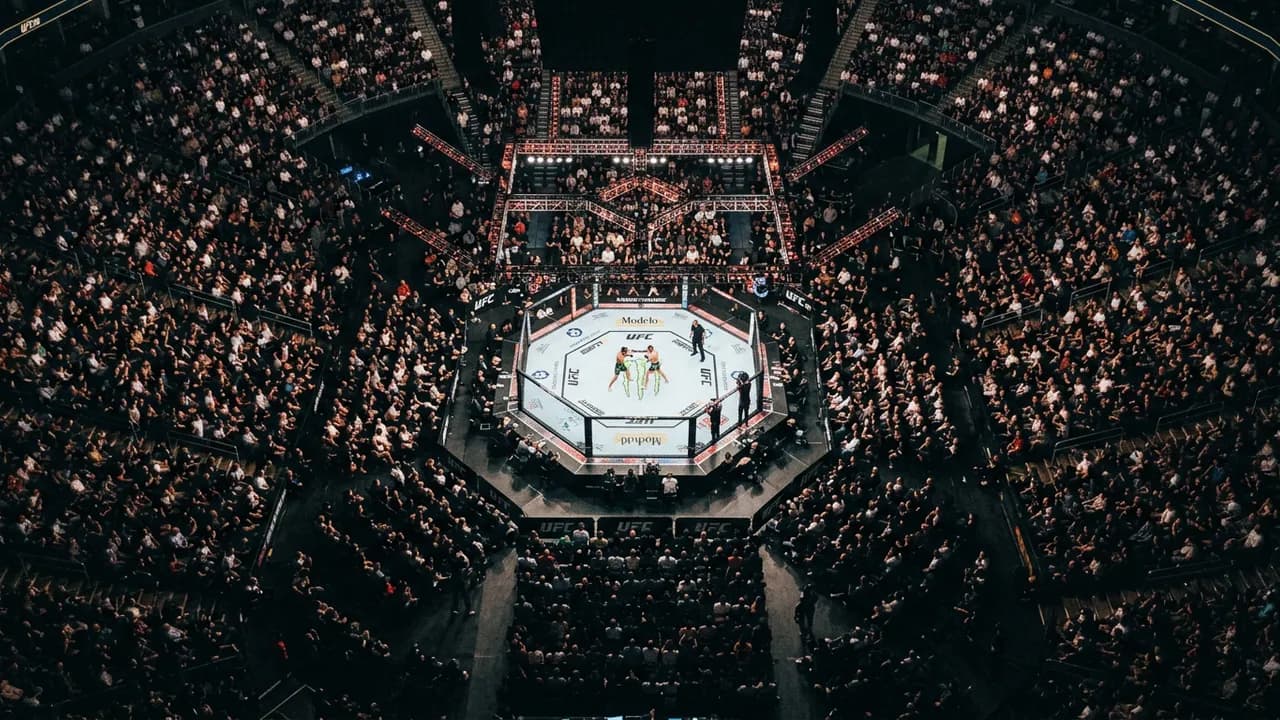
The single most distinguishing feature of KOTS events is the fighting surface. While virtually every other combat sports promotion in the world -- from the UFC to BKFC to Top Dog FC -- provides some form of padded surface (canvas, mat, plywood), KOTS fights take place directly on concrete.
07 / Up next / The Hype Crew and the KOTS Ecosystem
This is not merely an aesthetic choice. It fundamentally changes the nature of the fights. A knockdown on concrete carries consequences that do not exist in a ring or cage. The risk of serious head injury from a fall is exponentially greater. Fighters who might absorb a knockdown and recover on canvas face a different calculus on concrete -- a single trip or stumble can result in a secondary impact with the floor that is more dangerous than the punch that caused it.
The concrete floor also influences fighting strategy. Takedowns and throws, which are legal under the no-rules format, become double-edged weapons. Slamming an opponent on concrete can end a fight instantly, but being taken down carries an equally severe risk. Fighters tend to stay on their feet, making the fights more striking-oriented despite the permissive rule set.
The Hype Crew and the KOTS Ecosystem
KOTS does not exist in isolation. The Hype Crew -- the Swedish collective that founded the promotion -- has spawned an entire ecosystem of no-rules fighting across Europe. The Hype Crew is composed of hooligans, organized criminals, and seasoned street fighters who identified a market for raw, unregulated combat and built an organization around it.
Since KOTS established the template, numerous unaffiliated no-rules fight clubs have emerged across Europe -- in Germany, England, Ireland, France, Denmark, Poland, and beyond. These organizations operate independently of KOTS but owe their existence to the blueprint that the Hype Crew created. The no-rules underground fighting scene in Europe is now a genuine subculture, complete with its own media, its own fan communities, and its own fighter pipelines.
The KOTS Documentary
The growing cultural significance of KOTS attracted the attention of filmmaker Victor Palm, who directed "King of the Streets: The Documentary." The film offers a rare inside look at the world behind the closed doors of KOTS -- the fighters, the organizers, the motivations, and the lifestyle that surrounds Europe's most notorious fight club.
The documentary is described as being "seen through the lens of an outsider, offering an authentic and personal portrayal of the lifestyle, belonging, and violence of the fighters and organizers behind the closed doors of KOTS." The production was announced with a target release window in late 2024, though its distribution timeline has extended as the filmmakers sought to do justice to the complexity of their subject matter.
The documentary's existence is itself a marker of KOTS's cultural penetration. An organization that was once known only to European hooligan firms and underground fighting enthusiasts is now the subject of professional documentary filmmaking, further blurring the line between subculture and mainstream awareness.
KOTS in 2025-2026: The Current State
KOTS continues to operate and produce events at a consistent pace. The promotion's YouTube channel has surpassed one million subscribers, and individual fight videos routinely accumulate millions of views. The PPV model, operated through the KOTS website (kingofthestreets.com), provides a revenue stream for major events, while free content on YouTube and social media serves as the audience development engine.
The fight application process remains open through the KOTS website, indicating ongoing recruitment of new fighters across Europe. The promotion has maintained its operational security, with event locations typically disclosed only to ticketholders and participants, preserving the underground mystique that is central to the brand.
What KOTS Means for the Future of Fighting
KOTS occupies a unique and uncomfortable position in the combat sports landscape. It is, by any legal definition in the countries where it operates, an unsanctioned and illegal fighting organization. The absence of medical oversight, the concrete fighting surface, and the permissive rule set create a level of risk that no athletic commission would approve.
Yet the audience demand is undeniable. Millions of viewers watch KOTS content. The events sell out. The fighters return card after card. And the no-rules format has spawned an entire European subculture of underground fighting.
The tension between the appeal and the danger is what makes KOTS a subject worthy of examination. In a global fighting landscape where even bare knuckle boxing has achieved mainstream acceptance through organizations like BKFC and BKB, KOTS represents the frontier beyond the frontier -- the place where the rules end entirely and the fights are as real as they can possibly be.
Whether that is something to celebrate or condemn depends on your perspective. But ignoring it is no longer an option. King of the Streets is here, the concrete floor is waiting, and the Hype Crew is not going anywhere.
Watch on YouTube
Watch KOTS fight highlights and event footage on the official channel:
- KOTS: Unrivaled -- Full Event Highlights -- 13 fights, 13 knockouts, 400 hooligans -- the event that defined KOTS
- KOTS: Blood Money -- Fight Highlights -- Top finishes from the Blood Money PPV event
- KOTS: WarCry -- Best Knockouts -- The most brutal finishes from the eight-fight no-holds-barred card
- KOTS: The Euro Connection -- Highlights from the cross-border European fight card
- King of the Streets: The Documentary Trailer -- Preview of Victor Palm's KOTS documentary film
Subscribe to the King of the Streets YouTube channel for fight highlights, event footage, and underground fighting content.
For more on the sanctioned side of bare knuckle fighting, read our coverage of KnuckleMania: The Complete History and Top Dog FC Major Events. For the broader industry context, see The Ultimate Guide to Underground Fighting.