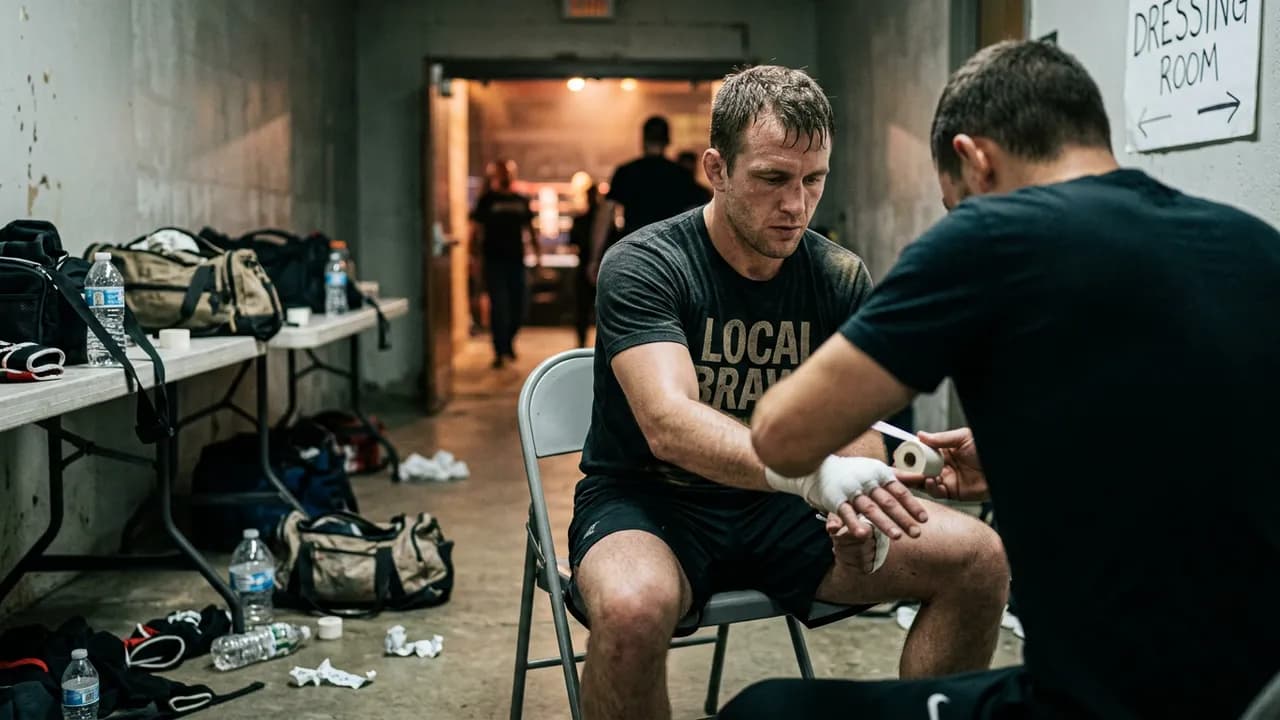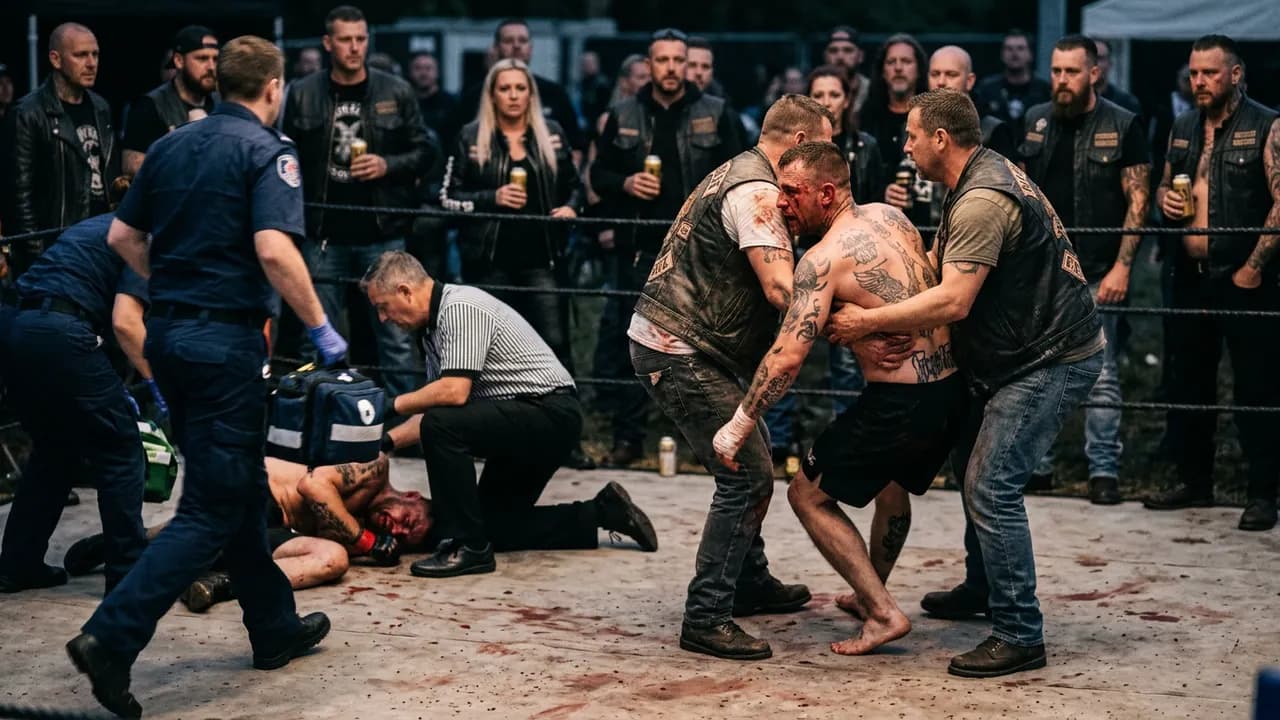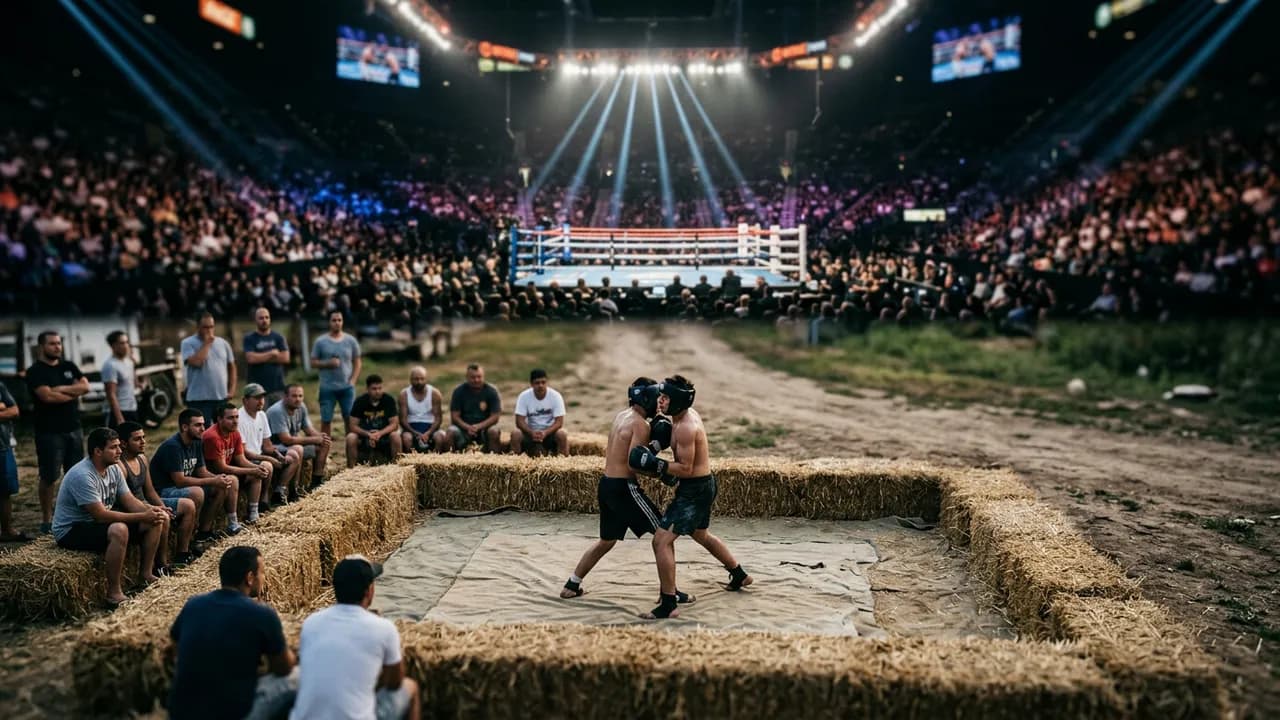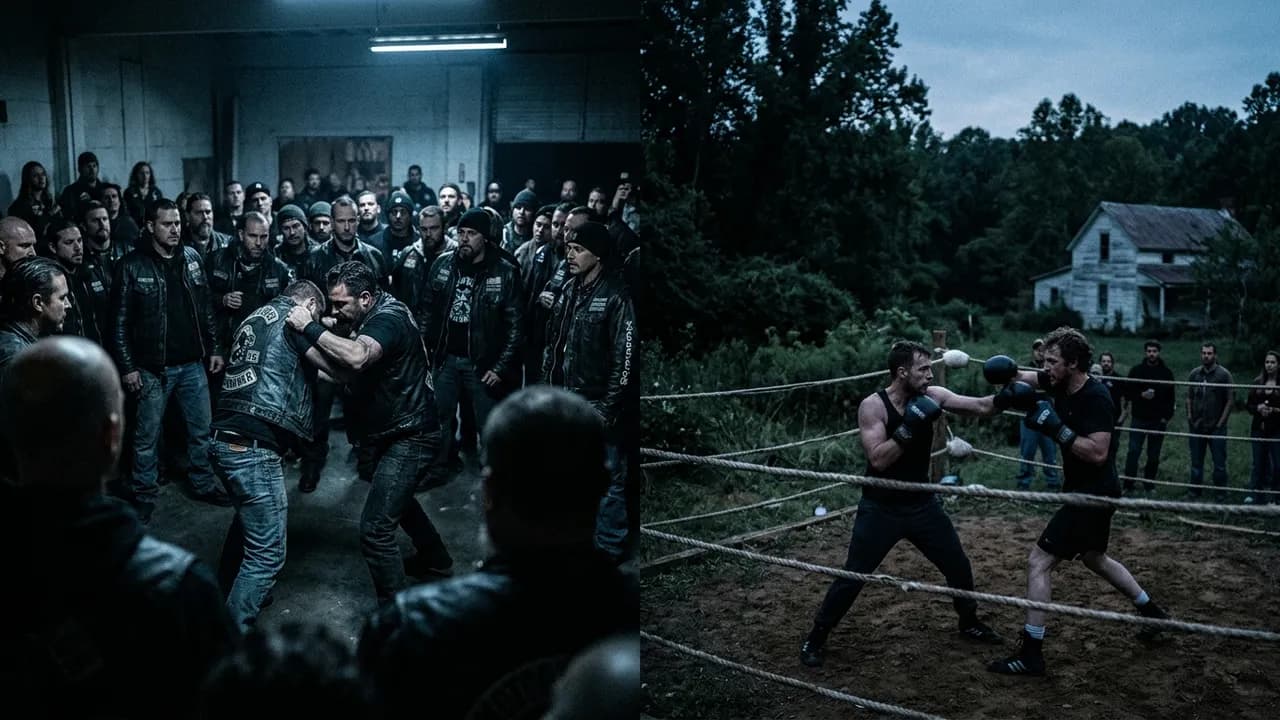
America's underground fighting landscape is vast and varied, but two organizations stand out as cultural touchstones that could not be more different despite sharing the same fundamental activity: putting willing people in a space to fight. East Bay Rats Motorcycle Club in Oakland, California, and Streetbeefs in Harrisonburg, Virginia, represent opposing poles of American fight culture -- one rooted in West Coast counterculture and motorcycle club tradition, the other in Appalachian self-reliance and community conflict resolution.
This comparison breaks down how two organizations that both host fights in America have built entirely different worlds around the same primal act.
Quick Comparison
| Feature | East Bay Rats MC | Streetbeefs |
|---|---|---|
| Location | Oakland, California | Harrisonburg, Virginia |
| Founded | 1994 (fight nights from early 2000s) | 2008 |
| Founder | Trevor Latham | Chris "Scarface" Wilmore |
| Format | Fight night events at clubhouse | Backyard bouts, filmed for YouTube |
| Rules | Boxing-style, bare knuckle or gloved | Varies -- boxing, MMA, bare knuckle |
| Fighters | MC members, locals, walk-ins | Community members with disputes or desire to compete |
| Audience | 100-300 at clubhouse | Small in-person, millions on YouTube |
| Philosophy | Counterculture ritual | Conflict resolution and community |
| Alcohol | Flowing heavily | No alcohol at events |
| Filming | Occasional, not primary focus | Every fight filmed and uploaded |
| Revenue Model | Door charge, bar sales | YouTube ad revenue, merchandise |
Origins and Philosophy
East Bay Rats MC
The East Bay Rats Motorcycle Club was founded in Oakland in 1994 by Trevor Latham, a larger-than-life figure who built the club around a philosophy of freedom, excess, and defiance. The Rats are not a one-percenter outlaw MC in the traditional sense -- they do not claim territory or engage in organized crime -- but they embrace a lifestyle that sits firmly outside mainstream society.
Fight nights at the Rats' Oakland clubhouse began in the early 2000s as an extension of the club's ethos. In a world that was becoming increasingly safe, sanitized, and regulated, the Rats offered a space where people could engage in consensual violence with minimal rules and maximum atmosphere. Fight nights became legendary -- part boxing match, part punk show, part bacchanal.
The philosophy is cathartic chaos. Fighting at the Rats' clubhouse is not about building a record or launching a career. It is about the experience -- the adrenaline, the crowd, the primal energy of trading punches in a room full of bikers, artists, and Oakland's fringe community.
Streetbeefs
Streetbeefs was founded in 2008 by Chris "Scarface" Wilmore in Harrisonburg, Virginia, with a mission that could not be more different. After witnessing years of deadly street violence in his community, Wilmore created Streetbeefs as an alternative: a supervised, filmed, refereed environment where people with genuine disputes could fight it out without anyone getting shot or stabbed.
The philosophy is community harm reduction. Wilmore has stated repeatedly that Streetbeefs exists to save lives, not glorify violence. Every fight is refereed, rules are established in advance, and fighters are expected to shake hands afterward. The YouTube channel -- which has amassed hundreds of millions of views -- serves both as documentation and deterrent. If you have a problem with someone, you can settle it at Streetbeefs instead of on the street.
Over time, Streetbeefs evolved beyond pure dispute resolution into a platform where aspiring fighters could test themselves, but the harm-reduction mission remains at its core.
The Events
East Bay Rats Fight Nights
Walking into a Rats fight night is a sensory assault. The clubhouse is packed -- 100 to 300 people crammed into a space designed for half that number. The air is thick with cigarette smoke, the bar is doing brisk business, and a punk or metal band may have just finished a set. A makeshift ring or cleared area occupies the center of the room, surrounded by screaming spectators who are often intoxicated.
Fights are loosely organized. Some matchups are arranged in advance; others happen when two willing participants step forward. The rules are basic boxing -- no kicking, no ground fighting -- though enforcement is casual. Fights can be bare knuckle or with borrowed gloves, depending on the fighters' preference. A rough approximation of a referee keeps things from going too far, but the line between "too far" and "just right" at the Rats is drawn very differently than it would be anywhere else.
03 / Up next / Streetbeefs Bouts
The crowd is part of the experience. Spectators press against the fighters, spilling drinks, shouting encouragement and insults in equal measure. The boundary between audience and participant is porous -- it is not uncommon for spectators to end up fighting each other, either in the ring or outside it.
Streetbeefs Bouts
A Streetbeefs event is a different universe. Bouts take place in Wilmore's backyard in rural Virginia, typically in a roped-off area or a basic ring set up on grass. The atmosphere is calm, almost neighborly. There might be a dozen spectators -- friends, family members, other fighters waiting for their turn.
Every fight follows an established process. Fighters agree to rules in advance -- boxing, MMA, bare knuckle, or some hybrid. Wilmore or another experienced community member referees. Rounds are timed. If a fighter is hurt or outmatched, the fight is stopped. After the fight, handshakes or hugs are expected, and fighters often stay to watch the remaining bouts.
There is no alcohol at Streetbeefs events. Wilmore has been adamant about this from the beginning, understanding that alcohol and fighting are a dangerous combination. This single rule does more to distinguish Streetbeefs from the East Bay Rats than any other factor.
Fighter Demographics
East Bay Rats Fighters
Rats fight night participants are drawn from Oakland's eclectic population:
- MC members who fight as part of club culture
- Punk and hardcore scene regulars who view fighting as an extension of their subculture
- Local tough guys who want to prove themselves
- Curious newcomers drawn by word of mouth or media coverage
- Artists, musicians, and Oakland counterculture figures
There is no screening process, no formal matchmaking by weight or experience, and no expectation of technical skill. Some Rats fighters are trained boxers; others have never thrown a punch in their lives. The disparity is part of the spectacle.
Streetbeefs Fighters
Streetbeefs draws from a different American demographic:
- Community members with disputes -- the original purpose
- Aspiring fighters who cannot afford gym memberships or travel to sanctioned events
- Military veterans seeking physical outlets
- Blue-collar workers from Virginia's rural and semi-rural communities
- Repeat competitors who have built records on the Streetbeefs channel
Streetbeefs fighters tend to be more serious about the actual fighting. Many train specifically for their bouts, watch film of their opponents, and treat their Streetbeefs record as a genuine athletic accomplishment. The YouTube platform creates accountability -- your fight will be seen by hundreds of thousands of people, so most fighters prepare accordingly.
Media and Legacy
East Bay Rats
The Rats' fight nights gained national attention through documentary coverage, most notably the 2014 film "Rat City" and various Vice Media features. These portrayals introduced the Rats to audiences far beyond Oakland, cementing their reputation as one of America's most distinctive underground fight cultures.
However, the Rats have never pursued YouTube or social media as a primary distribution channel. Fight footage exists online, but it is scattered, often filmed by attendees on phones, and not systematically uploaded or promoted. The Rats' cultural impact comes more from their mystique -- the stories people tell about fight nights -- than from any organized media presence.
Streetbeefs
Streetbeefs is one of the most successful underground fighting channels on YouTube, with videos regularly exceeding a million views. The channel's archive represents one of the most comprehensive records of grassroots American fighting ever assembled. Fighters like ATrain, Shinigami, and Kentucky Rifle have become genuine internet celebrities through their Streetbeefs appearances.
Wilmore's media savvy transformed what could have been a local curiosity into a national phenomenon. Streetbeefs has inspired dozens of imitators across the country, and the "backyard fighting" genre on YouTube owes much of its existence to Wilmore's pioneering work.
Community Impact
East Bay Rats
The Rats' impact on Oakland is complex. The club is a genuine community institution in certain Oakland neighborhoods, hosting charity events, toy drives, and neighborhood cleanups alongside their more notorious activities. Fight nights serve a social bonding function within the club and its extended community, providing a space where people from diverse backgrounds can interact through shared experience.
Critics argue that the Rats glorify violence and contribute to Oakland's problems. Supporters counter that the Rats provide a community space in a city that has lost many of its independent cultural institutions to gentrification.
Streetbeefs
Streetbeefs' community impact is more measurable and more widely praised. Wilmore has spoken publicly about specific instances where Streetbeefs prevented potential homicides by giving feuding individuals a controlled outlet. The organization has received coverage in major media outlets that frame it -- sometimes uncomfortably -- as a positive community intervention.
06 / Up next / Legal and Safety Considerations
Streetbeefs has also served as a launching pad for fighters who went on to sanctioned amateur and professional careers. Several Streetbeefs alumni have competed in Rough N' Rowdy, amateur boxing, and regional MMA promotions.
Legal and Safety Considerations
| Factor | East Bay Rats | Streetbeefs |
|---|---|---|
| Medical personnel | None | None, but first aid available |
| Waivers | Informal | Verbal agreements on camera |
| Police interaction | Periodic, complicated | Minimal -- rural location, community support |
| Injury rate | Higher (alcohol, mismatches, crowd chaos) | Lower (rules, referee, sobriety) |
| Legal status | Unsanctioned | Unsanctioned but tolerated |
The Verdict
East Bay Rats fight nights and Streetbeefs are both authentically American, but they represent radically different Americas. The Rats are West Coast counterculture -- chaotic, excessive, performance-oriented, and rooted in the motorcycle club's rejection of mainstream values. Streetbeefs is Appalachian pragmatism -- structured, purposeful, community-oriented, and rooted in the idea that controlled violence is better than uncontrolled violence.
If you want an experience, go to an East Bay Rats fight night. If you want to understand why people fight and what positive role fighting can play in a community, study Streetbeefs. Both have earned their places in American underground fighting history.
For more on Streetbeefs, see our Streetbeefs organization profile. For other Streetbeefs comparisons, check out Streetbeefs vs Rough N' Rowdy and Streetbeefs vs Backyard Squabbles.
Watch and Learn More
YouTube Channels
- Streetbeefs -- 4.2 million subscriber backyard fighting channel
Recommended Fights
- Streetbeefs Top 5 Knockouts -- The best finishes from the yard
- Streetbeefs: Blackie Chan vs Meyham -- Classic Streetbeefs bout
External Coverage
- ESPN: Streetbeefs Feature -- ESPN's in-depth profile
Read More on UNSANCTIONED FIGHTS
- Streetbeefs Organization Profile -- Full breakdown of the 4.2M subscriber phenomenon
- East Bay Rats -- Oakland's motorcycle club fight night since 1996
- Top 10 Streetbeefs Fighters -- The greatest yard fighters ranked
- Chris "Scarface" Wilmore -- Streetbeefs founder profile
- Streetbeefs vs Backyard Squabbles -- East vs West Coast backyard fighting
- Streetbeefs: Zero to 4 Million -- The growth story