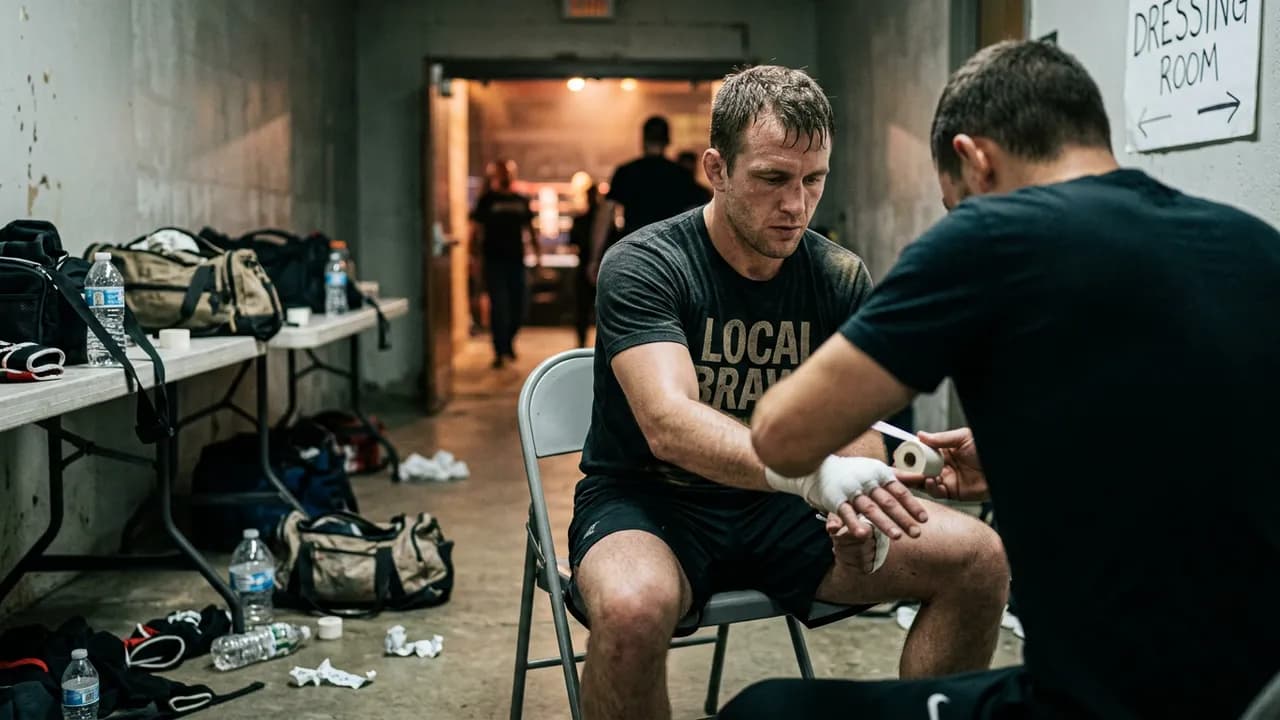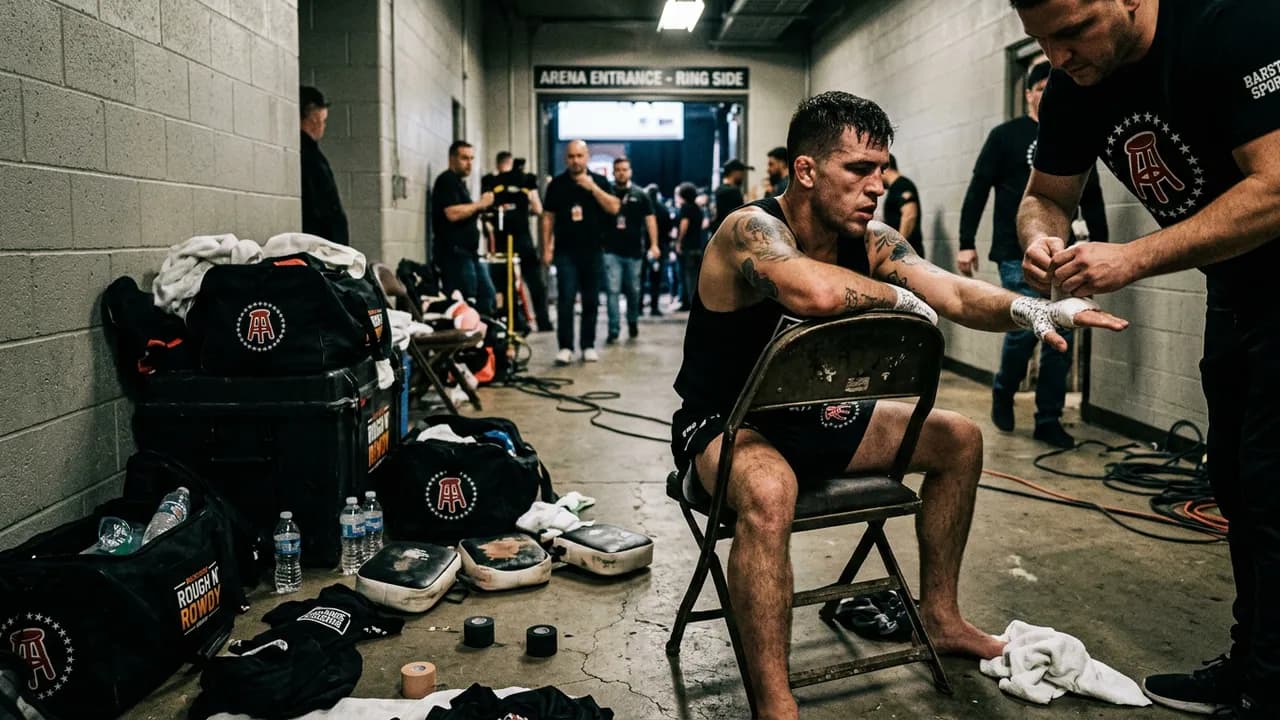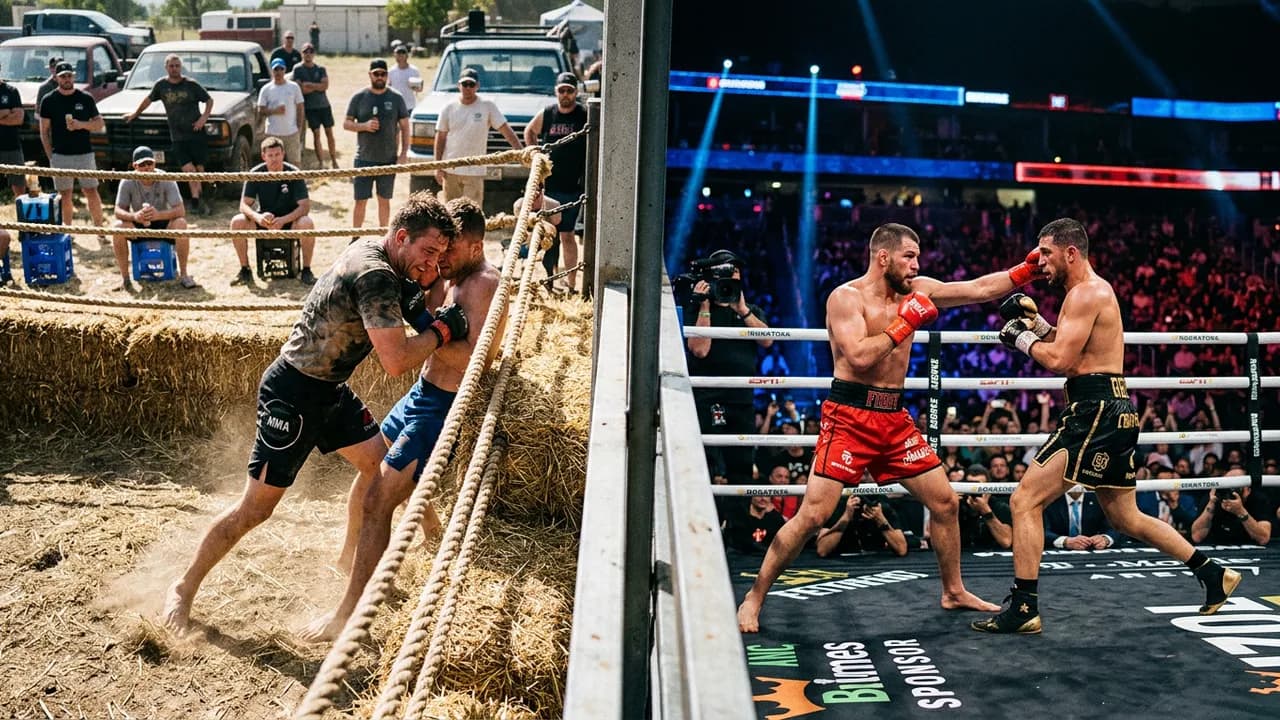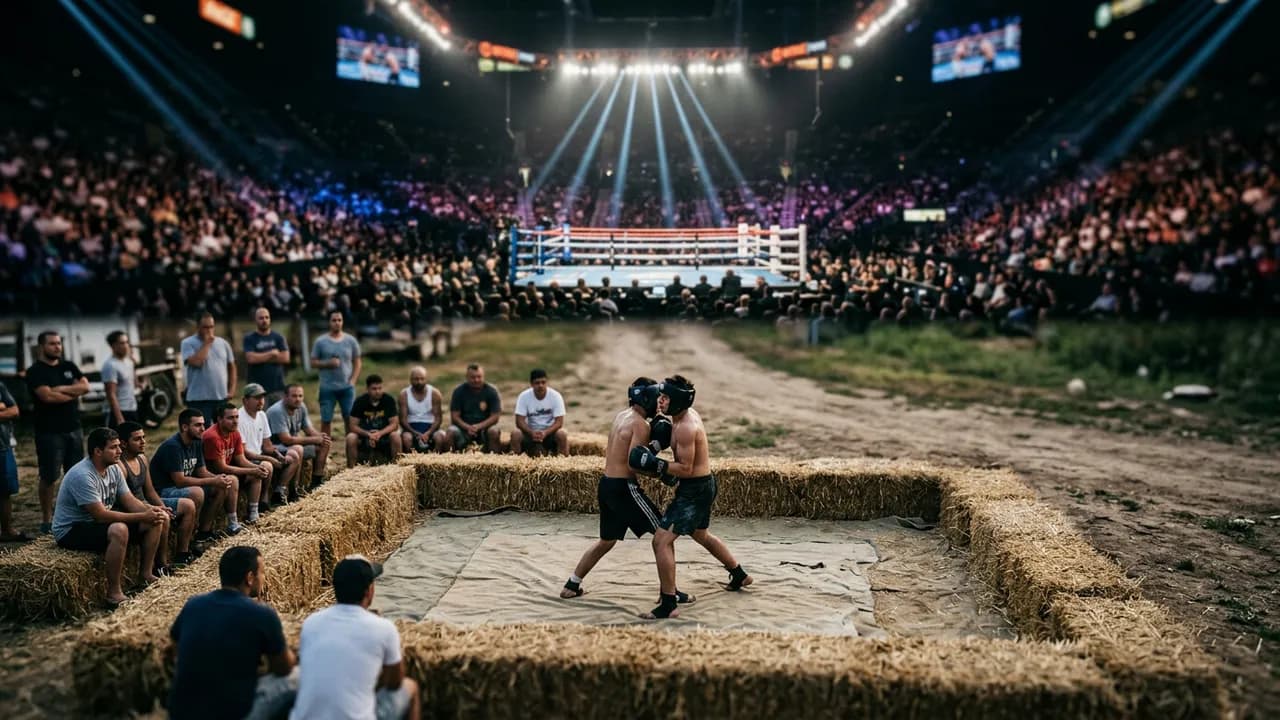
American amateur fighting has two towering brands, and they could not be more different in origin, philosophy, or audience. Streetbeefs, born in a Virginia backyard as a tool to stop gun violence, and Rough N' Rowdy, a West Virginia amateur boxing show turned Barstool Sports content machine, both put regular people in the ring and let them fight. But the reasons they exist, the people they serve, and the money behind them tell completely different stories about what amateur combat means in America.
Both organizations have massive audiences. Both feature untrained or lightly trained fighters. Both operate outside the traditional professional combat sports ecosystem. Beyond those surface similarities, the divergence is dramatic.
Origins and Philosophy
Streetbeefs
Streetbeefs was founded in 2008 in Harrisonburg, Virginia by Christopher "Scarface" Wilmore. The founding philosophy is distilled into four words: "Fists up, guns down." Wilmore, a man shaped by street violence and incarceration, built Streetbeefs as a literal alternative to shootings and stabbings in his community. The idea was simple: if two people have a problem, they settle it in the yard with gloves on and a referee watching.
What started as a conflict resolution tool on private property has grown into a multi-branch organization with locations across Virginia, California, Las Vegas, and Washington State. But the soul of the operation has never changed. Streetbeefs exists to redirect violence into controlled channels and give everyday people a place to test themselves. No one gets paid. No one charges admission. That is not a limitation -- it is the legal and philosophical backbone of the entire organization.
Rough N' Rowdy
Rough N' Rowdy originated as a West Virginia amateur boxing event created by Christopher MacCorkle Smith well before it became a national brand. The events featured local toughmen -- coal miners, bartenders, factory workers -- fighting three-round bouts in front of rowdy crowds. It was Appalachian entertainment, raw and unpolished.
Everything changed when Barstool Sports acquired the brand pre-2017. Dave Portnoy and his media empire recognized what Rough N' Rowdy was: perfect content. Untrained fighters throwing wild punches, a drunk and screaming crowd, and a broadcast team that treated the whole thing like a comedy show with occasional violence. Barstool turned Rough N' Rowdy into a pay-per-view juggernaut, pulling in 41,000+ PPV buys per event at $19.99 a pop and touring the concept nationally.
The philosophy is entertainment first. Rough N' Rowdy does not pretend to be anything other than a spectacle.
Rules and Format
| Aspect | Streetbeefs | Rough N' Rowdy |
|---|---|---|
| Rounds | 3 rounds (standard) | 3 rounds (1 minute each) |
| Formats | Boxing, kickboxing, MMA, jiu-jitsu | Boxing only |
| Gloves | Yes (boxing or MMA depending on format) | Yes (boxing gloves) |
| Headgear | Optional/varies | No headgear |
| Fighting Surface | Grass, dirt, outdoor area | Boxing ring (indoor arena) |
| Weight Classes | Informal size matching | Informal size matching |
| Prohibited | Biting, eye gouging, throat strikes, cursing | Standard amateur boxing fouls |
| Win Conditions | Decision, TKO, KO, submission | Decision, TKO, KO |
| Fighter Experience | Complete beginners to amateur level | Complete beginners to amateur level |
Streetbeefs offers significantly more variety. A fighter can compete in boxing, kickboxing, MMA, or jiu-jitsu depending on their preference and what both parties agree to. Rough N' Rowdy is strictly boxing -- stand-up punching with boxing gloves in a ring. The one-minute rounds in Rough N' Rowdy are notably short, designed to keep the action frantic and prevent the kind of tactical grinding that might bore a casual audience.
The no-cursing rule at Streetbeefs is revealing. Wilmore enforces a culture of respect that extends beyond the fighting itself. Rough N' Rowdy, by contrast, thrives on trash talk, walkout theatrics, and crowd-generated chaos.
Business Model and Money
This is where the two organizations fundamentally diverge.
| Financial Aspect | Streetbeefs | Rough N' Rowdy |
|---|---|---|
| Admission Fee | Free (no charge) | $19.99 PPV |
| Fighter Pay | None (by design and legal necessity) | Fighters receive payment |
| Revenue Sources | YouTube ad revenue | PPV sales, sponsorships, Barstool Sports ecosystem |
| PPV Buys | N/A -- all content free | 41,000+ per event |
| Events Per Year | Dozens (ongoing, informal schedule) | 12+ planned per year |
| Corporate Backing | None | Barstool Sports / Penn Entertainment |
| Estimated Revenue Per Event | Minimal (YouTube ads) | $800,000+ (PPV alone) |
Streetbeefs operates on a shoestring by design. The moment money changes hands -- either as fighter pay or admission fees -- Virginia's athletic commission would assert jurisdiction, and the accessible, informal model that defines Streetbeefs would cease to exist. YouTube ad revenue from over 4.39 million subscribers and 1.4 billion views generates income for the channel, but the events themselves are deliberately free.
Rough N' Rowdy is a commercial enterprise pulling in serious revenue. With 41,000 PPV buys at $19.99 per event and multiple events per year, the promotion generates millions annually before sponsorship money enters the picture. Barstool's media infrastructure provides built-in promotion, and fighters receive compensation for their participation. This is a business, and it operates like one.
Audience and Cultural Identity
Streetbeefs
Streetbeefs draws a remarkably diverse audience. The YouTube comments section reads like a cross-section of America -- combat sports veterans, people who have never thrown a punch, and everyone in between. The appeal is authenticity. These are real people from real neighborhoods fighting for real reasons. The production is minimal. The fights are unedited. The connection between viewer and fighter is direct and parasocial in a way that polished productions cannot replicate.
The mainstream media has embraced Streetbeefs positively. ESPN, The New York Times, The Washington Post, The New Yorker, and HuffPost have all profiled the organization, consistently framing it as an unconventional but effective community institution. Wilmore is treated as a peacemaker, not a fight promoter.
Rough N' Rowdy
Rough N' Rowdy's audience is the Barstool Sports audience -- predominantly young men who consume sports and comedy content. The appeal is the carnival atmosphere: fighters with ridiculous nicknames, theatrical entrances, crowd members who are visibly intoxicated, and commentary from Dave Portnoy and Big Cat (Dan Katz) that treats the proceedings as entertainment rather than sport.
The cultural identity is firmly blue-collar Americana filtered through internet comedy. Rough N' Rowdy does not pretend its fighters are athletes. The tagline says it all: "bar room brawlers and couch potatoes." The entertainment value comes from the gap between the fighters' enthusiasm and their ability.
Safety and Medical Provisions
| Safety Factor | Streetbeefs | Rough N' Rowdy |
|---|---|---|
| Medical Staff | Registered nurse on-site, trained staff | Licensed medical personnel (state-regulated) |
| Pre-Fight Medical | Informal screening | Required by state athletic commissions |
| Protective Gear | Gloves, mouthpieces | Boxing gloves, no headgear |
| Drug/Alcohol Policy | Strictly prohibited at events | Fighters sober; crowd notably not |
| Athletic Commission | Not regulated (no money exchanged) | Regulated by state commissions in most venues |
| Post-Fight Medical | Basic first aid | Professional medical evaluation available |
Because Rough N' Rowdy charges admission and pays fighters, it falls under state athletic commission jurisdiction in most states where it operates. This means mandatory pre-fight physicals, licensed ringside physicians, and regulatory oversight that Streetbeefs does not face. Paradoxically, Streetbeefs has voluntarily implemented safety measures -- the registered nurse, the drug and alcohol prohibition -- that many regulated amateur events do not match in spirit.
YouTube and Online Reach
| Metric | Streetbeefs | Rough N' Rowdy |
|---|---|---|
| YouTube Subscribers | 4.39 million | Modest (content primarily behind PPV paywall) |
| Total YouTube Views | 1.4+ billion | Limited free content; highlight clips |
| Content Model | All content free, full fights uploaded | PPV model; free clips for promotion only |
| Upload Frequency | Multiple fights per week | Event-based (monthly) |
| Total Videos | 3,600+ | Limited free library |
Streetbeefs dominates the free content space. With over 3,600 full fight videos available at no cost, the library is enormous and the algorithm rewards constant uploads. Rough N' Rowdy intentionally restricts its content to drive PPV purchases, meaning its YouTube presence is promotional rather than comprehensive.
This creates a fundamental asymmetry. Streetbeefs is discovered organically by millions of viewers who stumble into the algorithm. Rough N' Rowdy is discovered through the Barstool Sports media ecosystem.
Side-by-Side Summary
| Category | Streetbeefs | Rough N' Rowdy |
|---|---|---|
| Founded | 2008, Virginia | Pre-2017, West Virginia (Barstool acquisition) |
| Philosophy | Conflict resolution, community | Entertainment, spectacle |
| Formats | Boxing, kickboxing, MMA, BJJ | Boxing only |
| Fighter Pay | None | Yes |
| Admission | Free | $19.99 PPV |
| YouTube Subscribers | 4.39 million | Modest (PPV-focused) |
| Corporate Backing | None | Barstool Sports / Penn Entertainment |
| Setting | Outdoor backyard | Indoor arena with ring |
| Regulation | Unregulated (legal gray area) | State athletic commission oversight |
| Cultural Perception | Community institution | Comedy-infused spectacle |
| Geography | 4 branches across USA | Touring nationally |
The Verdict
Streetbeefs and Rough N' Rowdy both answer the same question -- what happens when regular Americans fight each other? -- but they answer it for completely different reasons.
Streetbeefs is grassroots fighting in its purest form. It exists because one man believed that controlled violence could prevent uncontrolled killing, and fifteen years of operation have validated that belief. The fights are real, the stakes are personal, and the audience connects with fighters because they see themselves in those fighters. There is no corporate backing, no paywall, and no comedy filter. It is raw, honest, and community-driven.
Rough N' Rowdy is amateur fighting as entertainment product. Barstool Sports recognized that untrained fighters swinging wildly is inherently compelling television, wrapped it in a carnival atmosphere, and monetized it brilliantly. The fighters are game, the production is professional, and the revenue numbers are impressive. It works because it does not take itself seriously.
Neither organization is better. They serve entirely different purposes. If you want to understand what fighting means in working-class America -- as survival, as release, as community -- Streetbeefs is the answer. If you want to drink beer and watch regular people throw hands while Dave Portnoy cracks jokes, Rough N' Rowdy delivers that experience perfectly.
The real lesson is that America has an enormous appetite for amateur fighting, and there is more than enough space for both the sincere and the spectacular.
For more on these organizations, see our profiles on Streetbeefs and Rough N' Rowdy. For a comparison of Rough N' Rowdy with professional bare knuckle, read our Rough N' Rowdy vs BKFC breakdown.
Watch and Learn More
YouTube Channels
- Streetbeefs -- Community backyard fighting
- Rough N' Rowdy -- Barstool's amateur boxing PPV
Recommended Fights
- Streetbeefs Top 5 Knockouts -- The best from the yard
Official Sites
- Rough N' Rowdy Official -- RNR event info and PPV access
External Coverage
- ESPN: Streetbeefs Feature -- ESPN's Streetbeefs profile
Read More on UNSANCTIONED FIGHTS
- Streetbeefs Organization Profile -- Full Streetbeefs profile
- Rough N' Rowdy Organization Profile -- Full RNR profile
- Delvin Hamlett Fighter Profile -- The fighter who bridged both worlds (5-1 in RNR)
- Top 10 Streetbeefs Fighters -- The greatest yard fighters
- Rough N' Rowdy vs BKFC -- Amateur vs professional comparison
- All Underground Fighting Organizations Ranked -- Where both orgs rank