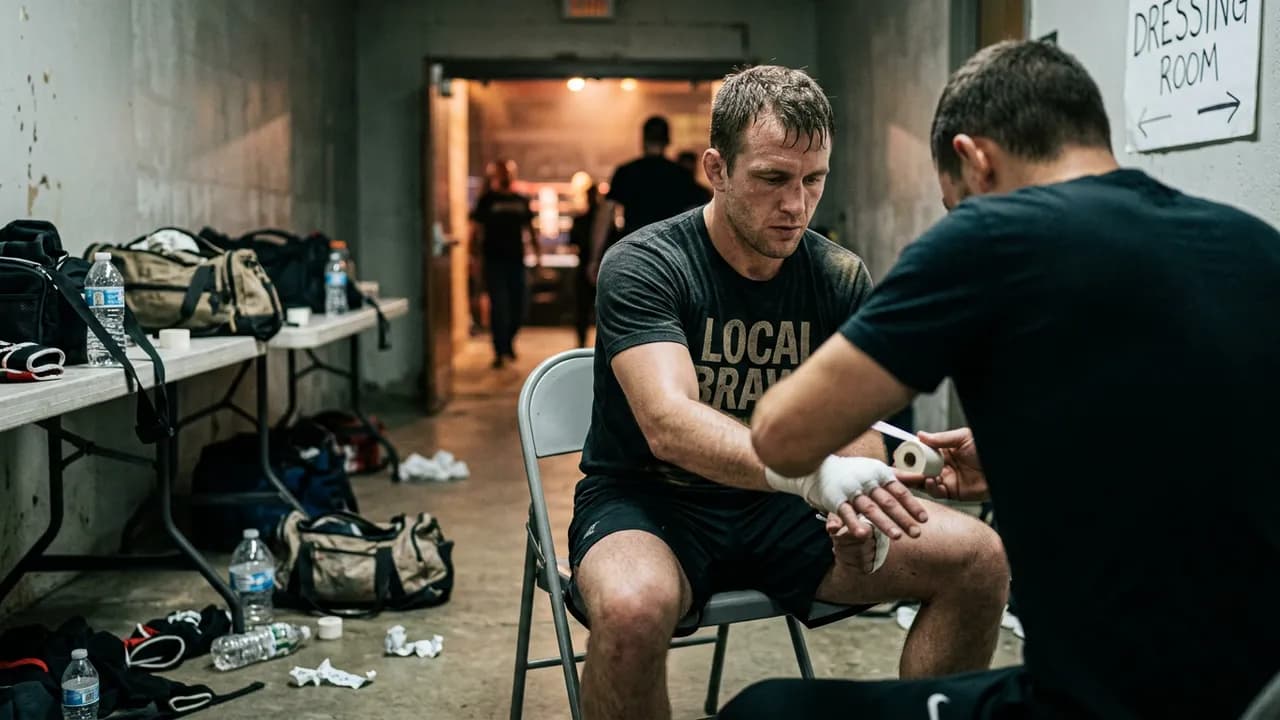
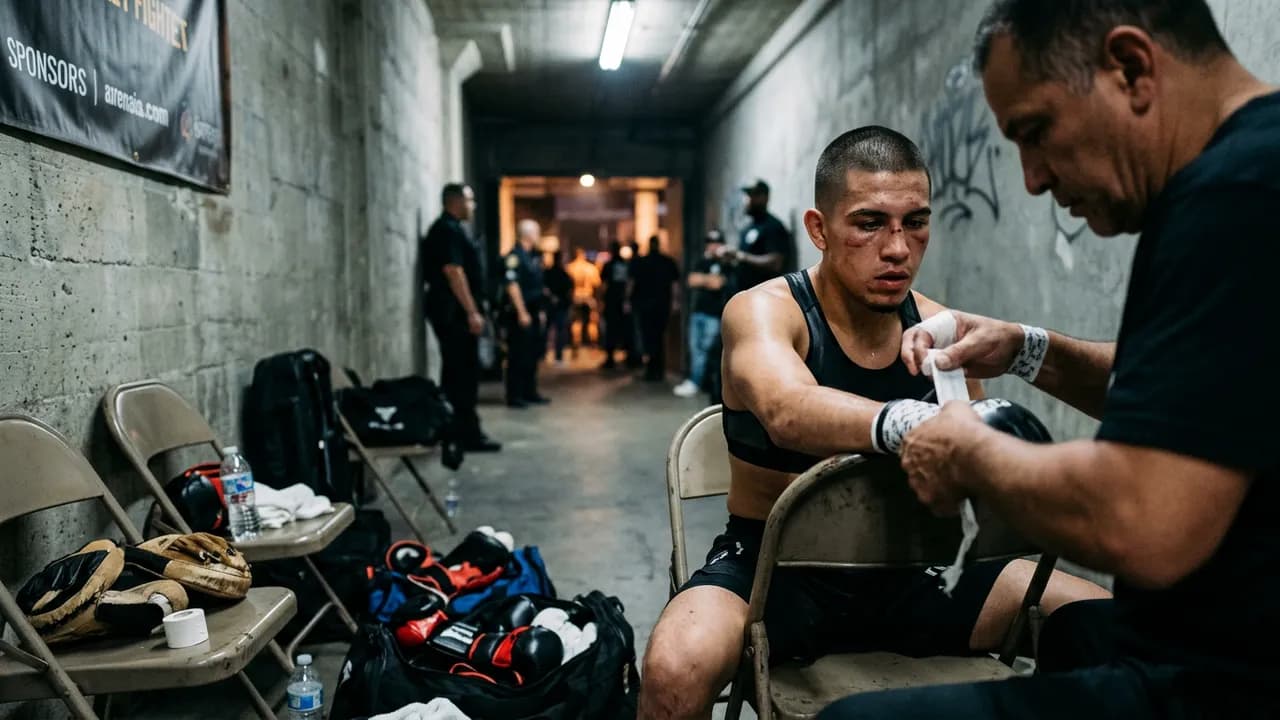
The idea was simple, and it was born from frustration. Chris Wilmore -- known to the internet as Scarface, for the scar running across his face from a knife attack -- was tired of seeing people in his community settle disputes with guns and knives. His proposal was direct: if you have a problem with someone, fight them. Wear gloves. Follow rules. Have a referee. Film it. Put it on YouTube. And then the beef is over.
That was the founding principle of Streetbeefs, articulated in Harrisonburg, Virginia, in 2008. Eighteen years later, the YouTube channel has surpassed 4 million subscribers, the organization has spawned branches across the country, and Streetbeefs has become the most recognized name in American backyard fighting. The journey from a rural Virginia backyard to a media empire is a story about the internet, about community, about the American appetite for fighting, and about one man's stubborn insistence that violence, properly channeled, can be a force for good.
The Founding: Harrisonburg, Virginia
Harrisonburg is not where you would expect to find the headquarters of America's largest backyard fighting organization. It is a small city in the Shenandoah Valley, home to James Madison University, surrounded by farmland. The population is around 55,000. It is not Miami, not New York, not Los Angeles. It is, in many respects, the middle of nowhere. Our venues guide covers where StreetBeefs is located in detail — the lot itself, how far it is from anywhere, and why the address is never published.
Chris Wilmore's Vision
Wilmore grew up in a world where disputes were settled violently and permanently. The scar that gave him his nickname was evidence of the stakes. People he knew were being shot, stabbed, and killed over arguments that could have been resolved in other ways. His insight -- obvious in retrospect, radical in execution -- was that if you gave people a structured way to fight, they would choose it over the alternative.
The early Streetbeefs operation was bare-bones. Wilmore set up a ring in his backyard using rope and posts. He bought boxing gloves and MMA gloves. He established rules: no hitting downed opponents, no eye gouging, no groin shots, no biting. He appointed himself referee. And he told people in the community that if they had a beef, they could bring it to his yard.
The Rules
The rules were crucial to Streetbeefs' identity and longevity. Unlike Felony Fights or the unregulated backyard fights that proliferated online, Streetbeefs operated with a structure that was simple but enforced. Fighters wore gloves. There was a referee. The fight was stopped when someone was hurt, knocked down, or quit. No weapons. No continuation after a stoppage. The rules were not elaborate, but they were real, and they distinguished Streetbeefs from the chaos of genuine street fighting.
Wilmore's role as referee was central. He was not a passive observer. He was in the ring, watching for dangerous moments, stepping between fighters when necessary, and enforcing the code of conduct that made Streetbeefs something more than filmed assault. His physical presence -- a large, imposing man with an unmistakable face -- gave the rules weight that a written document alone could not provide.
The YouTube Growth
Streetbeefs' growth on YouTube was not instant. The early videos, uploaded starting around 2008-2009, accumulated views slowly. The production quality was modest: a single camera, natural lighting, ambient audio. The appeal was the same thing that made Kimbo Slice's videos compelling -- raw, real fighting between real people -- but with a crucial difference: the fights were organized, refereed, and conducted with at least a basic framework of safety.
Finding the Audience
The audience found Streetbeefs gradually, through YouTube's recommendation algorithm and through word of mouth in online fighting communities. The channel grew from thousands of subscribers to tens of thousands, then to hundreds of thousands. Each milestone brought more visibility, which brought more fighters, which produced more content, which attracted more subscribers.
The growth curve accelerated around 2016-2017, when YouTube's algorithm began favoring the kind of engaging, high-retention content that Streetbeefs produced. Fight videos are natural algorithm food: they are short enough to watch in full, dramatic enough to retain attention, and compelling enough to generate clicks from recommendations. The algorithm did what Wilmore's marketing budget could not: it put Streetbeefs in front of millions of potential viewers.
Key Growth Milestones
The channel's growth followed a pattern common to viral YouTube content, with periods of steady accumulation punctuated by breakout moments:
- 2008-2014: Slow, organic growth. The channel built a core audience of dedicated fighting fans and accumulated a library of content.
- 2015-2017: Accelerating growth as YouTube's algorithm began recommending Streetbeefs videos to broader audiences. Subscriber count moved from tens of thousands to hundreds of thousands.
- 2018-2019: The channel crossed 1 million subscribers, a milestone that brought mainstream media attention and further accelerated growth.
- 2020-2021: The pandemic period supercharged growth as locked-down audiences sought entertainment and new fighters, unable to access gyms, came to Streetbeefs.
- 2022-2025: Continued growth toward and past the 4 million subscriber mark, with the channel firmly established as the dominant force in backyard fighting content.
Media Coverage
As Streetbeefs grew, it attracted attention from mainstream media outlets that treated the phenomenon with a mixture of fascination and bewilderment.
The New York Times
The New York Times covered Streetbeefs in a feature that introduced the organization to an audience that would never have encountered it through YouTube. The coverage was characteristically nuanced, exploring both the appeal and the controversy of organized backyard fighting, and profiling Wilmore as a complex figure -- part community organizer, part fight promoter, part YouTube entrepreneur.
The Washington Post
The Washington Post's coverage focused on the social dynamics of Streetbeefs, examining the organization's claim that it reduced gun violence by providing an alternative outlet for disputes. The coverage included interviews with fighters, community members, and legal experts who weighed in on the organization's questionable legal status.
Television and Other Media
Streetbeefs was featured on various television programs, podcasts, and digital media outlets. Each round of coverage brought new viewers to the YouTube channel, creating a virtuous cycle of media attention, audience growth, and content production that sustained the organization's expansion.
03 / Up next / The Expansion: Branches and the Title System
The media coverage was not uniformly positive. Critics questioned whether Streetbeefs genuinely reduced violence or merely provided a veneer of legitimacy for what was, legally, organized assault. Law enforcement perspectives varied: some local authorities tolerated Streetbeefs as a lesser evil, while others expressed concern about the legal and safety implications of organized backyard fighting.
The Expansion: Branches and the Title System
As Streetbeefs grew beyond Wilmore's backyard, the organization developed structures to accommodate its expanding scope.
Branch System
Streetbeefs established branches -- affiliated operations in other locations that operated under the Streetbeefs name and followed the organization's rules and format. These branches allowed Streetbeefs to expand geographically without requiring every fighter to travel to Harrisonburg, Virginia. Every StreetBeefs branch location is covered in our venues guide, including what is independently confirmed about each and what is not. Branch operators were expected to maintain Streetbeefs' standards: gloves, referees, rules, and the organizational philosophy of settling disputes through structured fighting.
The branch system was both a strength and a challenge. It allowed Streetbeefs to scale beyond what a single backyard could support, but it also created quality control issues. Maintaining consistent standards across multiple locations, operated by different people with different levels of commitment to the organization's values, was difficult. Some branches operated with the same care and professionalism as the main yard. Others were less reliable.
The Title System
Streetbeefs introduced a title system that gave fighters something to compete for beyond bragging rights. Weight-class championships were established, with title fights receiving special promotion on the YouTube channel. The title system transformed Streetbeefs from a dispute-resolution service into something that more closely resembled a legitimate fighting organization, with rankings, champions, and contenders.
The title system also created storylines -- narrative arcs that kept audiences engaged between individual fights. Title defenses, championship tournaments, and contender matchups gave the Streetbeefs content a structure that random beef-settlement fights could not provide.
Notable Fighters
Streetbeefs has produced a roster of fighters who have become recognizable figures in the backyard fighting community.
ATrain
ATrain became one of Streetbeefs' most popular and recognized fighters, known for his aggressive style and his willingness to fight frequently. His bouts consistently drew high viewership on YouTube, and his presence on a Streetbeefs card became a reliable indicator of strong engagement numbers. ATrain represented the kind of homegrown star that Streetbeefs uniquely produced -- a fighter who was famous within the backyard fighting world but unknown outside it.
Other Notable Names
The Streetbeefs roster has included dozens of fighters who developed followings through their appearances on the channel. Some used Streetbeefs as a platform to launch careers in amateur or professional MMA and boxing. Others fought for the love of fighting and the recognition of the community. The variety of fighters -- different sizes, different styles, different backgrounds, different motivations -- was part of the channel's appeal. You never knew exactly what you would see when a Streetbeefs video started.
The Philosophy
What distinguished Streetbeefs from other backyard fighting operations was not the rules or the production quality. It was the philosophy. Wilmore articulated and enforced a vision of backyard fighting that was fundamentally different from exploitation-based operations like Felony Fights or the no-rules chaos of unregulated street fights.
The Core Principles
The core principles were straightforward:
No pay. Fighters were not paid. This was both a philosophical choice and a legal strategy -- the absence of compensation helped distinguish Streetbeefs from professional fighting, which would require sanctioning and regulation.
Settling beefs. The original purpose was dispute resolution. While the organization evolved beyond this single function, the founding principle remained: fighting is better than shooting.
Respect. Fighters were expected to show respect before, during, and after fights. Unsportsmanlike conduct was not tolerated. The backyard was treated as a space governed by a code, not a free-for-all.
Community. Streetbeefs was presented as a community institution, not a commercial enterprise. The backyard was a gathering place, the fights were community events, and the organization's purpose was social, not financial.
Criticism and Defense
The philosophy attracted both admirers and critics. Admirers saw Streetbeefs as a genuine social innovation -- a grassroots solution to violence that worked because it was rooted in the community it served. Critics saw the philosophy as a justification for what was, at bottom, organized fighting without the safety measures, medical oversight, or regulatory framework that protects fighters in sanctioned sports.
06 / Up next / The Business
Wilmore's response to criticism was consistent: the people fighting in his yard were going to fight anyway. The question was not whether they would fight but how. Better with gloves and rules and a referee than with knives and guns and no one to stop it.
The Business
Streetbeefs operated in a financial gray area that reflected the broader tensions of the backyard fighting world. The fighters were not paid, but the YouTube channel generated revenue through advertising. The organization sold merchandise. Wilmore's personal brand, built on the Streetbeefs platform, created income opportunities.
The question of who benefited financially from Streetbeefs was a persistent source of tension. Critics pointed out that the fighters absorbed the physical risk while the channel owner collected the ad revenue. Defenders argued that the fighters were not coerced, that they fought voluntarily, and that the platform provided them with visibility and community that had non-monetary value.
The financial model evolved as the channel grew. What began as a zero-revenue operation -- a man with a backyard and a camera -- became a media property generating significant income through YouTube's partner program. The business of underground fighting was changing, and Streetbeefs was both a driver and a product of that change.
What Remains
Streetbeefs is, as of this writing, the most successful backyard fighting operation in American history by any quantifiable metric: subscribers, views, fighters, events, media coverage, cultural recognition. It transformed backyard fighting from a marginal, stigmatized activity into a mainstream YouTube genre. It proved that organized fighting content could sustain a massive audience without the production budgets of professional promotions. And it demonstrated that a single person with a clear vision, a backyard, and an internet connection could build something that reached millions.
Chris Wilmore built Streetbeefs on a simple idea: let people fight, but make them fight fair. The idea was not original. Boxing gyms have offered the same bargain for centuries. But Wilmore brought it to a backyard in rural Virginia, put it on the internet, and watched it grow into something that no one -- least of all Wilmore himself -- could have predicted.
From settling beefs to 4 million subscribers. From a backyard in Harrisonburg to a cultural phenomenon. The Streetbeefs story is still being written, one fight at a time.
Essential Streetbeefs Videos
The fights that built the most-watched backyard fighting channel in history.
- Streetbeefs: Death Sentence — Most Viewed Fight: One of the most-watched Streetbeefs fights of all time. The kind of knockout that made the channel a YouTube phenomenon.
- Streetbeefs: ATrain Highlights: Compilation of ATrain's most memorable fights, showcasing the aggressive style that made him Streetbeefs' most recognizable fighter.
- Streetbeefs — New York Times Documentary: "Backyard Fight Club: Guns to Gloves": The 2016 New York Times documentary that introduced Streetbeefs to a mainstream audience. Features Chris "Scarface" Wilmore explaining the philosophy behind "Guns Down, Gloves Up."
- Streetbeefs Official Channel — Fight Library: The full Streetbeefs catalog -- over 4 million subscribers and 1.3 billion views of backyard fights from Harrisonburg, Virginia.
- Scarface Explains Streetbeefs — Origin Story: Chris Wilmore in his own words, explaining how the loss of a friend to gun violence led him to create America's most famous backyard fighting organization.