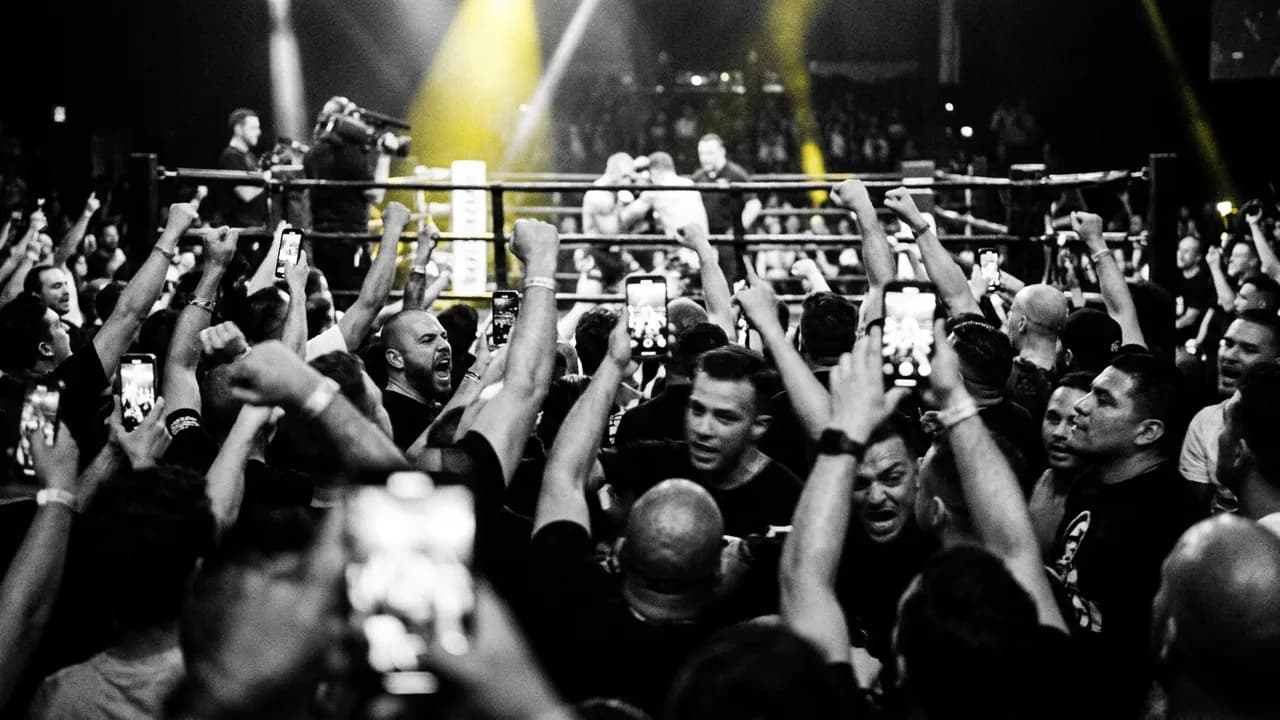
Las Vegas is the fight capital of the world. That title is not self-proclaimed. It is earned, night after night, in the arenas along the Strip where UFC pay-per-views draw global audiences, where boxing's biggest names still prefer to headline, and where the infrastructure of professional combat sports -- the gyms, the managers, the promoters, the commissions, the media -- is more concentrated per square mile than anywhere else on earth. The city exists, in many ways, because of wagering, entertainment, and spectacle. Fighting is all three.
So it was only a matter of time before the underground caught up.
Streetbeefs West Coast brought organized backyard fighting to Las Vegas, planting the flag of America's largest backyard combat organization in the same city that hosts the UFC's corporate headquarters. The branch operates as an official extension of Streetbeefs, founded by Christopher "Scarface" Wilmore in Harrisonburg, Virginia, and it gives fighters on the western half of the country access to the same backyard combat format that has generated over 1.4 billion YouTube views from the original yard. But the Las Vegas story is about more than a single branch. It is about what happens when underground fighting takes root in a city where professional combat sports are the dominant industry.
The Combat Sports Capital
To understand why Las Vegas matters to the underground fighting conversation, you have to understand the scale of what already exists there.
The UFC moved its corporate headquarters to Las Vegas in 2001, when Dana White took over the struggling organization and bet everything on rebuilding it from the Nevada desert. The gamble paid off spectacularly. Today, the UFC Apex -- a purpose-built arena and production facility on the outskirts of the Strip -- hosts weekly events broadcast to a global audience. T-Mobile Arena, the MGM Grand Garden Arena, and the Mandalay Bay Events Center rotate as venues for the promotion's biggest cards. The UFC's Performance Institute, a state-of-the-art training and recovery facility, is open to fighters on the roster. The entire ecosystem -- from matchmaking to media to medical testing -- operates within a few miles of downtown Las Vegas.
Boxing's presence is equally entrenched. The city has hosted more major boxing events than any other location in the modern era, from the golden age of Sugar Ray Leonard and Thomas Hearns at Caesars Palace to Floyd Mayweather's residency at the MGM Grand to the current generation of cards at venues across the valley. The Nevada State Athletic Commission, headquartered in Las Vegas, is the most influential regulatory body in combat sports. When a fight matters, it happens in Vegas.
This density of professional combat sports infrastructure has a gravitational effect. Fighters from around the world relocate to Las Vegas for training, networking, and proximity to opportunity. The city is home to dozens of world-class gyms, including the UFC PI, Xtreme Couture, Syndicate MMA, and countless smaller operations that cater to fighters at every level. The talent pool is enormous, the competitive environment is intense, and the path from amateur to professional is shorter and more clearly marked here than anywhere else.
Into this environment came Streetbeefs West Coast -- an operation that exists at the opposite end of the combat sports spectrum from the UFC but draws from the same deep well of fighters looking for an opportunity to prove themselves.
Streetbeefs West Coast: Origins and Operations
Streetbeefs West Coast was established in Las Vegas as an official branch of the Streetbeefs organization, operated by Martin Rubio and Alex Chenard in coordination with founder Christopher Wilmore. The branch was created to address a simple geographic problem: the original Streetbeefs yard in Virginia is a long way from the western United States, and fighters west of the Mississippi who wanted to compete under the Streetbeefs banner had no realistic way to do so.
The West Coast operation follows the same fundamental model as the original. Fighters sign up through social media -- primarily the Streetbeefs West Coast Facebook group and Instagram, where the branch has built a following of over 292,000. Potential fighters are required to be active in the online community before being selected for events. Matchmakers pair fighters by weight and experience. Events are held outdoors in the Las Vegas area, following the backyard format that defines the Streetbeefs brand. Fights are filmed, uploaded to YouTube, and made available for free.
02 / Up next / The Fighter Pipeline
The rules mirror the original yard: boxing, kickboxing, MMA, and grappling formats are available. Gloves are mandatory. Referees are present. No fighters are paid, keeping the operation outside the jurisdiction of the Nevada State Athletic Commission -- a particularly important distinction in a state with one of the most active and powerful athletic commissions in the country. No admission is charged to spectators.
The fighter sign-up process is community-driven. Streetbeefs West Coast periodically posts fighter recruitment calls on social media, and interested participants must demonstrate engagement with the community before being considered. This is not a walk-in operation. The process serves both as quality control and as a way to build the social bonds that distinguish Streetbeefs from random street fighting.
The Fighter Pipeline
The most significant aspect of Streetbeefs West Coast in Las Vegas is not the fights themselves. It is the pipeline.
Las Vegas is a city full of aspiring fighters. Young men and women move there from across the country, drawn by the gyms, the competition, and the dream of a professional career in combat sports. Some arrive with extensive amateur backgrounds. Others have natural talent but no formal training. Many are somewhere in between -- competent enough to compete but lacking the connections, the resume, or the opportunity to get noticed by the professional promotions that operate just miles away.
For these fighters, Streetbeefs West Coast functions as an unofficial proving ground. A strong performance on the Streetbeefs YouTube channel, which has an audience in the millions, can generate more exposure than a dozen unsanctioned amateur bouts in a half-empty gym. The footage serves as a video resume that fighters can send to managers, matchmakers, and smaller professional promotions looking for talent.
The most notable example of this pipeline in action is Shinigami (Danny Uribe), who earned the Streetbeefs West Coast Championship with an 8-2 record before transitioning to professional competition. Uribe, a karate practitioner and self-described goth who trained at The Lab BJJ in Lancaster, California, became a viral sensation through his Streetbeefs appearances. His spinning techniques and unorthodox style generated millions of views, and the exposure helped launch a professional career that might never have materialized without the platform.
Uribe is not an isolated case. Several Streetbeefs fighters have used the organization as a springboard to professional careers, and the West Coast branch's location in Las Vegas -- where professional promotions, managers, and scouts are abundant -- makes it a particularly effective launching pad. The irony is thick: fighters compete for free in a backyard to build the credentials they need to get paid in an arena. But in a city where the path from obscurity to opportunity is always being walked by someone, the logic makes perfect sense.
Tuff-N-Uff and the Amateur Infrastructure
Streetbeefs West Coast does not exist in isolation within the Las Vegas amateur fighting landscape. The city has long supported Tuff-N-Uff, the premier developmental mixed martial arts promotion in the United States, which has been operating in Las Vegas since 1994. Tuff-N-Uff provides a more formalized amateur pathway -- sanctioned bouts, official records, and a structured ranking system -- that has served as the launchpad for UFC stars including Valentina Shevchenko, Ryan Hall, and many others.
The coexistence of Tuff-N-Uff and Streetbeefs West Coast illustrates the breadth of the Las Vegas amateur fighting ecosystem. Tuff-N-Uff caters to fighters who are on a clear trajectory toward professional careers and want official records and commission oversight. Streetbeefs caters to a different population: fighters who want to test themselves in a rawer, less formal environment, or who may not meet the requirements or desire the structure of a sanctioned amateur program.
There is overlap between the two worlds. Some fighters compete in both. Others start at Streetbeefs and graduate to Tuff-N-Uff as they become more serious about a professional career. The two promotions are not competitors so much as they are different rungs on the same ladder, each serving a distinct purpose within the broader pipeline that feeds fighters into the professional ranks.
The Underground in the Shadow of the UFC
The relationship between the Las Vegas underground fighting scene and the professional establishment is one of proximity without acknowledgment. The UFC does not talk about Streetbeefs. The Nevada State Athletic Commission does not regulate it. The major gyms do not officially send their fighters to backyard bouts. And yet the worlds are connected by an invisible web of shared fighters, shared geography, and shared audience.
A fan who watches a Streetbeefs video during the week might buy a UFC pay-per-view on Saturday night.
A fighter who competes at a Streetbeefs West Coast event on Saturday might be training at Xtreme Couture on Monday. A fan who watches a Streetbeefs video during the week might buy a UFC pay-per-view on Saturday night. A manager scouting talent at Tuff-N-Uff might check Streetbeefs YouTube footage to evaluate a prospect. The underground and the professional mainstream occupy the same physical space and serve overlapping markets, even if neither side formally acknowledges the other.
This dynamic is unique to Las Vegas. In other cities where Streetbeefs operates -- Harrisonburg, El Paso, Gig Harbor -- the backyard scene exists in its own orbit, largely disconnected from professional combat sports infrastructure. In Las Vegas, the underground exists in the gravitational field of the most powerful professional combat sports ecosystem on the planet. That proximity shapes everything: the quality of fighters, the stakes of performances, and the potential consequences of standing out.
Fight Circus and the Alternative Scene
Beyond Streetbeefs, Las Vegas has become a magnet for alternative combat sports entertainment. Fight Circus, a promotion that bills itself as the most unpredictable combat entertainment spectacle on earth, has staged events in the city featuring formats that defy conventional categorization -- phone booth fights, intergender grappling, and multi-person bouts that exist somewhere between MMA and performance art.
These alternative promotions thrive in Las Vegas because the city's culture already embraces spectacle. In a town where you can watch Cirque du Soleil, play poker at three in the morning, and attend a world championship boxing match all in the same weekend, the appetite for unconventional entertainment is bottomless. Fight Circus and its peers tap into the same audience that watches Streetbeefs -- people who want combat that is raw, unpredictable, and free from the polished production of mainstream promotions.
The Las Vegas underground scene, broadly defined, includes everything from backyard bouts to unsanctioned gym fights to alternative promotions staging shows in nightclubs and convention halls. It is the underside of the same coin that bears the UFC logo on top.
The Nevada Legal Framework
Operating an unsanctioned fighting organization in Nevada requires careful navigation. The Nevada State Athletic Commission is one of the most powerful and active regulatory bodies in combat sports, with broad authority over professional and amateur contests. The commission's jurisdiction, however, is tied to specific triggers: payment to fighters, admission fees charged to spectators, and the formal promotion of events as combat sports contests.
Streetbeefs West Coast avoids these triggers by following the same model as the original Virginia operation. No fighters are paid. No admission is charged. Events are framed as private gatherings of consenting adults on private property, not as promoted combat sports events. This keeps the operation outside the commission's regulatory reach, at least in theory.
The legal calculus in Nevada is arguably more delicate than in Virginia, given the commission's institutional power and the state's history of aggressive regulation of combat sports. But the same logic that protects Streetbeefs in Virginia -- the absence of commercial elements that would trigger regulatory jurisdiction -- applies in Nevada. As long as no money changes hands and no tickets are sold, the events occupy a legal gray area that regulators have not moved to close.
What Las Vegas Means to the Underground
Las Vegas is proof that underground fighting is not just a product of economic desperation or community dysfunction. It thrives in the richest, most developed combat sports market on earth because it fills a need that professional promotions cannot: the need for accessible, unfiltered, immediate competition.
Not every fighter in Las Vegas will make it to the UFC. Most will not. But many of them still want to fight, still want to test themselves, and still want an audience. Streetbeefs West Coast provides that. So do the gyms that host unsanctioned sparring events, the alternative promotions that stage shows for niche audiences, and the informal networks of fighters who meet up in parks and backyards to settle things the old-fashioned way.
The fight capital of the world has an underground, and it is thriving.
Related Reading
- Streetbeefs -- The parent organization, founded in Harrisonburg, Virginia
- Underground Fighting in Harrisonburg -- Where Streetbeefs began
- Shinigami (Danny Uribe) -- Streetbeefs West Coast champion turned professional fighter
- How to Watch Underground Fights -- Guide to finding and streaming underground fight content
- BKFC -- The largest professional bare-knuckle promotion, which also stages events in Las Vegas