Quick answer: Bare knuckle boxing hits harder per punch and is technically harder to fight in than gloved boxing — but it produces roughly 4x fewer concussions (1.5% vs 6-12%) and fewer hand fractures (3.2% vs 4.7%). The trade-off is more cuts: 34.8% of bare knuckle fighters need stitches per event.
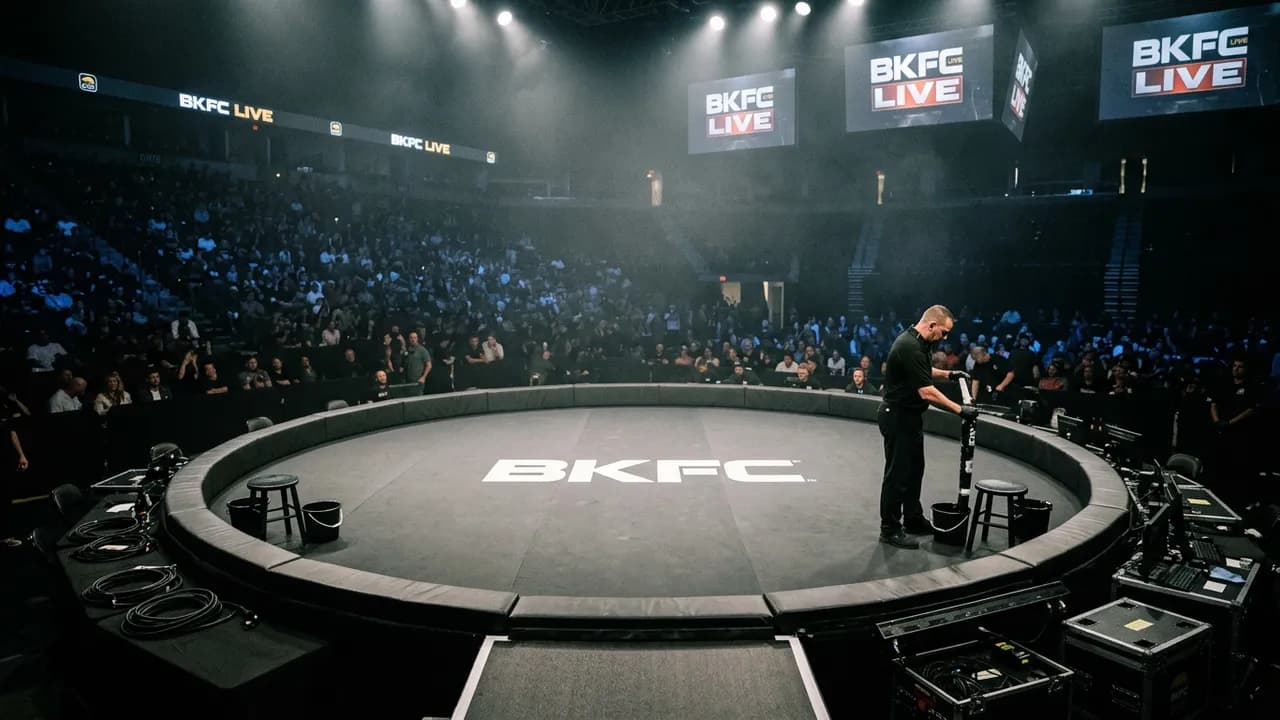
Bare knuckle is "harder" in three concrete ways. (1) Every punch carries more direct impact because there's no padding cushioning the strike — but fighters throw fewer head shots to protect their hands, which is why concussion rates fall. (2) Defensive technique is harder: the high glove guard that boxers rely on doesn't exist, so fighters must master head movement, slipping, and footwork. (3) Round pacing is harder: BKFC uses 2-minute rounds with no place to hide in the smaller circular ring.
This article breaks down rules, technique, injury data, history, pacing, and the spectator experience so you can see exactly how the two sports diverge. Below: the rules comparison, the counterintuitive safety data, and the verdict.
Historical Context: From Bare Fists to Padded Gloves
For most of boxing's history, there were no gloves. From the ancient Greeks through the London Prize Ring era that dominated the 18th and 19th centuries, fighters struck with bare fists -- or at most, thin leather wraps designed to protect the hand more than the opponent. The introduction of padded gloves under the Marquess of Queensberry Rules in 1867 transformed boxing from bare knuckle brawl into the sport we recognize today.
Now, bare knuckle boxing is back. Organizations like BKFC and BKB have brought the pre-glove era into modern arenas with sanctioned events, broadcast deals, and growing mainstream audiences. The resurgence has reignited a fundamental debate: is fighting without gloves actually more dangerous than fighting with them?
The data says no — at least when it comes to brain injuries.
A Brief History
The Bare Knuckle Era
Organized bare knuckle fighting dates back to at least 1681 in England, when the first recorded prize fight took place. The sport operated under minimal rules until 1743, when champion Jack Broughton introduced the first formal code: no hitting a downed opponent, a 30-second count for knockdowns, and a requirement to stand at a "scratch" line to continue.
The London Prize Ring Rules, adopted in 1838 and revised in 1853, became the definitive bare knuckle ruleset. Under these rules:
- Kicking, gouging, butting, biting, and low blows were all fouls
- A round ended when a fighter went down
- Fighters had 30 seconds between rounds, then 8 seconds to reach the "scratch" mark at center ring
- Failure to reach the scratch ended the fight
Fights under these rules could last dozens of rounds and go on for hours. The longest recorded bare knuckle bout lasted 6 hours and 15 minutes over 276 rounds.
The Introduction of Gloves
The Marquess of Queensberry Rules, written by John Graham Chambers and endorsed by John Douglas, 9th Marquess of Queensberry, were published in 1867. Their key innovations:
- Gloves were mandatory for the first time
- Rounds were standardized to 3 minutes with 1-minute rest periods
- A downed fighter had 10 seconds to rise unaided
- Wrestling and clinching were restricted
The Queensberry Rules did not immediately replace bare knuckle fighting. The last major bare knuckle championship bout took place in 1889, when John L. Sullivan defended his title under London Prize Ring Rules. Sullivan later became the first gloved heavyweight champion under Queensberry Rules, bridging the two eras.
For over a century, bare knuckle boxing essentially vanished from organized competition. Its modern revival began in the 2010s with promotions in the UK and exploded in 2018 with the founding of BKFC in the United States.
Rules Comparison
| Rule | Bare Knuckle (Modern BKFC/BKB) | Gloved Boxing |
|---|---|---|
| Hand Protection | Wrist wraps only; knuckles fully exposed (BKFC) or minimal padded wraps (BKB) | 8-10 oz gloves (professional); 12-16 oz (amateur/training) |
| Round Length | 2 minutes (BKFC); 3 minutes (BKB) | 3 minutes (professional); 2-3 minutes (amateur) |
| Number of Rounds | 5 rounds standard; up to 7 (BKB title fights) | 4-12 rounds (professional); 3-4 rounds (amateur) |
| Knockdown Count | 10 seconds (BKFC); 18 seconds (BKB) | 10 seconds (standard) |
| Standing Eight Count | Generally not used | Used in amateur and some professional boxing |
| Three-Knockdown Rule | Not standard | Varies by jurisdiction and commission |
| Clinching | Limited; punching in clinch prohibited (BKB) | Limited; referee breaks clinches |
| Weight Classes | Yes -- similar to boxing divisions | Yes -- 17 professional divisions |
| Ring | Circular ring (BKFC); Trigon (BKB) | Square ring (standard) |
| Scoring | 10-point must system | 10-point must system |
Modern bare knuckle boxing borrows heavily from the gloved boxing framework -- both use the 10-point must scoring system, both have standardized weight classes, and both are sanctioned by state athletic commissions in the United States. The key structural differences are hand protection, round length, and ring format.
Technique Differences
The presence or absence of gloves changes fighting technique at every level.
Striking Mechanics
Bare knuckle fighters must protect their hands. The human hand contains 27 bones, many of them small and fragile. Hitting a skull with an unprotected fist at full power risks fractures to the metacarpals (boxer's fracture) or the smaller bones of the hand and wrist. This biological reality forces several technical adaptations:
- Fewer headshots. Bare knuckle fighters are more selective about targeting the head, particularly the forehead and temples where the skull is thickest. Body shots carry far less risk of hand injury and are more prominent in bare knuckle than in gloved boxing.
- Different fist orientation. Some bare knuckle fighters favor the hammer fist or strike with the bottom three knuckles rather than the top two, distributing force more safely across the hand.
- Precision over volume. Without gloves absorbing impact, every punch carries more consequence for the fighter throwing it. This encourages accuracy and discourages the volume-punching approach common in gloved boxing.
- Open-hand techniques. Palm strikes and slapping techniques, while not universally used, appear more frequently in bare knuckle than in gloved competition.
Gloved fighters can throw with relative abandon. The 8-10 ounce padding on a boxing glove allows fighters to target the head repeatedly without the same risk of hand injury. This enables high-volume combination punching, extended flurries, and the sustained headhunting that characterizes modern gloved boxing.
Defense
- Bare knuckle defense emphasizes head movement and footwork. Without the large surface area of a boxing glove to catch punches, traditional high-guard defense (holding gloves at the temples) is less effective. Bare knuckle fighters must rely more on slipping, rolling, and pulling back to avoid shots.
- Gloved defense uses the guard extensively. The "Philly Shell," peek-a-boo, cross-arm guard, and other glove-dependent defensive systems are fundamental to modern boxing. These systems work because the glove itself is large enough to absorb and deflect punches.
Clinch Work
In bare knuckle fighting, particularly under BKB rules, punching in the clinch is prohibited. In gloved boxing, clinching is also limited, but fighters use it tactically to smother opponents' offense and create breathing room. The bare knuckle prohibition on clinch punching, combined with smaller fighting surfaces like BKB's Trigon, keeps action at punching range rather than the wrestling-on-the-ropes sequences that can slow gloved boxing fights.
Injury Patterns: The Counterintuitive Safety Data
This is where the bare knuckle vs. gloved boxing debate gets genuinely surprising. The assumption that fighting without gloves is categorically more dangerous than fighting with them is not supported by the available research.
Concussion Rates
The most significant finding in bare knuckle safety research comes from injury data compiled across BKFC events:
| Format | Concussion Rate |
|---|---|
| Bare Knuckle Boxing | 1.5% |
| Gloved Boxing | 6 -- 12% (estimated) |
| MMA | 14.7% |
A concussion rate of 1.5% in bare knuckle versus 6-12% in gloved boxing is a dramatic difference. Several mechanisms explain this gap:
- Reduced impact force to the head. Without gloves, fighters throw fewer and less powerful punches to the head to protect their hands. Each individual head shot may carry similar force, but the total number of head impacts per fight is lower.
- Glove mass adds momentum. A 10-ounce boxing glove adds mass to the fist, increasing the total momentum delivered to the opponent's head with each punch. The glove does not reduce the force transmitted to the brain -- it cushions the fist while increasing the total weight behind the blow.
- More body targeting. Bare knuckle fighters throw proportionally more body shots, redirecting damage away from the head.
- Higher stoppage rates. Bare knuckle fights end sooner on average, meaning fighters absorb fewer total blows before the fight is stopped.
Lacerations and Cuts
Where bare knuckle boxing is clearly more dangerous is in facial lacerations:
| Injury Type | Bare Knuckle Rate | Notes |
|---|---|---|
| Facial Lacerations | 34.8% of all fighters | Average of 6.2 sutures per laceration |
| Location | Predominantly facial | Eyebrows, cheekbones, bridge of nose |
Bare knuckle produces dramatically more cuts than gloved boxing. The unpadded fist, with its bony ridges and angular surface, acts more like a cutting tool than a blunt instrument. Eyebrow cuts, cheekbone splits, and nasal lacerations are common -- 34.8% of all bare knuckle combatants in one study suffered lacerations requiring an average of 6.2 sutures.
These injuries are visually dramatic and require immediate medical attention, but they are generally acute and healable. Stitches close cuts. Scars form. The tissue heals. This stands in contrast to concussive brain injuries, which are cumulative, often invisible, and potentially irreversible.
Hand and Wrist Injuries
| Format | Hand Fracture Rate |
|---|---|
| Bare Knuckle Boxing | 3.2% |
| MMA | 3.8% |
| Gloved Boxing | 4.7% |
Counterintuitively, bare knuckle boxing has a lower hand fracture rate than gloved boxing (3.2% vs. 4.7%). This appears to result from the self-limiting nature of bare knuckle punching -- fighters instinctively moderate their force and targeting to protect their hands, resulting in fewer catastrophic hand injuries despite the absence of padding.
The Long-Term Safety Question
The most important medical distinction between bare knuckle and gloved boxing may not be about any single injury but about cumulative brain damage over a career.
Gloved boxing enables fighters to absorb hundreds of head shots per fight across careers spanning dozens of bouts. The padding prevents acute cuts and visible damage while doing little to prevent the brain from moving inside the skull with each impact. This is the mechanism behind Chronic Traumatic Encephalopathy (CTE), the degenerative brain disease found in many retired boxers.
Bare knuckle boxing's lower concussion rate and fewer total head impacts per fight theoretically suggest a lower risk of CTE accumulation -- but this remains unproven. The modern bare knuckle revival is too young for long-term longitudinal studies on fighter brain health. It would be premature to declare bare knuckle boxing "safer" for the brain based solely on acute injury data, but the early numbers are genuinely thought-provoking.
Pacing and Fight Duration
The pacing of bare knuckle and gloved boxing differs substantially, and this affects both the fighter experience and the spectator experience.
Bare Knuckle Pacing
- Shorter rounds (2 minutes in BKFC) create urgency from the opening bell
- Higher stoppage rates mean fights end earlier on average
- Fewer rounds of intense action -- less room for slow starts or tactical patience
- BKB's Trigon amplifies this further with a 90% stoppage rate
- Fights that go the distance are the exception, not the norm
Gloved Boxing Pacing
- Longer rounds (3 minutes) allow for tactical development within rounds
- Championship fights go 12 rounds, creating a marathon-like endurance test
- Early rounds often involve feeling-out periods as fighters establish range and rhythm
- Clinching can slow action and lead to referee breaks
- Decisions are common in competitive fights at the highest level
The result is a fundamentally different rhythm. Bare knuckle fights feel like sprints -- explosive, chaotic, and often over quickly. Gloved boxing fights can be chess matches -- methodical, strategic, with dramatic shifts in momentum over many rounds. Neither pacing is inherently superior; it depends on what you want from a fight.
Spectator Experience
| Aspect | Bare Knuckle | Gloved Boxing |
|---|---|---|
| Visceral Impact | Extremely high -- visible cuts, blood, unfiltered contact | High but cushioned by gloves |
| Duration | Shorter events; most fights end quickly | Longer events; championship fights can take 36+ minutes |
| Knockouts | Very high rate | Lower rate in modern boxing |
| Technical Appreciation | Less nuanced footwork; more raw aggression | Deep tactical elements; ring generalship, feinting, jabbing |
| Controversy | Growing mainstream but still perceived as extreme | Fully mainstream and accepted |
| Event Atmosphere | Intense, often intimate venues | Ranges from small halls to massive arenas |
| Production Quality | Rapidly improving (BKFC on DAZN; BKB on Vice TV) | Established broadcast infrastructure (ESPN, DAZN, PPV) |
Bare knuckle boxing delivers an immediate visceral thrill that gloved boxing often struggles to match. The absence of gloves means every clean punch leaves a visible mark. Blood flows earlier and more freely. The sound of knuckle on flesh is different from glove on flesh. For viewers who want raw, unfiltered violence, bare knuckle is difficult to beat.
Gloved boxing offers depth and nuance that bare knuckle fights, with their shorter durations and higher stoppage rates, cannot always develop. The chess-match quality of a Floyd Mayweather defensive masterclass or the slow-building drama of a championship fight swinging on the late rounds -- these experiences are unique to gloved boxing's longer format.
The Safety Debate: What the Science Actually Shows
Let us consolidate the injury data into a single clear picture.
Bare Knuckle Boxing Is Associated With:
- Lower concussion rates (1.5% vs. 6-12% in gloved boxing)
- Lower hand fracture rates (3.2% vs. 4.7% in gloved boxing)
- Higher facial laceration rates (34.8% of fighters)
- Higher stoppage rates (fewer total blows absorbed per fight)
- Theoretically lower cumulative brain trauma (unproven long-term)
Gloved Boxing Is Associated With:
- Higher concussion rates (6-12% per fight)
- Higher hand fracture rates (4.7%)
- Lower facial laceration rates (gloves spread impact force)
- More total head impacts per fight (padding enables volume punching)
- Documented CTE risk over long careers
What This Means
The available research suggests a trade-off model: bare knuckle boxing trades acute, visible, treatable injuries (cuts, lacerations) for a reduced rate of acute and potentially chronic brain injuries (concussions, cumulative sub-concussive impacts). Gloved boxing does the opposite -- it reduces visible acute trauma while potentially increasing the invisible, cumulative neurological damage that manifests years or decades later.
It is essential to note the limitations of this research:
- Sample sizes are small. Bare knuckle injury studies cover hundreds of fighters, not thousands.
- Long-term data does not exist. Modern bare knuckle boxing is less than a decade old. We cannot yet study CTE rates in retired bare knuckle fighters.
- Confounding variables are significant. Bare knuckle fighters may have different training volumes, career lengths, and fighting frequencies than professional boxers.
- There is no medical consensus. The studies cited here are peer-reviewed and credible, but the combat sports medical community has not reached agreement on whether bare knuckle is "safer" overall.
What the data does support is that the common assumption -- "no gloves means more dangerous" -- is overly simplistic and potentially wrong when it comes to the most serious injury in combat sports: brain damage.
Comprehensive Comparison Table
| Category | Bare Knuckle Boxing | Gloved Boxing |
|---|---|---|
| Hand Protection | Wrist wraps only or minimal padding | 8-10 oz padded gloves |
| Round Length | 2-3 minutes | 3 minutes |
| Max Rounds | 5-7 | 12 (professional) |
| Concussion Rate | ~1.5% | ~6-12% |
| Laceration Rate | ~34.8% | Significantly lower |
| Hand Fracture Rate | ~3.2% | ~4.7% |
| Stoppage Rate | Very high (90% in BKB) | Lower |
| Punch Volume | Lower (hand preservation) | Higher (gloves enable volume) |
| Body Shot Frequency | Higher | Lower |
| Defensive Style | Head movement, footwork dominant | Guard, blocking dominant |
| Fight Duration | Shorter on average | Longer on average |
| Historical Era | Pre-1889; revived 2010s | 1889-present |
| Mainstream Acceptance | Growing rapidly | Fully established |
| Broadcast Platforms | DAZN, Vice TV, TrillerTV | ESPN, DAZN, Showtime, PPV |
| Cumulative Brain Risk | Theoretically lower (unproven) | Documented CTE risk |
The Verdict
Bare knuckle and gloved boxing are not simply the same sport with and without padding. They are fundamentally different combat disciplines that produce different technical approaches, different injury profiles, different fight rhythms, and different spectator experiences.
If you prioritize brain safety based on the available (though limited) data, bare knuckle boxing's lower concussion rate and reduced head-impact volume make a compelling case. The trade-off is more cuts, more blood, and a more visually brutal experience.
If you prioritize technical depth and career longevity as a spectator sport, gloved boxing's longer rounds, deeper tactical framework, and established championship structure offer something bare knuckle cannot yet match.
The most honest answer is that both formats carry real risk, and neither is truly "safe." Bare knuckle's resurgence has, however, forced a necessary conversation about what boxing gloves actually protect -- the hands, certainly; the face, somewhat; the brain, possibly not at all. That conversation, driven by real data, is one of the most important developments in combat sports safety in decades. For the betting implications of these differences -- what the shorter clock and the cut rate do to a price -- see bare knuckle betting strategy.
Frequently Asked Questions
Is bare knuckle boxing safer than gloved boxing?
It depends on the injury type. Bare knuckle boxing has a 1.5% concussion rate compared to 6-12% in gloved boxing, making it significantly safer for the brain per bout. However, bare knuckle produces far more facial lacerations -- 34.8% of fighters suffer cuts requiring an average of 6.2 sutures. The trade-off is acute, healable surface injuries (cuts) versus potentially irreversible neurological damage (concussions and CTE). Neither format is categorically "safer" -- bare knuckle is safer for the brain, gloved boxing is safer for the face. The full evidence base, including the competing injury figures from different studies and where the research runs out, is covered in is bare knuckle boxing safer than boxing.
What is the concussion rate in bare knuckle boxing vs gloved boxing?
Research compiled across BKFC events shows a 1.5% concussion rate in bare knuckle boxing versus an estimated 6-12% in gloved boxing and 14.7% in MMA. The lower bare knuckle rate is attributed to fewer head-targeted punches (fighters protect their unpadded hands), lower total punch volume, and higher stoppage rates that end fights before cumulative damage accumulates.
Why do bare knuckle fighters throw fewer headshots?
The human hand contains 27 bones, many small and fragile. Striking a skull with an unpadded fist at full power risks metacarpal fractures (boxer's fracture). This biological reality forces bare knuckle fighters to be more selective about head targeting, throw more body shots, prioritize precision over volume, and moderate their punching power. Gloved fighters face no such constraint -- 8-10 oz of padding allows them to target the head repeatedly without hand injury risk.
Do boxing gloves actually make fighting more dangerous?
In some ways, yes. Boxing gloves add mass to the fist, increasing the total momentum delivered to the opponent's head. They protect the striker's hands, enabling higher punch volume and repeated head targeting. They also prolong fights by reducing visible facial trauma (cuts and knockdowns), meaning fighters absorb more cumulative sub-concussive blows. The glove cushions the fist but does not prevent the brain from moving inside the skull on impact -- the mechanism behind Chronic Traumatic Encephalopathy (CTE).
What is the hand fracture rate in bare knuckle vs gloved boxing?
Counterintuitively, bare knuckle boxing has a lower hand fracture rate (3.2%) than gloved boxing (4.7%). Bare knuckle fighters instinctively moderate their force and targeting to protect their hands, resulting in fewer catastrophic hand injuries despite the absence of padding. MMA falls in between at 3.8%.
How long do bare knuckle fights last compared to gloved boxing?
Bare knuckle fights are significantly shorter. BKFC uses 2-minute rounds with a maximum of 5 rounds (10 minutes of fighting time). BKB has a 90% stoppage rate, meaning most fights end before the final round. Gloved boxing championship fights go 12 rounds of 3 minutes each (36 minutes of fighting time). The shorter duration in bare knuckle means fewer total blows absorbed per fight.
Is bare knuckle boxing legal?
Yes, in most US states. Bare knuckle boxing is regulated by state athletic commissions in the same way as gloved boxing and MMA. BKFC holds sanctioned events across the United States, and BKB operates under regulation in the United Kingdom. The sport follows standardized rules including weight classes, the 10-point must scoring system, and mandatory medical screenings.
What are the tactical differences between bare knuckle and gloved boxing?
Three tactical shifts define bare knuckle versus gloved boxing. No high guard: without 10 oz of glove to hide behind, fighters defend with head movement, slipping, and footwork instead of a wall of padding, so the gloved "peek-a-boo" shell disappears. Hand preservation dictates target selection: unpadded fists fracture against the skull, so bare knuckle fighters throw with more precision and to safer targets rather than blind volume. Range stays at punching distance: clinch punching is restricted and the BKFC ring is smaller, removing the rope-wrestling lulls of gloved boxing. The net effect is a more measured, accuracy-first striking game, not the high-output pressure many expect.
Do bare knuckle boxers throw more body shots than head shots?
Proportionally, yes — more than gloved boxers do. Because the forehead and skull can break an unprotected hand, bare knuckle fighters redirect a larger share of strikes to the body and to softer head targets (jaw, cheek) and pick their head shots more carefully. Gloved boxers, shielded by padding, target the head far more freely, which is the main reason gloved boxing carries a 6–12% concussion rate against bare knuckle's 1.5%.
Does bare knuckle boxing have lower punch volume than gloved boxing?
Yes. Punch volume is lower in bare knuckle boxing. Padding lets gloved boxers throw and block in high volume with little hand risk, while bare knuckle fighters moderate output to protect their hands and conserve power across 2-minute rounds. Lower volume, more selective targeting, and a 90% stoppage rate in promotions like BKB mean fewer total blows are landed per fight than in a 12-round gloved bout.
For more on the bare knuckle world, explore our detailed comparison of BKFC vs BKB and our profiles of BKFC and BKB Bare Knuckle Boxing. For the broader underground fighting context, see Underground Fighting vs Professional MMA.
Watch and Learn More
YouTube Channels
- BKFC Official -- Full bare knuckle fights for comparison
- BKB Official -- British bare knuckle boxing
Recommended Fights
- BKB at the O2 Arena -- Bare knuckle in a major boxing venue
- Mike Perry vs Luke Rockhold (BKFC) -- Ex-UFC fighters in bare knuckle
Official Sites
- BKFC Official Site -- Event schedules and PPV access
Read More on UNSANCTIONED FIGHTS
- BKFC Organization Profile -- The world's biggest bare knuckle promotion
- BKB Bare Knuckle Boxing -- Britain's premier BK promotion
- Bare Knuckle vs MMA -- How BK compares beyond just boxing
- Best Bare Knuckle Promotions Ranked -- All BK promotions rated
- History of Bare Knuckle Boxing -- From prize rings to BKFC
- Top 10 BKFC Fighters of All Time -- The greatest bare knuckle boxers
FAQ
Is bare knuckle boxing safer than gloved boxing?
Research suggests bare knuckle boxing may cause fewer traumatic brain injuries than gloved boxing. Studies show a concussion rate of approximately 1.5% in bare knuckle bouts compared to 6-12% in gloved boxing. Without gloves, fighters throw fewer head shots due to the risk of hand fractures, resulting in fewer cumulative blows to the head per fight. However, bare knuckle boxing produces more facial lacerations, fractures, and hand injuries.
Why do gloves cause more brain damage than bare knuckles?
Boxing gloves add weight and padding that allow fighters to throw harder, more frequent head shots without breaking their hands. The added mass increases punch force by an estimated 30-50%, while the padding reduces surface injuries but transmits more force through the skull to the brain. Gloves essentially turned boxing into a sport optimized for head hunting, increasing the cumulative brain trauma over a career.
What are the tactical differences between bare knuckle and gloved boxing?
Bare knuckle fighters target the body more heavily (roughly 60-70% body shots vs 30-40% in gloved boxing) because unprotected hands break easily against the skull. Stance is typically more upright with hands held lower. Fighters use more open-hand strikes, palm strikes, and inside fighting. Gloved boxers can jab freely, throw long combinations to the head, and fight behind a high guard — all strategies that are impractical or dangerous without gloves.
Is bare knuckle boxing legal?
Yes, in most US states and the UK. Bare knuckle boxing is sanctioned and regulated by state athletic commissions under the Association of Boxing Commissions (ABC) Unified Rules of Bare Knuckle Boxing. BKFC holds legal, sanctioned events across the United States, while BKB operates under regulation in the United Kingdom. Fighters undergo the same medical screenings and drug testing as gloved boxers.