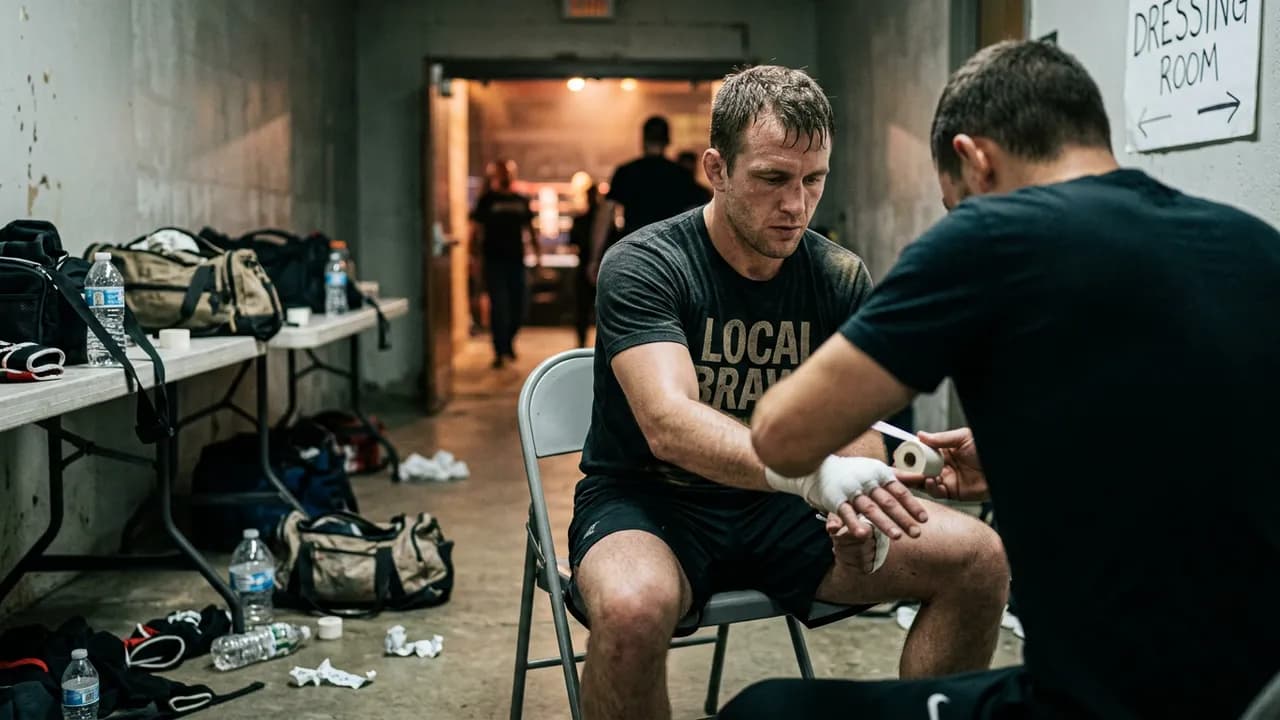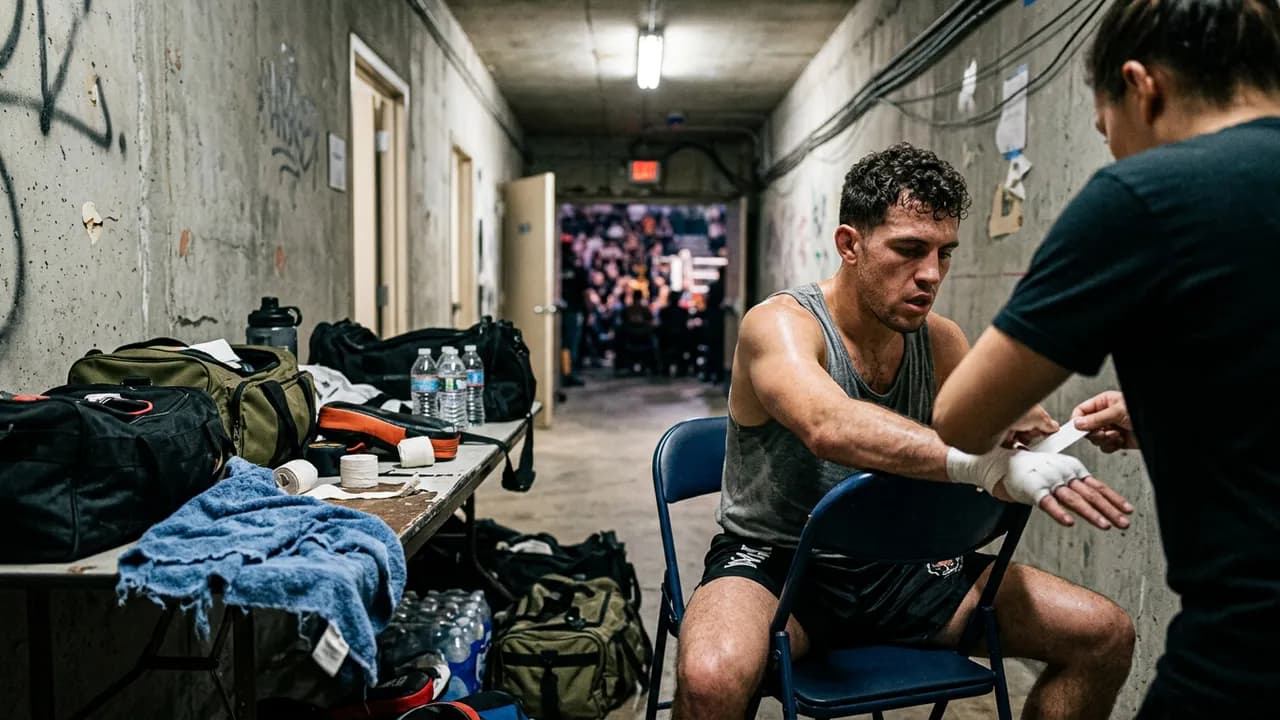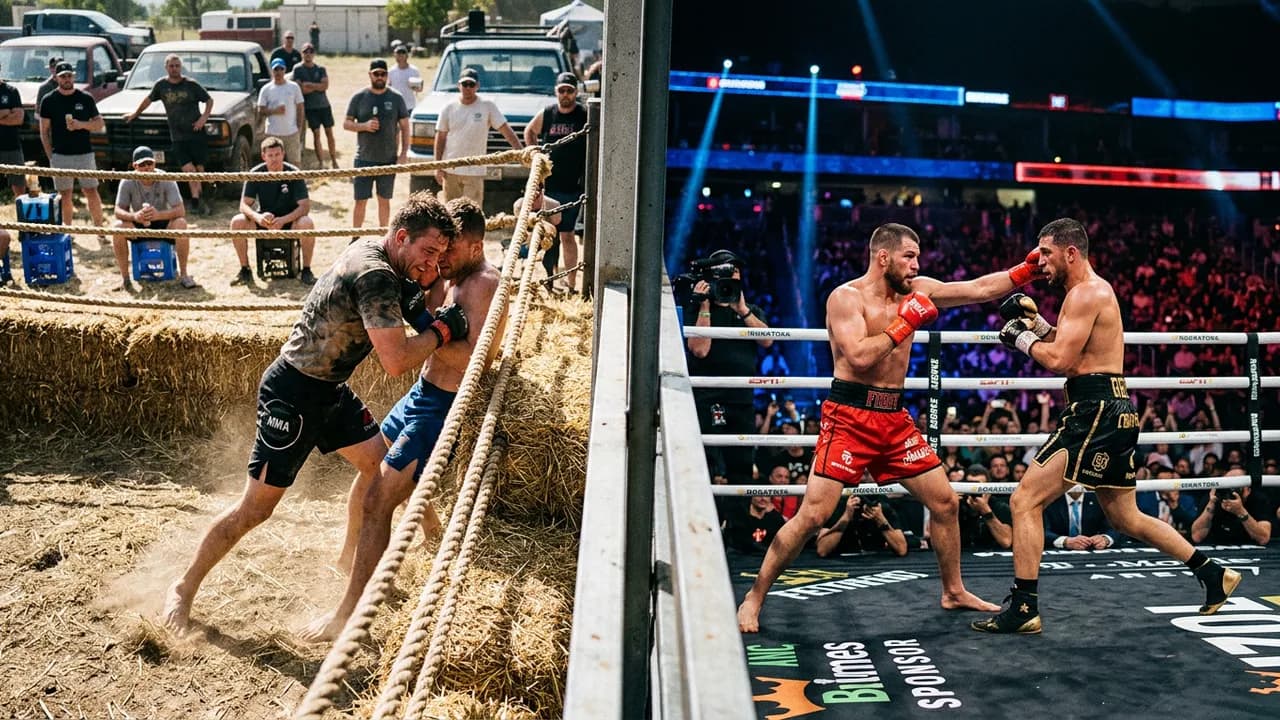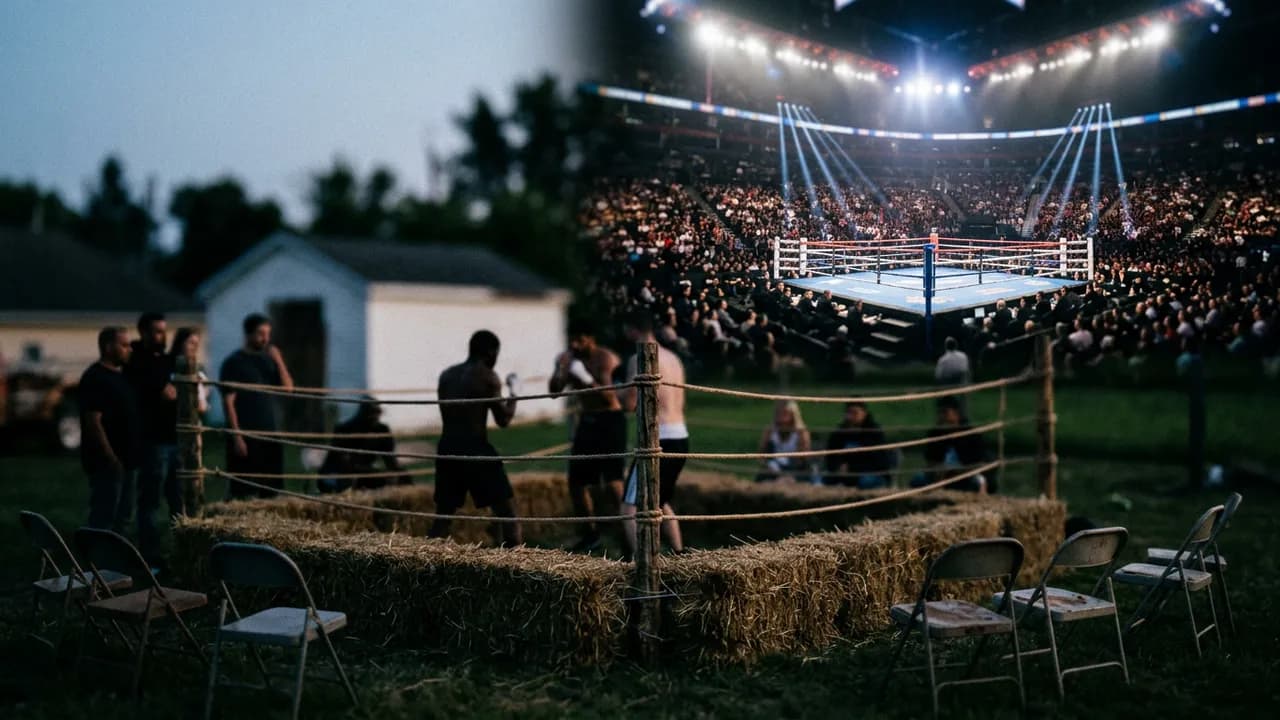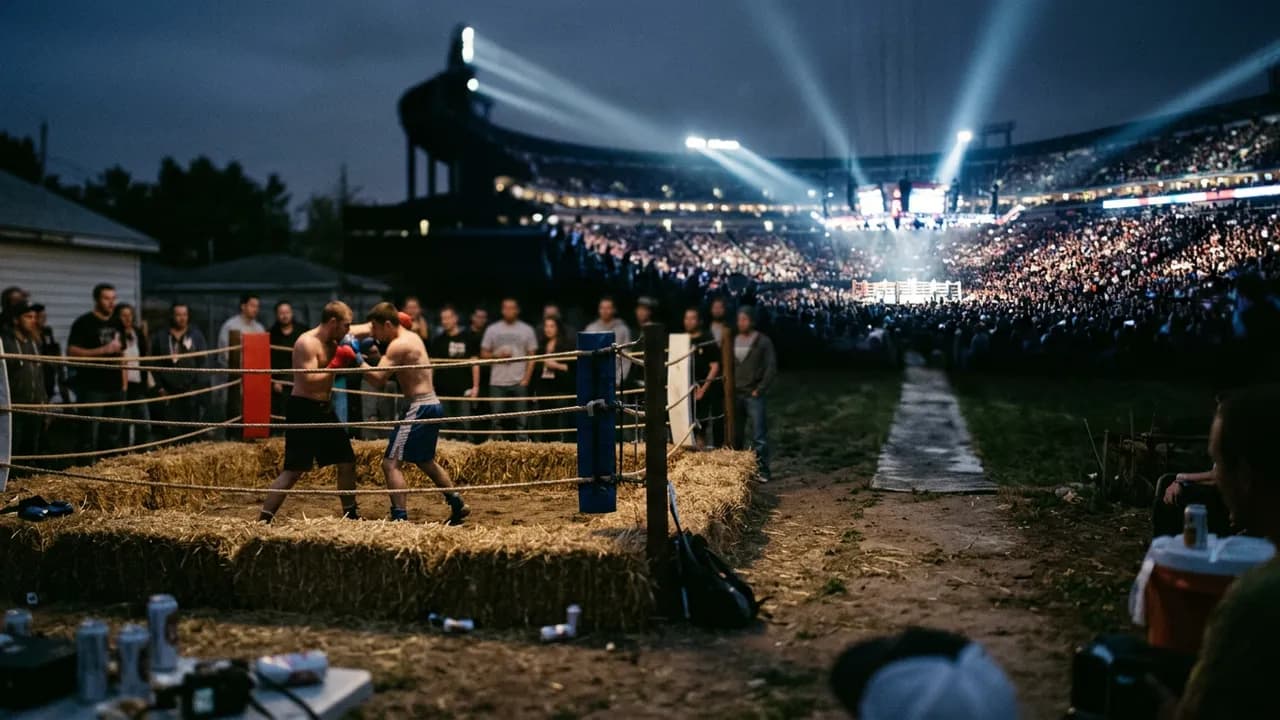
Two nations. Two fight cultures. Two organizations that gave ordinary people a place to fight and, in doing so, built two of the most-watched combat sports channels on the internet. Streetbeefs, the Virginia-based backyard fighting operation, and Strelka, the Russian sand-ring fight club, are the people's promotions -- organizations where regular citizens, not professional athletes, step in and throw hands.
Together, they account for over 6.8 million YouTube subscribers and 2.6 billion combined views. Those are not underground numbers. Those are mainstream media numbers, achieved by two organizations that operate entirely outside the professional combat sports system. Comparing them reveals how the same human impulse -- the desire to test yourself physically -- manifests in two radically different national cultures.
Origins and Philosophy
Streetbeefs
Streetbeefs was founded in 2008 in Harrisonburg, Virginia by Christopher "Scarface" Wilmore. The founding philosophy is encoded in the motto: "Fists up, guns down." Wilmore built Streetbeefs as a direct response to gun violence in his community. The logic was simple: if two people have a problem, they can settle it in the yard with gloves, under rules, with a referee. Nobody gets shot. Nobody goes to prison.
Streetbeefs is deliberately not a fighting promotion. It is a conflict resolution mechanism that happens to produce fighting content. No fighters are paid. No admission is charged. These are not arbitrary constraints -- they are what keeps Streetbeefs outside Virginia's combat-sports licensing law. Under that law an unpaid fighter is an amateur (Va. Code § 54.1-828), and amateur boxing is exempt from licensing (§ 54.1-830). That is an exemption from licensing, not a permission to fight; assault law still applies.
The organization has expanded to four branches across the United States and has been profiled positively by ESPN, The New York Times, The Washington Post, The New Yorker, and HuffPost.
Strelka
Strelka was founded in 2011 in St. Petersburg, Russia and has grown into the largest fight club in the world by participant count, with over 10,000 participants across Russia and the CIS nations. The word "strelka" means a scheduled meeting or confrontation in Russian slang -- a term that perfectly captures the organization's purpose.
Strelka's philosophy is universal access to combat. The organization is open to anyone -- lawyers, truck drivers, office workers, students. There is no social mission framing. There is no anti-violence narrative. Strelka exists because Russians want to fight, and Strelka provides the structure, the venue, and the audience. The matchmakers pair fighters of equal ability, the ring is drawn in sand, and the fight begins. It is participation, not ideology, that drives the operation.
Rules and Format
| Aspect | Streetbeefs | Strelka |
|---|---|---|
| Rounds | 3 rounds (standard) | None -- continuous fighting |
| Time Limits | Timed rounds | None |
| Gloves | Yes (boxing or MMA) | None |
| Formats | Boxing, kickboxing, MMA, jiu-jitsu | Open (striking, grappling) |
| Fighting Surface | Grass, dirt, outdoor area | Sand ring |
| Weight Classes | Informal size matching | Matched by experience and size |
| Win Conditions | Decision, TKO, KO, submission | Surrender or inability to continue |
| Judges/Decisions | Yes -- rounds scored | No judges, no decisions |
| Prohibited | Biting, eye gouging, throat strikes, cursing | Basic safety rules |
| Referee | Active refereeing | Present |
| Attire | Standard fight gear with gloves | Casual |
The rule differences reflect deep cultural differences in how each country approaches organized amateur combat.
Streetbeefs is structured like a miniature sanctioned fight card. Timed rounds, scorecards, and decisions create a framework where fighters can win without finishing their opponent. The multiple format options -- boxing, kickboxing, MMA, and jiu-jitsu -- allow fighters to compete in the discipline they prefer or that both parties agree to. Gloves are mandatory, and the no-cursing rule enforces a culture of respect that extends beyond the physical combat.
Strelka is formless by design. No rounds. No decisions. No gloves. The fight continues until someone surrenders or cannot continue. This creates a fundamentally different competitive dynamic: every Strelka fight has a definitive winner determined by combat, not judging. The sand surface provides more impact absorption than concrete or hardwood but adds an unpredictable element to footwork and movement.
Scale and Audience
| Metric | Streetbeefs | Strelka |
|---|---|---|
| YouTube Subscribers | 4.39 million | 2.5 million |
| Total YouTube Views | 1.4+ billion | 1.2+ billion |
| Total Videos | 3,600+ | Thousands |
| Total Participants | Thousands (across 4 branches) | 10,000+ (across Russia/CIS) |
| Branches/Locations | 4 (VA, CA/LV, Tidewater VA, WA) | Nationwide across Russia and CIS |
| Content Frequency | Multiple uploads per week | Frequent uploads |
| Most Viral Moment | Multiple fights with millions of views | Andrei Petrantsov KO (24M views) |
The numbers are remarkably similar in scale, which is itself remarkable given how different the two countries and cultures are. Streetbeefs leads in subscribers (4.39 million to 2.5 million) and total views (1.4 billion to 1.2 billion), but Strelka leads massively in participant count. Over 10,000 Russians have fought in Strelka events, making it the largest participatory fight club on earth.
Strelka holds the distinction of being the second most-watched combat sports channel on YouTube after the UFC. That statistic is staggering -- a Russian underground fight club that rivals the production of the most powerful combat sports organization in history in terms of viewership.
Both organizations have produced viral moments. Strelka's most famous is the knockout by Andrei Petrantsov, a truck driver from Bryansk whose fight accumulated 24 million views and became a symbol of the Strelka ethos: an ordinary person capable of extraordinary violence.
Fighter Profiles
Streetbeefs Fighters
Streetbeefs fighters are everyday Americans -- construction workers, retail employees, students, military veterans from Harrisonburg and surrounding areas. The skill range spans from complete beginners to experienced amateurs. Notable fighters include:
- ATrain (Alan Stephenson) -- considered the best Streetbeefs fighter, with a 6-5 professional MMA record
- Delvin Hamlett -- undefeated 205-pound champion at 8-0
- Shinigami (Daniel Uribe) -- karate specialist, 8-2 record
- Memnon Warrior -- signed by professional management
- Beach -- considered one of the most skilled fighters in the organization
The title system requires three or more wins for contention, creating a competitive hierarchy within the amateur framework.
Strelka Fighters
Strelka fighters are ordinary Russians -- the 10,000+ participant count includes lawyers, truck drivers, office workers, and students. The matchmaking philosophy of pairing fighters by equal ability means most Strelka fighters are unknowns competing against other unknowns.
The most famous Strelka fighter, Andrei Petrantsov, was a truck driver from Bryansk. His viral knockout perfectly captures what Strelka represents: a completely anonymous person stepping into the sand and producing a moment that 24 million people wanted to watch. Petrantsov was not a trained fighter. He was a working man who threw a punch that the internet could not stop watching.
Cultural Context
Streetbeefs and American Fight Culture
Streetbeefs exists within a distinctly American cultural framework. The anti-violence mission -- fists instead of guns -- resonates in a country where gun violence is a defining social issue. The organization's legal navigation (no pay, no admission, private property) reflects the American regulatory environment where athletic commissions and liability law shape what fighting can look like.
The mainstream media acceptance of Streetbeefs reflects American society's capacity to embrace unconventional solutions to social problems when they demonstrably work. Wilmore is treated as a community leader, and Streetbeefs is covered as a social innovation rather than a fighting promotion.
Strelka and Russian Fight Culture
Strelka exists within a Russian cultural context where physical toughness and combat readiness carry deep historical and social significance. Russia's martial traditions -- from sambo to systema to the long history of organized and informal fighting -- provide a cultural foundation that makes an organization like Strelka feel natural rather than transgressive.
The sheer scale of participation -- 10,000+ fighters across the country -- suggests that Strelka tapped into something fundamental in Russian masculinity and social culture. This is not a niche interest. This is a national phenomenon with participation levels that dwarf any Western equivalent.
Safety Comparison
| Safety Factor | Streetbeefs | Strelka |
|---|---|---|
| Medical Staff | Registered nurse, trained staff | Not extensively reported |
| Gloves | Mandatory | None |
| Rounds | Timed (limits cumulative damage) | None (continuous) |
| Surface | Grass/dirt | Sand |
| Drug/Alcohol Policy | Strictly prohibited | Not publicly detailed |
| Weight Matching | Informal | Matchmaker judgment |
| Referee | Active | Present |
| Cursing Policy | Prohibited | Not restricted |
Streetbeefs provides a meaningfully safer environment. Gloves reduce hand and facial injuries. Timed rounds prevent exhaustion-related damage. The registered nurse on-site provides immediate medical response. The strict prohibition on drugs and alcohol at events further reduces risk.
Strelka's bare knuckle, no-round format is inherently more dangerous, though the sand surface absorbs impact better than concrete or hardwood. The matchmakers' commitment to equal pairings reduces the risk of one-sided beatdowns, which is a meaningful safety consideration that pure skill mismatches would amplify.
Side-by-Side Summary
| Category | Streetbeefs | Strelka |
|---|---|---|
| Founded | 2008, Virginia, USA | 2011, St. Petersburg, Russia |
| Motto | "Fists up, guns down" | N/A |
| Philosophy | Conflict resolution, anti-violence | Open participation, physical testing |
| Participants | Thousands | 10,000+ |
| YouTube Subscribers | 4.39 million | 2.5 million |
| YouTube Views | 1.4+ billion | 1.2+ billion |
| Rounds | 3 (standard) | None |
| Gloves | Yes | No |
| Surface | Grass/dirt | Sand |
| Formats | Boxing, kickboxing, MMA, BJJ | Open |
| Decisions | Yes | No (finish only) |
| Medical Staff | Nurse on-site | Not reported |
| Fighter Pay | None | Not disclosed |
| Geography | 4 US branches | Nationwide Russia/CIS |
| Cultural Framing | Social intervention | Physical culture tradition |
The Verdict
Streetbeefs and Strelka are mirror images of each other -- the same fundamental concept refracted through two vastly different national cultures.
Streetbeefs frames fighting as social medicine. Wilmore built an organization that solves a specific American problem -- gun violence in underserved communities -- by channeling aggression into controlled combat. The anti-violence mission is not just marketing; it is the legal and philosophical foundation that makes everything else work. Streetbeefs succeeds because it takes fighting seriously as a tool for community good while keeping the events accessible, respectful, and free.
Strelka frames fighting as national culture. There is no social justification, no anti-violence narrative, no media-friendly packaging. Strelka exists because Russians want to fight, and Strelka provides the sand, the ring, and the audience. The scale -- 10,000 participants, 2.5 million subscribers, 1.2 billion views -- speaks for itself. This is not a subculture. This is a mainstream cultural phenomenon operating outside the professional sports system.
Both organizations prove that ordinary people will fight if you give them a venue, and that millions of other ordinary people will watch. The American version wraps itself in a social mission. The Russian version does not bother. Both are honest. Both are massive. And between them, they have changed what "underground fighting" means globally.
For more on these organizations, see our profiles on Streetbeefs and Strelka. For how Strelka compares to Russia's professional scene, read our Strelka vs Top Dog FC breakdown.
Watch and Learn More
YouTube Channels
- Streetbeefs -- America's biggest backyard fight club (4.2M subscribers)
- Strelka / TRON MMA -- The world's biggest fight club (2.45M subscribers, 1.5B+ views)
Recommended Fights
- Streetbeefs Top 5 Knockouts -- The best from the yard
- Strelka: Petrantsov Knockout -- The viral truck driver one-punch KO (24M+ views)
Official Sites
- Strelka / TRON MMA -- Official Strelka platform
External Coverage
- ESPN: Streetbeefs Feature -- ESPN's Streetbeefs profile
Read More on UNSANCTIONED FIGHTS
- Streetbeefs Organization Profile -- Full Streetbeefs profile
- Strelka Organization Profile -- Full Strelka profile
- Top 10 Streetbeefs Fighters -- Streetbeefs' greatest
- Top Strelka Fighters and Viral Moments -- Strelka's greatest
- Andrei Petrantsov Fighter Profile -- Strelka's most iconic fighter
- Chris "Scarface" Wilmore -- Streetbeefs founder
- All Underground Fighting Organizations Ranked -- Where both rank