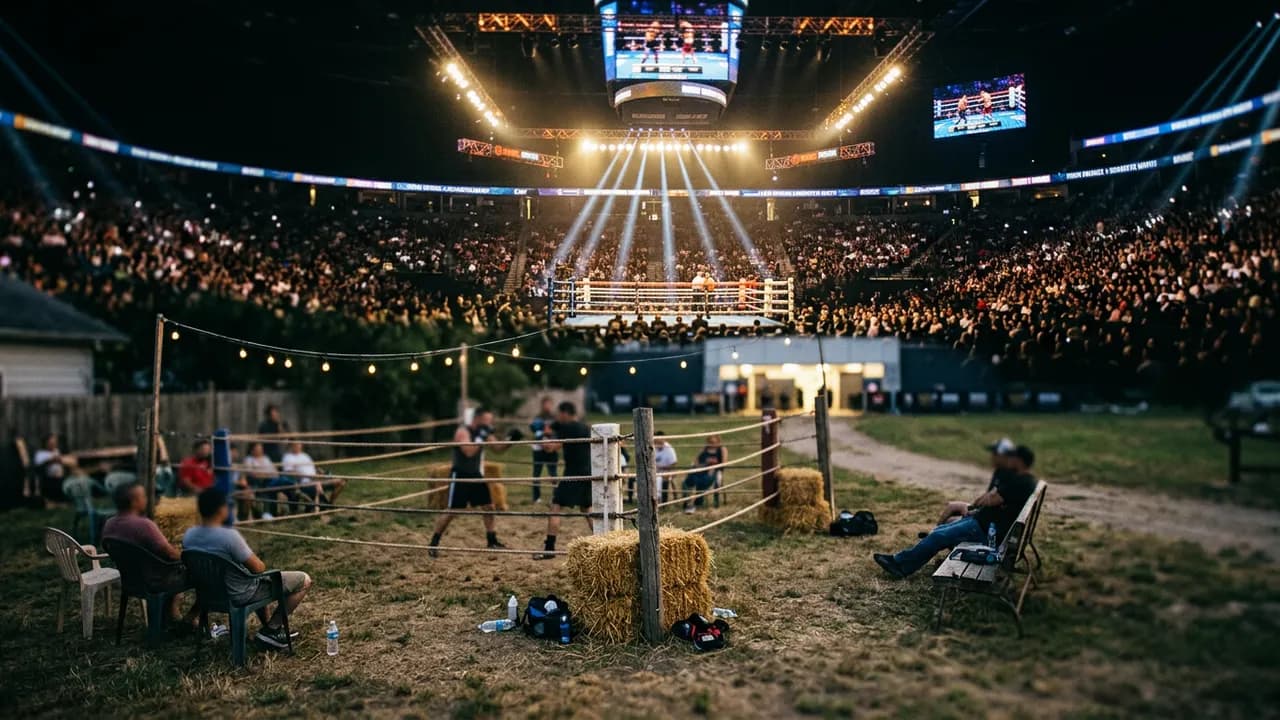
The line between entertainment fighting and professional combat sports has never been more blurred -- and nowhere is that blur more visible than in the comparison between Rough N' Rowdy and the Bare Knuckle Fighting Championship (BKFC). One is an amateur boxing show operated by a media company where untrained regular people throw haymakers for a drunk crowd. The other is the world's largest professional bare knuckle promotion, sanctioned by state athletic commissions, partially owned by Conor McGregor, and headlined by former UFC champions. They serve overlapping audiences, operate in the same American combat sports ecosystem, and could not be more different in what they actually are.
Understanding where Rough N' Rowdy ends and BKFC begins is essential for anyone following the modern American fighting landscape.
Origins and Business Model
Rough N' Rowdy
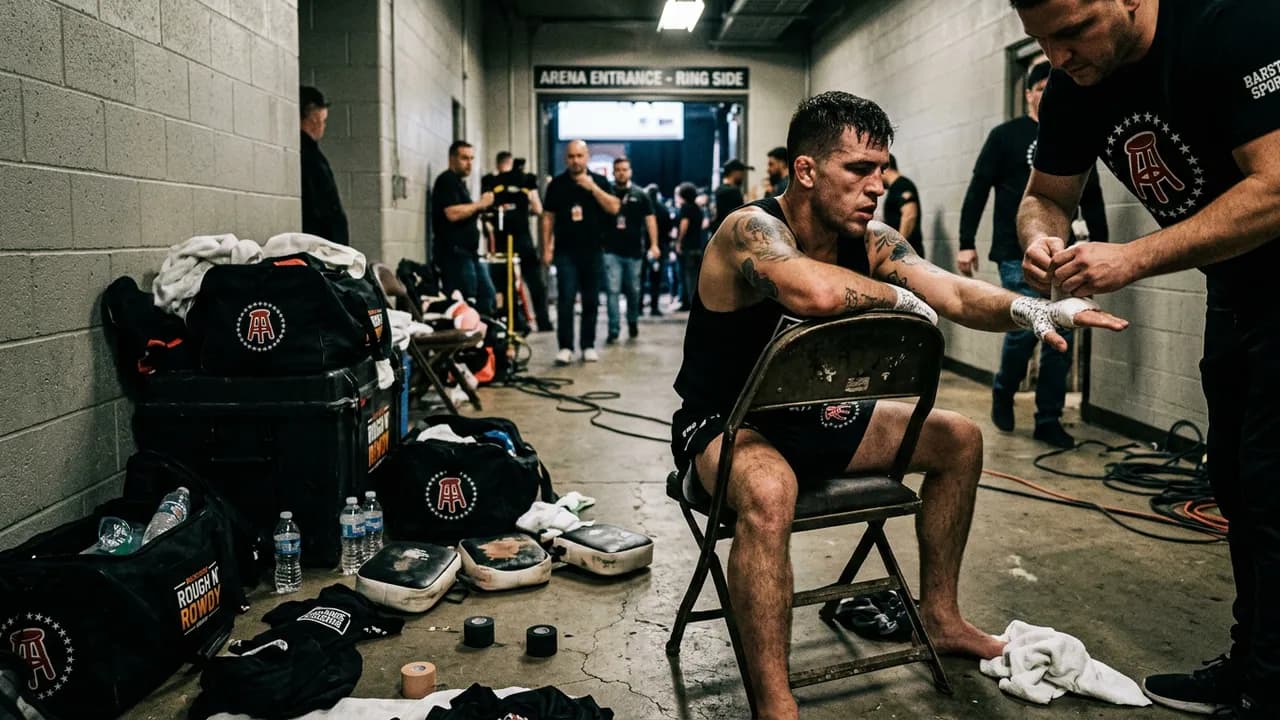
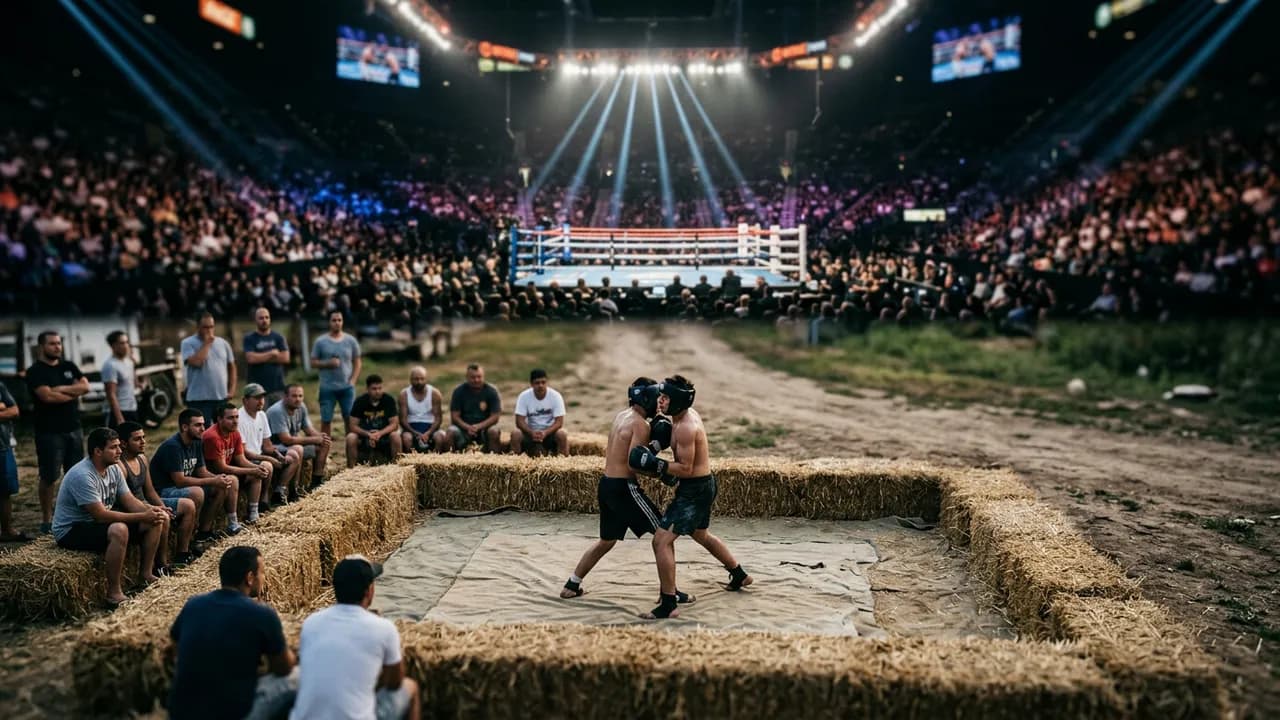
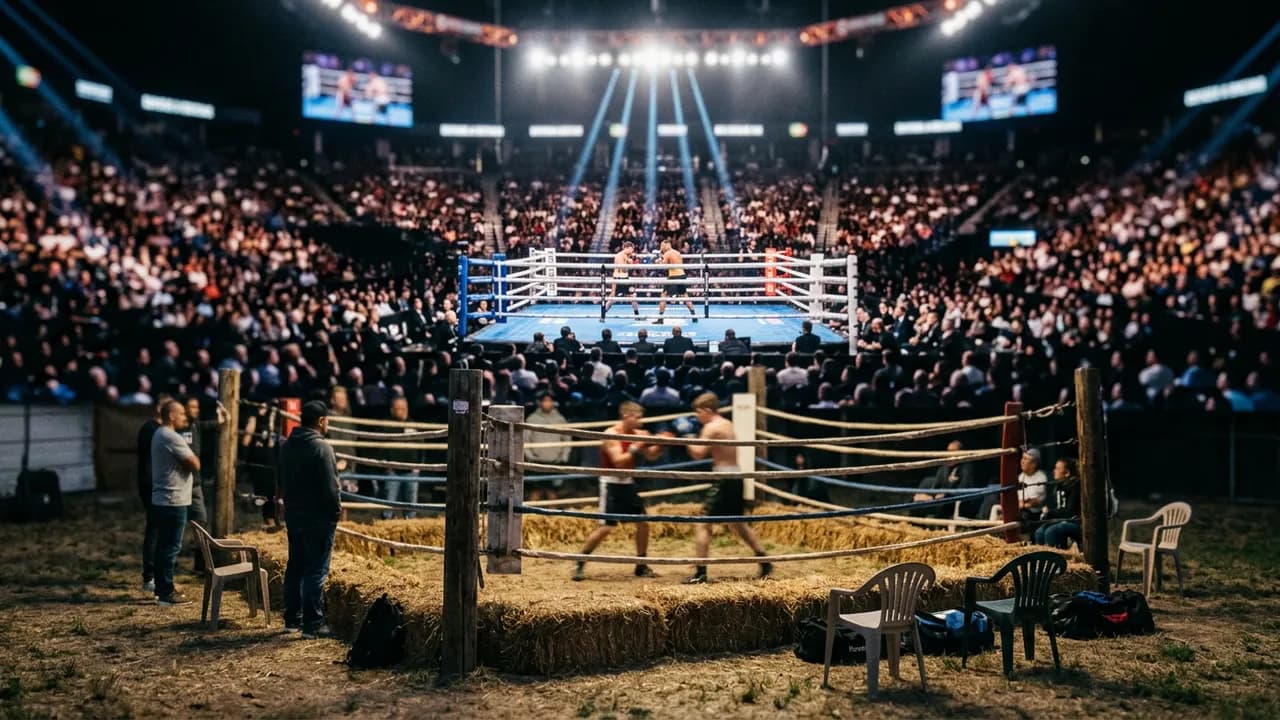
Rough N' Rowdy began as a West Virginia amateur boxing event created by Christopher MacCorkle Smith. The original concept was straightforward Appalachian entertainment: local toughmen fighting three-round amateur bouts in front of enthusiastic, often inebriated crowds. Blue-collar fighters with no training but plenty of heart.
The transformation came when Barstool Sports acquired the brand pre-2017. Dave Portnoy's media empire recognized Rough N' Rowdy as content gold -- the combination of untrained fighters, chaotic action, and comedy commentary was perfectly calibrated for Barstool's young male audience. Under Barstool's management, Rough N' Rowdy became a pay-per-view franchise priced at $19.99 per event, pulling in 41,000+ buys per event with plans for 12+ events per year touring nationally.
The business model is media-first. Rough N' Rowdy exists to generate content for the Barstool ecosystem. The fighting is real, but the presentation is entertainment.
BKFC
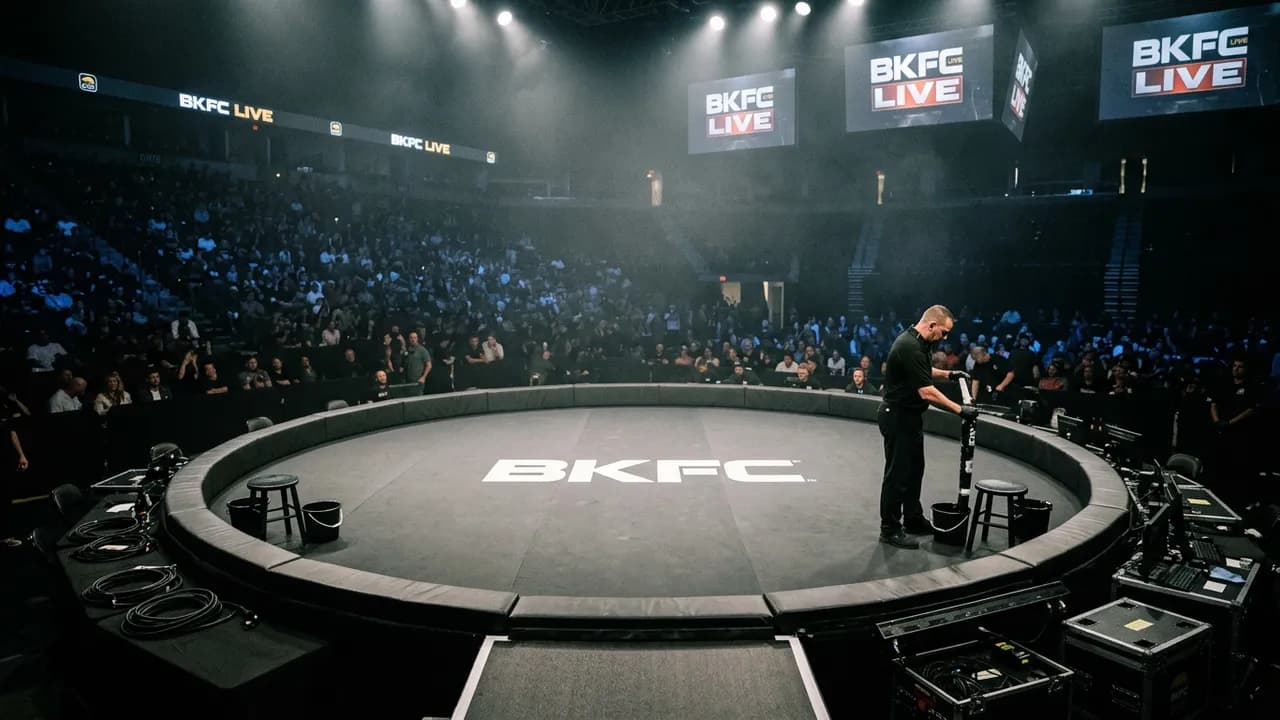
BKFC was founded in April 2018 in Philadelphia and staged the first legal bare knuckle fighting events in the United States since 1889. From its inception, BKFC pursued legitimacy through the regulatory system, obtaining sanctioning from state athletic commissions and operating under the same legal framework as professional boxing and MMA.
The legitimacy escalated in 2024 when Conor McGregor and McGregor Sports and Entertainment became part-owners. McGregor's involvement brought global media attention, social media amplification, and a level of star power that positioned BKFC as a serious force in combat sports.
BKFC's business model is professional sports. Revenue comes from pay-per-view, streaming, ticket sales, sponsorships, and the global expansion into the UK (via BKFC UK, acquired BFBA in 2022) and Asia (BKFC Thailand, 2021).
Rules and Format
| Aspect | Rough N' Rowdy | BKFC |
|---|---|---|
| Format | Amateur boxing (gloves) | Professional bare knuckle boxing |
| Rounds | 3 rounds (1 minute each) | Up to 5 rounds x 2 minutes |
| Gloves | Boxing gloves | None (hand wraps only) |
| Headgear | No | No |
| Fighting Surface | Boxing ring | Circular ring with ropes |
| Weight Classes | Informal size matching | 9 male, 3 female (formal) |
| Scoring | Judges | Three judges, 10-point must system |
| Athletic Commission | Regulated in most states | Fully sanctioned by state commissions |
| Fighters | Untrained amateurs | Professional fighters (many ex-UFC/boxing) |
| Title Fights | Novelty titles | Legitimate championship belts |
The format differences are stark. Rough N' Rowdy's one-minute rounds are designed for spectacle -- short enough that untrained fighters can go all-out without gassing completely, and short enough that boring fights never last long. The boxing gloves provide a layer of safety that allows amateurs to fight without the hand injury risk inherent in bare knuckle.
BKFC operates on a professional boxing scoring system with fights lasting up to five two-minute rounds. The absence of gloves (only hand wraps are permitted) fundamentally changes the biomechanics of the fight -- punches land harder, cut more easily, and hand injuries are a constant factor. This is professional combat sports adapted for bare knuckle, not amateur entertainment adapted for television.
Fighter Caliber
Rough N' Rowdy Fighters
Rough N' Rowdy fighters are, by design, regular people. The tagline says it all: "bar room brawlers and couch potatoes." These are coal miners, bartenders, construction workers, and office drones who sign up to fight with minimal or no training. The entertainment value comes precisely from the gap between their enthusiasm and their technique.
There are no stars in the traditional sense. Rough N' Rowdy fighters become momentary internet celebrities through wild knockouts or comically one-sided performances, but nobody builds a career through the promotion. The fighters are disposable content -- and that is not an insult, it is the business model.
BKFC Fighters
BKFC has assembled arguably the most impressive roster in bare knuckle history:
- Austin Trout -- P4P #1, former boxing world champion who has translated elite-level boxing skill to bare knuckle domination
- Mike Perry -- King of Violence champion, 4-0 in BKFC with stoppages of Julian Lane, Michael Page, Luke Rockhold, and Eddie Alvarez
- Christine Ferea -- widely regarded as the female bare knuckle GOAT, flyweight champion
- Britain Hart -- most main events in BKFC history, strawweight champion
- Luis Palomino -- two-division champion
- Eddie Alvarez, Luke Rockhold, Chad Mendes, Jeremy Stephens, Michael Page -- UFC veterans who have crossed over
The fighter caliber is not comparable. BKFC features world-class combat sports athletes. Rough N' Rowdy features people who watched YouTube to learn how to throw a jab last Tuesday.
Production and Presentation
Rough N' Rowdy
Rough N' Rowdy events are produced through the Barstool Sports lens. Commentary comes from Dave Portnoy and Big Cat (Dan Katz), who treat the proceedings as comedy content with a fighting backdrop. The crowd is a character in the show -- rowdy, often visibly drunk, and generating energy that makes even mediocre fights entertaining through atmosphere alone.
The production is professional by streaming standards but deliberately unpolished in tone. Fighters get theatrical walkouts. The ring card girls are a fixture. The between-fight content is designed to keep the PPV audience entertained even when no one is punching. This is a show first and a fight card second.
BKFC
BKFC events are produced as professional combat sports broadcasts. The production quality has escalated significantly since the McGregor acquisition, with live broadcasts reaching a polish comparable to mid-tier boxing events. The broadcast team, graphics packages, pre-fight packages, and event flow follow the template established by the UFC and major boxing promotions.
BKFC takes itself seriously because it has to. State athletic commissions, professional fighters, and championship stakes demand a production standard that matches the legitimacy of the competition. There is no comedy commentary. There are no novelty fights. This is professional fighting presented professionally.
Revenue and Business Scale
| Business Metric | Rough N' Rowdy | BKFC |
|---|---|---|
| PPV Price | $19.99 | Varies by event |
| PPV Buys (Est.) | 41,000+ per event | Varies (significant for major cards) |
| Events Per Year | 12+ (planned) | Multiple per month |
| Corporate Backing | Barstool Sports / Penn Entertainment | McGregor Sports and Entertainment |
| Fighter Pay | Payment to fighters | Professional contracts, disclosed purses |
| International | Domestic US touring | USA, UK, Thailand |
| Social Media | Barstool Sports ecosystem (massive) | 2M Instagram followers |
| Revenue Per Event | $800K+ (PPV alone) | Varies widely |
Both organizations generate serious revenue, but through different mechanisms. Rough N' Rowdy leverages the Barstool Sports audience -- a pre-built fanbase of millions who will buy the PPV because it is Barstool content, not because they follow amateur boxing. BKFC builds its audience through combat sports channels, with fighter recognition and competitive stakes driving purchases.
The revenue efficiency of Rough N' Rowdy is remarkable. With amateur fighters who cost a fraction of what professional athletes demand, and a media company that provides free promotion through its existing platforms, the margin on each event is substantial. BKFC's costs are higher -- professional fighter purses, athletic commission fees, venue costs, insurance -- but the product commands premium pricing and generates revenue from international expansion.
Safety and Regulation
| Safety Factor | Rough N' Rowdy | BKFC |
|---|---|---|
| Athletic Commission | Yes (state-regulated) | Yes (state-regulated) |
| Pre-Fight Medicals | Required | Required |
| Ringside Physician | Required | Required |
| Drug Testing | Commission-mandated | Commission-mandated |
| Gloves | Boxing gloves | None (hand wraps) |
| Fighter Experience | Amateur (minimal training) | Professional |
| Head Protection | No headgear | No headgear |
Both organizations operate under state athletic commission oversight, which mandates pre-fight physicals, licensed ringside physicians, and drug testing. This puts them in the same regulatory category despite the enormous gap in fighter caliber.
The paradox is that Rough N' Rowdy may present higher practical risk in some ways despite having gloves. Untrained fighters throw wild, unpredictable punches and have not developed defensive skills. BKFC fighters, while fighting without gloves, have professional-level defensive technique that reduces the frequency of clean, damaging blows. Training is the single greatest safety factor in combat sports, and Rough N' Rowdy explicitly features fighters without it.
Side-by-Side Summary
| Category | Rough N' Rowdy | BKFC |
|---|---|---|
| Founded | Pre-2017 (Barstool acquisition) | 2018, Philadelphia |
| Identity | Entertainment show with fighting | Professional combat sports promotion |
| Fighters | Untrained amateurs | Professional (ex-UFC, boxing crossovers) |
| Gloves | Boxing gloves | Bare knuckle (wraps only) |
| Rounds | 3 x 1 minute | Up to 5 x 2 minutes |
| Weight Classes | Informal | 9 male, 3 female |
| Ownership | Barstool Sports / Penn Entertainment | McGregor Sports and Entertainment |
| PPV Buys | 41,000+ per event | Varies |
| Commentary | Portnoy and Big Cat (comedy-driven) | Professional broadcast team |
| International | Domestic US | USA, UK, Thailand |
| Athletic Commission | Yes | Yes |
| Cultural Role | Blue-collar entertainment | Legitimate combat sports |
The Verdict
Rough N' Rowdy and BKFC are not competitors. They operate in parallel universes that happen to overlap in the American pay-per-view market.
Rough N' Rowdy is a content product built on the appeal of untrained regular people fighting. It works because Barstool Sports understood that the gap between enthusiasm and ability is inherently entertaining, and that their audience would pay $19.99 to watch coal miners throw haymakers while Portnoy cracks jokes. The business model is brilliant in its simplicity: low-cost talent, pre-built audience, high-margin PPV events, and a comedy framework that makes even bad fights watchable. Rough N' Rowdy does not need to be legitimate. It needs to be fun.
BKFC is a combat sports promotion building toward permanent legitimacy. McGregor ownership, state commission sanctioning, a deep roster of recognized professional fighters, international expansion, and championship infrastructure all point toward an organization that intends to sit alongside boxing and MMA as a sanctioned combat sport. The product is real fighting at a professional level -- Austin Trout and Mike Perry are not bar room brawlers, they are elite athletes competing in the rawest format available.
The irony is that Rough N' Rowdy might actually introduce more people to combat sports than BKFC does. A 22-year-old who buys the Rough N' Rowdy PPV because he follows Barstool may have never watched a professional fight in his life. But after watching amateur boxers flail around for three hours, he might be curious about what professional bare knuckle looks like -- and that curiosity leads directly to BKFC.
In that sense, they are not competitors. They are different floors of the same building.
For more on these organizations, see our profiles on Rough N' Rowdy and BKFC. For how BKFC compares to international bare knuckle, read our BKFC vs Top Dog FC breakdown.
Watch and Learn More
YouTube Channels
- Rough N' Rowdy -- Barstool Sports' amateur boxing series
- BKFC Official -- Professional bare knuckle fighting
Official Sites
- Rough N' Rowdy Official -- PPV event info and past cards
- BKFC Official Site -- Event schedules and streaming
Read More on UNSANCTIONED FIGHTS
- Rough N' Rowdy Organization Profile -- Full RNR profile
- BKFC Organization Profile -- Full BKFC profile
- Streetbeefs vs Rough N' Rowdy -- Another amateur vs pro comparison
- Delvin Hamlett Fighter Profile -- Streetbeefs to RNR crossover champion
- Best Bare Knuckle Promotions Ranked -- Where RNR and BKFC rank
- All Underground Fighting Organizations Ranked -- The definitive ranking