Two of combat sports' fastest-growing segments occupy different positions on the fighting spectrum but increasingly compete for the same audience. Bare knuckle fighting -- primarily through organizations like BKFC and BKB -- has surged from niche curiosity to legitimate sport with major broadcast deals. Mixed martial arts, dominated by the UFC, remains the world's most popular combat sport. For fighters, fans, and casual observers, understanding how these two worlds compare is essential.
Quick Comparison
| Feature | Bare Knuckle Fighting | MMA |
|---|---|---|
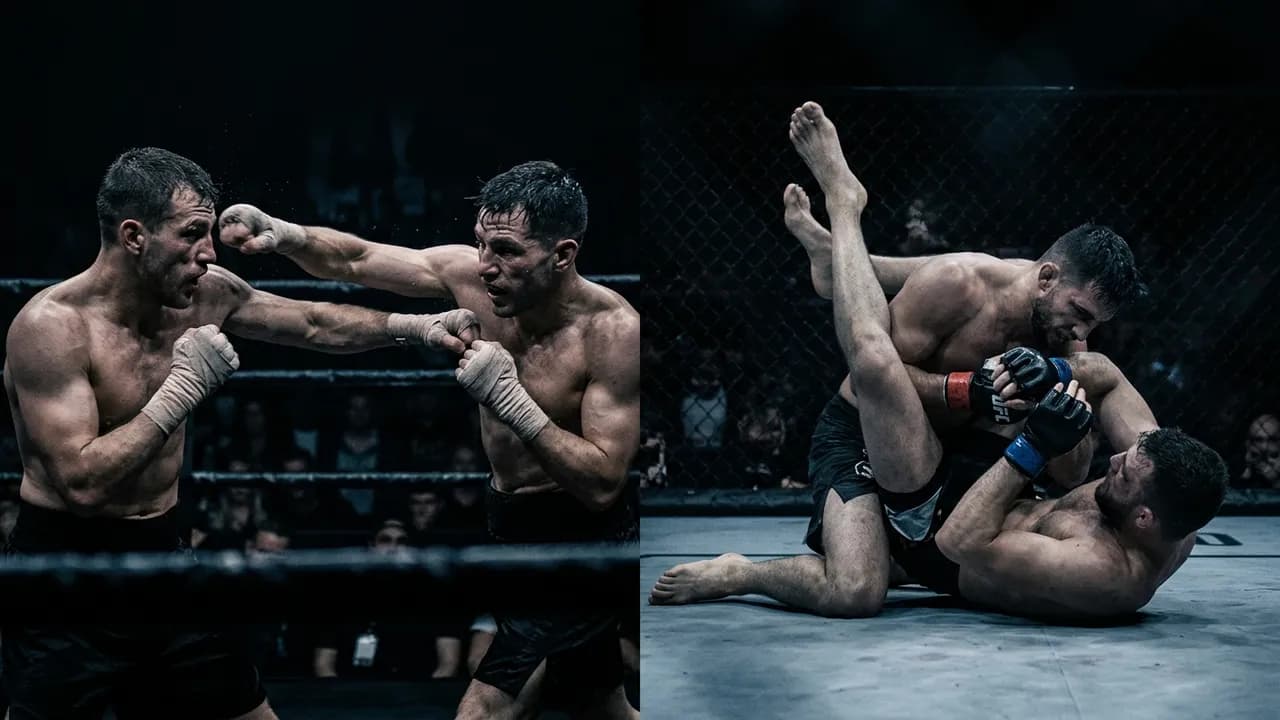
| Techniques | Punches only (boxing rules) | Striking, wrestling, grappling, submissions |
| Gloves | None (wrist wraps only) | 4 oz open-finger gloves |
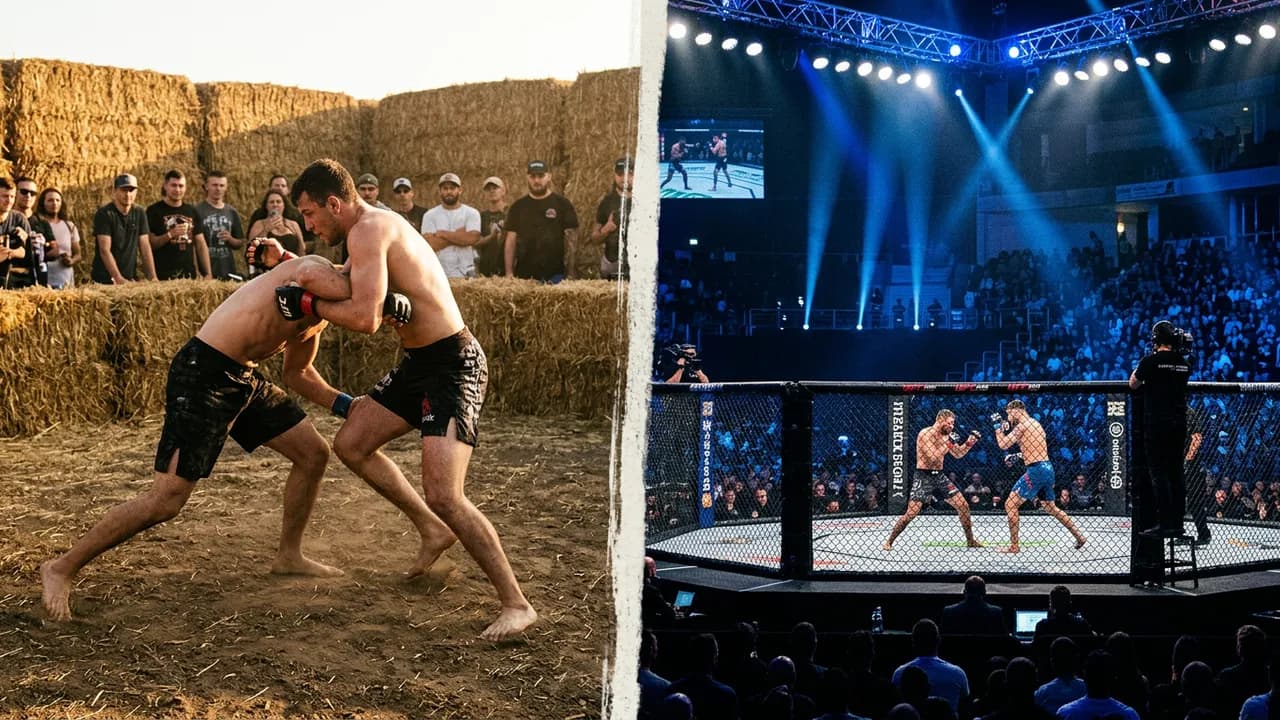
| Fighting Surface | Ring (circular or traditional) | Cage (octagon, circle, or hexagon) |
| Rounds | 2-minute rounds, typically 5 | 5-minute rounds, 3 or 5 |
| Ground Fighting | Not allowed | Central element |
| Clinch Work | Limited | Extensive |
| Major Promotions | BKFC, BKB, Gamebred BKMMA | UFC, Bellator/PFL, ONE Championship |
| Average Fight Length | 4-8 minutes | 8-15 minutes |
| Stoppage Rate | High (~60-70% finishes) | Moderate (~50-55% finishes) |
| Global Participants | Thousands | Millions |
Rules and Format
Bare Knuckle Fighting Rules
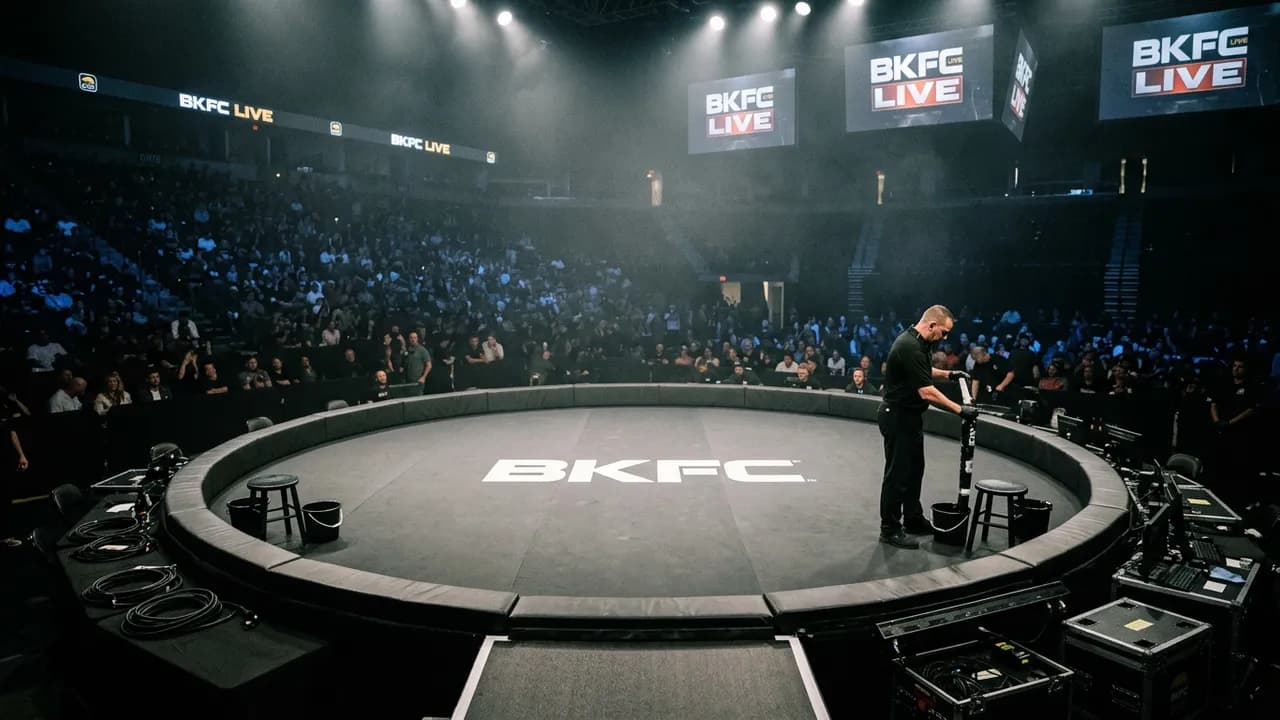
Bare knuckle fighting in its dominant form (BKFC-style) operates under modified boxing rules:
- Punches only -- no kicks, knees, elbows, or takedowns
- Bare fists with wrist wraps protecting the wrist but leaving knuckles exposed
- 2-minute rounds (shorter than boxing or MMA rounds)
- Circular ring in most promotions
- 10-count knockdown rule
- Referee stoppage for cuts, accumulated damage, or inability to continue
- Judges' decision if no stoppage
The shorter rounds and bare knuckle format create a sport that rewards explosive action over long-term strategy. Fighters know that every exchange carries knockout potential, which produces a sense of urgency absent in longer-format combat sports.
MMA Rules
MMA under the Unified Rules allows:
- Striking: Punches, kicks, knees, elbows from standing and ground positions
- Wrestling: Takedowns, clinch work, cage control
- Grappling: Submissions, positional control, ground-and-pound
- 4 oz gloves that allow grappling while providing minimal hand protection
- 5-minute rounds, three rounds standard, five for main events and title fights
- Stoppage by knockout, submission, referee stoppage, or doctor stoppage
- Judges' decision using 10-point must system
MMA's broader ruleset creates a sport where fighters must be proficient in multiple disciplines. A fighter who can only box will be taken down. A fighter who can only wrestle will be struck. This multidimensional requirement is MMA's defining characteristic.
Injury Rates and Types
This is where the comparison gets most interesting -- and most counterintuitive.
Bare Knuckle Injuries
| Injury Type | Frequency | Severity |
|---|---|---|
| Hand fractures | Very high (30-40% of fighters per event) | Moderate -- usually metacarpal breaks |
| Facial lacerations | Extremely high | Mostly superficial, some requiring stitches |
| Broken nose | Common | Moderate |
| Concussions | Present but possibly lower than gloved boxing | Varies |
| Eye injuries | Elevated risk | Can be serious |
| Body injuries | Lower (punches only) | Minor to moderate |
The hand fracture rate is bare knuckle fighting's most distinctive injury pattern. Without gloves to distribute impact and protect the metacarpals, fighters frequently break their hands on their opponents' skulls. This is not a bug -- it is an inherent feature of the sport.
Paradoxically, some research suggests that concussion rates may be lower in bare knuckle fighting than in gloved boxing. The theory: gloves allow harder punching with less personal cost, and the distributed impact transfers more energy to the brain. Bare knuckle fighters self-regulate their punching power to protect their hands, and the concentrated impact produces cuts rather than deep brain trauma. This remains debated among sports medicine professionals.
MMA Injuries
| Injury Type | Frequency | Severity |
|---|---|---|
| Concussions | Common | Varies -- can be severe |
| Facial lacerations | Common (elbows, especially) | Moderate to severe |
| Orthopedic injuries | Very common (knees, shoulders, ankles) | Often career-threatening |
| Hand injuries | Less common than BK (gloves protect) | Moderate |
| Neck injuries | Present (wrestling, submissions) | Can be serious |
| Submission injuries | Common (joint locks, chokes) | Can be severe if fighter does not tap |
MMA's orthopedic injury rate is its most significant long-term health concern. Torn ACLs, MCLs, rotator cuffs, and herniated discs are common in MMA training and competition. These injuries can require surgery and end careers. Bare knuckle fighting's injury profile, while visually dramatic (blood, cuts, swollen hands), tends to involve injuries that heal faster and are less career-threatening.
Fighter Backgrounds
Who Fights Bare Knuckle?
Bare knuckle fighters typically come from three backgrounds:
- Boxing: Former amateur and professional boxers who transition to bare knuckle for financial opportunity or because their boxing careers stalled
- MMA: Former MMA fighters -- particularly UFC veterans -- who bring striking skills and name recognition (Mike Perry, Eddie Alvarez, Jeremy Stephens, Andrei Arlovski)
- Bare knuckle specialists: Fighters who have built their careers specifically in bare knuckle organizations
The MMA-to-bare-knuckle pipeline has been BKFC's most successful recruitment strategy. UFC veterans bring built-in audiences and media coverage, and their striking skills translate effectively (though they must adjust to the absence of takedown threat and the bare knuckle dynamic).
Who Fights MMA?
MMA fighters come from virtually every combat discipline:
- Wrestling (historically the most successful base)
- Brazilian Jiu-Jitsu
- Muay Thai and kickboxing
- Boxing
- Judo and Sambo
- Karate and Taekwondo
The diversity of backgrounds is one of MMA's greatest strengths as a sport. Stylistic matchups -- wrestler vs. striker, grappler vs. brawler -- create narrative interest that pure striking sports cannot replicate.
Fighter Pay
| Level | Bare Knuckle (BKFC) | MMA (UFC) |
|---|---|---|
| Debut fighters | $2,000 - $9,000 | $12,000 - $24,000 (show + win) |
| Mid-tier | $20,000 - $30,000 | $50,000 - $150,000 |
| Top contenders | $100,000 - $300,000 | $300,000 - $1,000,000 |
| Champions/Stars | $400,000 - $1,000,000+ | $1,000,000 - $10,000,000+ |
| Sponsorship | Allowed (fighters keep 100%) | Restricted to UFC outfitting deal |
The pay gap narrows significantly when factoring in sponsorship income. BKFC allows fighters to wear their own sponsors, while the UFC restricts athletes to the official outfitting partner. For mid-tier fighters, BKFC sponsorship income can exceed what they would earn in UFC base pay.
At the very top, MMA pays dramatically more. Conor McGregor's disclosed UFC purses exceeded $30 million for major fights. No bare knuckle fighter approaches that level. But for the average fighter -- someone ranked 15th to 50th in their division -- the financial comparison is closer than most people assume.
Fan Demographics
Bare Knuckle Fans
- Age: Skews 25-45, with strong millennial representation
- Gender: Predominantly male (estimated 80-85%)
- Previous fandom: Boxing fans, MMA fans seeking more raw action, combat sports purists
- Discovery: YouTube, social media, word of mouth
- Engagement: High social media engagement, strong PPV buy rates for major events
- Values: Authenticity, toughness, "real fighting" aesthetic
MMA Fans
- Age: Broad, 18-55, with strong 18-34 demographic
- Gender: Predominantly male (estimated 70-75%), growing female audience
- Previous fandom: Diverse -- football, boxing, wrestling, martial arts
- Discovery: ESPN, broadcast TV, social media
- Engagement: Massive social media presence, event attendance, fantasy leagues
- Values: Skill, athleticism, competition, narratives/storylines
The bare knuckle audience is a subset of the broader combat sports audience. Most bare knuckle fans also follow MMA, but many MMA fans have not yet discovered bare knuckle fighting. This represents significant growth potential for bare knuckle promotions.
Career Path and Longevity
Bare Knuckle Career Path
The typical bare knuckle career is shorter than an MMA career:
- Enter the sport in mid-20s to early 30s (often after boxing or MMA career)
- Active competition window of 3-7 years
- Hand injuries often dictate retirement timeline
- Limited pathway beyond fighting (coaching, commentary emerging)
- Growing but still limited developmental infrastructure
MMA Career Path
MMA offers a more structured career pathway:
- Begin training in teens, amateur competition in early 20s
- Regional promotions to national/international organizations
- Active competition window of 8-15 years for many fighters
- Post-career options: coaching, commentary, gym ownership, acting
- Established developmental systems (DWCS, regional circuits)
- Growing media opportunities for retired fighters
The Verdict
Bare knuckle fighting and MMA serve different needs within the combat sports ecosystem. MMA is the more complete sport -- testing a wider range of fighting skills across a broader canvas. Bare knuckle fighting is the more focused product -- distilling combat to its most elemental form and producing a visceral viewing experience that MMA's complexity sometimes dilutes.
For fighters, MMA offers better pay at the top, more career longevity, and a clearer developmental path. Bare knuckle fighting offers an alternative for boxers and MMA veterans, supplemental income through sponsorships, and a growing platform that rewards toughness over technical breadth.
For fans, the choice is not either/or. The best combat sports fans follow both, appreciating MMA's strategic depth and bare knuckle fighting's raw simplicity. Both sports are growing, and their coexistence enriches the broader combat sports landscape.
For related comparisons, see Bare Knuckle vs Gloved Boxing, BKFC vs BKB, and Underground Fighting vs Sanctioned Combat Sports.
Watch and Learn More
YouTube Channels
- BKFC Official -- Full fights and event replays from the world's largest bare knuckle promotion
- Gamebred Bareknuckle MMA -- Jorge Masvidal's bareknuckle MMA promotion bridging both worlds
Recommended Fights
- Mike Perry vs Luke Rockhold (BKFC) -- UFC veteran crossover showcasing the BK vs MMA transition
- Top Dog FC Best Knockouts -- Raw bare knuckle power on display
Official Sites
- BKFC Official Site -- Event schedules, fighter roster, PPV access
- BKFC Streaming -- Watch BKFC events live
Read More on UNSANCTIONED FIGHTS
- BKFC Organization Profile -- Complete breakdown of the world's biggest bare knuckle promotion
- Gamebred Bareknuckle MMA -- The first professional bareknuckle MMA promotion
- Top 10 BKFC Fighters of All Time -- The greatest bare knuckle boxers ranked
- P4P Bare Knuckle Rankings -- Current pound-for-pound standings
- Underground Fighting vs Professional MMA -- How the underground differs from the mainstream
- All Underground Fighting Organizations Ranked -- Every org from 23 to 1