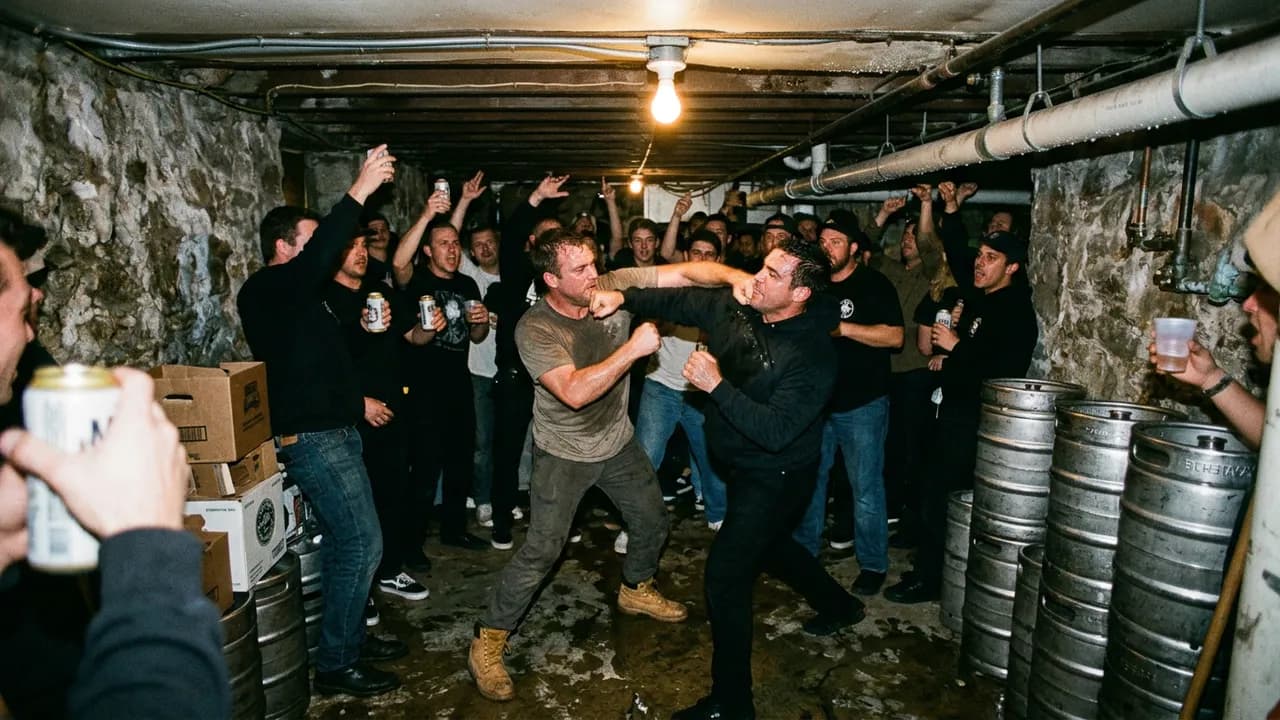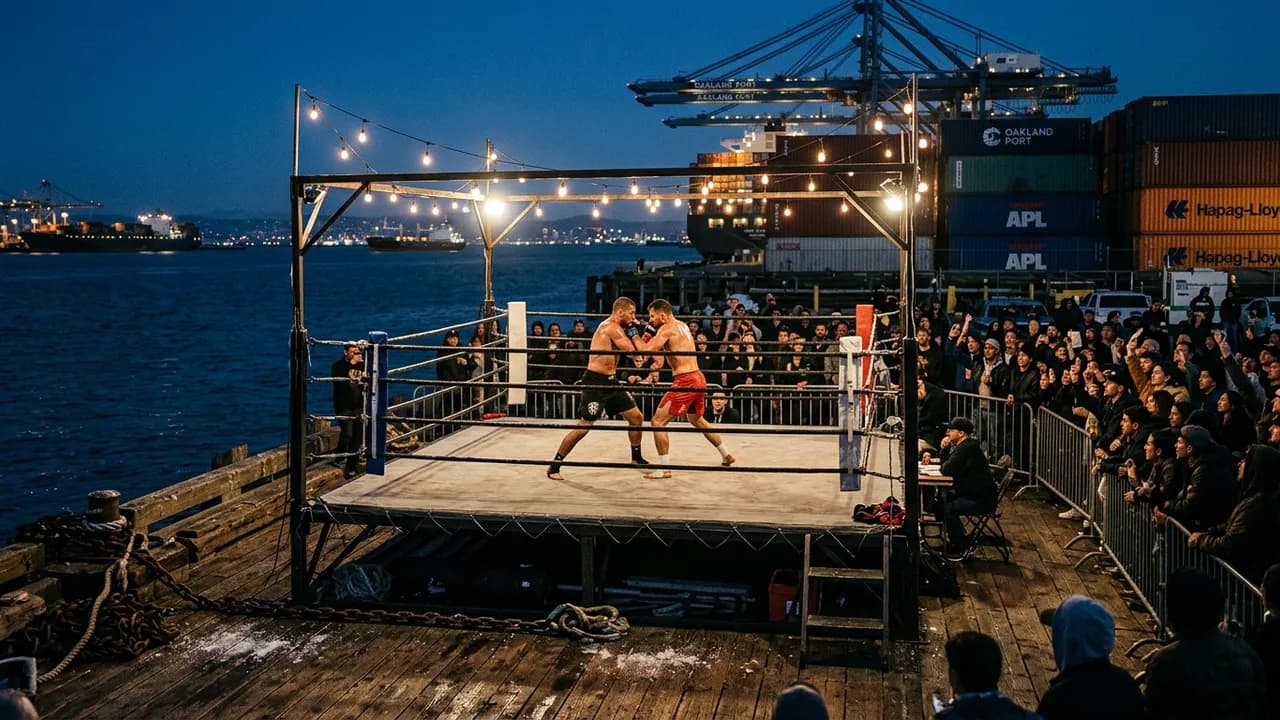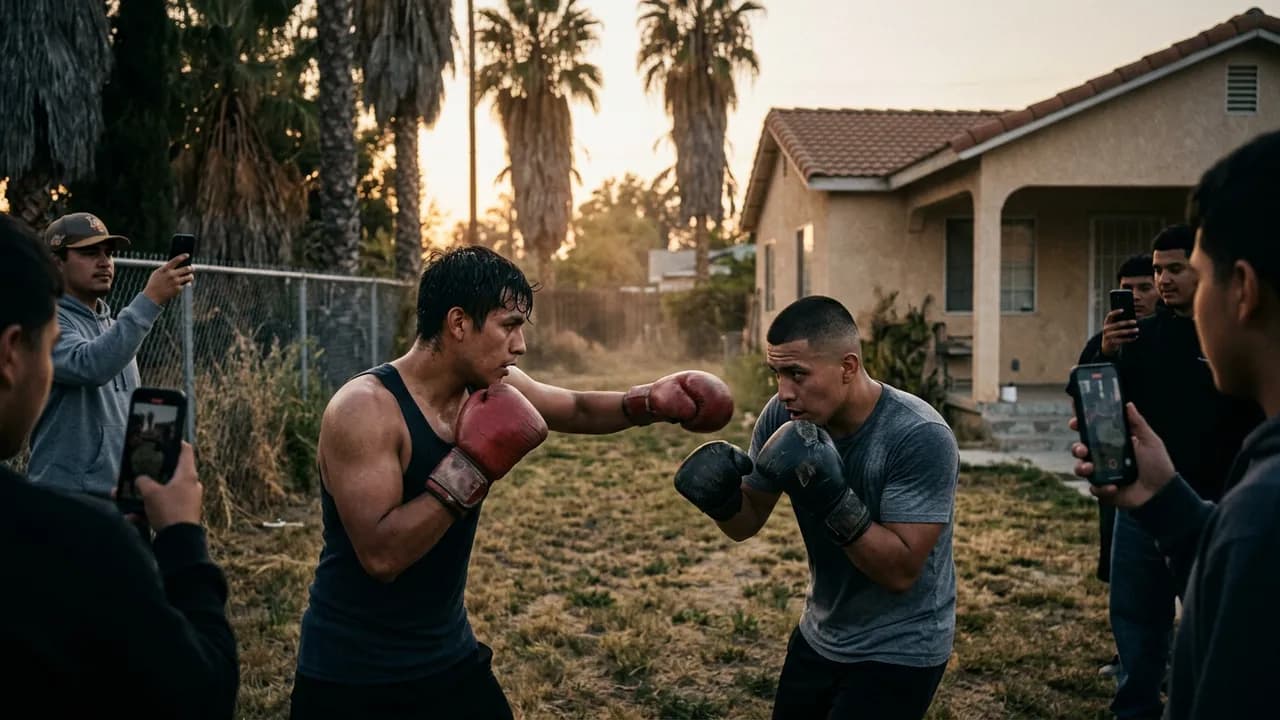
San Diego does not have a single named underground promotion the way Gothenburg has King of the Streets or the French Riviera has FPVS. What it has instead is one of the deepest legitimate fight ecosystems in the United States, and an informal backyard-boxing culture that grows in the spaces around it. The underground here is less a secret society and more an overflow channel: people who train at world-class gyms, or who can't get a sanctioned bout, settle things in driveways, garages, and Tijuana-adjacent border towns.
History
San Diego's combat-sports identity was built on sanctioned competition, not the underground. The city and surrounding county host a dense cluster of elite gyms, and its proximity to the Mexican border put it on the boxing map for most of the last century. Tijuana, twenty minutes from downtown, ran fight cards when American commissions were restrictive, and fighters and trainers crossed the line in both directions for decades.
That legitimate base is the important context. Where there are thousands of trained boxers, kickboxers, and grapplers, there is always a layer of competition that never reaches a commission. Backyard boxing in Southern California predates the social-media era, but smartphone video turned private grudge matches into shareable content during the 2010s. The same wave that produced Backyard Squabbles up the coast in Los Angeles ran through San Diego's suburbs and inland communities, though the city never produced a single dominant branded promotion the way LA did.
Organizations
There is no documented standing underground organization headquartered in San Diego, and this page will not invent one. The scene is better described by its formats than its brands.
Backyard boxing
The most common form of unsanctioned fighting in the region is amateur-style backyard boxing: gloves, sometimes headgear, often agreed rounds, recorded on phones and posted to social platforms. It mirrors the model that Backyard Squabbles formalized in Los Angeles after its 2020 founding by Damian Gutierrez and Joshua Brito. San Diego fights tend to be looser and more local, organized through group chats and word of mouth rather than under a promoter's banner.
Border-region cards
San Diego's underground cannot be separated from the border. Informal and semi-formal fight events in Tijuana and the broader Baja region pull in San Diego fighters and spectators. These sit in a gray zone outside California's regulatory reach, and details are rarely documented publicly. Treat any specific claim about them as unconfirmed.
The gym overflow
A large share of San Diego's informal fighting is simply hard sparring that escalates, or grudge matches between members of rival gyms. The city's MMA and boxing community is large enough that these settle-it sessions happen regularly without ever being branded or promoted.
Legal status
In California, prizefighting and any boxing, kickboxing, or MMA contest must be sanctioned by the California State Athletic Commission (CSAC). An unsanctioned fight staged for a crowd, for money, or as a promoted event is illegal, and organizers can face prosecution. This is the same legal framework that governs the rest of the state, including the scene around Los Angeles.
The honest nuance: a backyard scuffle between two consenting adults with no admission charge and no promotion sits in murkier territory than a ticketed event, and enforcement in practice focuses on injury, money, and publicity rather than the act of two people agreeing to box. That is not a legal endorsement. People have been seriously hurt in unregulated bouts with no doctor, no commission, and no insurance, and California law does not recognize consent as a defense when serious bodily harm results.
For anyone wanting the fighting without the legal exposure, San Diego's sanctioned amateur circuit and its USA Boxing clubs are accessible and well-run.
Where the action is
San Diego's underground does not cluster in a single neighborhood. The pattern follows the county's geography: backyard events in the inland and South Bay residential areas where lot sizes are bigger, gym-rivalry fights wherever two competing camps sit close together, and border-region activity to the south. Nothing here is a fixed venue, and locations move by design.
The legitimate scene is far easier to point to. The county's boxing gyms, jiu-jitsu academies, and MMA camps are the social spine that the informal scene grows out of, and most underground fighters are first and foremost gym members.
How to find it (and the safer route)
Underground fights in San Diego surface the same way they do elsewhere: through trusted contacts inside the local gym and combat-sports community, not through public listings. Outsiders asking around will get nowhere, which is the point.
The safer and far more accessible path is the sanctioned one. San Diego's amateur boxing and MMA scene gives anyone who wants to compete a regulated, insured, doctor-supervised place to do it. For readers drawn to the unsanctioned end of the spectrum, the documented organizations elsewhere in the world tell the story better than anything reliably running in San Diego: the West Coast backyard model in Los Angeles, the bare-knuckle promotions clustered in Miami, and the long-running club-fight culture of the East Bay Rats up in Oakland.
FAQ
Is there a famous underground fight club in San Diego? No documented standing promotion is based in San Diego. The scene is informal backyard boxing and gym-rivalry fights rather than a single branded organization.
Is backyard boxing legal in San Diego? Promoted or ticketed unsanctioned fights are illegal under California's CSAC framework. Even an unpromoted backyard bout carries real legal and medical risk, because California does not accept consent as a defense for serious injury.
Where do San Diego fighters compete legally? Through CSAC-sanctioned cards and the local USA Boxing amateur circuit, supported by the county's large network of boxing and MMA gyms.