Every underground fighting organization exists under the same shadow: the possibility that someone will die. It has not happened often enough to shut down the industry, but it has happened often enough that anyone who follows the space closely knows the shadow is real. The question is not whether underground fighting is dangerous -- that is self-evident to the point of absurdity. The question is how dangerous it actually is, what we know about the specific incidents that have occurred, and what the data says about the relative risks of fighting with and without institutional safety infrastructure.
This article is a factual accounting. It examines the known incidents of death and serious injury in underground and bare-knuckle fighting, the safety records of major organizations, the medical realities of fighting without gloves, and the structural factors that make unregulated combat more dangerous than its sanctioned counterpart. It does not argue that underground fighting should be banned, nor does it argue that it is safe. It presents what is known and lets the evidence speak.
The Medical Realities of Bare-Knuckle Combat
What Happens When Fists Meet Faces Without Gloves
The most common misconception about bare-knuckle fighting is that the absence of gloves makes it more dangerous than gloved combat. The reality is more nuanced, and the medical evidence supports a counterintuitive conclusion: bare-knuckle fighting may produce less brain damage than gloved boxing, while producing more superficial injuries.
Boxing gloves do not protect the person being hit. They protect the hands of the person throwing the punch. A padded glove allows a fighter to hit the skull at full force without breaking their hand -- something that bare-knuckle fighters cannot do without risking metacarpal fractures. The result is that bare-knuckle fighters throw fewer full-force blows to the head, and the blows they do throw deliver less cumulative force to the brain than the padded, consequence-free head shots that gloved boxing encourages.
This does not mean bare-knuckle fighting is safe. It means the injury profile is different:
Facial lacerations: Far more common in bare-knuckle than gloved combat. Bare knuckles cut skin more readily than padded gloves, resulting in the dramatic bleeding that characterizes bare-knuckle bouts. These injuries are visually alarming but rarely life-threatening.
Hand fractures: Extremely common. The human hand was not designed to strike the human skull repeatedly at full force. Metacarpal fractures, boxer's fractures, and other hand injuries are endemic to bare-knuckle fighting and can cause lasting functional impairment.
Concussions: Present in any combat sport. The rate and severity relative to gloved boxing is debated, with some medical researchers arguing that bare-knuckle fighting produces fewer concussions per bout due to the reduced head-targeting that hand vulnerability creates.
Orbital fractures, nasal fractures, and dental injuries: Common across all combat sports but particularly prevalent in bare-knuckle formats where facial contact is frequent and unpadded.
The Danger of No Regulation
The medical difference between bare-knuckle fighting and underground fighting is the difference between a controlled risk and an uncontrolled one. Sanctioned bare-knuckle fighting -- as practiced by BKFC, BKB, and other regulated promotions -- operates under medical protocols: pre-fight medical examinations, ringside physicians, ambulance access, mandatory suspensions after knockouts, and post-fight medical evaluations.
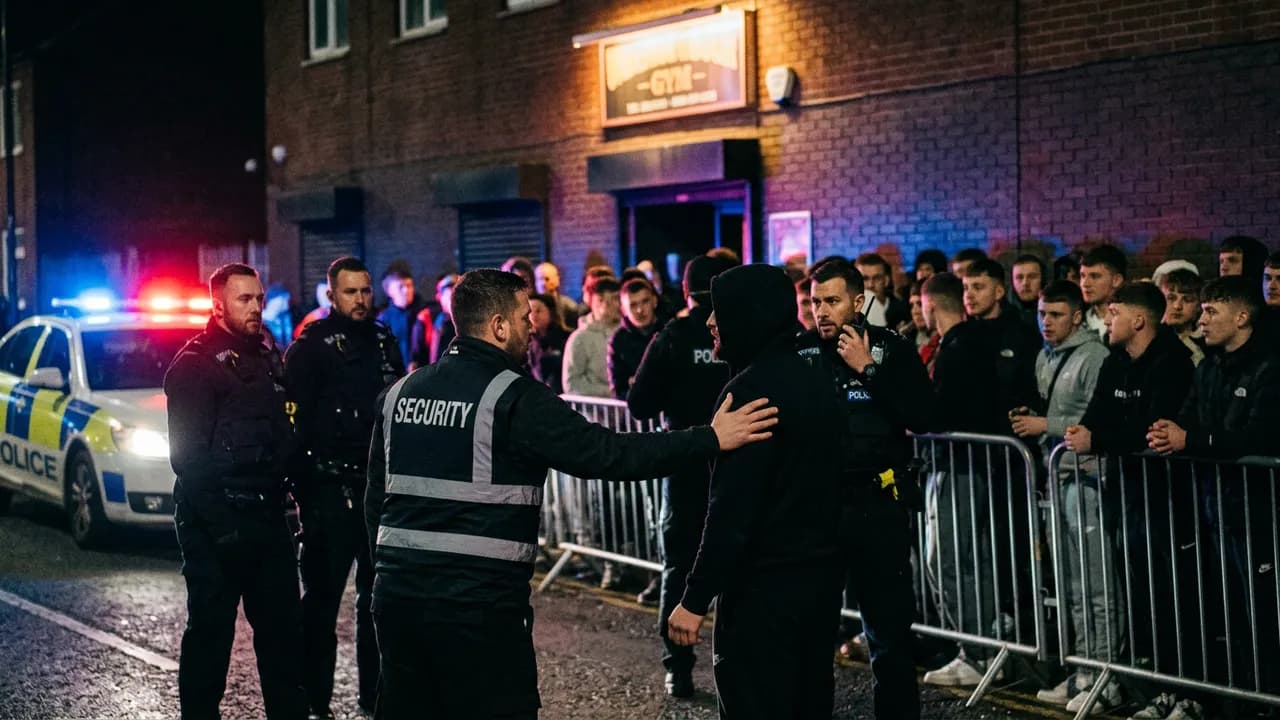
Underground fighting, by definition, lacks some or all of these protections. The degree of medical infrastructure varies enormously across the underground spectrum:
- Streetbeefs employs basic safety measures: supervised fights, protective gear options, and the presence of experienced personnel who can recognize when a fight should be stopped.
- Strelka uses referees and has moved toward basic medical screening, but operates in outdoor venues without the medical infrastructure of sanctioned events.
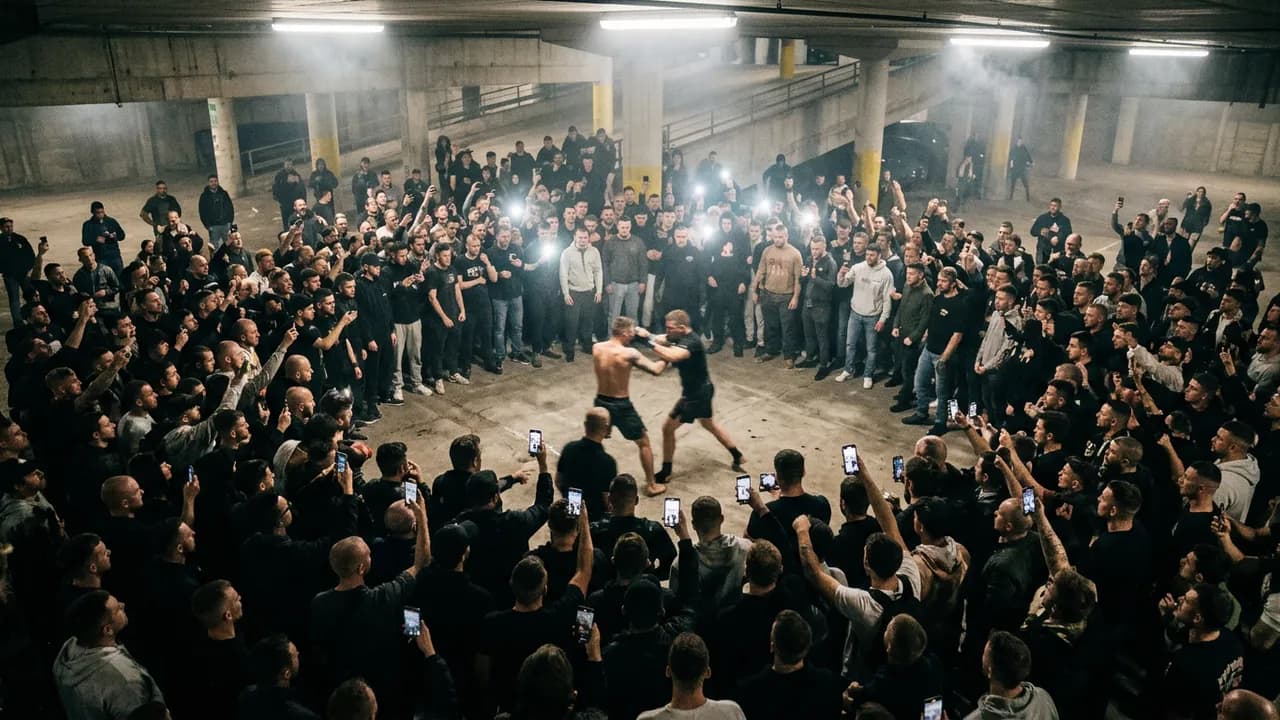
- King of the Streets fights on concrete with no gloves and minimal safety infrastructure, representing the most dangerous end of the organized underground spectrum.
- Unorganized street fights and informal backyard brawls exist entirely outside any safety framework.
The risk gradient is clear: the further a fighting operation moves from institutional oversight, the higher the probability that a preventable injury becomes a catastrophic one.
Known Incidents: The Documented Record
The Dada 5000 Cardiac Arrest (2016)
The most high-profile medical emergency in the overlap between underground and sanctioned fighting involved Dada 5000 (Dhafir Harris), the Miami backyard fighting figure who had built his reputation in the same Perrine, Florida, scene that produced Kimbo Slice.
On February 19, 2016, at Bellator 149 in Houston, Texas, Dada 5000 fought Kimbo Slice in a sanctioned MMA bout.
On February 19, 2016, at Bellator 149 in Houston, Texas, Dada 5000 fought Kimbo Slice in a sanctioned MMA bout. The fight itself was not an underground event -- it was broadcast on Spike TV and sanctioned by the Texas Department of Licensing and Regulation. But both fighters had roots in the underground scene, and the bout was a product of a rivalry born in Miami's backyard fighting culture.
During the third round, Dada 5000 collapsed in the cage. He was clinically dead -- suffering cardiac arrest and renal failure. Medical personnel revived him, and he was transported to the hospital where he spent several days in intensive care. He survived, but the incident was a stark demonstration of the medical risks inherent in combat sports, even within the regulated framework of a sanctioned event.
The Dada 5000 cardiac arrest was caused by a combination of factors: extreme dehydration from weight cutting, the physical stress of the fight itself, and underlying medical conditions that a more thorough pre-fight medical evaluation might have identified. The incident revealed the limitations of even sanctioned medical protocols when fighters engage in dangerous weight-cutting practices and when pre-fight screening fails to identify risk factors.
For the underground fighting community, the Dada 5000 incident served as a warning about the consequences of inadequate medical infrastructure. If a fighter could die in a sanctioned event with medical personnel present, the risks in an unsanctioned setting -- without physicians, without ambulance access, without any medical screening -- were exponentially higher.
Deaths in Unsanctioned Fighting
Documenting deaths in underground fighting is inherently difficult because the unregulated nature of the activity means that incidents are frequently unreported, misclassified, or obscured by the participants' desire to avoid legal consequences. The available record is therefore incomplete, and the true number of deaths in underground fighting is almost certainly higher than what has been publicly documented.
What is known:
Street fights resulting in death occur regularly in jurisdictions worldwide, though these are generally classified as assaults or homicides rather than sporting events. The distinction between an "underground fight" and a "street fight" is often semantic -- when two people agree to fight informally and one dies, the legal system treats it as a crime regardless of whether the participants considered it a sport.
Organized underground events resulting in death are rarer but not unknown. The Felony Fights video series, which operated in the early 2000s and featured inmates and ex-convicts fighting in brutal, unregulated bouts, produced numerous serious injuries and represented the absolute nadir of underground fighting's safety spectrum.
Bare-knuckle fighting deaths in the sanctioned era are extremely rare. BKFC, the largest sanctioned bare-knuckle promotion, has staged over 142 events through December 2025 without a fighter death -- a safety record that, while partially attributable to the medical infrastructure of sanctioned events, also suggests that the sport's injury profile may be less lethal than critics assume.
The Kimbo Slice Death (2016)
Kimbo Slice (Kevin Ferguson) died on June 6, 2016, at the age of 42, from heart failure. While his death was not directly caused by fighting -- it occurred outside the ring, and the official cause was a myocardial infarction complicated by liver failure and a mass on his heart -- the connection between his fighting career and his death is impossible to ignore entirely.
Kimbo had spent years absorbing punishment in backyard fights, underground bouts, and professional competitions. The cumulative physical toll of that career, combined with the steroid use that was widely suspected and eventually confirmed by post-Bellator drug testing (Kimbo tested positive for nandrolone after his final Bellator fight), contributed to the physical deterioration that preceded his death.
Kimbo's death was not classified as a fighting death, and it should not be. But it illustrates the long-term health risks that fighters in all combat sports -- sanctioned and unsanctioned -- face. The man who proved that underground fighting could go viral died at 42 with a damaged heart.
Safety Records of Major Organizations
BKFC: The Sanctioned Benchmark
BKFC's safety record represents the best-case scenario for bare-knuckle fighting. Over 142 events and hundreds of bouts, the promotion has maintained a zero-fatality record. This is attributable to the full complement of sanctioned safety infrastructure: pre-fight medical examinations, ringside physicians, ambulance on standby, mandatory medical suspensions after knockouts, and state athletic commission oversight.
03 / Up next / Streetbeefs: The Community Model
BKFC's injury rate for cuts and hand fractures is higher than gloved boxing, consistent with the bare-knuckle format. But the severity of injuries -- measured by hospitalizations, career-ending injuries, or life-threatening emergencies -- has been comparable to or lower than professional boxing and MMA, supporting the argument that bare-knuckle fighting's injury profile is different rather than categorically worse.
Streetbeefs: The Community Model
Streetbeefs' safety record, while not subject to athletic commission reporting requirements, has been remarkably positive given the scale of its operations. Over more than 3,600 recorded fights across seventeen years, the organization has not produced a documented fatality. Serious injuries have occurred -- broken bones, concussions, significant cuts -- but the rate of catastrophic injury has been low relative to the volume of fights.
Several factors contribute to Streetbeefs' safety record: the use of protective gear (gloves, headgear in some formats), the presence of Wilmore and experienced personnel who recognize when fights should be stopped, the structured rules that govern each discipline, and the organizational culture that prioritizes fighter safety over spectacle.
Strelka: The Mass-Participation Risk
Strelka's safety profile is more difficult to assess. With over 10,000 participants and thousands of recorded bouts, the organization has operated at a scale where the law of large numbers suggests that serious injuries have occurred. The sand ring provides meaningful cushioning, and referees are present to stop fights, but the absence of pre-fight medical screening, the lack of medical personnel at many events, and the no-rounds format that allows fights to continue through exhaustion create elevated risk.
Strelka has not reported any fighter deaths, but the decentralized nature of its operations -- with events staged across Russia and the CIS by local organizers -- means that the central organization may not have full visibility into every incident that occurs under its banner.
KOTS: The High-Risk End
King of the Streets represents the highest safety risk profile among major organized underground fighting operations. Fights on concrete, without gloves, with no rounds and minimal rules, create conditions where a knockout on a hard surface could easily produce a catastrophic brain injury. The organization's operational security -- which prevents disclosure of venues, participants, and incidents -- means that any injuries that occur are unlikely to be publicly reported.
The absence of documented fatalities at KOTS events does not mean they have not occurred. It means that the operational security that protects the Hype Crew from law enforcement also prevents public accounting of the organization's safety record. This opacity is itself a safety concern: without transparency, there is no accountability, and without accountability, there is no mechanism for safety improvement.
The Structural Problem: Why Underground Fighting Cannot Be Made Fully Safe
What Regulation Provides
The safety gap between sanctioned and unsanctioned fighting is not primarily a gap in rules or equipment. It is a gap in infrastructure. What sanctioned combat sports provide that underground fighting does not includes:
Pre-fight medical screening: Blood tests, cardiac evaluation, neurological assessment, and medical history review that can identify fighters who are at elevated risk for catastrophic injury. A fighter with an undiagnosed heart condition who enters a Strelka sand ring or a KOTS concrete surface has no medical safety net.
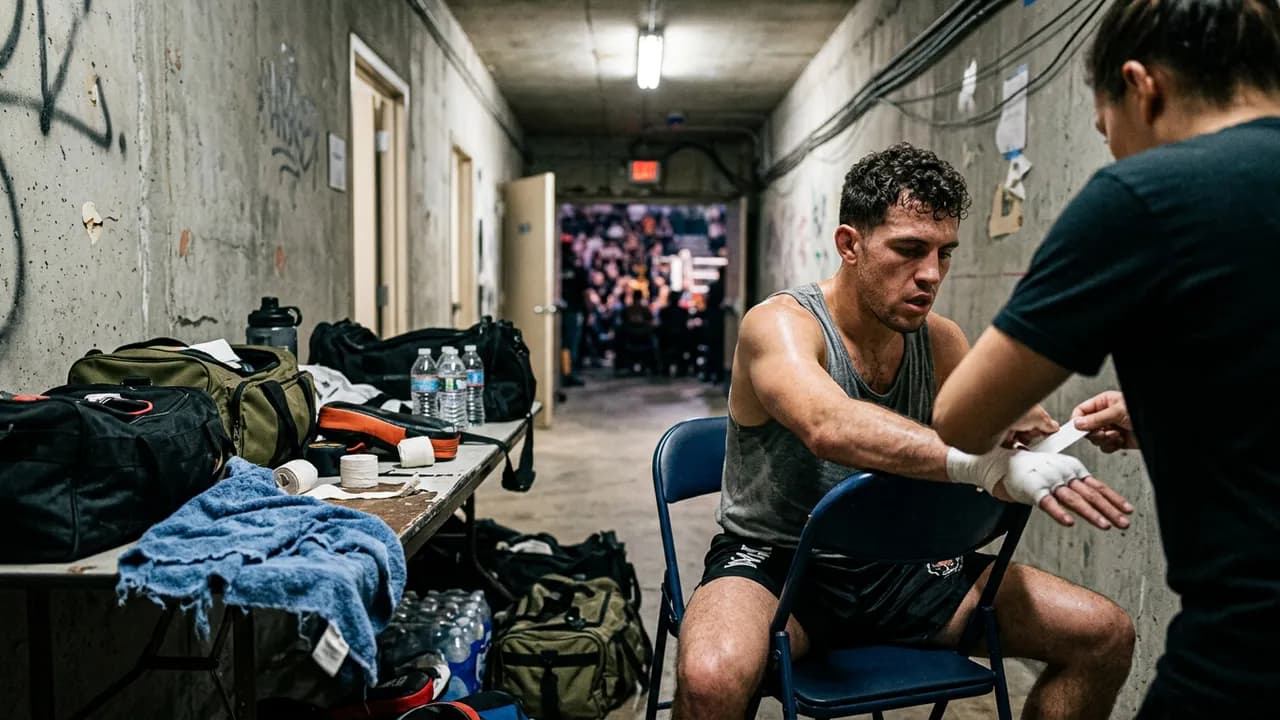
Ringside medical personnel: A physician whose sole function is to monitor fighters for signs of serious injury and intervene when necessary. In underground fighting, this role is usually filled by the referee or other non-medical personnel whose judgment is informed by experience rather than medical training.
Emergency medical access: Ambulance on standby, with a predetermined route to the nearest hospital. Underground events, particularly those held in secret locations, may be far from medical facilities, and the time between a catastrophic injury and professional medical intervention may be the difference between life and death.
Post-fight medical evaluation: Mandatory medical examination after the fight, including assessment for concussion, internal bleeding, and other injuries that may not be immediately apparent. Underground fighters typically leave the event without medical evaluation, and injuries that require treatment may go undiagnosed until they become emergencies.
Mandatory medical suspensions: Sanctioned fighters who are knocked out receive mandatory suspension periods during which they cannot compete, allowing the brain to recover. Underground fighters face no such restrictions and may compete again within days or weeks of sustaining a concussion.
What Cannot Be Fixed
Even with improvements, underground fighting will always carry risks that sanctioned fighting does not. The fundamental nature of unregulated combat -- the absence of institutional oversight, the variability of safety measures across different organizations and events, and the practical impossibility of ensuring consistent medical infrastructure at events that are, by design, conducted outside official channels -- creates an irreducible baseline of risk.
04 / Up next / The Uncomfortable Numbers
This is not an argument for banning underground fighting. Prohibition has never eliminated demand for combat; it has only pushed it further underground, where the risks are even higher. It is an argument for honesty about the risks -- for fighters, fans, and organizers to understand what they are accepting when they participate in an activity that operates outside the safety infrastructure of regulated sports.
The Uncomfortable Numbers
What Data Exists
Comprehensive safety data for underground fighting does not exist. There is no sanctioning body collecting injury reports, no medical journal publishing longitudinal studies of underground fighters, and no regulatory authority tracking outcomes. What exists are fragments: individual incident reports, anecdotal evidence from fighters and organizers, and the safety records of specific organizations that choose to maintain and disclose them.
The available data suggests the following patterns:
- Fatality rates in sanctioned bare-knuckle fighting appear to be very low, comparable to or lower than professional boxing and MMA. BKFC's zero-fatality record over 142+ events is the strongest available evidence.
- Fatality rates in organized underground fighting are unknown but presumed to be higher than sanctioned fighting, given the absence of medical infrastructure.
- The most common serious injuries in bare-knuckle and underground fighting are hand fractures, facial fractures, and concussions. These injuries are painful and potentially career-impacting but rarely life-threatening.
- The most dangerous conditions are fights on hard surfaces (concrete, asphalt) without gloves, where a knockout can produce skull impact with a surface that provides zero cushioning. KOTS-style concrete fighting represents the highest-risk format in organized underground fighting.
What Data Does Not Exist
The most important safety data -- the data that would allow a meaningful assessment of underground fighting's actual risks -- does not exist because the activity is, by definition, unmonitored. Nobody is tracking:
- The total number of underground fights that occur globally
- The total number of injuries, by type and severity
- The long-term neurological outcomes of underground fighters
- The correlation between specific safety measures and injury rates
- The comparative risk profiles of different formats, surfaces, and rulesets
Without this data, any comprehensive assessment of underground fighting's safety profile is necessarily incomplete. What can be said with confidence is that the risk is real, the consequences can be severe, and the fighters who accept those risks do so with imperfect information about what they are accepting.
Living With the Risk
The underground fighting industry operates in a space where risk is the product. The danger is not a bug -- it is the feature that attracts fighters, audiences, and the algorithm alike. Fighters choose to participate knowing the risks. Audiences watch because the stakes are real. And organizations build their brands on the raw authenticity that comes from genuine, unfiltered danger.
None of that changes the fact that people get hurt. That hands break and faces split and brains concuss and hearts, on rare and terrible occasions, stop beating. The record of deaths and serious injuries in underground fighting is shorter than critics might expect but longer than anyone involved wants it to be.
The fighters who step into sand rings, hay bale circles, and concrete surfaces do so with their eyes open. Whether society should let them, regulate them, or look the other way is a question that every country answers differently. What is not debatable is that the risks are real, the safety infrastructure is incomplete, and the gap between what is and what should be is measured in injuries that did not have to happen.
The underground fighting industry's relationship with risk is its defining characteristic. It is what makes the fights compelling. It is also what makes them dangerous. Those two things are not separable, and any honest discussion of underground fighting must hold both of them in view at the same time.