Every combat sports promotion has an origin story. The UFC started with an argument about which martial art was best. BKFC started with a boxing promoter who believed gloves had stolen something essential from the sport. Streetbeefs started with a man who wanted to stop shootings.
Top Dog Fighting Championship started with a pandemic. And a parking lot.
In early 2020, as COVID-19 shuttered gyms, canceled sporting events, and left Russia's combat sports community with nothing to do, nowhere to go, and an enormous reservoir of pent-up aggression, an amateur fighter named Danil "Regbist" Aleyev began organizing bare-knuckle fights in parking lots around Moscow. Six years later, Top Dog FC is the first and largest bare-knuckle boxing promotion in Eastern Europe, staging sold-out shows at Moscow's CSKA Arena, attracting crossover events with global celebrities, and commanding an international audience that reaches far beyond Russia's borders.
The speed of that ascent -- from improvised parking lot brawls to professional arena shows in less than three years -- is one of the most remarkable growth stories in combat sports history. And it was made possible by a convergence of pandemic conditions, cultural timing, and one man's vision for what bare-knuckle fighting could become.
The Parking Lot Era: Early 2020
When the World Stopped, Fighting Started
The COVID-19 pandemic created a unique set of conditions that were catastrophic for most of the world and paradoxically perfect for launching an underground fighting promotion.
Russia's combat sports infrastructure -- the gyms, the training camps, the sanctioned events -- shut down along with everything else in early 2020. Professional fighters lost their income. Amateur competitors lost their training venues. The entire ecosystem of organized combat, from the biggest MMA promotions to the smallest boxing clubs, went dormant.
But the desire to fight did not go dormant. If anything, the lockdowns intensified it. Boredom, frustration, economic stress, and the loss of physical outlets combined to create a population of young Russian men who were looking for somewhere to channel their energy. The gyms were closed. The bars were closed. The streets were empty. A parking lot was available.
Danil Aleyev recognized both the need and the opportunity. A competitive amateur fighter himself, Aleyev understood the pent-up demand for combat sports content and participation. He began organizing bare-knuckle bouts in Moscow parking lots, filming them, and uploading the footage online.
The Format Takes Shape
Even in the parking lot era, Aleyev brought a level of intentionality that distinguished his operation from the dozens of other amateur fight videos being uploaded during the pandemic. Several elements were established from the beginning and would become defining features of the Top Dog brand:
Bare knuckle: Fighters competed without gloves, wearing only hand wraps. This was not simply an economic decision driven by equipment unavailability. It was an aesthetic and philosophical choice that aligned with the Russian fighting tradition and created a visual product that was more raw, more intense, and more immediately compelling than gloved combat.
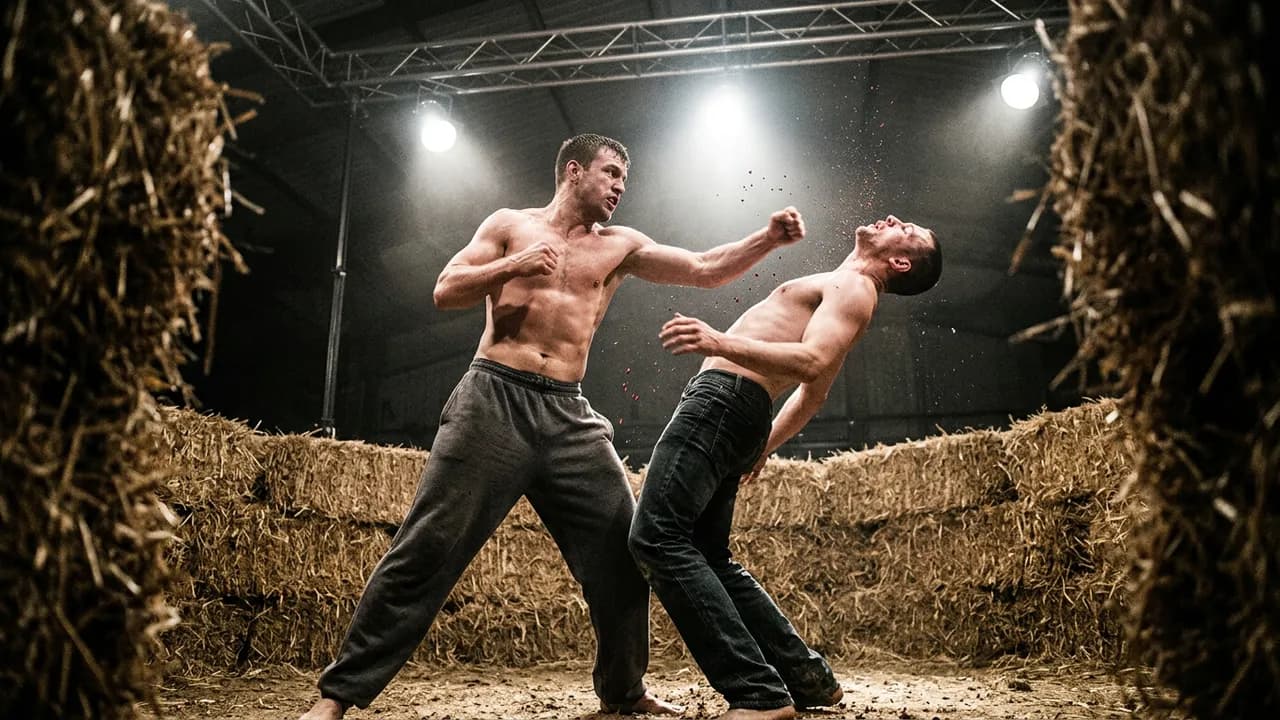
The hay bale ring: The iconic hay bale ring -- fighters competing in a circle defined by stacked hay bales -- became Top Dog's visual signature almost immediately. The hay bales served a practical function (delineating the fighting area), a safety function (providing a softer boundary than walls or fences), and a branding function (creating an instantly recognizable visual that set Top Dog apart from every other fighting operation on the planet).
Casual dress code: Fighters competed in jeans, sweatpants, or whatever they wore to the event. No uniforms, no specialized fighting attire. This visual choice reinforced the rawness of the product and lowered the barrier to entry -- anyone could walk into a parking lot and fight. No equipment required.
Production quality: Even the earliest Top Dog videos showed attention to camera placement, lighting, and editing that exceeded the typical amateur fight upload. Aleyev understood that the content was the product, and the product needed to look good.
The Algorithm Rides to the Rescue: 2020 - 2021
Why Top Dog Went Viral
Top Dog's early content hit YouTube at a moment of maximum receptivity. The pandemic had created a content vacuum -- professional sports were canceled, entertainment productions were halted, and audiences were consuming digital content at unprecedented rates. Into this vacuum, Top Dog delivered exactly what the algorithm wanted: fresh, high-engagement fight content with a distinctive visual identity.
By mid-2021, Top Dog was experiencing the kind of viral growth that transforms a hobby into a business.
The hay bale ring was a critical factor in algorithmic success. In YouTube's recommendation sidebar, where thumbnails compete for attention in a fraction of a second, the image of two fighters facing off inside a circle of hay bales was immediately distinctive. It did not look like a UFC event, a Streetbeefs backyard, or a Strelka sand ring. It looked like nothing else on the platform, and that visual distinctiveness drove click-through rates that the algorithm rewarded with more recommendations.
The no-gloves format amplified engagement further. Bare-knuckle fighting is more visceral and visually dramatic than gloved combat -- the impact of bare fists, the visible damage, the faster knockouts. Viewers watched to the end because the fights were shorter and more intense, driving the completion rates that YouTube interprets as quality signals.
By mid-2021, Top Dog was experiencing the kind of viral growth that transforms a hobby into a business. Reuters covered the phenomenon, noting how Russian bare-knuckle fight nights had found a massive American audience -- viewers discovering Top Dog through YouTube's recommendation engine despite the language barrier, drawn by the universal appeal of the format.
The International Audience
One of the most significant aspects of Top Dog's pandemic growth was the composition of its audience. While the content was Russian-language, the appeal transcended language entirely. Fight content communicates through action, not dialogue. A knockout in a hay bale ring does not require subtitles.
American viewers constituted a substantial portion of Top Dog's growing audience, drawn to the format through YouTube's cross-language recommendation system. European, Latin American, and Asian viewers followed. The international audience growth was organic and algorithm-driven -- Top Dog did not market to American audiences, did not produce English-language content, and did not actively pursue international viewers. The algorithm simply identified fight content enthusiasts worldwide and served them Top Dog videos alongside content from Streetbeefs, KOTS, and other fight channels.
This international audience would prove crucial to Top Dog's commercial development, providing a viewership base that justified the investment in production upgrades, venue improvements, and the professional infrastructure that would transform the promotion from a parking lot operation into an arena show.
The Professionalization: 2021 - 2023
From Parking Lot to Arena
Aleyev's most consequential decision was his refusal to stay underground. While many pandemic-era fighting operations remained at the amateur, parking-lot level, Aleyev deliberately and systematically professionalized Top Dog FC, treating it not as a content gimmick but as a legitimate combat sports promotion.
The professionalization happened rapidly:
Weight classes: Top Dog introduced six weight classes to ensure competitive balance. This moved the promotion from the open-weight chaos of Strelka -- where any two people could fight regardless of size -- to a structured competitive framework that produced fairer matchups and more compelling bouts.
Championship structure: Title fights and championship belts were introduced, creating narrative continuity across events. Fans could follow champions, track records, and anticipate title matchups -- the same structural elements that drive engagement in boxing, MMA, and professional wrestling.
Round structure: Unlike Strelka's no-rounds format, Top Dog implemented a three-round format (five for championship bouts) with two-minute rounds. This provided rest periods, allowed for corner advice, and created a familiar competitive structure for audiences accustomed to traditional combat sports.
Production upgrades: Camera quality, multiple angles, professional commentary, graphics packages, and post-production editing all improved rapidly. By 2022, Top Dog's broadcast quality was comparable to mid-tier professional boxing or MMA promotions, a dramatic upgrade from the parking lot-era footage.
Venue upgrades: The migration from parking lots to indoor venues and eventually to CSKA Arena -- a major Moscow sports venue -- represented the physical manifestation of Top Dog's growth. Staging events at CSKA Arena positioned Top Dog alongside Russia's most prestigious sporting events and provided the infrastructure (seating, lighting, sound, backstage facilities) that professional-grade events require.
The CSKA Arena Moment
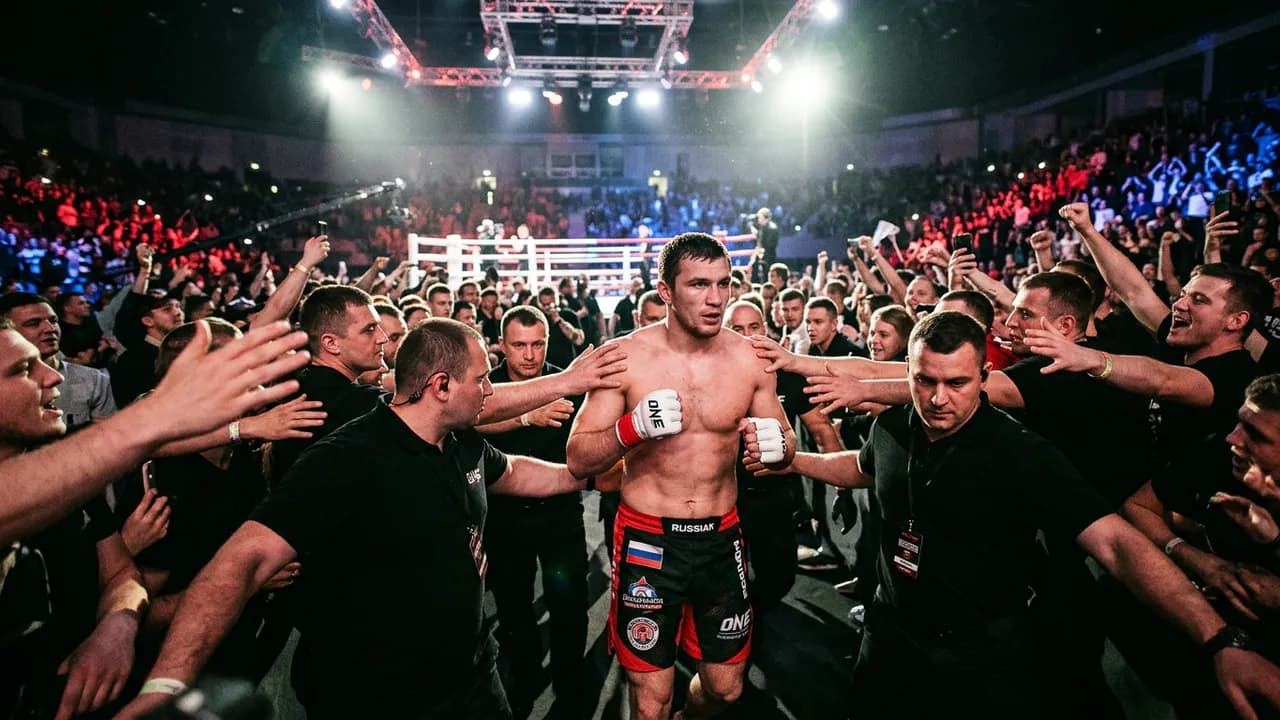
The first Top Dog event at CSKA Arena was the promotion's graduation ceremony. A bare-knuckle fighting operation that had started in parking lots three years earlier was now filling an arena in Russia's capital city with thousands of spectators. The production matched the venue -- full arena lighting, professional sound, multiple camera feeds, and the hay bale ring set up at center stage like a gladiatorial pit.
03 / Up next / The Regbist Factor
The CSKA Arena events established Top Dog as the most important bare-knuckle promotion in Russian combat sports, surpassing Strelka in production quality and competitive prestige while maintaining the raw, authentic aesthetic that had built the audience in the first place. The hay bales were still there. The fighters still wore jeans. The fists were still bare. But the context had transformed from underground to institutional.
The Regbist Factor
The Promoter Who Fights
Danil "Regbist" Aleyev is, as far as anyone can tell, the only active promoter in major combat sports who regularly fights on his own cards. His 16-4 bare-knuckle record is not a ceremonial figure. He competes against real opponents, takes real punishment, and has both wins and losses on his ledger.
This dual identity -- promoter and fighter -- gives Top Dog an authenticity that no marketing budget can replicate. When Aleyev stands in the hay bale ring across from Alex Terrible or any other opponent, he is not a suit making decisions from an office. He is a competitor who understands the sport from the inside, who has bled in the same ring he asks his fighters to bleed in, and whose credibility is earned through personal risk rather than business acumen alone.
The Regbist factor also creates compelling content. A promoter fighting his own fighters is an inherently dramatic proposition -- the boss stepping into the ring, the potential for embarrassment or injury, the blurred lines between commercial interest and competitive drive. These dynamics generate the kind of narrative tension that drives engagement across both the hardcore combat sports audience and the casual viewer who is drawn to spectacle.
Building the Roster
Aleyev built Top Dog's roster from Russia's deep pool of combat sports talent. The promotion's fighters include former amateur boxers, MMA practitioners, sambo competitors, and street fighters who were identified through the same informal talent pipeline that Strelka had pioneered. Notable fighters like Naim Davudov, Alexander "Drago" Shapovalov, and Gia "The Ogre" Torchinava brought legitimate combat sports credentials to the roster, elevating the competitive quality beyond what pure amateur operations could offer.
The crossover strategy -- bringing fighters from outside traditional combat sports, such as Alex Terrible from the metal world -- added audience reach without diluting competitive credibility. By mixing legitimate fighters with compelling personalities, Top Dog created a roster that satisfied both the hardcore audience and the casual viewer.
The Pandemic's Legacy
What COVID Made Possible
Top Dog FC would not exist without the COVID-19 pandemic. That is not a retrospective judgment -- it is a structural fact. The pandemic created every condition necessary for the promotion's launch: the content vacuum that gave fight content unprecedented algorithmic traction, the pool of frustrated fighters looking for competition, the audience starving for live sports, and the economic disruption that made high-risk entrepreneurship relatively more attractive.
But the pandemic only created the opening. Aleyev's execution -- the visual branding, the production quality, the professionalization strategy, the willingness to fight on his own cards -- is what turned a pandemic-era opportunity into a durable business. Dozens of operations launched pandemic-era fight content. Most disappeared when normalcy returned. Top Dog survived and thrived because it was building something permanent from the beginning.
The Russian Bare Knuckle Ecosystem
Top Dog's rise reshaped the Russian combat sports landscape. Before the pandemic, Strelka was the dominant force in Russian fight content -- the biggest channel, the biggest roster, the most cultural relevance. After Top Dog's emergence, the landscape became bipolar: Strelka for the democratic, amateur, sand-ring experience; Top Dog for the professional, curated, arena-level product.
This segmentation has been healthy for the overall ecosystem. Strelka serves as a massive talent identification system, giving thousands of amateur fighters the chance to compete. Top Dog provides the professional tier, offering the best bare-knuckle fighters in Russia a platform with production values, compensation, and competitive structure that approach professional standards. Together, they create a pipeline from amateur sand ring to professional hay bale ring that did not exist before the pandemic.
Where Top Dog Goes From Here
Top Dog FC's trajectory from parking lot to CSKA Arena suggests a promotion with ambitions that extend beyond the Russian domestic market. The international audience -- built organically through YouTube's recommendation engine -- provides a foundation for global expansion. The production quality matches or exceeds that of many Western promotions. The format -- bare knuckle, hay bale ring, casual dress -- has proven its appeal across cultural and language barriers.
The challenges are significant. Geopolitical tensions between Russia and the West complicate international partnerships and broadcast deals. The promotion's reliance on YouTube for international distribution creates the same platform dependency risk that threatens every YouTube-native operation. And the competitive landscape for bare-knuckle fighting globally has intensified, with BKFC's international expansion establishing a formidable Western counterpart.
But the fact that these are real, strategic challenges rather than existential threats is itself a testament to how far Top Dog has come. Three years from parking lot to arena. From zero to one of the most-watched bare-knuckle promotions in the world. From pandemic improvisation to institutional permanence.
It started with a parking lot, a set of hay bales, and a man willing to fight on his own card. It has become something that nobody in that parking lot could have predicted. And the hay bales -- now set up inside a Moscow arena, under professional lighting, in front of thousands of spectators -- are still there. Some things you do not change when they work.