Yes. Bare Knuckle Fighting Championship is real. The fights are real. The blood is real. The knockouts are real. Nothing about BKFC is staged, scripted, or predetermined.
This question comes up frequently, and it is understandable why. When someone watches a BKFC fight for the first time and sees two people throwing ungloved punches at each other's faces, it can look so extreme that the natural reaction is disbelief. How can this be legal? How is this allowed? There must be a catch.
There is no catch. BKFC is a fully sanctioned, state-regulated, medically supervised professional combat sport. This article breaks down exactly how it works, why it is legal, what safety protocols are in place, and why the misconception of staged fights persists.
BKFC Is Legally Sanctioned and State-Regulated
BKFC is not operating in a legal gray area. It is not an underground operation filmed in someone's garage. It is a professional combat sports promotion that operates under the oversight of state athletic commissions, the same regulatory bodies that sanction UFC events, professional boxing, and other combat sports.
When BKFC held its first event on June 2, 2018, at the Cheyenne Ice and Events Center in Cheyenne, Wyoming, it marked the first legally sanctioned bare knuckle boxing event in the United States since 1889. Wyoming was the first state to explicitly legalize bare knuckle boxing in March 2018, and the Wyoming Combative Sports Commission oversaw that inaugural card.
Since that milestone, BKFC has expanded to hold events in multiple states across the country, including Florida, Mississippi, Pennsylvania, Connecticut, Colorado, Hawaii, and more. Each event is sanctioned by the athletic commission of the state where it takes place. No commission, no event.
The promotion also operates internationally, holding events in the United Kingdom and expanding into Australia in 2026.
How BKFC Fights Actually Work
Understanding the format eliminates most doubts about whether the fights are real.
The Rules
BKFC fights are governed by a unified rule set that was updated in July 2024 by the Association of Boxing Commissions and Combative Sports (ABC). The key rules include:
- Striking only. Only closed-fist punches are allowed. No kicks, elbows, knees, headbutts, or grappling.
- Five rounds of two minutes each. Bouts are shorter than traditional boxing or MMA, reflecting the increased damage potential of bare fists.
- No hand wrapping. Fighters may tape their wrists for support but cannot wrap their knuckles. The striking surface of the hand is completely exposed.
- Knockdown rule. If a fighter is knocked down, they have 10 seconds to return to their feet or the fight is stopped.
- No hitting a downed opponent. If a fighter goes down, the other fighter must stop immediately. Violations result in disqualification and potential forfeiture of the purse.
- Clinch breaks. If there is a three-second lull in action during a clinch, the referee separates the fighters.
The Circular Ring
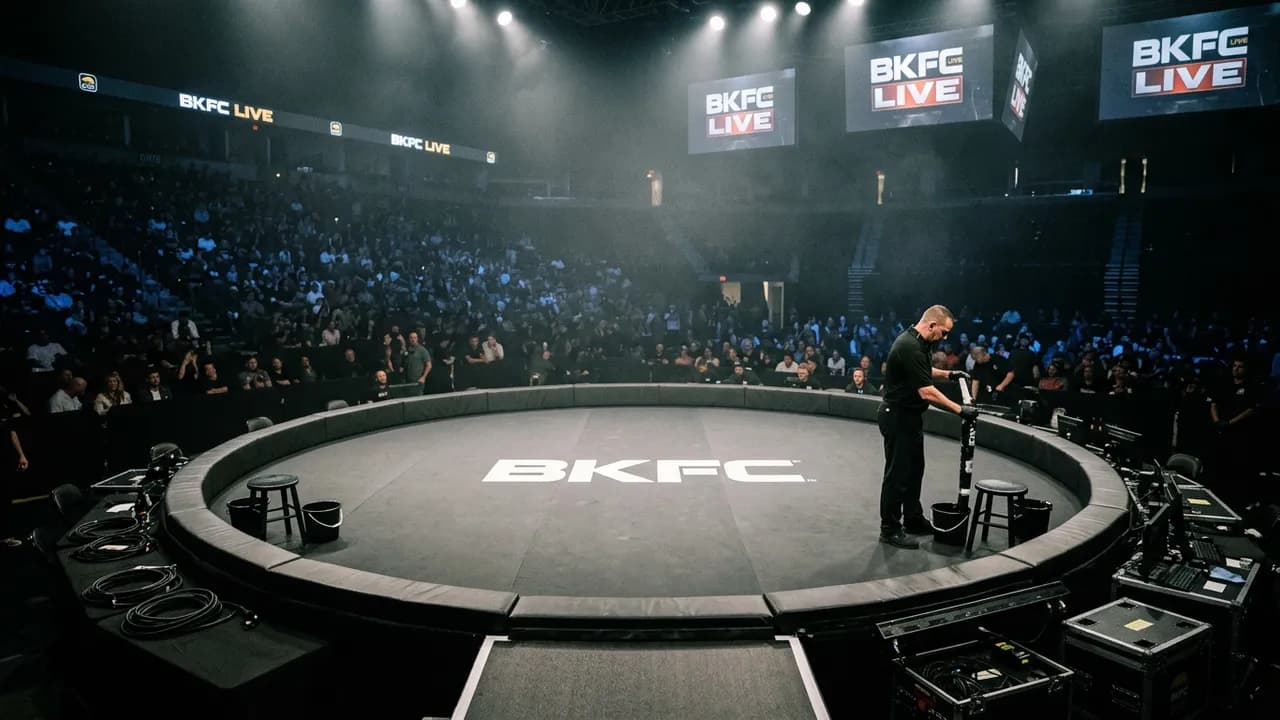
BKFC uses a distinctive circular ring rather than the traditional square ring used in boxing. This design eliminates corners, preventing fighters from being trapped and forcing constant movement and engagement. The circular shape is one of the reasons BKFC fights tend to be action-packed -- there is nowhere to hide.
Weight Classes
BKFC operates across ten weight classes, ranging from strawweight to heavyweight, ensuring competitive matchups based on fighter size.
Medical Protocols: What Keeps Fighters Safe
One of the strongest indicators that BKFC is a legitimate, regulated sport is the extensive medical infrastructure surrounding every event.
Pre-Fight Medical Requirements
Before a fighter is cleared to compete, they must complete:
- A comprehensive physical examination
- Negative HIV, Hepatitis B, and Hepatitis C tests
- A dilated eye examination
- A CAT scan (CT scan) of the brain
These requirements mirror or exceed those of traditional boxing and MMA commissions. They exist to ensure that fighters do not enter the ring with pre-existing conditions that could be worsened by competition.
On fight day, each fighter must be examined by a physician within eight hours of entering the ring. If the physician identifies any medical concern, the fighter is not cleared to compete.
Ringside Medical Staff
Every BKFC event is required to have:
- Two ringside physicians, one assigned to each corner
- An ambulance on-site with emergency equipment and a portable resuscitator with oxygen
- A qualified emergency operator on premises at all times
Ringside physicians observe fighters continuously during bouts. A physician can stop any contest at any time to examine a fighter, and they have the authority to recommend termination of the bout if continuing would risk serious injury. This is identical to the medical authority granted at any professional boxing or MMA event.
Post-Fight Suspensions
After a fight, medical suspensions are issued based on the injuries sustained. A fighter who is knocked out, suffers a significant cut, or shows signs of a concussion is medically suspended from competing for a set period, typically 30 to 90 days. These suspensions are tracked and enforced across jurisdictions.
The Fighters Are Real Professionals
BKFC does not pull people off the street and throw them into a ring. The promotion requires that all fighters be established professionals in boxing, MMA, kickboxing, or Muay Thai before they are allowed to compete bare knuckle.
04 / Up next / Fight Results Are Real and Verifiable
The roster includes former UFC veterans like Mike Perry, Eddie Alvarez, and Paige VanZant, as well as accomplished professional boxers like Austin Trout and career bare knuckle specialists like Luis Palomino and Christine Ferea.
These are trained athletes with verifiable professional records, fight histories that can be checked on platforms like Tapology and Sherdog, and careers that exist outside of BKFC. Their participation in real, sanctioned combat is not in question.
Fight Results Are Real and Verifiable
Every BKFC fight result is a matter of public record. Results are filed with the sanctioning athletic commission, recorded by independent combat sports databases, and reported by media outlets covering the event.
You can verify any BKFC fight result through:
- The official BKFC website at bkfc.com
- Tapology, a comprehensive combat sports database
- BoxRec, for fighters with professional boxing records
- State athletic commission records
If BKFC fights were staged, maintaining a consistent web of fictional results across multiple independent databases, athletic commissions, and media outlets would be impossible. The results are real because the fights are real.
Common Misconceptions About BKFC
"It's like WWE -- the fights are scripted"
Professional wrestling is entertainment with predetermined outcomes. BKFC is a combat sport with real competition. The comparison does not hold up. No athletic commission would sanction staged fights, and no physician would sign off on the medical protocols required if the outcomes were predetermined. The blood, the knockouts, and the injuries are genuine.
"It's illegal street fighting"
BKFC has nothing to do with street fighting. Every event takes place in a professional venue, under the oversight of a state athletic commission, with licensed referees, trained judges, and full medical staff. It is as far from a street fight as a UFC event is.
For a look at the actual history of bare knuckle boxing and how it evolved from its underground roots to modern sanctioned competition, we have a dedicated deep dive.
"Nobody would actually fight without gloves -- it must be fake"
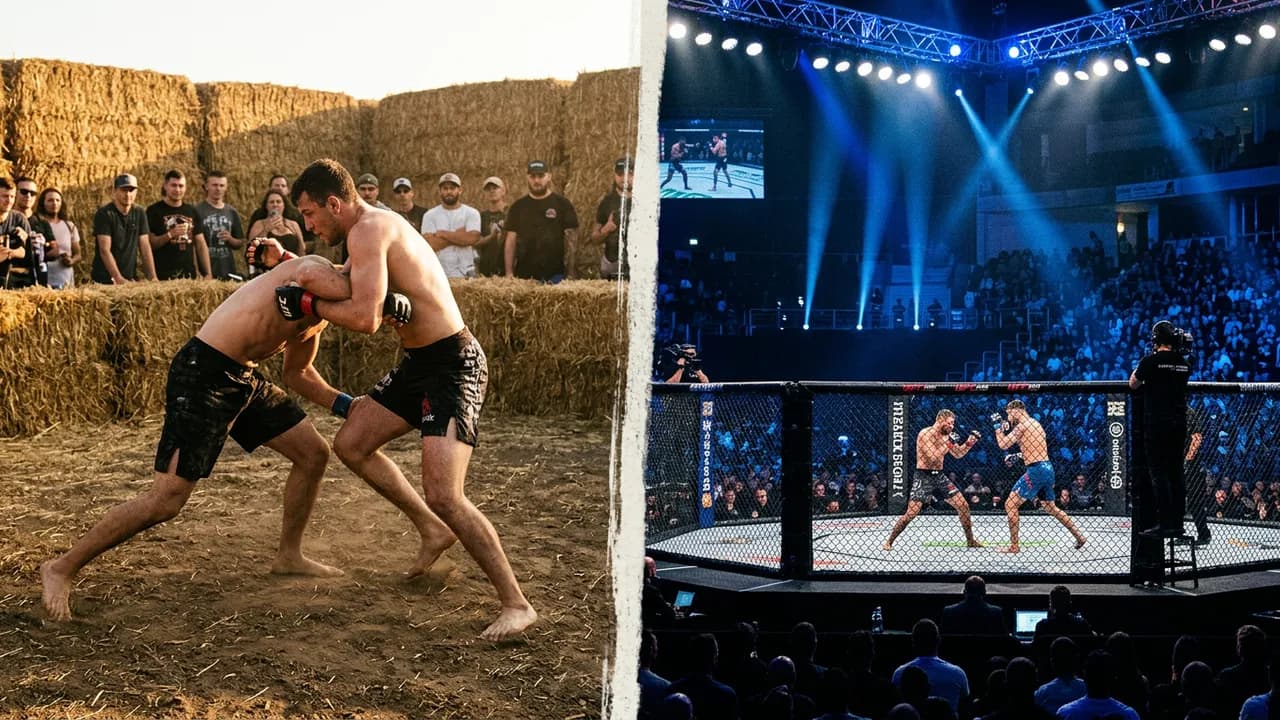
People have been fighting bare knuckle for centuries. The London Prize Ring Rules governed professional bare knuckle boxing from the 1830s through the 1880s, and the sport only moved to gloves when the Marquess of Queensberry Rules were adopted. Modern BKFC is a return to the original form of boxing, not an invention.
"The blood is fake or exaggerated"
Bare knuckle fights produce more visible bleeding than gloved fights because the hard surface of the knuckles creates more lacerations than padded gloves do. Studies have shown that approximately 34.8% of bare knuckle fighters sustain lacerations, with facial cuts requiring an average of 6.2 sutures. The blood is real, and it is a natural consequence of the sport.
"It's too dangerous to be legal"
Research published in The Physician and Sportsmedicine found that the concussion rate in bare knuckle fighting is approximately 1.5%, compared to 6-12% in gloved boxing. Bare knuckle fighting is visually more violent due to the bleeding, but the data suggests it may actually be safer than gloved boxing in terms of brain trauma. Athletic commissions reviewed this evidence when deciding to sanction the sport.
Why the "Is It Real?" Question Persists
The question is not unreasonable. Several factors contribute to the skepticism.
It looks extreme. For anyone accustomed to gloved boxing or MMA, bare knuckle fighting looks shockingly raw. The visible blood, the swollen hands, and the sound of unpadded punches landing create an impression that this cannot possibly be sanctioned.
It was illegal for over a century. Bare knuckle boxing was effectively banned in the United States from 1889 until Wyoming legalized it in 2018. That 129-year gap means most people grew up with no frame of reference for legal bare knuckle competition.
Social media clips lack context. When a 30-second BKFC knockout goes viral, it often circulates without any context about the sanctioning, regulations, or medical infrastructure behind it. Stripped of context, it can look like organized street fighting.
Combat sports skepticism is widespread. The existence of professional wrestling has conditioned many people to question the legitimacy of any combat sport that looks too dramatic to be real.
The Bottom Line
BKFC is as real as it gets. It is a legally sanctioned, state-regulated, medically supervised professional combat sport with real fighters, real competition, and real consequences. The promotion operates under the same athletic commission framework as the UFC and professional boxing, with medical protocols that in some cases exceed those of its gloved counterparts.
The next time someone asks "is BKFC real?" -- the answer is unequivocal. The fights are real. The results are real. The blood is most definitely real. And the sport is growing faster than almost any other combat sports promotion on the planet.
For more on how BKFC works, its fighter roster, and its 2026 schedule, explore our full coverage of bare knuckle fighting.
See For Yourself
The best way to confirm that BKFC is real is to watch the fights:
- BKFC YouTube: Subscribe for free prelim fights and highlights
- Perry vs Rockhold: Watch on YouTube -- former UFC fighters competing bare knuckle
- Official BKFC website: bkfc.com -- event results, fighter records, and schedules
- Stream full events: watch.bkfc.com
- BKFC Instagram: @bareknucklefc
Related Reading
- BKFC Champions List -- every current title holder
- Conor McGregor BKFC Ownership -- how McGregor's involvement reshaped the promotion
- Bare Knuckle Fighting Injuries -- the real physical toll
- History of Bare Knuckle Boxing -- from the 1700s to today