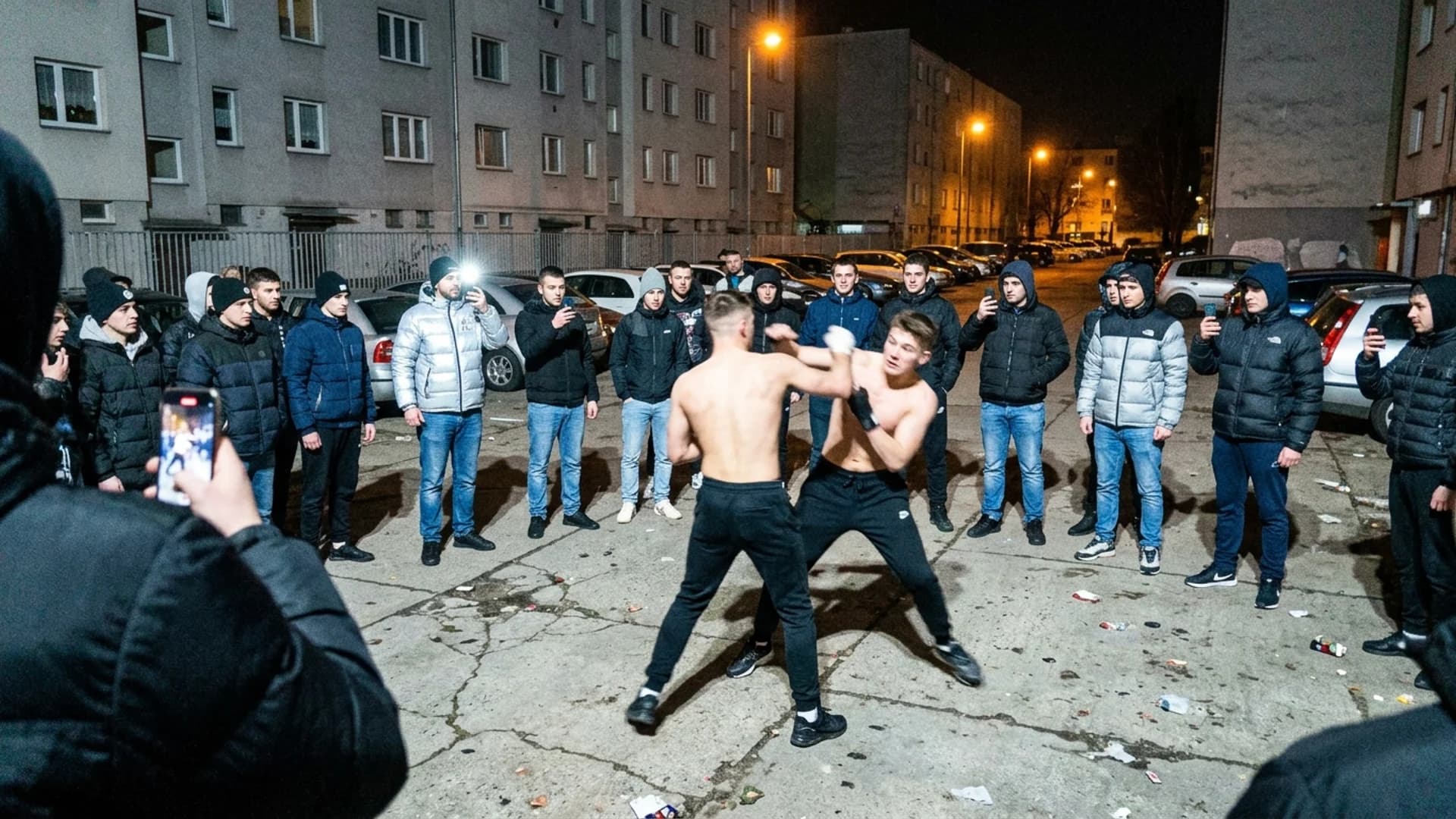
The phrase "no rules" gets thrown around loosely in fighting circles, but truly ruleless fighting does exist, and it looks nothing like what you see in a sanctioned MMA cage. From the vale tudo pits of Brazil to the open circles of Russia's KOTS and Strelka, no-rules fighting strips combat down to its most primal form. This guide compares these raw formats with regulated MMA to show exactly what changes when the rulebook gets thrown out.
What Is "No-Rules" Fighting?
True no-rules fighting means exactly what it sounds like: two people fight with minimal or zero restrictions on techniques. In practice, even the most extreme organizations usually maintain a handful of prohibitions (eye gouging and biting are almost universally banned), but everything else is fair game.
The most prominent no-rules or near-no-rules formats include:
- Vale Tudo - The Brazilian "anything goes" format that predated modern MMA. Headbutts, soccer kicks, stomps, and groin strikes were all legal in traditional vale tudo.
- KOTS (King of the Streets) - The Russian promotion that allows headbutts, soccer kicks, and stomps in an open circle with no time limits in some formats.
- Strelka - Russian open-circle fighting with minimal rules, where fighters of drastically different sizes are sometimes matched together.
- Backyard/street formats - Informal fights with no agreed-upon rules beyond "fight until someone quits."
Key Differences: No-Rules vs. Regulated MMA
| Aspect | No-Rules Fighting | Regulated MMA (Unified Rules) |
|---|---|---|
| Headbutts | Legal | Illegal |
| Soccer kicks | Legal | Illegal (most commissions) |
| Stomps | Legal | Illegal (most commissions) |
| Groin strikes | Often legal | Illegal |
| 12-6 elbows | Legal | Illegal (recently revised) |
| Knees to grounded | Legal | Illegal (most US commissions) |
| Hair pulling | Often legal | Illegal |
| Small joint manipulation | Often legal | Illegal |
| Fish-hooking | Sometimes legal | Illegal |
| Eye gouging | Usually illegal (even in no-rules) | Illegal |
| Biting | Usually illegal | Illegal |
| Time limits | Often none | 3 or 5 rounds of 5 minutes |
| Weight classes | Often none | 12 standardized divisions |
| Gloves | Often no gloves | 4 oz MMA gloves required |
How Techniques Change Without Rules
The removal of rules fundamentally alters fighting strategy:
Takedown Defense: In MMA, a fighter who sprawls on a takedown is in a relatively safe position. In no-rules fighting, a sprawled defender can receive knees to the face and headbutts from the top position. This makes the wrestling exchange far more dangerous for both fighters.
Ground Game: Guard play, a staple of MMA, becomes extremely hazardous without rules. A fighter on their back in no-rules fighting faces headbutts, soccer kicks from a standing opponent, and stomps. The closed guard that works in MMA can become a death trap in vale tudo.
Clinch Fighting: The clinch becomes a battlefield of headbutts and knees when rules are removed. Dirty boxing takes on a whole new meaning when you can drive your forehead into your opponent's nose.
Standing Strikes: With no gloves, punching technique changes. Fighters are more cautious with full-power hooks and uppercuts due to the risk of hand injuries. Palm strikes and hammer fists become more common.
Safety Comparison
The safety gap between no-rules fighting and regulated MMA is substantial:
Medical Support:
- Regulated MMA requires ringside physicians, ambulances, and pre-fight medical clearances
- No-rules events typically have minimal or no medical support
- Post-fight medical evaluations are standard in sanctioned MMA but rare in no-rules formats
Referee Intervention:
- MMA referees are trained to stop fights when a fighter can no longer intelligently defend themselves
- No-rules events may have delayed stoppages or no referee at all
- The "intelligent defense" standard doesn't exist in most no-rules formats
Protective Equipment:
- MMA requires mouthguards, groin protection, and 4 oz gloves
- No-rules formats often allow bare fists and may not require mouthguards
- The absence of gloves actually reduces some types of brain trauma but increases hand injuries and facial lacerations
The Vale Tudo Legacy
Vale tudo deserves special attention as the direct ancestor of modern MMA. Originating in Brazil in the mid-20th century, vale tudo events like those hosted by the Gracie family demonstrated the effectiveness of Brazilian Jiu-Jitsu against other martial arts. These early no-rules fights directly inspired the creation of the UFC in 1993.
As MMA evolved and became regulated, vale tudo didn't disappear. It retreated underground, continuing in Brazilian favelas and small-town events. Modern vale tudo maintains the "anything goes" ethos and produces fighters with a distinctive, aggressive style that sometimes transitions into sanctioned MMA.
Notable No-Rules Organizations
| Organization | Country | Key Rules | Format |
|---|---|---|---|
| KOTS | Russia | Headbutts, soccer kicks legal | Open circle, timed rounds |
| Strelka | Russia | Minimal rules, size mismatches | Open circle |
| Vale Tudo (underground) | Brazil | Nearly everything legal | Varies |
| Top Dog FC | Russia | Bare-knuckle, standing only | Open circle |
| Felony Fights | USA (defunct) | No rules, street settings | No ring/cage |
Which Styles Dominate in Each Format?
The optimal martial arts background shifts significantly between formats:
Regulated MMA favors:
- Wrestling (cage control, top position safety)
- Brazilian Jiu-Jitsu (submission threat, guard game)
- Boxing/Muay Thai (striking within rules)
No-Rules Fighting favors:
- Wrestling (but with modified takedown entries)
- Sambo (combat-oriented, trained for strikes on the ground)
- Street fighting experience (headbutt awareness, dirty tactics)
- BJJ is less effective (guard is dangerous without rules)
FAQ
Is no-rules fighting the same as street fighting?
Not exactly. Even the most extreme no-rules organizations impose some structure: designated fighting areas, agreed-upon start times, and usually at least one or two prohibited techniques like eye gouging. Street fighting has no structure, no consent framework, and no boundaries. No-rules fighting is closer to a sport; street fighting is closer to assault.
Has anyone died in no-rules fighting?
Yes. Deaths have occurred in underground vale tudo events in Brazil and in informal no-rules fights globally. The lack of medical support, referee stoppages, and protective equipment makes no-rules fighting significantly more dangerous than regulated MMA. Exact statistics are difficult to compile because many events are undocumented.