On the surface, underground fighting and professional MMA are the same thing: two people fighting each other. But beneath that surface, they are entirely different worlds with different rules, different cultures, different economic structures, different legal realities, and fundamentally different philosophies about what fighting is and what it should be.
Professional MMA, as represented by the UFC, Bellator, ONE Championship, and the PFL, is a regulated, sanctioned, multi-billion-dollar industry with athletic commissions, drug testing, physician oversight, collective bargaining, broadcast deals, and fighter rankings. Underground fighting, as represented by organizations from KOTS to Streetbeefs to Top Dog FC, operates outside this framework, by choice, by necessity, or by some combination of both.
This guide provides a thorough, category-by-category comparison of the two worlds: where they overlap, where they diverge, and what each offers that the other cannot.
Rules and Format
The most visible difference between underground fighting and professional MMA is the ruleset, or in some cases, the absence of one.
Professional MMA
Professional MMA operates under the Unified Rules of Mixed Martial Arts, adopted by athletic commissions across the United States and increasingly worldwide. These rules include:
- Weight classes: Fighters compete within defined weight divisions (strawweight through heavyweight), with weight cutting and official weigh-ins
- Rounds: Championship fights are 5 rounds of 5 minutes; non-title fights are 3 rounds of 5 minutes
- Gloves: 4-ounce MMA gloves are mandatory
- Illegal techniques: An extensive list of prohibited techniques, including headbutts, groin strikes, strikes to the back of the head, eye gouging, biting, fish-hooking, throat strikes, small joint manipulation, and many others
- Judging: Three judges score fights using the 10-point must system when a fight goes to decision
- Referee authority: A referee can stop the fight at any time for fighter safety
- Cage/ring: Fights take place in an enclosed cage (octagon, hexagon, or circular) or a ring with a padded canvas surface
Underground Fighting
Underground fighting rules vary enormously by organization. Here is the spectrum:
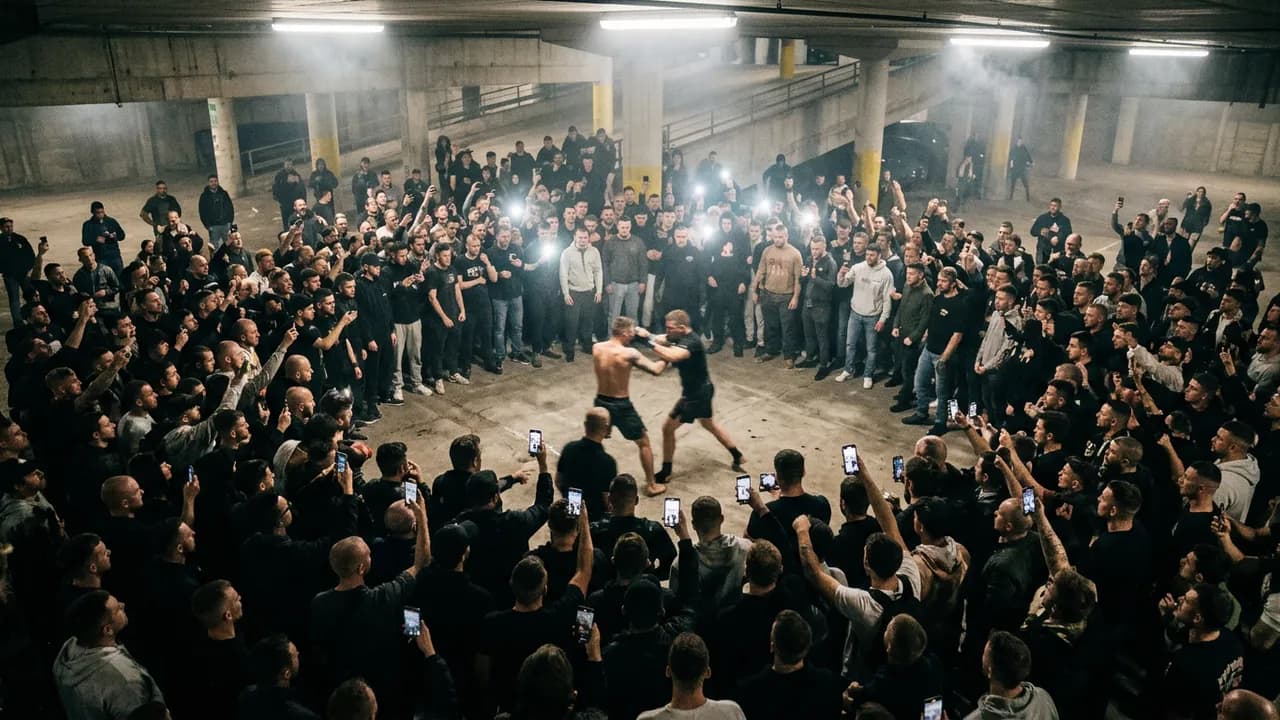
No-rules organizations (KOTS, FPVS):
- No weight classes (fighters may be matched by approximate size, but not by official weigh-in)
- No rounds, no time limits
- No gloves
- Virtually no prohibited techniques (headbutts, biting, eye gouging, ground stomps are all permitted)
- No judges or scoring systems (fight ends by knockout, submission, or referee stoppage)
- Concrete surface
- Minimal referee intervention
Bare knuckle organizations (Top Dog FC, Mahatch FC):
- Approximate weight matching
- Varying round structures
- No gloves (wrist wraps may be permitted)
- Modified rules (some techniques restricted, others permitted)
- Ring or defined fighting area (hay bales, sandbags, or professional ring)
- Referee present
Backyard organizations (Streetbeefs, The Scrapyard):
- Weight matching (often loose)
- Timed rounds
- Boxing or MMA gloves required
- Modified boxing or MMA rules
- Grass, dirt, or outdoor surface
- Referee present with authority to stop fights
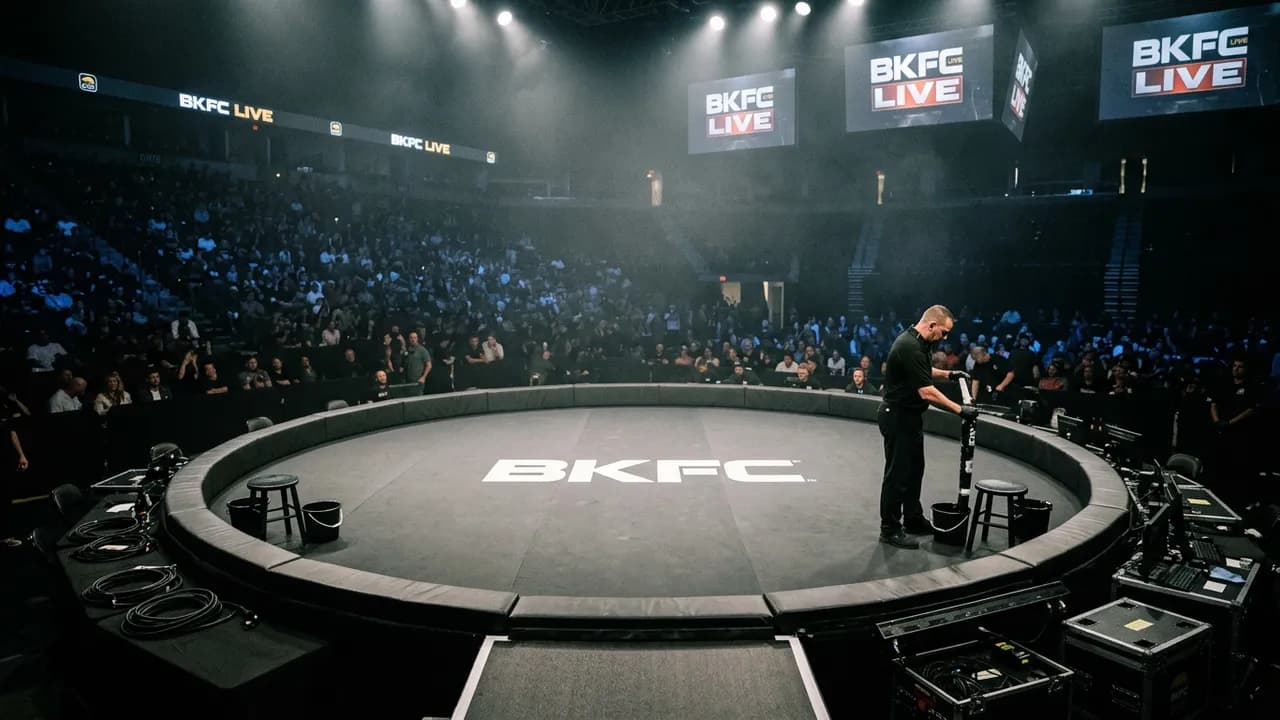
Sanctioned bare knuckle (BKFC):
- Official weight classes with weigh-ins
- 2-minute rounds (typically 5 rounds per fight)
- No gloves (wrist wraps permitted)
- Boxing rules (punches only, no clinching, no takedowns)
- Professional ring with padded surface
- Licensed referees, judges, and physicians
Key Differences
| Category | Professional MMA | Underground (No-Rules) | Underground (Backyard) | Sanctioned BK |
|---|---|---|---|---|
| Weight Classes | Strict, official weigh-in | None or approximate | Loose matching | Official weigh-in |
| Rounds | 3 or 5 x 5 min | None | Yes | 5 x 2 min |
| Gloves | 4oz MMA | None | Boxing/MMA | None |
| Surface | Padded canvas | Concrete | Grass/dirt | Padded ring |
| Headbutts | Illegal | Legal | Illegal | Illegal |
| Ground Strikes | Legal (with restrictions) | All legal | Varies | N/A (boxing) |
| Eye Gouging | Illegal | Legal | Illegal | Illegal |
| Referee | Licensed, full authority | Minimal presence | Present | Licensed |
Safety and Medical Protocols
This is arguably the most significant difference between the two worlds. Professional MMA has extensive safety infrastructure. Most underground organizations have little or none.
Professional MMA
- Pre-fight medical examination: Fighters must pass a physical examination before being licensed to compete. This includes blood tests (HIV, Hepatitis B and C), neurological screening, cardiac evaluation, and ophthalmologic examination.
- Drug testing: USADA (United States Anti-Doping Agency) conducts year-round, random drug testing for UFC fighters. Other promotions use various testing protocols.
- Ringside physicians: At least one (often two) licensed physicians are present at ringside with the authority to stop the fight at any time based on their assessment of a fighter's condition.
- Ambulance on standby: An ambulance with emergency medical technicians must be present at the venue.
- Post-fight medical examination: Fighters are examined after every fight, regardless of outcome.
- Medical suspensions: Fighters who are knocked out or sustain significant injuries receive mandatory medical suspensions that prevent them from fighting again until cleared by a physician. Typical suspensions range from 30 to 180 days.
- Insurance: Promotions are required to provide medical insurance coverage for fighters.
Underground Fighting
The contrast is stark:
No-rules organizations (KOTS, FPVS):
- No pre-fight medical examination
- No drug testing
- No ringside physicians
- No ambulance on standby (that is publicly known)
- No post-fight medical examination
- No medical suspensions
- No fighter insurance
- Concrete surface amplifies injury risk on every knockdown
Backyard organizations (Streetbeefs, The Scrapyard):
- No formal medical examination (though some screen for obvious conditions)
- No drug testing
- No ringside physicians (though some have first aid kits and basic medical supplies)
- No ambulance typically on standby
- No formal medical suspensions
- No fighter insurance
- Softer surface (grass/dirt) reduces some impact injury risk
Sanctioned bare knuckle (BKFC):
- Full pre-fight medical examination (equivalent to professional MMA)
- Drug testing protocols
- Ringside physicians present
- Ambulance on standby
- Post-fight medical examination
- Medical suspensions enforced
- Fighter insurance provided
- Professional ring with padded surface
The Injury Question
The lack of safety infrastructure in underground fighting raises obvious concerns. However, the injury picture is more nuanced than a simple "underground is more dangerous" narrative:
Arguments that underground fighting is more dangerous than MMA:
- No medical screening means fighters with undisclosed conditions (heart problems, previous brain injuries, blood-borne diseases) can compete without detection
- No ringside physicians means that dangerous injuries may not be identified in real time
- Concrete surfaces turn every knockdown into a potential traumatic brain injury
- No drug testing means fighters may compete on performance-enhancing substances that increase their ability to inflict damage
- No medical suspensions mean fighters may compete again before recovering from previous injuries
Arguments that some underground formats may have certain safety characteristics:
- Bare knuckle fighters naturally moderate their punching power on head strikes to protect their own hands, which some research suggests produces fewer concussions than gloved boxing
- No-rules fights often end faster than MMA fights, potentially reducing cumulative damage
- The absence of gloves means less total force transmitted to the brain per strike (gloves allow harder punching without breaking the hand)
- Backyard organizations with gloves and referees provide a level of safety that, while lower than professional MMA, is far above a genuine street fight
None of these arguments should be mistaken for a claim that underground fighting is safe. It is not. The absence of medical infrastructure means that when something goes wrong, the consequences can be catastrophic in ways that they would not be in a regulated environment.
Fighter Pay and Economics
The economic reality of underground fighting is fundamentally different from professional MMA, and neither side is as straightforward as it might appear.
Professional MMA Pay Structure
UFC fighter pay operates on a disclosed purse system with several components:
- Show money: A guaranteed purse paid regardless of outcome (UFC minimums are $12,000 for debut fighters, scaling up based on experience and negotiation)
- Win bonus: Typically equal to the show money, paid only if the fighter wins
- Performance bonuses: $50,000 bonuses for Fight of the Night and Performance of the Night (in UFC)
- PPV points: Top fighters receive a share of pay-per-view revenue (typically starting at around 200,000 buys)
- Sponsorship revenue: Under the UFC's Venum deal, fighters receive tiered sponsorship payments based on number of UFC fights
- Purse ranges: UFC purses range from $12,000/$12,000 (show/win) for debuting fighters to millions for champions and main event stars
Outside the UFC, purses are generally lower. Regional MMA promotions may pay fighters anywhere from nothing (for amateur fights) to a few thousand dollars. Bellator, PFL, and ONE Championship purses vary widely.
After training expenses, management fees (typically 15-20%), and taxes, many professional MMA fighters struggle financially.
The median UFC fighter earns significantly less than the headline-grabbing purses suggest. Most UFC fighters earn between $50,000 and $150,000 per fight (total compensation including bonuses), with many earning less. After training expenses, management fees (typically 15-20%), and taxes, many professional MMA fighters struggle financially.
Underground Fighter Pay
Underground fighter pay varies even more widely:
No pay:
- Streetbeefs fighters are not paid. They fight to settle disputes, for the experience, or for the exposure. The organization's founders have been clear that Streetbeefs is not about money.
- Many smaller backyard organizations do not pay fighters.
- East Bay Rats fight nights are communal events, not commercial ventures.
Winner-take-all:
- KOTS reportedly pays only the winner. Exact purses are not publicly disclosed, but they are modest by professional standards.
- Some tournament-format organizations award prize money only to tournament winners or finalists.
Disclosed purses:
- BKFC pays disclosed purses comparable to mid-level professional MMA. Top fighters can earn six figures per fight. Debut fighters earn less.
- Top Dog FC compensates fighters, though exact figures are generally not publicly available.
- Gamebred Bareknuckle MMA offers tournament prize pools up to $500,000, the highest in the underground-adjacent space.
- Rough N' Rowdy pays fighters, with purses scaling based on the fighter's draw and entertainment value.
The Real Economics
The economic comparison between underground and professional MMA is not as one-sided as it appears:
Advantages of professional MMA economics:
- Guaranteed purses (at least at the UFC level)
- Insurance coverage
- Sponsorship income
- Potential for PPV revenue at the top level
- Legitimate tax documentation
- Career longevity through safety measures
Advantages of underground economics:
- No manager fees (most underground fighters do not have managers)
- No licensing costs (no athletic commission fees, no medical exam costs)
- Lower training costs (many underground fighters do not maintain expensive gym memberships or coaching relationships)
- Faster path to fights (no need to build an amateur record, get licensed, or find a sanctioned promotion willing to sign you)
- Content revenue: some underground fighters earn money from their own YouTube channels, social media, or from a share of an organization's content revenue
- No exclusive contracts: many underground fighters are free to compete for multiple organizations
Career Paths
The career trajectories available to fighters in the underground and professional MMA worlds are markedly different.
Professional MMA Career Path
The traditional MMA career path is well-defined:
- Martial arts training (begin in one or more martial arts as a teenager or young adult)
- Amateur competition (amateur MMA bouts under regional athletic commission oversight)
- Professional debut (first professional fight, typically on a regional card)
- Regional circuit (build a professional record fighting for regional promotions)
- Contender contract or signing (get noticed and signed by a major promotion)
- Major promotion career (fight in UFC, Bellator, PFL, ONE Championship)
- Title contention (work toward a title shot through rankings and victories)
- Retirement and transition (coaching, commentary, promotion, or leaving the sport)
This path typically takes years of development and requires significant investment in training, coaching, and competition. The dropout rate is enormous: thousands of fighters compete at the amateur and regional levels for every one who reaches the UFC.
Underground Career Path
The underground offers a radically different and less defined career path:
- Decide to fight (often with minimal or no formal training)
- Apply to an organization (submit a fight application through a website or social media)
- Fight (compete in your first underground fight)
- Build a reputation (accumulate wins, build a following, gain recognition within the underground community)
- Move up (transition to larger underground organizations, begin earning money)
- Cross over (optional) (some underground fighters transition to sanctioned competition)
The underground path has several distinctive features:
- No formal credentials required. You do not need a professional license, an amateur record, or a training pedigree. Organizations like Streetbeefs accept applications from essentially anyone willing to fight.
- Faster entry. The time from deciding to fight to actually fighting can be days or weeks, compared to months or years in the professional pipeline.
- Lower barrier. No gym membership, no coaching, no competition fees. Just a willingness to fight.
- Less upward mobility. The underground does not have a clear competitive ladder. There are no rankings, no titles (with limited exceptions), and no structured progression from smaller to larger stages.
The Crossover
The most interesting career dynamic is the crossover between the two worlds. Fighters move in both directions:
Underground to professional:
- Kimbo Slice went from backyard fights to EliteXC to UFC to Bellator
- Jorge Masvidal fought in backyard fights before building a UFC career (and then returned to the underground space by founding Gamebred Bareknuckle MMA)
- Numerous Streetbeefs and BKFC fighters have transitioned to or from sanctioned amateur and professional MMA
Professional to underground:
- Former UFC and professional MMA fighters compete in BKFC, drawn by competitive purses and the appeal of a different format
- Mike Perry, a former UFC fighter, became one of BKFC's biggest stars
- Paige VanZant, a former UFC fighter, competed in BKFC
- Some professional fighters who age out of sanctioned competition find second careers in underground organizations
Legal Status
The legal difference between the two worlds is absolute in some jurisdictions and blurred in others.
Professional MMA
Professional MMA is legal in all 50 US states, all Canadian provinces, and in most countries worldwide. It operates under the authority of athletic commissions that:
- License fighters, referees, judges, and promoters
- Establish and enforce rules
- Mandate medical protocols
- Approve matchups
- Conduct drug testing
- Adjudicate disputes
The legal status of professional MMA is unambiguous. If you fight in a sanctioned MMA event, you are engaged in a legal activity with full legal protection.
Underground Fighting
The legal status of underground fighting ranges from clearly illegal to gray area, depending on the jurisdiction and the format. For a comprehensive breakdown, see our Country-by-Country Legal Analysis.
In general:
- No-rules fighting (KOTS, FPVS) is illegal virtually everywhere it takes place
- Backyard fighting (Streetbeefs, The Scrapyard) exists in a gray area in most jurisdictions
- Unsanctioned bare knuckle fighting (Top Dog FC, Mahatch FC) ranges from tolerated to illegal depending on the country
- Sanctioned bare knuckle (BKFC) is legal where sanctioned, which is an increasing number of jurisdictions
The legal risk is borne not just by fighters but by organizers, promoters, and in some jurisdictions, even spectators.
Training and Preparation
How fighters prepare for competition differs fundamentally between the two worlds.
Professional MMA Training
Professional MMA fighters are full-time athletes who train 5-6 days per week, often twice per day. A typical training camp for a professional MMA fight includes:
- Striking: Boxing, kickboxing, Muay Thai
- Grappling: Wrestling, Brazilian Jiu-Jitsu
- MMA-specific sparring: Full MMA sparring sessions
- Strength and conditioning: Periodized strength training, cardiovascular conditioning
- Game planning: Studying opponents, developing fight-specific strategies
- Nutrition and weight management: Working with nutritionists, cutting weight for weigh-ins
- Mental preparation: Working with sports psychologists, visualization, meditation
A typical training camp for a UFC fight lasts 8-12 weeks and may cost tens of thousands of dollars when factoring in coaching, sparring partners, nutritionists, and facility costs. Top fighters train at major MMA gyms (American Top Team, City Kickboxing, Sanford MMA, etc.) with world-class coaches and training partners.
Underground Fighter Training
Underground fighter training is as varied as the organizations themselves:
No training: Many underground fighters, particularly in backyard organizations, have no formal martial arts training. They fight on instinct, toughness, and whatever fighting experience they have accumulated in their lives. This is particularly common at Streetbeefs and Rough N' Rowdy, where the appeal is partly that regular people are fighting.
06 / Up next / Audience and Culture
Self-taught: Some underground fighters train on their own, learning from YouTube videos, heavy bag work, and informal sparring with friends. This produces fighters who may have developed significant power or toughness but lack the technical foundation of formally trained martial artists.
Formally trained: Many fighters at higher-level underground organizations have formal martial arts training. Top Dog FC features experienced martial artists from across Russia. BKFC draws from the boxing and MMA talent pool. KOTS attracts fighters from MMA gyms, boxing clubs, and other combat sports backgrounds.
Hybrid: Some fighters train at traditional gyms but compete in underground events. They may maintain gym memberships and train regularly while fighting in backyard or bare knuckle events on weekends.
Audience and Culture
The audiences for professional MMA and underground fighting overlap significantly but have distinct cultural characteristics.
Professional MMA Audience
The professional MMA audience is large, mainstream, and increasingly diverse:
- Size: UFC events regularly draw millions of PPV buys for major cards. Weekly broadcasts on ESPN attract millions of viewers.
- Demographics: Skewing male (70-75%), ages 18-49, with growing female and international audiences
- Engagement: Through broadcast TV, PPV, social media, fantasy leagues, betting markets, podcasts, and live events
- Culture: Sports-centric, with similarities to the boxing or NFL fan experience. Fans follow fighters, analyze matchups, discuss rankings, and engage with the sport as a competitive athletic endeavor.
Underground Fighting Audience
The underground fighting audience is large but harder to measure and culturally distinct:
- Size: Difficult to quantify precisely, but Streetbeefs (4.2M YouTube subscribers), Top Dog FC (6M+ subscribers), and Strelka (2M+ subscribers) suggest an audience in the tens of millions globally.
- Demographics: Skewing younger and more male than professional MMA. Strong representation from working-class and urban communities. Significant international diversity, particularly Russian-speaking and Scandinavian audiences.
- Engagement: Through YouTube, social media, Telegram, in-person events, and online communities. Less engagement through traditional sports media.
- Culture: The underground fighting audience values authenticity over athleticism, rawness over polish, and community over corporate entertainment. There is a philosophical dimension to underground fighting fandom that does not exist in the same way in mainstream MMA: many fans see underground fighting as a rejection of the sanitization and commercialization of combat sports.
Cultural Values Comparison
| Value | Professional MMA | Underground Fighting |
|---|---|---|
| Athleticism | Central | Important but secondary |
| Authenticity | Valued but not paramount | Core value |
| Production quality | Expected to be high | Varying; rawness can be a feature |
| Fighter safety | Foundational priority | Philosophical tension |
| Commercial viability | Driving force | Secondary to authenticity |
| Accessibility | Behind PPV/broadcast walls | Often free (YouTube) |
| Community | Fan-athlete relationship | Participant-community relationship |
| Legitimacy | Established | Deliberately outside the establishment |
The Philosophical Divide
At its core, the difference between underground fighting and professional MMA is philosophical. Professional MMA has answered the question "what should fighting be?" with a comprehensive set of regulations designed to balance competition with safety. Underground fighting either rejects that answer or proposes alternatives.
The Professional MMA Philosophy
Professional MMA operates on the premise that fighting can be a safe, fair, and entertaining sport when properly regulated. The rules exist to create a competitive environment where skill determines the outcome, where fighters are protected from unnecessary harm, and where the audience can enjoy the spectacle without complicity in genuine danger.
This philosophy has produced extraordinary fighters, iconic moments, and a multi-billion-dollar industry. It has also, critics argue, domesticated fighting. When every technique that might cause serious harm is prohibited, when every fight takes place on padded canvas with physicians at ringside, when every fighter is tested for drugs and screened for medical conditions, is it still really fighting? Or is it just a very impressive athletic competition that resembles fighting?
The Underground Philosophy
Underground fighting, particularly at the no-rules end of the spectrum, operates on a fundamentally different premise: that fighting should be fighting. Not a sport with fighting elements, not a regulated competition that resembles fighting, but actual combat between two willing participants with as few artificial constraints as possible.
KOTS embodies this philosophy most explicitly. The insistence on concrete surfaces is not just an aesthetic choice; it is a philosophical statement. On concrete, every mistake carries real consequences. The surface does not forgive. There is no padded canvas to soften a knockdown. The concrete is the great equalizer, and it ensures that every fight is fought with the knowledge that genuine, irreversible harm is possible at any moment.
08 / Up next / Where They Converge
This philosophy is controversial and, to many, indefensible. But it has an internal coherence that its proponents articulate clearly: if you want to know who the better fighter is, strip away everything that protects them from the consequences of losing.
Where They Converge
Despite the philosophical divide, underground fighting and professional MMA are converging in several ways:
- BKFC operates as a sanctioned promotion with professional production but features the raw, gloveless fighting that characterizes the underground
- Gamebred Bareknuckle MMA uses professional MMA rules but without gloves, creating a hybrid format
- Top Dog FC has moved from parking lots to arenas while maintaining its underground aesthetic
- Former UFC fighters increasingly compete in underground-adjacent organizations, bringing professional skills to underground formats
- Underground organizations are adopting professional production techniques while maintaining their philosophical distinctiveness
The future may not be a clear divide between "underground" and "professional" but rather a spectrum, with organizations positioned at various points based on how much regulation, production, and safety infrastructure they choose to incorporate.
Side-by-Side Comparison Table
| Category | Professional MMA (UFC) | No-Rules (KOTS) | Backyard (Streetbeefs) | Sanctioned BK (BKFC) |
|---|---|---|---|---|
| Sanctioned | Yes | No | No | Yes |
| Gloves | 4oz MMA | None | Boxing/MMA | None |
| Surface | Padded canvas | Concrete | Grass/dirt | Padded ring |
| Rounds | 3-5 x 5 min | None | Yes | 5 x 2 min |
| Weight Classes | Official | None | Loose | Official |
| Medical Staff | Yes | No | No | Yes |
| Drug Testing | Yes (USADA in UFC) | No | No | Yes |
| Headbutts | Illegal | Legal | Illegal | Illegal |
| Fighter Pay | $12K-$10M+ | Winner only | $0 | Varies (up to 6 figures) |
| Legal Status | Legal everywhere | Illegal everywhere | Gray area | Legal where sanctioned |
| Audience Access | PPV/ESPN/broadcast | YouTube/PPV/Telegram | YouTube (free) | PPV/app |
| Fighter Training | Full-time professional | Varies widely | Often minimal | Professional |
| Career Path | Defined ladder | Informal | Informal | Semi-defined |
| Insurance | Required | None | None | Required |
Watch the Contrast on YouTube
The difference between underground fighting and professional MMA is best understood by watching both. These YouTube videos showcase the underground side of the comparison, allowing you to see firsthand how the formats, production, and fighting styles differ from what you see on ESPN or pay-per-view.
Underground Fighting at Its Most Extreme
-
KOTS: Simon vs Ronin -- No-rules fighting on concrete. No gloves, no rounds, no time limit. Compare this to any UFC fight and the philosophical divide becomes immediately clear. Watch on the KING OF THE STREETS channel.
-
Strelka -- Petrantsov -- Russian street fighting tournaments where trained fighters compete outdoors with no gloves. The technical skill is surprisingly high, but the environment is nothing like a professional arena. Watch on Tron MMA.
Underground Fighting at Its Most Accessible
-
Streetbeefs Top Knockouts -- Backyard fighting with gloves and referees. Closer to professional MMA in format but with none of the regulatory infrastructure. Watch on Streetbeefs.
-
Top Dog FC Best Knockouts -- High-production bare knuckle fighting from Russia. Top Dog's production quality rivals professional promotions, but the fights take place without gloves in a hay-bale ring. Watch on Top Dog Fighting.
The Bridge Between Both Worlds
-
BKB at the O2 Arena -- Bare knuckle boxing at a major London venue. This is where underground meets mainstream, with professional production but the raw, gloveless combat that defines the underground scene.
-
Kimbo Slice vs Big D -- The original backyard fight that started the crossover between underground fighting and professional MMA. Kimbo went from this to fighting on CBS, showing that the two worlds are connected.
Conclusion
Underground fighting and professional MMA are two answers to the same human impulse: the desire to test yourself against another person in physical combat. Professional MMA answers that impulse with regulation, safety, and structure. Underground fighting answers it with rawness, authenticity, and a deliberate rejection of the safety nets that professional sport provides.
Neither answer is complete. Professional MMA provides safety and legitimacy at the cost of some authenticity and accessibility. Underground fighting provides authenticity and accessibility at the cost of safety and legitimacy. The ideal for any individual fighter or fan depends on what they value most.
What is clear is that both worlds are thriving, both are growing, and neither is going away. The underground is not a developmental league for professional MMA, and professional MMA is not a more evolved version of the underground. They are parallel worlds that serve different needs, and their coexistence is the defining feature of modern combat sports.
For a comprehensive overview of the underground fighting world, see our Ultimate Guide to Underground Fighting. For details on the legality of each format, see our Country-by-Country Legal Breakdown. For information on how to watch both underground and professional fighting, see our Complete Streaming Guide.