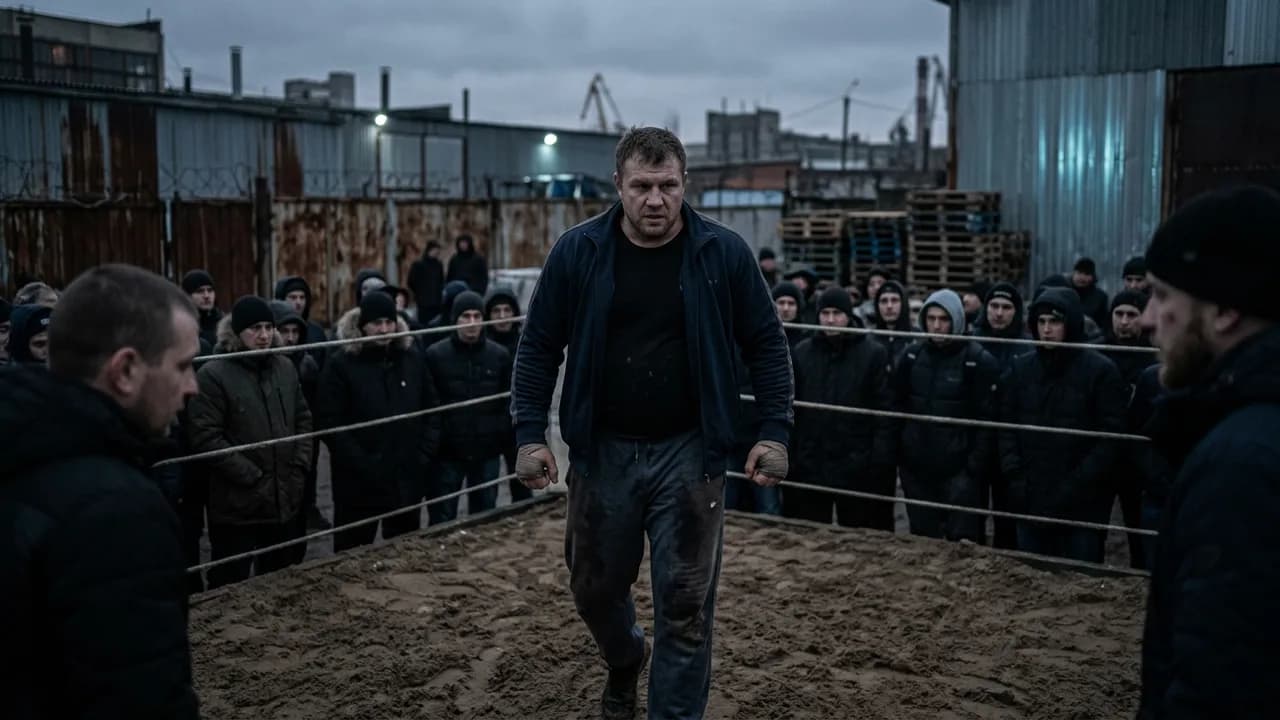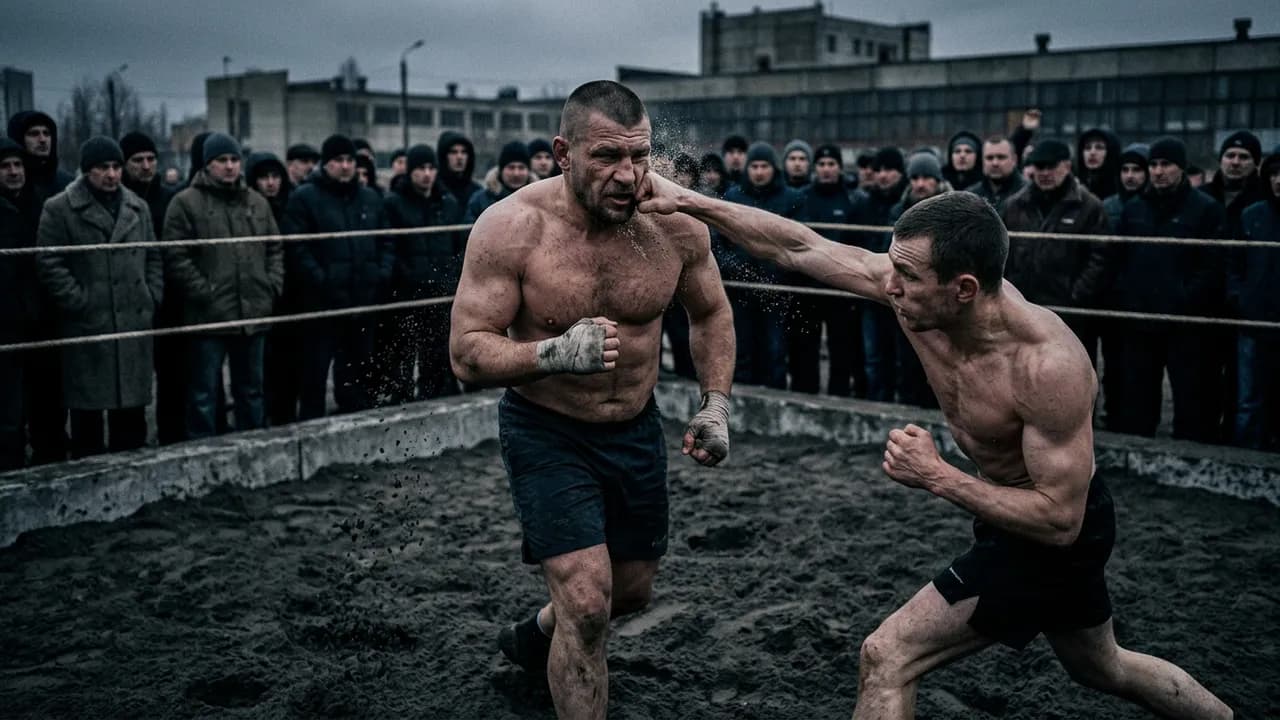
Yuri "The Tank" is an editorial persona, not a documented biography. Like most competitors in Strelka Street Fight Championship, the man behind the nickname is largely unrecorded in English-language sources, and Strelka rarely publishes verified identities or formal records. What the persona reliably captures is a role: the grinder, the fighter whose central asset is an apparent inability to be hurt, and whose game plan is built on outlasting whatever an opponent can throw.
Quick Facts
| Detail | Info |
|---|---|
| Ring Name | Yuri "The Tank" |
| Country | Russia |
| Organization | Strelka |
| Base | St. Petersburg |
| Style | Durability grinder / iron chin |
| Format | No rounds, no time limits, improvised sand ring |
| Role | Attrition and toughness archetype |
Overview
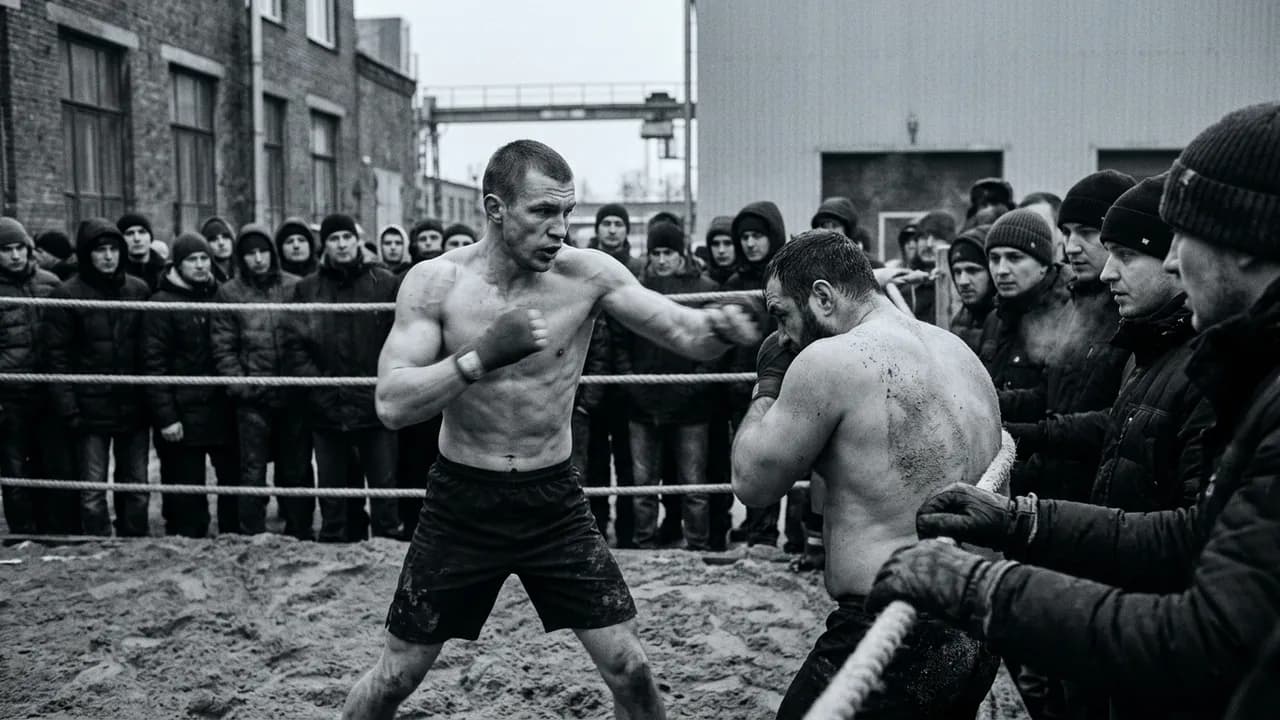
Strelka was founded in 2011 in St. Petersburg by an organizer known only by the alias "Greg," and it runs a deliberately bare format: no rounds, no time limits, and a ring marked out in sand. A bout continues until one man can no longer carry on. There is no standing eight count to grant a reprieve and no bell to interrupt a beating, which places an unusual premium on a single attribute: the capacity to keep absorbing punishment without breaking.
Yuri "The Tank" is the persona built around that attribute. The "Tank" nickname is common across street-fight culture, and the first name grounds it in the Russian setting and distinguishes this durability-first reading from other heavy archetypes. Where a power puncher wants to end things quickly and a pressure fighter wants to march forward, the grinder simply refuses to fall, turning every fight into a question of who tires, bleeds, or quits first. Whether one competitor or a composite, the persona reflects a real and decisive pattern in how Strelka bouts are won.
The full ruleset and what it demands of fighters is laid out in the Strelka rules explainer.
Fighting Style
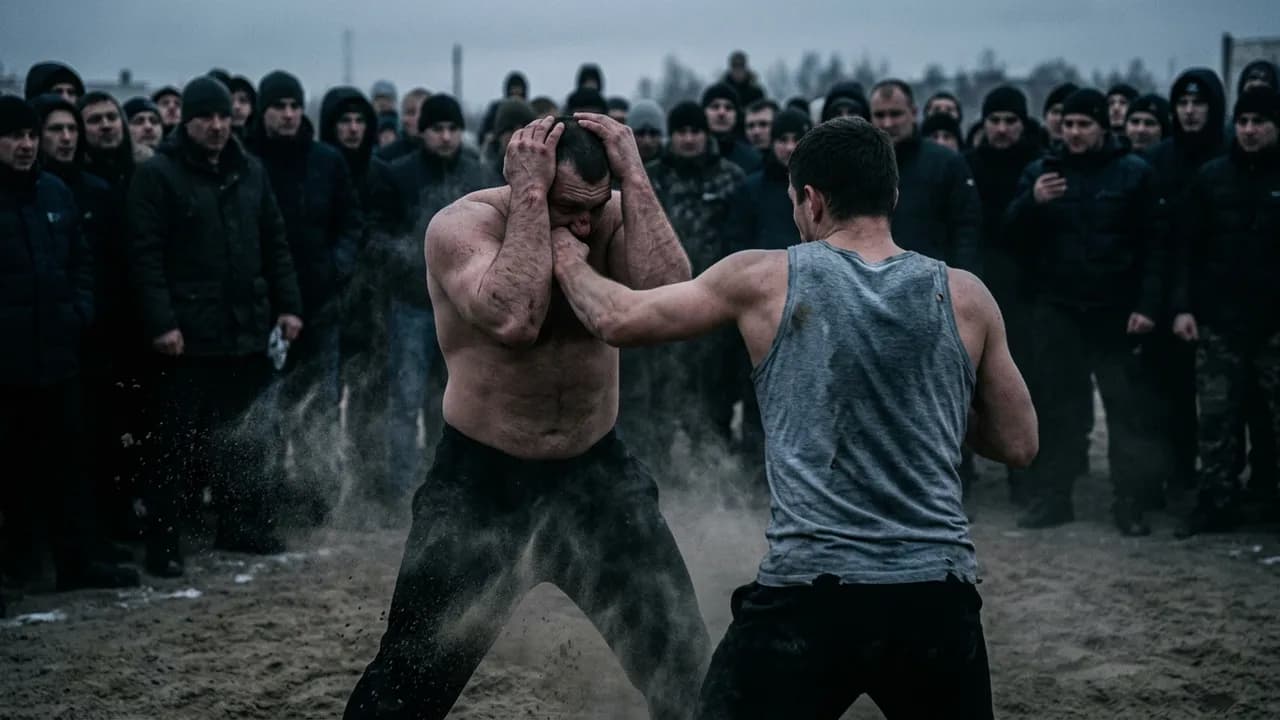
The Tank's style is defined by what it endures rather than what it produces. He walks into exchanges expecting to be hit, and he is, often cleanly, yet he keeps coming. The chin and the constitution do the heavy lifting; a high guard and a low, balanced stance reduce the worst of the damage, but the persona is fundamentally about a man who treats clean punches as information rather than emergencies. Each absorbed blow is a small deposit against an opponent's confidence.
The offense is unhurried and built for the long haul. Short body shots, heavy single hooks, and clinch work that drains an opponent physically and mentally. There is little flourish to it, and that is the point. The grinder is not trying to dazzle; he is trying to be there in the eleventh minute of a fight that has no scheduled end, when the other man's hands have dropped and his legs have gone. On shifting sand, where every reset costs energy, the fighter who needs the least rest holds the advantage.
The vulnerability is real even if it is rarely exploited quickly. A genuine one-punch finisher can cut the story short before attrition takes hold, and a smarter, more mobile opponent can in theory pile up damage from a distance the grinder cannot close. But in a format with no clock to hide behind, those opponents must do their work in full, against a man whose entire identity is the refusal to stay down.
Role and Significance
Within Strelka's body of work, The Tank fills the slot of the indestructible. The promotion's appeal rests on raw, unscheduled violence, and few images are more compelling on a YouTube clip than a fighter walking through a clean shot as though it never landed. The grinder is the persona that turns durability itself into the main event.
The archetype also clarifies why Strelka's format is so unforgiving compared with gloved, round-based promotions. In Russia's Top Dog FC, three two-minute rounds give a hurt fighter a corner, a break, and a chance to recover, which softens the value of pure durability. Strelka offers no such mercy: there is no break to survive to, only the next punch and the question of whether you can take it. Related personas in adjacent molds include The Tank, the forward-marching pressure fighter, and Mikhail the Wall, built around defensive immovability.
Consistent with Strelka coverage, this profile describes role, era, and style rather than asserting fight results that cannot be verified. The nickname is treated as a circulated persona, and no real identity or fabricated record is presented as fact.
Legacy
Yuri "The Tank" endures as Strelka's measure of toughness, the standard against which other fighters' chins are quietly judged. The promotion is built on the recurring drama of strangers testing each other on bare ground, and the grinder offers the most elemental version of that test. He does not ask whether he can beat you with skill or power. He asks whether you can hit him hard enough, often enough, to make him stop, and the persona stands for every fighter who answered no.
For readers tracing the organization's most significant figures, the best Strelka fighters of all time list places personas like The Tank within the broader history of the St. Petersburg scene.
FAQ
Who is Yuri "The Tank" in Strelka?
Yuri "The Tank" is an editorial persona for a Strelka durability fighter built around an iron chin and a high tolerance for punishment. Strelka rarely publishes verified identities, so the profile describes the archetype and role rather than a documented record.
Why does durability decide so many Strelka fights?
Strelka uses no rounds and no time limits in a sand ring, with no standing count or break to grant a hurt fighter relief. A bout runs until one man cannot continue, so the competitor who can keep absorbing punishment often outlasts the one trying to inflict it.
Is Yuri "The Tank" a real, named fighter?
The nickname is common in street-fight culture and may apply to one competitor or several. In keeping with Strelka coverage, this profile treats it as a persona and avoids inventing specific fight results or a real identity.