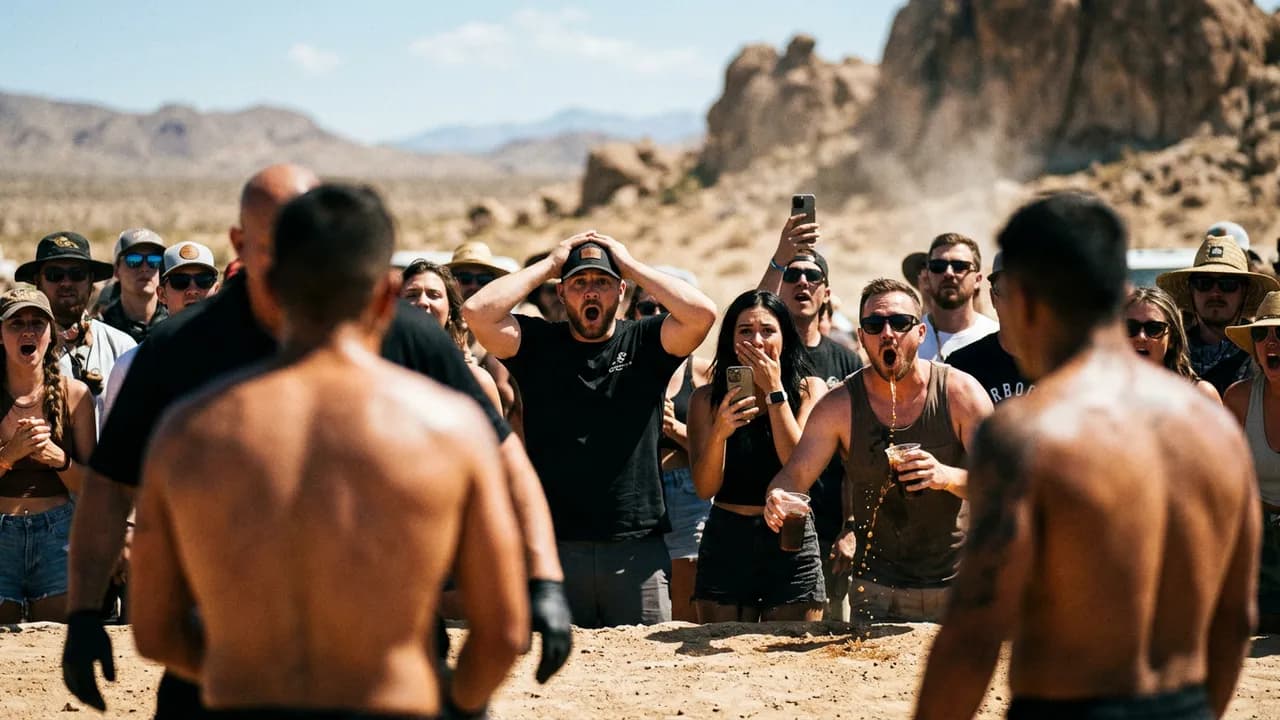
Felony Fights was a notorious underground fight DVD series that distributed some of the most extreme no-rules combat footage ever produced commercially. Created by Shad Smith -- himself a convicted felon -- the series featured brutal, unregulated fights between felons, gang members, skinheads, and street fighters. It was banned from retail stores, generated outrage from politicians and advocacy groups, and ultimately disappeared from production in the late 2000s.
This FAQ covers the full story of Felony Fights -- what it was, how it operated, and what happened to it.
What was Felony Fights?
Felony Fights was a DVD series produced starting in 2005 by Shad Smith, who created the concept shortly after his release from California's Avenal State Prison. The series featured raw, unedited street fights between convicted felons and street fighters with no rules, no protective equipment, and no regulation of any kind.
The content was extreme by any standard:
- No gloves, no wraps, no protective gear
- No rules governing techniques -- punching, kicking, stomping, and ground strikes were all permitted
- No referee to stop fights
- No medical staff present
- Fighters were identified by their criminal records and gang affiliations
- Volumes included titles like "Sick & Twisted Games" and "Return of the Games"
The DVDs were sold through independent distribution channels, internet retailers, and direct sales. Major retail chains refused to stock the product due to its extreme content.
Who was Shad Smith?
Shad Smith was the creator and primary producer of Felony Fights. Smith was a convicted felon who had served time at Avenal State Prison in California. After his release, he conceived Felony Fights as both a business venture and an outlet for the street fighting culture he had been immersed in during and after incarceration.
Smith recruited fighters from the communities he knew -- former inmates, gang members, and street fighters from California's roughest neighborhoods. His insider status gave him access to participants who would not have engaged with a mainstream production company.
Why was Felony Fights controversial?
Felony Fights generated controversy on multiple levels:
Exploitation concerns. Critics argued that the series exploited vulnerable populations -- convicted felons, addicts, and people from impoverished communities -- by profiting from their willingness to engage in dangerous violence. The fighters received minimal compensation while Smith and the distributors profited from sales.
Racial and gang elements. Some volumes featured explicitly racial matchups -- including fights between members of different racial groups and gang factions. This content drew accusations of exploiting racial tensions for entertainment and potentially inciting violence.
Safety. The complete absence of safety measures meant that fighters were at serious risk of permanent injury or death. No medical screening, no referee, no medical staff, and no intervention protocol of any kind.
Legality. The fights themselves were unregulated and unsanctioned, raising questions about whether the footage documented criminal assault. Several law enforcement agencies investigated Felony Fights, though the series operated in a gray area -- the participants consented to the fights, making prosecution complicated.
Normalization of violence. Advocacy groups and politicians argued that Felony Fights normalized extreme violence and glorified criminal culture, particularly among young men in communities already affected by high rates of violence.
Was Felony Fights illegal?
The legal status of Felony Fights was complex:
- The fights themselves were likely illegal under California assault statutes, as they involved intentional infliction of bodily harm without sanctioning from any athletic commission.
- The distribution of the footage was protected in many jurisdictions by free speech and free press laws, similar to how violent documentaries and news footage are legally distributed.
- The recruitment and organization of fights could potentially have been prosecuted as conspiracy to commit assault or as promotion of illegal fighting.
In practice, the series existed in a legal gray area. Law enforcement investigated but did not pursue major prosecutions, likely because the participants consented voluntarily and because the broader legal framework for prosecuting fight promoters who film and sell the content was (and remains) unsettled.
What happened to Felony Fights?
Felony Fights ceased production in the late 2000s. The exact circumstances of its demise are not comprehensively documented, but several factors contributed:
- Distribution challenges. Retail bans and the reluctance of mainstream distributors to carry the product limited commercial viability.
- Legal pressure. Ongoing law enforcement attention created risk for Smith and his associates.
- Competition from free online content. The rise of YouTube and other video platforms made it possible to watch extreme fight content for free, undermining the DVD sales model.
- Cultural shift. The backyard fighting scene evolved. Organizations like Streetbeefs offered structured, filmed fights with at least some safety measures, providing audiences with similar content in a more palatable format.
The original Felony Fights DVDs have become rare collectors' items. Some footage has been archived on the Internet Archive, and clips circulate on social media and video platforms. The website felonyfights.com still exists but the operation is no longer active.
How many Felony Fights DVDs were produced?
Multiple volumes of Felony Fights were produced between 2005 and approximately 2006-2007. The exact number of volumes is not definitively documented, but the series included several numbered volumes plus special editions with titles referencing the extreme nature of the content.
How was Felony Fights different from other underground fighting?
Felony Fights occupied a unique and extreme position in the underground fighting landscape:
- Streetbeefs uses gloves, referees, and rules. Felony Fights used none.
- KOTS is extreme but operates as an ongoing organization with a community. Felony Fights was a media product, not a community.
- UCL (Underground Combat League) in New York was unsanctioned MMA with at least some structure. Felony Fights had no structure whatsoever.
The closest comparison is to the "bum fights" genre of the early 2000s, which also exploited vulnerable populations for entertainment. Felony Fights was more focused on genuine fighters and fight culture, but it shared the exploitative dynamic of profiting from the desperation and circumstances of its participants.
What is Felony Fights' legacy?
Felony Fights' legacy is primarily cautionary. It represents:
- The darkest end of the underground fighting spectrum -- what happens when there are truly no rules, no safety measures, and no consideration for fighter welfare
- The exploitation problem that continues to affect underground fighting -- organizations profiting from content created by fighters who assume all the risk and receive minimal compensation
- A precursor to modern fight content -- the demand that Felony Fights identified (raw, unfiltered fight footage) was eventually met by YouTube-based organizations that offered similar content with less extreme exploitation
The series is cited in academic and journalistic analyses of underground fighting culture as an example of the ethical boundaries that even the underground scene generally chooses not to cross.
For more on the broader underground fighting landscape, see our complete underground fighting FAQ. For the history of underground fighting in the United States, see our history of backyard fighting.