Strelka is the largest fight club in the world by participant count and one of the most-watched combat sports channels on YouTube. Founded in St. Petersburg, Russia, in 2011, Strelka has grown from a regional street fighting operation into a nationwide phenomenon that has processed over 10,000 fighters across Russia and the CIS (Commonwealth of Independent States). Its YouTube channel boasts over 2.5 million subscribers and 1.2 billion total views, making it the second most-viewed combat sports channel on the platform behind only the UFC.
Those numbers are staggering for an organization that has no television deal, no arena tours, and no fighters who would be recognized on the street. Strelka's power lies in its format, its accessibility, and the algorithmic reach of its viral content. This is the history of the events and fights that made Strelka a global phenomenon.
The Format: Sand, Surrender, and No Time Limits
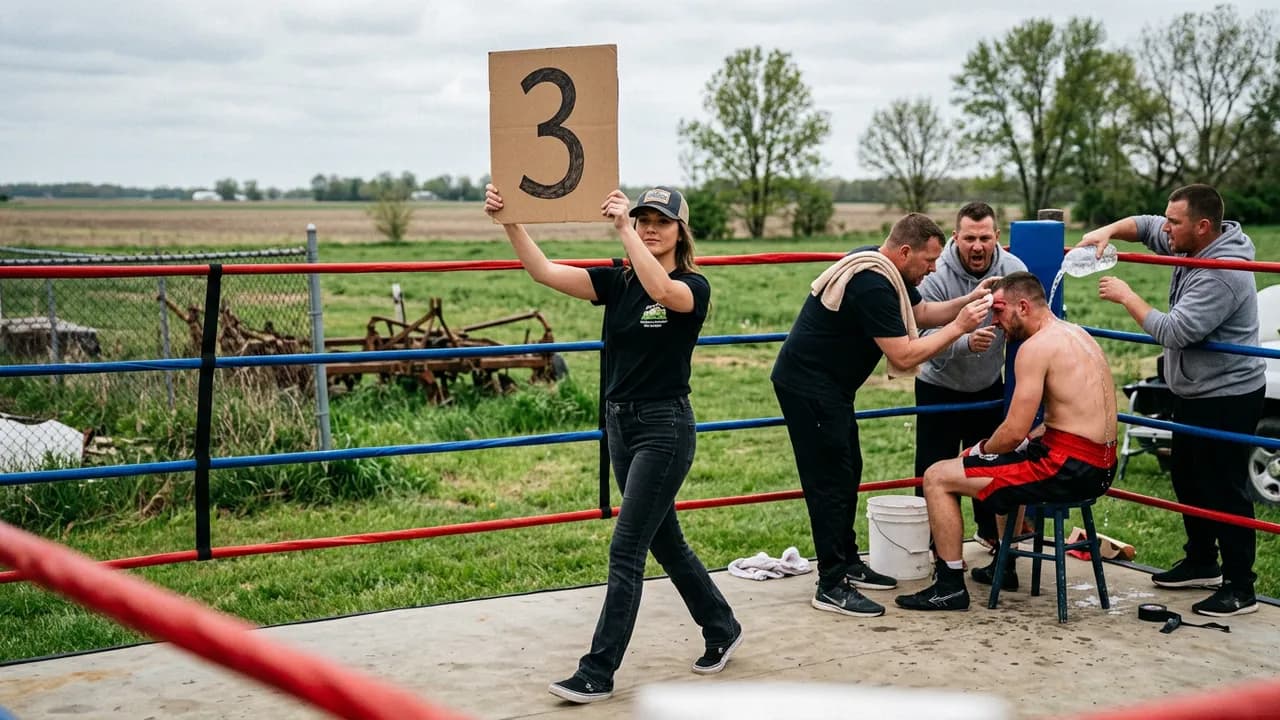
Before examining individual events, understanding Strelka's format is essential. Fights take place on a sand or beach surface, inside a circular ring that resembles a pit more than a traditional squared circle. There are no rounds. There are no judges. There is no time limit. A fight continues until one participant surrenders, is unable to continue, or the referee intervenes for safety.
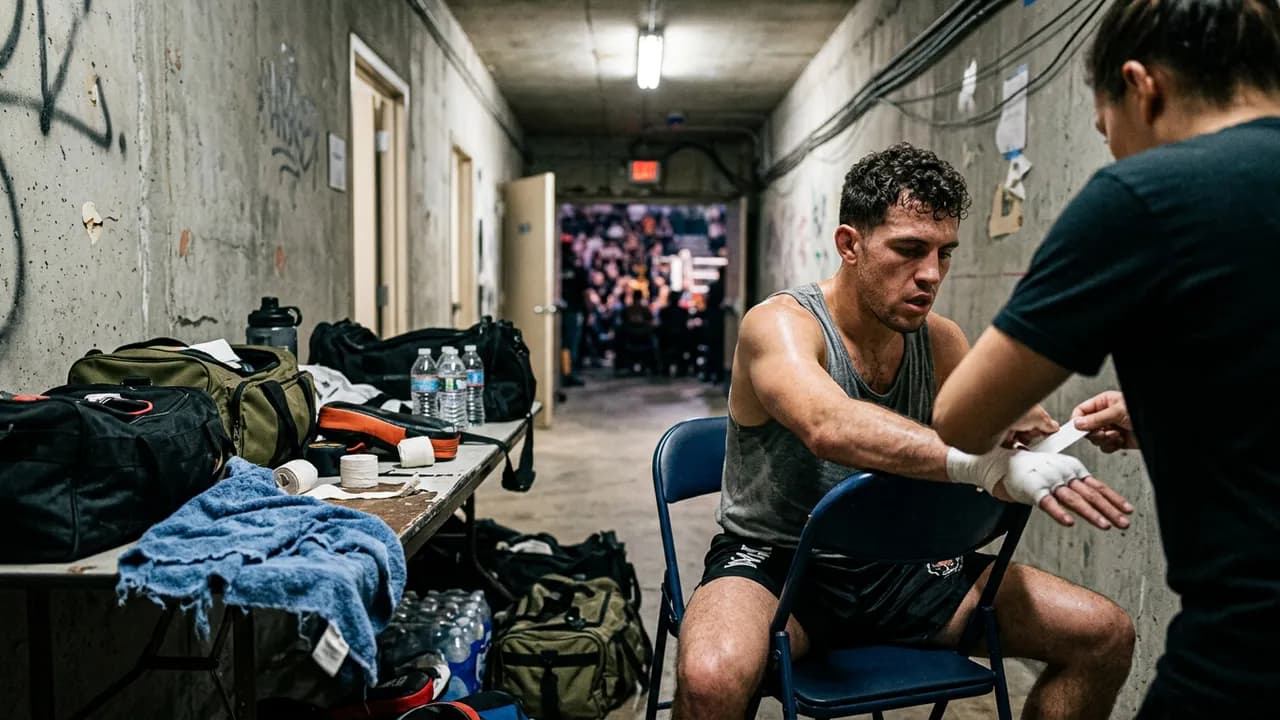
The participants are amateurs and semi-professionals. Strelka's matchmakers pair fighters of approximately equal size and skill, but the fighter pool is drawn from everyday Russian society: truck drivers, office workers, construction laborers, university students, lawyers, and anyone else willing to register through the Strelka website (tronmma.com). The diversity of participants is a core part of the brand. Strelka is not a promotion for professional fighters. It is a promotion for everyone.
This accessibility is what separates Strelka from organizations like BKFC or Top Dog FC. There is no tryout process that filters for elite athletes. If you want to fight, you can fight. That openness produces matchups that range from surprisingly technical to comically lopsided, and the unpredictability of any given fight is one of the primary reasons viewers keep coming back.
The 24-Million-View Knockout: Andrei Petrantsov's Moment
No discussion of Strelka's biggest moments is complete without Andrei Petrantsov. A truck driver from Bryansk -- a mid-sized city roughly 380 kilometers southwest of Moscow -- Petrantsov arrived at a Strelka event as a complete unknown. He was not a trained fighter. He did not have a martial arts background. He was a working-class man who signed up because the registration form was open and the sand ring was available.
What happened next produced one of the most-viewed combat sports clips on the internet. Petrantsov delivered a knockout so dramatic, so perfectly timed, and so unexpected that the resulting YouTube video accumulated over 24 million views. The clip was shared across every social media platform, translated into dozens of languages, and introduced millions of non-Russian speakers to Strelka for the first time.
Petrantsov's knockout encapsulated everything that makes Strelka compelling. An ordinary man, with no professional credentials, delivering an extraordinary moment in an environment that makes no distinction between trained fighters and first-timers. The footage was raw, the setting was unpolished, and the result was genuine. No amount of production value could have manufactured what happened organically on that sand ring.
Early Events (2011-2015): Building the Foundation in St. Petersburg
Strelka's earliest events were local affairs, staged in and around St. Petersburg with participants drawn from the city and surrounding Leningrad Oblast. The format was established during this period -- the sand ring, the no-rounds structure, the open registration -- and the first fights were uploaded to YouTube with minimal editing or production.
The early videos reflected the guerrilla nature of the operation. Camera angles were basic. Audio was ambient crowd noise. There was no commentary, no graphics, and no post-production. But the content was compelling enough to generate a growing subscriber base, and the YouTube algorithm began surfacing Strelka videos to combat sports audiences around the world.
During this foundational period, Strelka established its identity as something distinct from both the underground fighting scene (where organizations like Streetbeefs operated) and the professional bare knuckle world. Strelka was neither fully underground nor professional. It occupied a middle ground -- organized enough to have consistent branding and matchmaking, informal enough to accept anyone who wanted to fight.
The National Expansion (2016-2019)
By 2016, Strelka had outgrown St. Petersburg. The organization began staging events across Russia, setting up sand rings in cities from Moscow to Vladivostok. The national expansion was driven by demand -- fighters from across the country wanted to participate, and the YouTube audience rewarded content from diverse locations and fighter pools.
04 / Up next / Peak YouTube Era (2019-2022)
This period saw a dramatic increase in both the quantity and quality of content. Events became larger, with more fights per card and more spectators in attendance. The production values improved incrementally -- better cameras, multiple angles, occasional slow-motion replays -- while maintaining the raw aesthetic that distinguished Strelka from polished professional promotions.
The national expansion also introduced regional rivalries and styles. Fighters from the Caucasus brought wrestling and grappling traditions. Fighters from Siberia brought toughness and endurance. Fighters from Moscow brought whatever training they could find in the capital's diverse gym scene. The stylistic variety made the content more interesting and unpredictable.
Peak YouTube Era (2019-2022)
Strelka's YouTube channel reached its peak velocity during this period, crossing the 2 million subscriber mark and accumulating hundreds of millions of views. The channel was uploading multiple fights per week, and the algorithm was consistently surfacing Strelka content to audiences across Europe, North America, and Latin America.
Several factors drove this growth:
The rise of combat sports YouTube. The broader explosion of fight content on YouTube -- driven by organizations like Streetbeefs, King of the Streets, and the emergence of influencer boxing -- created a larger audience pool that was primed for Strelka's content.
The "regular people fighting" appeal. Unlike professional promotions where the fighters are trained athletes, Strelka's roster of everyday people created a relatability that resonated with viewers. The truck driver, the office worker, the university student -- these were people the audience could imagine being. That identification drove engagement.
The knockout culture. Strelka's no-rounds format meant that fights often ended in dramatic fashion. Knockouts, submissions, and corner stoppages provided the kind of decisive finishes that generate shares and clicks. The algorithm rewarded the engagement, and the engagement rewarded the algorithm.
Notable Events and Viral Moments
While Strelka does not name its events with the branded branding of promotions like BKFC's KnuckleMania or Top Dog FC, several individual cards and moments stand out:
The heavyweight showcase events featured the largest fighters in Strelka's roster -- men well over 100 kilograms -- throwing ungloved punches on sand. The visual spectacle of two massive individuals fighting in an open-air sand ring, surrounded by a crowd of spectators, produced some of the channel's most-viewed content.
The "David vs. Goliath" matchups where significantly smaller fighters were matched against larger opponents. When the smaller fighter won -- and they did more often than casual viewers expected -- the resulting clips went viral. These matchups exploited a universal narrative that transcends language and culture.
The multi-fight tournament events where fighters competed in back-to-back bouts on the same day. The tournament format added stakes and drama that single-fight cards lacked, and the fatigue factor in later rounds produced compelling viewing as fighters struggled to perform while exhausted.
Strelka's Relationship with Top Dog FC and Mahatch FC
Strelka's success inspired the creation of other Russian and Eastern European fighting organizations. Top Dog FC, founded in Moscow around 2019, operates in a similar space but with higher production values, a hay bale ring instead of sand, and a more structured championship system. Mahatch FC, founded in Ukraine in 2020, drew explicit inspiration from the bare knuckle format that Strelka had popularized.
The relationship between these organizations is complex. They compete for fighters and audience attention in the same geographic and linguistic markets, but they also benefit from each other's growth. A viewer who discovers Strelka on YouTube is likely to be recommended Top Dog FC content, and vice versa. The rising tide of Russian-language fighting content has lifted all boats.
Strelka's Global Audience
One of Strelka's most remarkable achievements is its penetration into non-Russian-speaking markets. Despite uploading content entirely in Russian with minimal English-language accommodation, the channel has built a substantial international audience. Combat sports content is inherently visual, and the universal language of a knockout translates across every linguistic barrier.
International viewers discovered Strelka through YouTube's recommendation algorithm, reaction channels, and social media clips. The channel's most viral moments -- particularly the Petrantsov knockout -- circulated globally without translation, driven by the visual impact of the footage rather than any narrative context.
This global reach has implications for Strelka's future. An organization with over 2.5 million subscribers and 1.2 billion views has commercial value that extends far beyond the Russian market. Whether Strelka chooses to pursue that value through English-language content, international events, or partnerships with Western promotions remains to be seen.
The Current State of Strelka Events
As of 2026, Strelka continues to operate as one of the most prolific fighting organizations in the world. Events are staged regularly across Russia, the fighter registration system remains open, and the YouTube channel continues to upload content at a pace that dwarfs most professional promotions.
The organization has weathered geopolitical disruptions, platform changes, and the natural lifecycle challenges that affect any content-driven business. Its durability is a testament to the simplicity and appeal of its format: put two people on sand, let them fight until one cannot continue, and film it.
Whether Strelka evolves into something more structured or remains in its current form, its place in the history of underground and semi-professional fighting is secure. With over 10,000 participants and more than a billion YouTube views, Strelka is not just a fighting organization. It is a cultural phenomenon that has redefined what combat sports content can look like in the internet age.
Watch on YouTube
Watch Strelka's biggest fights and tournament highlights on their official channel:
- Strelka Street Fight -- Best Knockouts Compilation -- The most devastating finishes from over a decade of Strelka events
- Strelka Grand Prix Highlights -- Tournament bracket fights and championship bouts
- Strelka Season Highlights -- Best fights from recent Strelka seasons
- Strelka: How It Works -- Explanation of the Strelka format, rules, and tournament structure
Subscribe to the Strelka / TronMMA YouTube channel -- 2.5 million subscribers and over 1.2 billion total views.
For coverage of other major Eastern European fighting events, see Top Dog FC Major Events and Mahatch FC Major Events. For a broader view of the scene, read our Underground Fighting Legends profile.