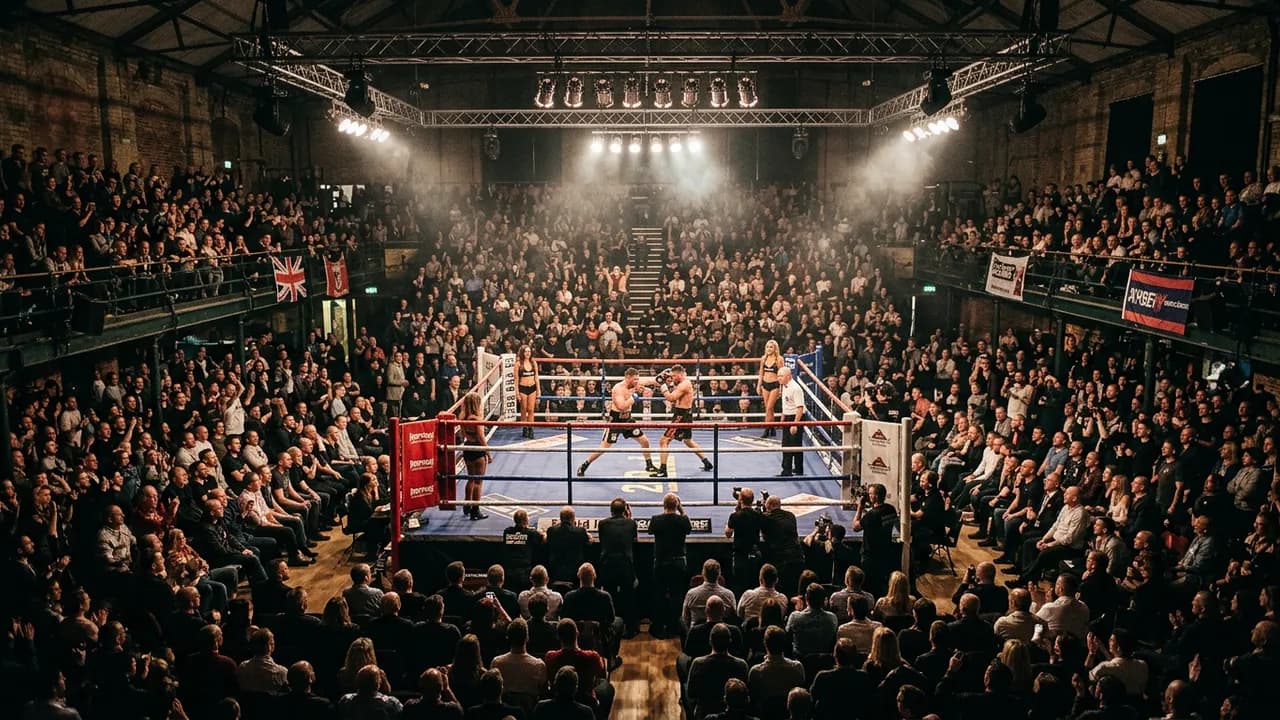
The United Kingdom has a bare knuckle fighting tradition that stretches back centuries -- from the prize ring era of the 18th and 19th centuries to the gypsy fighting culture that has preserved the art through generations of Traveller communities. BKB (Bare Knuckle Boxing) has positioned itself as the modern inheritor of that tradition, and BKB 8 -- held at London's prestigious O2 Indigo -- was the event that demonstrated the promotion could deliver bare knuckle fighting at a level that matched the sport's storied British history.
The O2 Indigo is not a back-alley venue or an industrial warehouse. It is a 2,800-capacity entertainment space within the O2 complex, one of London's premier entertainment destinations. Staging a bare knuckle event at the O2 Indigo was a statement: BKB was legitimate enough for one of the most recognized venue brands in the world. Whether British bookmakers price cards like it is a separate question, covered in BKB betting odds.
Event Overview
BKB 8 was a full-scale bare knuckle boxing event featuring a deep card of bouts across multiple weight classes. The event showcased BKB's roster of UK and international bare knuckle fighters, many of whom had built their reputations through the British bare knuckle scene and its intersection with the Traveller fighting tradition.
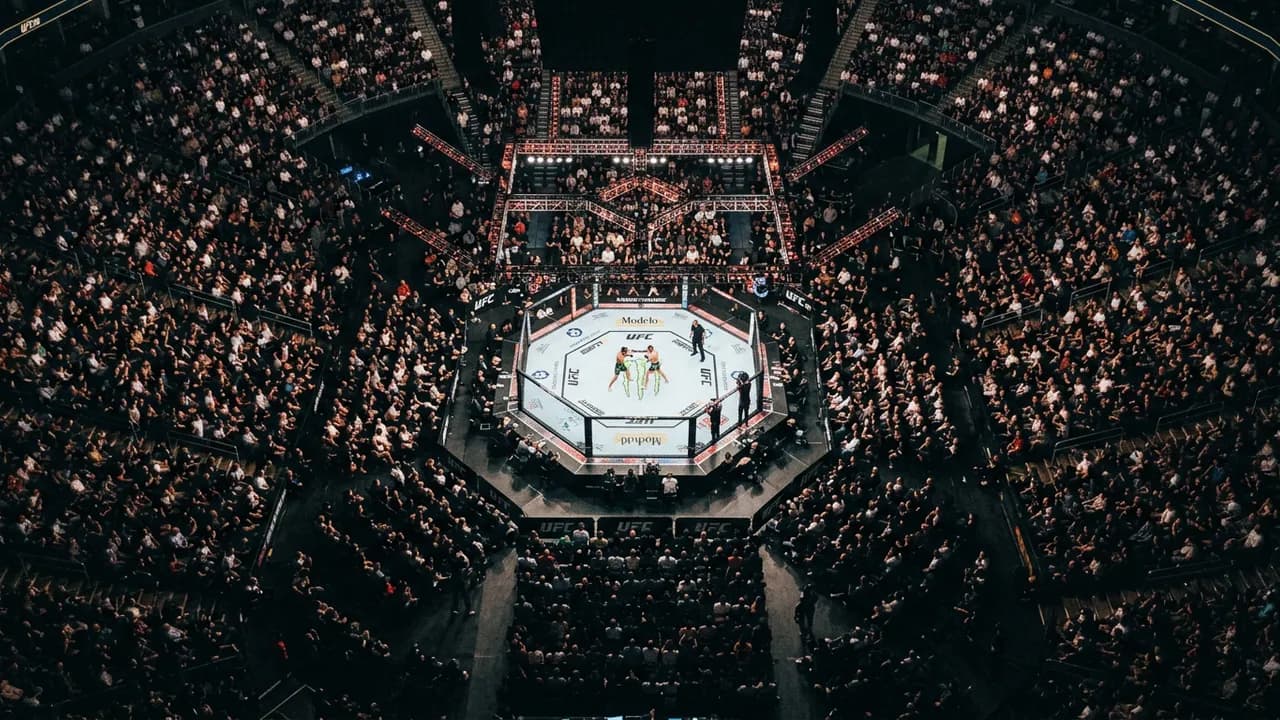
The format was bare knuckle boxing -- no gloves, but with hand wraps allowed. Fights were contested in BKB's distinctive triangular "Pit" -- a three-sided fighting area that is smaller than a standard boxing ring and creates a unique tactical environment. The triangular shape eliminates the neutral corners that boxers use for defensive positioning and forces more frequent engagement. The reduced space means there is nowhere to hide.
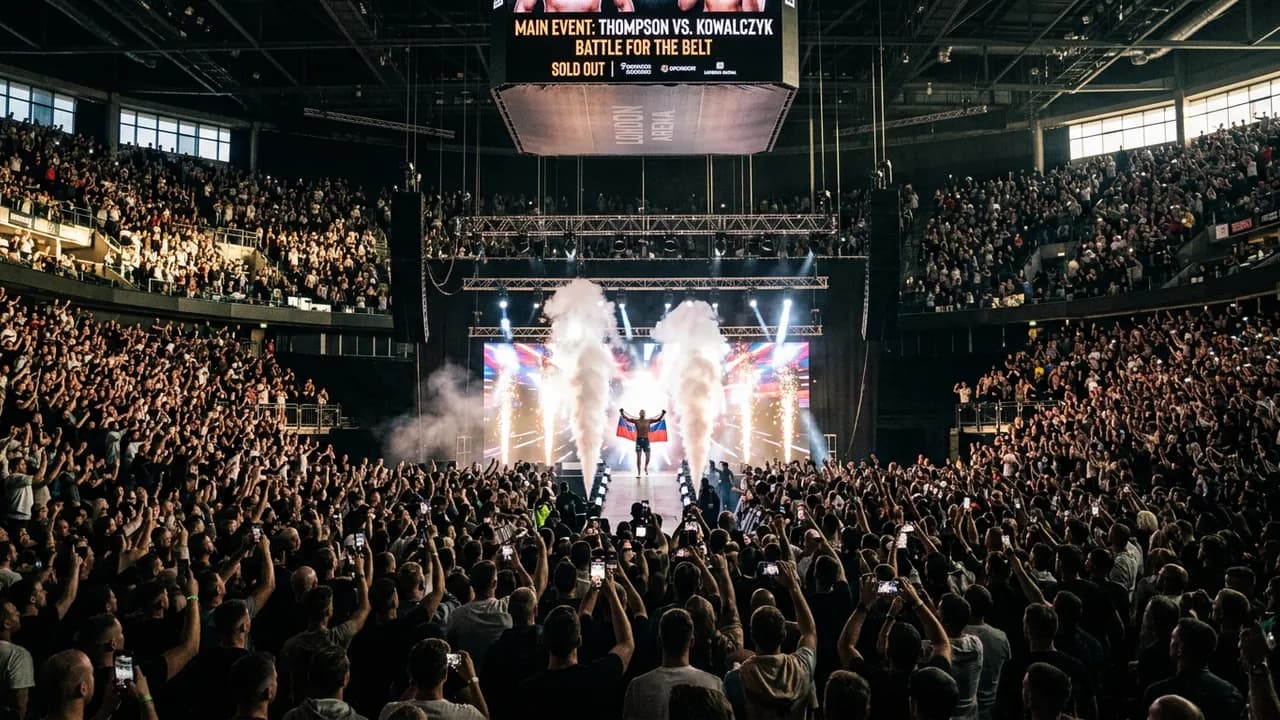
The event was broadcast to a pay-per-view audience while the live crowd at the O2 Indigo provided the atmosphere. London's bare knuckle fanbase -- a blend of boxing traditionalists, Traveller community supporters, and combat sports enthusiasts drawn by the raw appeal of ungloved fighting -- filled the venue with an energy that was distinctly British: knowledgeable, vocal, and passionate about the fighters and the traditions they represented.
Fight Card and Results
Headline Bouts
BKB 8's headline fights featured the promotion's top-tier fighters -- men who had established themselves as the best bare knuckle boxers in the UK. Fighters like Jimmy Sweeney and Barrie Jones, who had become recognizable names within the British bare knuckle scene, were featured prominently on the card.
The headline bouts delivered the combination of technical boxing and raw power that defines high-level bare knuckle fighting. Without the cushioning effect of boxing gloves, every punch carries amplified consequence. Clean shots that might be absorbed through gloves instead cut, swell, and damage. The fighters at BKB 8's main event level were skilled enough to land with precision, making the fights both technically impressive and viscerally impactful.
Undercard Depth
The undercard at BKB 8 showcased the depth of the UK bare knuckle scene. Fighters from across England, Scotland, Wales, and Ireland competed in bouts that ranged from technical boxing matches to all-out brawls. The UK's long bare knuckle tradition means that the fighter pool is deeper than in many countries -- there are men who have been fighting bare knuckle, formally or informally, their entire lives, and BKB's events tap into this reservoir of talent.
The Traveller Presence
The Traveller community's influence on BKB events is significant and was visible at BKB 8. The Irish Traveller and Romani communities have preserved bare knuckle fighting traditions for generations, settling disputes and establishing hierarchies through fair fights on neutral ground. Many of BKB's most talented fighters come from these communities, bringing a fighting heritage that cannot be replicated by gym training alone.
At BKB 8, fighters from Traveller backgrounds competed alongside boxers from the conventional British amateur and professional boxing scenes. The stylistic differences were sometimes visible -- Traveller fighters often favor a more aggressive, forward-moving style influenced by the fair fight tradition, while conventional boxers tend toward the technical, defensive approach that British boxing gyms emphasize.
Key Moments
The O2 Venue Statement
Securing the O2 Indigo as a venue was itself one of BKB 8's most significant moments. The O2 complex is a globally recognized entertainment brand, and its willingness to host a bare knuckle boxing event represented a validation of the sport's legitimacy in the UK market.
The O2 association gave BKB a veneer of mainstream legitimacy that few bare knuckle promotions worldwide could match.
The venue's prestige also attracted media attention that a less prominent location would not have generated. London-based sports journalists and entertainment media covered the event, introducing bare knuckle fighting to audiences who might not have sought it out. The O2 association gave BKB a veneer of mainstream legitimacy that few bare knuckle promotions worldwide could match.
The Triangular Pit in Action
BKB's triangular Pit is the promotion's most distinctive visual element, and at BKB 8 it demonstrated its tactical impact on the fights. The three-sided design, smaller than a conventional ring, creates a fighting environment where engagement is virtually constant. Boxers cannot circle away along the ropes or retreat to neutral corners. The angles of the triangle create unfamiliar geometries that disrupt the footwork patterns that conventionally trained boxers rely upon.
At BKB 8, the Pit produced fights that were more action-packed than typical boxing bouts. The reduced space forced exchanges, and the unusual angles created openings that neither fighter expected. The result was a style of fighting that was visually distinct from both conventional boxing and the American bare knuckle format used by BKFC.
British Bare Knuckle Tradition on Display
BKB 8 was a showcase for the living British bare knuckle tradition. The sport that produced legendary prize fighters like Jem Belcher, Tom Cribb, and Daniel Mendoza in the 18th and 19th centuries was on display in a modern London venue, performed by men who were carrying that tradition forward into the 21st century.
The connection between historical British bare knuckle boxing and BKB's modern version was not just marketing. Many of the fighters at BKB 8 were products of the same communities -- Traveller families, boxing dynasties, working-class neighborhoods -- that produced Britain's bare knuckle champions two centuries ago. The tradition had never truly died in the UK; it had merely gone underground. BKB 8 brought it back into the light.
Aftermath and Impact
BKB's Market Position Strengthened
BKB 8 strengthened the promotion's position as the premier bare knuckle boxing organization in the UK. While BKFC dominated the American market and was expanding into the UK through its BKFC UK operations, BKB maintained its claim to the domestic market through events like BKB 8 that emphasized British tradition and British talent.
The O2 Indigo event demonstrated that BKB could operate at a venue level that competed with BKFC's American events, providing a domestic alternative for UK bare knuckle fans who wanted to support a homegrown promotion.
Fighter Visibility
The fighters who competed at BKB 8 -- particularly the headline performers -- gained visibility that extended beyond the bare knuckle community. The O2 venue, the media coverage, and the PPV distribution gave them exposure to audiences that most bare knuckle fighters in the UK never reach.
For fighters like Jimmy Sweeney and Barrie Jones, BKB 8 represented a platform commensurate with their skills -- a venue and an event that treated bare knuckle boxing with the respect and production quality that its practitioners deserve.
The UK vs. USA Dynamic
BKB 8 contributed to the growing dynamic between UK and American bare knuckle fighting. As BKFC expanded internationally and BKB maintained its domestic position, the possibility of cross-promotional matchups -- UK champions vs. American champions -- became a topic of discussion within the bare knuckle community. BKB 8 demonstrated that the UK had fighters capable of competing with anyone in the world, making the prospect of transatlantic bare knuckle matchups increasingly compelling.
What BKB 8 Represents
BKB 8 is a statement about continuity. Bare knuckle fighting in Britain did not begin with BKB, and it will not end with BKB. But the promotion's ability to stage a major event at the O2 Indigo in London -- to bring an ancient, often maligned sport into a modern, prestigious venue -- represents a bridge between the historical tradition and its modern expression.
The fighters who competed at BKB 8 are the heirs of the prize ring. The venue is the modern arena. And the sport -- raw, ungloved, demanding -- is the same one that captivated British audiences for centuries before boxing gloves were even invented.
Watch on YouTube
Watch BKB 8 fights and UK bare knuckle boxing highlights:
- BKB 8 -- Event Highlights -- Fight highlights from the BKB 8 event
- BKB Bare Knuckle Boxing: Best Knockouts -- The most devastating finishes from UK bare knuckle boxing
- BKB on VICE TV -- BKB event coverage that aired on VICE TV
BKB events are broadcast on VICE TV in the US and Canada. Search YouTube for "BKB Bare Knuckle Boxing" for highlights and fight clips.
For more on UK bare knuckle fighting, see BKB organization profile. For the broader bare knuckle landscape, see BKFC Major Events and KOTR Major Events.