Two of combat sports' most polarizing promotions -- Power Slap League and Bare Knuckle Fighting Championship (BKFC) -- represent opposite approaches to the same underlying concept: strip away the norms of traditional combat sports and see what happens. Power Slap removes the fight entirely, reducing combat to a single exchange of open-hand strikes. BKFC removes the gloves and lets boxers fight bare-fisted. Both have been called extreme. Both have been called dangerous. Both have significant viewership. But which is actually more extreme?
Quick Comparison
| Feature | Power Slap | BKFC |
|---|---|---|
| Founded | 2022 (first event Jan 2023) | 2018 |
| Creator/Owner | Dana White / UFC/TKO Group | David Feldman, Conor McGregor (investor) |
| Sport | Competitive slap fighting | Bare knuckle boxing |
| Format | Alternating single slaps | Full boxing match, bare knuckle |
| Defense Allowed | None -- must stand and receive | Full defensive boxing |
| Rounds | 3-5 rounds (one slap per turn per round) | 5 rounds, 2 minutes each |
| Broadcast | TBS, Max, YouTube | DAZN, TrillerTV |
| Weight Classes | Multiple | Multiple |
| Athletic Commission | Nevada State Athletic Commission | Multiple state commissions |
| Criticism Level | Extremely high | Moderate |
What Each Sport Actually Is
Power Slap
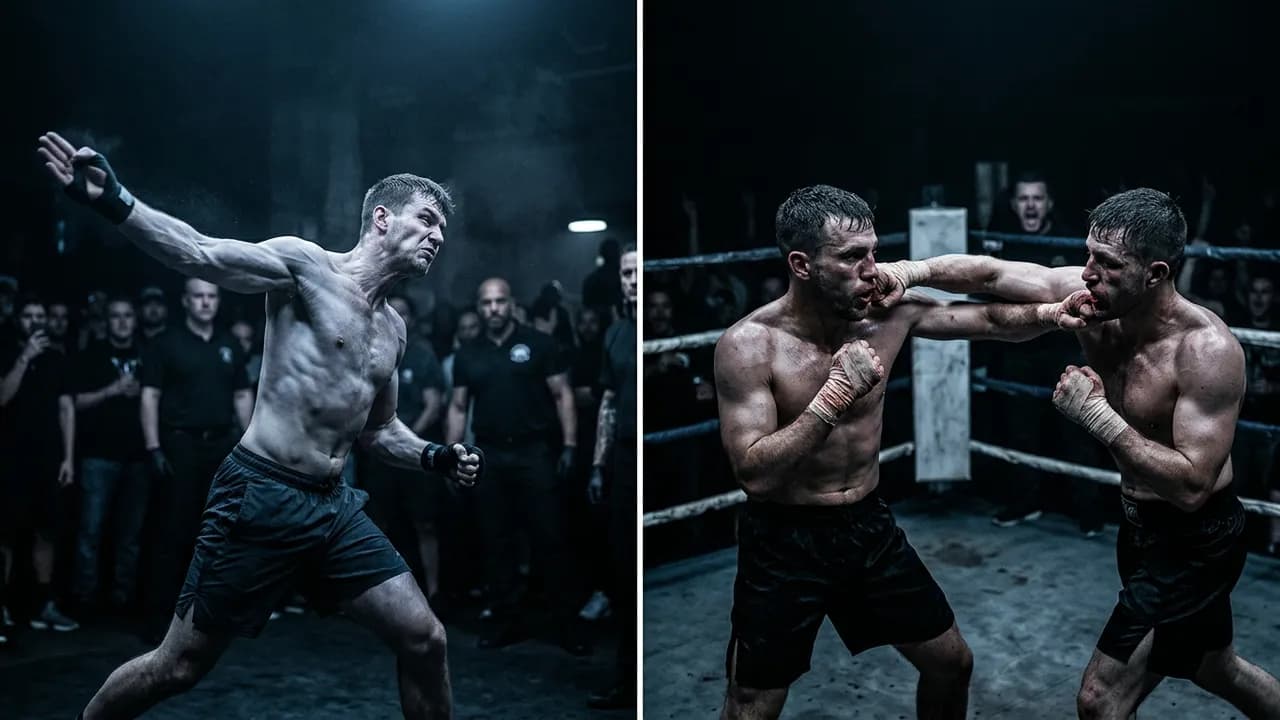
Power Slap is a competitive slap fighting league created by Dana White, the president of the UFC and CEO of TKO Group Holdings. The concept is deceptively simple: two competitors take turns delivering open-hand strikes to each other's face. There is no dodging, no blocking, and no fighting back during your opponent's turn. You stand with your hands behind your back and absorb the blow, then it is your turn to deliver one.
Matches consist of three to five rounds, with each round comprising one slap per competitor. Judges score based on the quality and impact of the slap. Knockouts are common and valued. The promotion debuted on TBS in January 2023 and has since expanded to Max (HBO Max) streaming and a significant YouTube presence.
BKFC
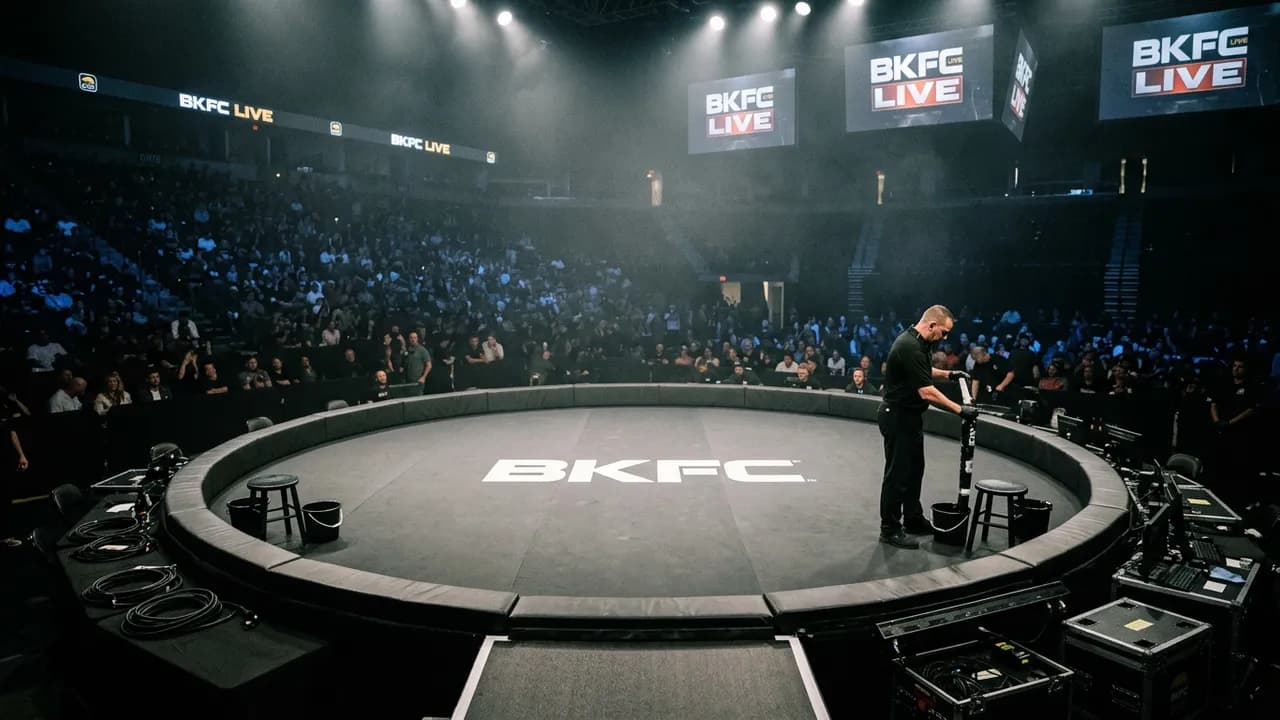
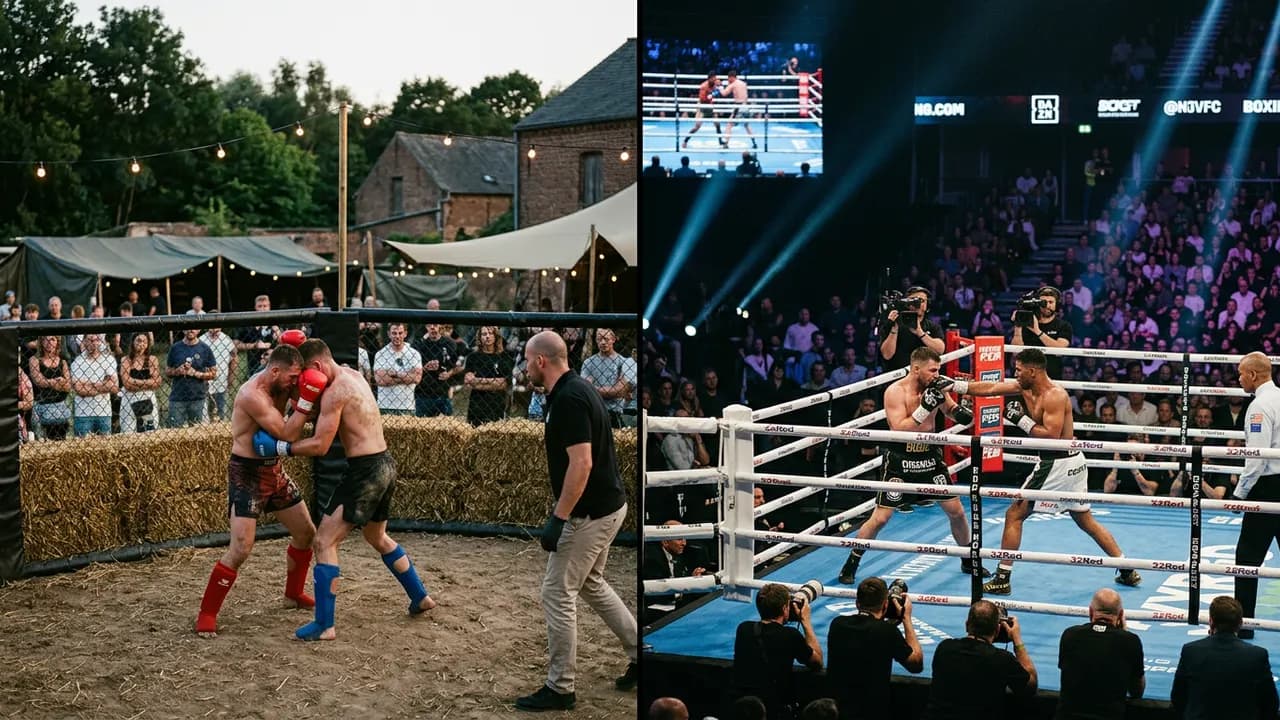
BKFC is bare knuckle boxing -- a full boxing match conducted without gloves. Fighters use all traditional boxing techniques: jabs, crosses, hooks, uppercuts, body shots, head movement, footwork, and clinch work. The only difference from gloved boxing is the absence of padded gloves; fighters wear wrist wraps that leave the knuckles exposed.
BKFC has been operating since 2018 and is the largest bare knuckle promotion in the world, with a three-year DAZN broadcast deal, over 142 events staged, and a roster that includes former UFC champions and contenders.
Rules Comparison
| Rule | Power Slap | BKFC |
|---|---|---|
| Striking Technique | Open-hand slap only | Closed-fist punches only |
| Target Area | Face/chin | Head, body (above waist) |
| Defense | Not allowed during opponent's turn | Full defensive boxing allowed |
| Footwork | Must remain stationary | Full ring movement |
| Clinch | N/A | Limited clinch work |
| Knockdown Rules | 10-count, match can continue | 10-count, varies by commission |
| Fouls | Wind-up violations, illegal techniques | Same as boxing fouls |
| Judging Criteria | Impact, technique, damage | Same as boxing (effective striking, etc.) |
The most striking rule difference is the prohibition of defense in Power Slap. In every other combat sport on earth, a fighter is expected -- and allowed -- to defend themselves. Power Slap removes this fundamental element. You must stand still and accept a full-force open-hand strike to the face. This single rule is the source of most criticism directed at the sport.
Danger and Medical Risk
This is the central question, and the answer is more nuanced than either promotion's critics or supporters suggest.
Power Slap Risks
- Concussive force without defense: The inability to slip, roll with, or block strikes means competitors absorb full, unmitigated impact to the head
- Rotational force: Open-hand slaps generate significant rotational acceleration to the head, which research has linked to traumatic brain injury
- Cumulative damage: Even in a three-round match, competitors receive three full-force shots to the head with no ability to mitigate
- Knockouts by design: The sport explicitly rewards and celebrates knockouts, incentivizing maximum force
Medical professionals have been vocal in their opposition to Power Slap. The Association of Ringside Physicians and multiple neurologists have criticized the sport, arguing that the prohibition of defense violates the basic safety framework that makes other combat sports ethically defensible. The argument is straightforward: in boxing, MMA, and even bare knuckle fighting, a fighter can move, block, and mitigate damage. In Power Slap, they cannot.
BKFC Risks
- Hand injuries: Bare knuckle punching produces frequent hand fractures and breaks
- Facial lacerations: Without glove padding, punches produce more cuts
- Concussive force: Still present, though fighters can defend themselves
- Eye injuries: Bare fists can more easily damage orbital areas
- Faster knockouts: Bare knuckle punches land faster than gloved punches
Counterintuitively, some medical research suggests that bare knuckle boxing may produce fewer concussions than gloved boxing. The reasoning: gloves allow fighters to throw harder punches with less personal risk to their hands, and the padding distributes force over a wider area, transferring more energy to the brain. Bare knuckle fighters throw with less power (to protect their hands) and the concentrated impact is more likely to produce cuts than deep brain trauma. This remains debated, but the data is worth noting.
Fighter Pay
| Pay Tier | Power Slap | BKFC |
|---|---|---|
| Entry Level | $2,000 - $5,000 | $2,000 - $9,000 |
| Mid-Tier | $5,000 - $25,000 | $20,000 - $30,000 |
| Top Tier | $50,000 - $100,000 | $100,000 - $300,000 |
| Headliners | $100,000+ | $400,000 - $700,000+ |
| Sponsorship | Restricted (UFC/TKO model) | Allowed -- fighters can wear sponsors |
BKFC pays significantly more at the top end, with fighters like Mike Perry reportedly earning over $1 million per fight when bonuses and sponsorships are included. BKFC's policy of allowing fighter sponsorships provides additional income that Power Slap's UFC-adjacent model does not permit.
Power Slap's pay structure reflects its newer status and the lower skill barrier to entry. The sport does not require years of combat sports training, which keeps labor costs down but also raises questions about whether competitors are adequately compensated for the neurological risk they assume.
Viewership and Cultural Reception
Power Slap
Power Slap has generated massive viewership, particularly on YouTube, where highlight clips routinely accumulate millions of views. The sport's viral nature -- dramatic knockouts, theatrical reactions, the spectacle of watching someone stand still and get slapped -- makes it perfectly suited for short-form social media content.
However, Power Slap has faced intense criticism from mainstream media, medical professionals, and even within the combat sports community. Critics call it barbaric, exploitative, and a step backward for combat sports legitimacy. Dana White has defended the sport vigorously, pointing to its regulated status under the Nevada State Athletic Commission and its growing audience.
BKFC
BKFC has achieved a more traditionally respected position within combat sports. The DAZN deal places it alongside boxing and MMA on a major platform. Coverage from outlets like ESPN, The Athletic, and MMA Fighting treats BKFC as a legitimate -- if edgy -- combat sport. The involvement of Conor McGregor as an investor added mainstream credibility.
BKFC still faces criticism -- bare knuckle fighting remains controversial -- but the criticism is qualitatively different from what Power Slap receives. BKFC is debated as a combat sport. Power Slap is debated as to whether it should exist at all.
Which Is More Extreme?
The answer depends on how you define "extreme."
Power Slap is more extreme in terms of:
- Removing the ability to defend yourself
- Forcing competitors to absorb unmitigated head trauma
- Departing further from traditional combat sports norms
- Generating more medical and ethical controversy
- The sheer spectacle of its format
BKFC is more extreme in terms of:
- Total damage accumulated over a full fight
- Visible injuries (cuts, swelling, broken hands)
- Duration of combat (10 minutes vs. a few slaps)
- Physical demands on the fighter
- The breadth of skills required
If "extreme" means departure from the norm of combat sports ethics -- the expectation that fighters can defend themselves -- then Power Slap is more extreme. It violates a principle that every other combat sport upholds.
If "extreme" means the total physical toll on participants over the course of competition, BKFC is more extreme. A five-round bare knuckle boxing match inflicts far more cumulative damage than three alternating slaps.
The Verdict
Power Slap and BKFC are both positioned on the extreme end of the combat sports spectrum, but they are extreme in different ways. BKFC is an evolution of one of humanity's oldest sports -- fistfighting -- conducted at a professional level with genuine athletic skill. Power Slap is a spectacle sport built for viral moments, backed by the most powerful promoter in combat sports history.
BKFC has earned its place as a legitimate, if controversial, combat sport. Power Slap remains far more divisive, with fundamental questions about its medical ethics still unresolved. Both will continue to draw audiences, but only one has a clear path to long-term legitimacy.
For more on BKFC, see our BKFC organization profile and BKFC vs BKB comparison. For other comparisons, check out Rough N' Rowdy vs BKFC.
Watch and Learn More
YouTube Channels
- Power Slap -- Dana White's open-hand striking league
- BKFC Official -- Bare knuckle fighting championship
Recommended Fights
- Mike Perry vs Luke Rockhold (BKFC) -- BKFC's biggest crossover fight
Official Sites
- BKFC Official Site -- BKFC events and streaming
Read More on UNSANCTIONED FIGHTS
- BKFC Organization Profile -- Full BKFC breakdown
- Underground vs Slap Fighting -- Broader comparison
- Delvin Hamlett Fighter Profile -- Streetbeefs to Power Slap crossover
- Top 10 BKFC Fighters of All Time -- BKFC's greatest
- BKFC vs UFC Fighter Pay -- How BKFC pay compares
- All Underground Fighting Organizations Ranked -- Where BKFC ranks