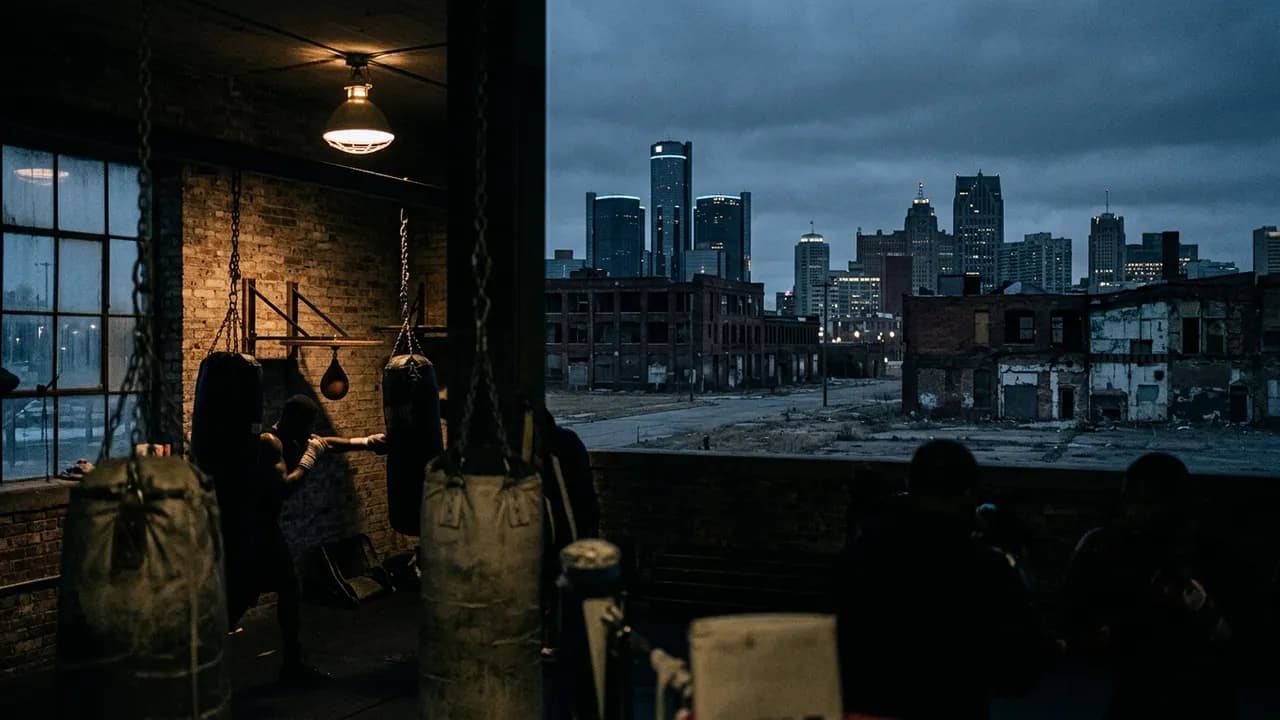
Detroit is a city that has been fighting for its survival for half a century. The collapse of the auto industry, the population exodus, the bankruptcy, the abandoned blocks that stretch for miles -- all of it has created a city where toughness is not an affectation but a survival skill. And from this crucible, Detroit has produced a fighting culture that is as hard and as real as the city itself. The Kronk Gym, Thomas "Hitman" Hearns, and a succession of world-class boxers gave Detroit a place in the pantheon of American boxing cities. The underground scene that operates in the city's margins carries that tradition forward in rawer, less celebrated form.
Detroit fights because Detroit has always fought. The city's boxing heritage is inseparable from its industrial heritage -- both are products of a culture that valued physical labor, physical courage, and the ability to endure punishment that would break softer places.
History
Detroit's boxing golden age is synonymous with the Kronk Gym and the man who made it legendary: Emanuel Steward. The gym, located in the Kronk Recreation Center on the west side, produced an astonishing roster of world champions -- Thomas Hearns, Hilmer Kenty, Milton McCrory, Jimmy Paul, and dozens of others. Steward's training methods and his ability to develop fighters from Detroit's toughest neighborhoods made Kronk the most famous boxing gym in the world during the 1980s and early 1990s.
Thomas Hearns, the "Hitman," remains Detroit's greatest fighting son. His right hand was one of the most devastating weapons in boxing history, and his wars with Sugar Ray Leonard, Marvin Hagler, and Roberto Duran defined an era. Hearns emerged from the same streets that produce the city's current generation of fighters, and his legacy casts a long shadow over Detroit's fighting culture.
The decline of Detroit's economy in the late twentieth century did not diminish the city's fighting spirit -- if anything, it intensified it. As legitimate economic opportunities disappeared, the skills and toughness that boxing cultivated became even more relevant. The underground fighting scene that developed in Detroit's abandoned lots and vacant buildings was a natural extension of a culture where physical capability was one of the few assets that could not be outsourced or automated.
Organizations
The Gym Legacy
The Kronk Gym closed its original location but its legacy persists in the gyms that continue to operate across Detroit. These facilities train fighters in the Kronk tradition -- explosive punching, aggressive pressure fighting, and the kind of conditioning that produces fighters who can sustain punishment over twelve rounds. Several gyms in the Detroit area explicitly claim the Kronk lineage, and their graduates carry the style into amateur and professional competition.
The Underground Scene
Detroit's underground fighting scene is raw and decentralized. Backyard fights, parking lot brawls, and informal boxing matches take place across the city with regularity. The content that emerges on social media shows fights that range from supervised boxing matches with gloves and a referee to unregulated encounters that more closely resemble street fighting.
The city's economic conditions shape the scene. In neighborhoods where unemployment is chronic and the formal economy barely exists, fighting provides both entertainment and a pathway to recognition. The fighters who emerge from Detroit's underground carry a hardness that reflects their environment -- they have been conditioned by a city that does not coddle its residents.
Amateur Boxing
Detroit's amateur boxing programs remain a vital part of the city's social infrastructure. The Police Athletic League and community-based boxing programs provide training and competitive opportunities for young fighters. These programs serve dual purposes -- developing boxing talent and providing structured activities for young people in neighborhoods where such opportunities are scarce. The amateur programs feed fighters into the professional ranks and, inevitably, into the underground scene as well.
Notable Fighters
Detroit's boxing legacy is extraordinary. Thomas Hearns tops the list, but the city has produced world champions across eras and weight classes. Floyd Mayweather Jr., though associated with Las Vegas and Grand Rapids, has Detroit roots. The Kronk Gym alumni alone constitute one of the greatest concentrations of boxing talent any single gym has ever produced.
The underground scene produces fighters known within Detroit's neighborhoods rather than on the national stage. These fighters carry the Kronk tradition in their bones -- the aggressive style, the heavy hands, the refusal to take a backward step -- even if they have never set foot in a sanctioned ring.
Legal Status
Michigan regulates combat sports through the Michigan Department of Licensing and Regulatory Affairs. Professional and amateur boxing and MMA events require state oversight. The regulatory framework is functional but does not extend to the informal fighting that takes place across Detroit's neighborhoods.
Unsanctioned fighting in Detroit operates with minimal law enforcement interference, largely because the police department's resources are stretched thin by the city's broader public safety challenges. In a city with one of the highest violent crime rates in America, informal boxing matches on private property rank low on the enforcement priority list. This de facto tolerance allows the underground scene to operate more openly than it might in cities with more aggressive policing.
How to Get Involved
Detroit's boxing gyms are the primary entry point for the city's fighting culture. The gyms that carry the Kronk tradition offer world-class training, and many operate on sliding-scale fee structures that reflect the economic realities of their neighborhoods. USA Boxing amateur competitions are held in Michigan year-round.
The MMA scene in Detroit has grown, with multiple gyms offering training in mixed martial arts. Regional promotions provide competitive opportunities for fighters at the amateur and professional levels.
BKFC events in the Midwest are announced through bkfc.com. Detroit's boxing heritage makes it a natural market for bare knuckle events, and the promotion has drawn fighters from the Michigan area.
Related Cities
- Chicago -- Fellow Rust Belt boxing city with deep traditions and active underground scene
- Philadelphia -- East Coast parallel with similar blue-collar boxing culture
- New York -- Historic rival on the national boxing circuit
- Atlanta -- Southern city with comparable economic challenges and fighting culture