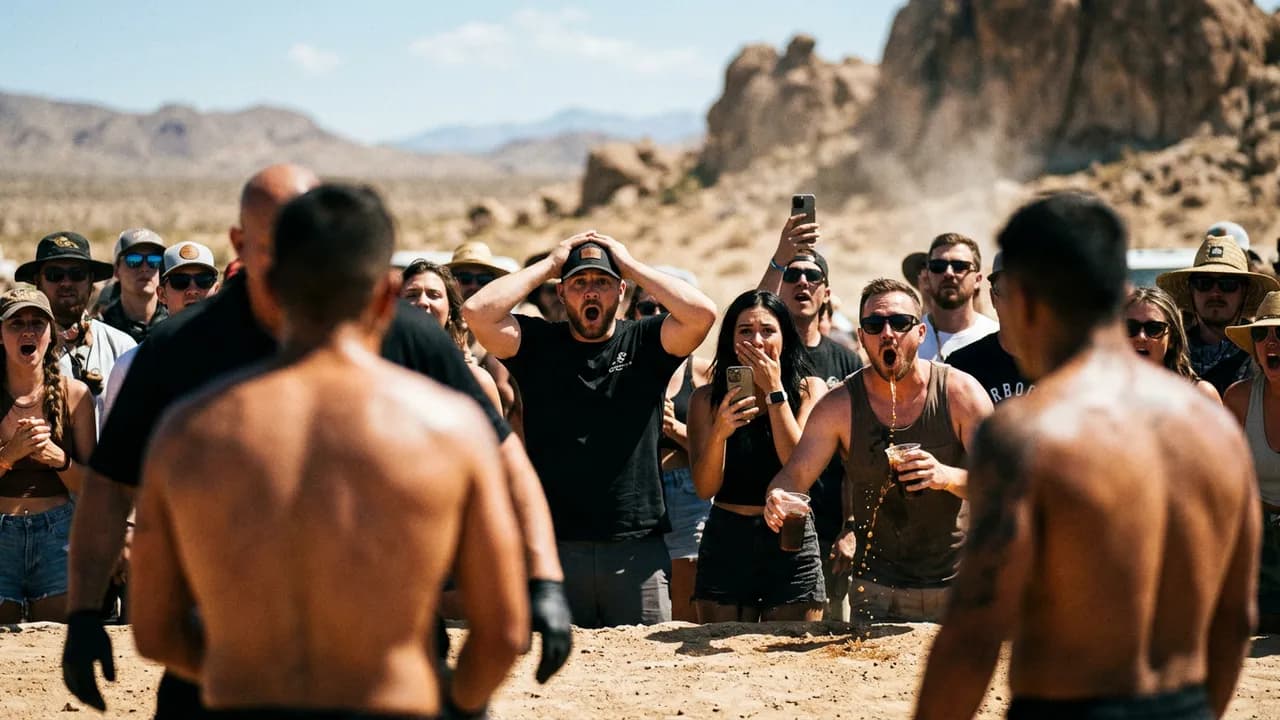
Felony Fights was never trying to be a sport. It was a product -- a series of DVDs that filmed convicted felons fighting each other in parking lots, empty lots, and warehouses across Southern California, then packaged the footage with mugshots, criminal records, and rap sheets as promotional material. The tagline was not subtle. The marketing was not aspirational. The entire concept was designed to exploit the worst moments of people's lives for entertainment value.
The series ran from roughly 2004 to 2013, producing multiple volumes that circulated through underground DVD networks, gas stations, and eventually the internet. The fights were raw, unregulated, and frequently disturbing. Participants were often homeless, addicted, or recently released from incarceration. Some were paid as little as forty dollars to fight. Others were reportedly given drugs.
What happened to these people after the cameras stopped rolling is a story that almost nobody bothered to tell. This is an attempt to account for at least some of them.
The Production Model: Exploitation by Design
Before tracking individual participants, it is important to understand what Felony Fights actually was. The producers -- primarily a figure known as "Johnny Flex" -- would recruit fighters from homeless encampments, halfway houses, and street corners in cities like San Diego, Los Angeles, and Fresno. The pitch was simple: fight someone, get paid cash.
The participants were not athletes in any meaningful sense. Some had fighting experience -- prison yards teach certain lessons -- but most were simply desperate people willing to absorb punishment for a small amount of money. The fights were not matched by weight, skill, or any other rational criterion. They were matched for maximum visual impact, which often meant significant mismatches.
This production model meant that the "fighters" from Felony Fights were never going to transition to legitimate combat sports. They were not building careers. They were surviving a Tuesday.
The Unnamed Majority: Vanished into the System
The most honest accounting of Felony Fights participants begins with an uncomfortable admission: most of them cannot be tracked. The series did not always use real names. Many participants were identified only by their street names or their criminal charges. Follow-up was not part of the business model.
What can be said with reasonable confidence is that many Felony Fights participants cycled back into the criminal justice system. The population from which the series drew its talent -- homeless individuals, addicts, people with extensive felony records -- has high rates of recidivism, overdose, and early death. Some of the people who appeared on those DVDs are almost certainly dead. Others are almost certainly incarcerated. The ones who made it out did so despite Felony Fights, not because of it.
This is not speculation. It is statistical reality applied to a population that was already marginalized before a camera crew showed up and offered them forty dollars to get punched in a parking lot.
The Fighters Who Became Internet Artifacts
When Felony Fights clips migrated from DVDs to YouTube and WorldStarHipHop in the late 2000s, some participants became recognizable -- not as people, but as content. Certain fights were viewed millions of times. The participants in those clips became memes, GIFs, and reaction videos, their worst moments replayed endlessly without their consent or compensation.
A handful of participants have been identified by internet researchers over the years. Some were located in California state prison databases. Others surfaced on social media, occasionally acknowledging their participation in the series. The reactions ranged from indifference to regret to a kind of dark pride in having survived the experience.
One recurring theme among identifiable participants is that Felony Fights represented a low point in their lives, not a highlight. The ones who achieved stability after the series rarely wanted to discuss their involvement. The ones who remained in crisis rarely had the platform to discuss anything at all.
The Legal Fallout: Producers and Participants
Felony Fights attracted significant legal scrutiny. Law enforcement investigations focused primarily on the producers rather than the participants, examining questions of exploitation, assault liability, and whether the series constituted illegal prizefighting under California law.
Several participants were reportedly questioned by law enforcement about the production, and a few faced additional charges related to their involvement. For people already navigating the criminal justice system, a Felony Fights appearance could complicate parole conditions, probation terms, and employment prospects.
04 / Up next / The Rare Success Stories
The producers eventually ceased production, though the exact circumstances of the series' end are disputed. Some accounts suggest legal pressure made continued operation untenable. Others point to the changing landscape of internet video, which made the DVD distribution model obsolete. Either way, the production stopped, and the participants were left to deal with the aftermath alone.
The Rare Success Stories
Among the hundreds of people who appeared across the Felony Fights catalog, a very small number managed to stabilize their lives in the years following their participation. These stories are difficult to verify and even more difficult to attribute to the fighting itself. Nobody credits Felony Fights with turning their life around. But a few participants have surfaced publicly in better circumstances than the ones captured on those DVDs.
Some found sobriety through recovery programs. Others secured housing and employment through reentry services that had nothing to do with combat sports. A few reportedly channeled the aggression that Felony Fights captured into legitimate gym training, finding in structured martial arts the outlet that a parking lot brawl could never provide.
These stories are the exception. They deserve mention precisely because they are rare.
The Ethical Reckoning
The underground fighting community has largely distanced itself from Felony Fights. Organizations like Streetbeefs, BKFC, and even the more extreme promotions operating today draw a clear line between consensual combat sport and exploitation. Streetbeefs founder Chris "Scarface" Wilmore built his entire platform on the principle that fighting should be an alternative to destructive behavior, not a product of it.
Felony Fights inverted that logic entirely. It found people who were already being destroyed by addiction, poverty, and incarceration, and it filmed them destroying each other for profit. The participants were not athletes seeking glory. They were raw material for a content machine that discarded them the moment the camera stopped rolling.
The question "where are they now?" is not just a retrospective curiosity when applied to Felony Fights. It is an indictment. Nobody tracked these people because nobody was ever supposed to care about them. They were cast as villains and spectacles, defined by their worst decisions, and then forgotten.
What Felony Fights Teaches About the Underground
Every underground fighting organization exists somewhere on a spectrum between sport and exploitation. At its best, the underground provides opportunity, community, and an outlet for aggression that might otherwise find more destructive expression. At its worst, it preys on vulnerability and calls it entertainment.
Felony Fights sits at the far end of that spectrum. Its participants were not empowered by their involvement. They were consumed by it. And the fact that most of them cannot be located today -- that their names, their faces, and their fates are simply unknown -- tells you everything you need to know about what the series valued and what it did not.
Wherever the participants of Felony Fights are now, they got there without any help from the people who profited from their pain. That is the legacy of the series, and it is one that the underground fighting world has spent the last decade trying to live down.
Watch: Available Felony Fights Footage
Felony Fights was a DVD-era phenomenon. Some clips have migrated to YouTube, though much of the original footage has been removed or restricted due to content policies.
- Felony Fights -- Original DVD Clips -- Surviving footage from the controversial series that filmed convicted felons fighting in Southern California parking lots.
- Felony Fights Documentary Analysis -- A retrospective look at the series, its exploitation model, and what it reveals about the dark side of underground fighting.
- Felony Fights vs Streetbeefs -- The Ethical Divide -- Understanding the difference between exploitation and empowerment in underground fighting through Scarface's "Fists Up, Guns Down" philosophy.
- Underground Fighting DVD Era -- 2000s Retrospective -- How Felony Fights fit into the broader ecosystem of underground fighting content distribution before YouTube dominated.
Note: Much of the original Felony Fights footage has been removed from major platforms due to content guidelines. Available clips represent a fraction of the original DVD catalog.
For more on the history and controversy of Felony Fights, see our Felony Fights organization profile. For a broader look at underground fighting legends, read Where Are They Now: Legends of Underground Fighting.