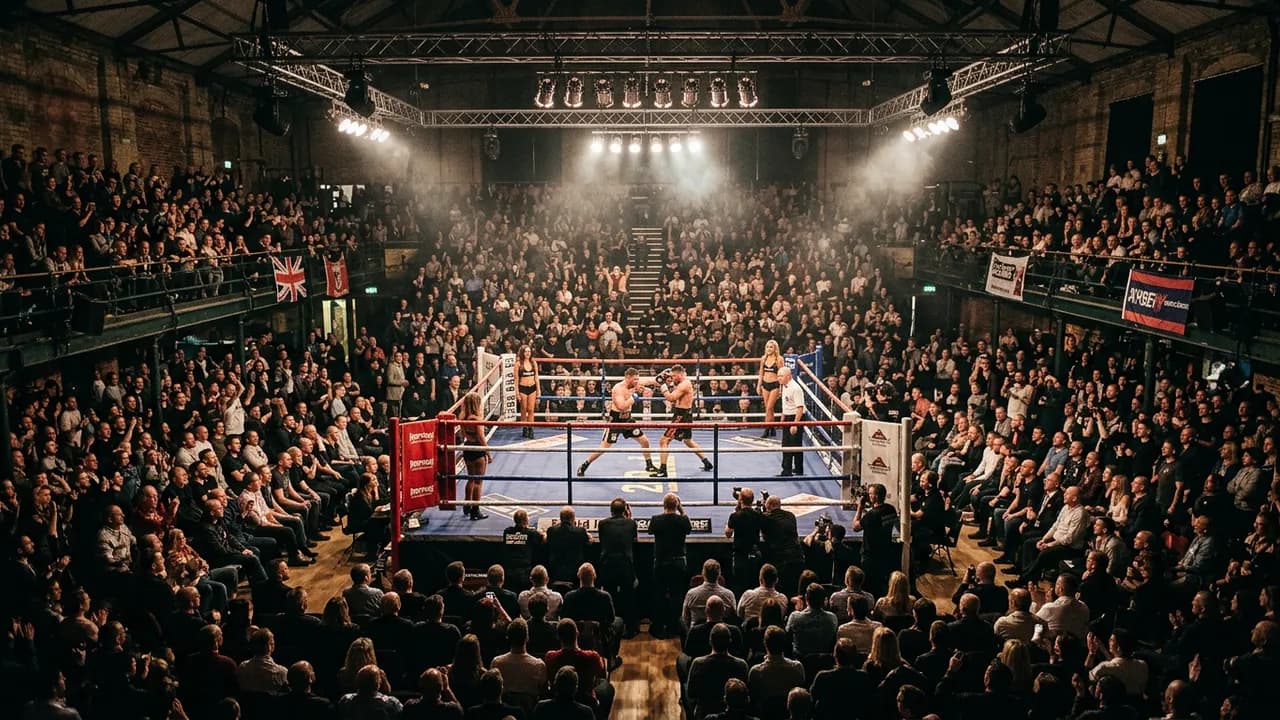
Before BKFC staged its first event in Wyoming, before bare knuckle fighting became a pay-per-view commodity in America, the United Kingdom was already reviving the sport that it had invented. BKB -- Bare Knuckle Boxing launched in the UK with the explicit mission of bringing bare knuckle fighting back to legitimacy in the country where the Marquess of Queensberry Rules had first put gloves on fighters' hands over a century earlier.
The fighters who competed at those early BKB events were walking into a regulatory gray area. Bare knuckle boxing occupied an uncertain legal position in the UK, and the fighters who participated risked their professional boxing licenses, their reputations, and their physical safety to compete in a format that the British Boxing Board of Control refused to sanction.
Those pioneers built something that has since grown into a global movement. This is where they are now.
Jimmy Sweeney: The Godfather of British Bare Knuckle
Jimmy Sweeney was the fighter who gave early BKB its credibility. A veteran of the Irish Traveller fighting tradition -- a centuries-old bare knuckle culture that predates any modern promotion -- Sweeney brought to BKB a level of experience and legitimacy that no other fighter could match. He had fought bare knuckle before there was a promotion. He had fought bare knuckle before there were cameras. He had fought bare knuckle because that was what men in his community did.
Sweeney's early BKB performances were masterclasses in the old-school art of bare knuckle boxing. His stance, his guard, his punch selection -- everything reflected a fighting education passed down through generations rather than learned in a modern gym. He fought with his hands low, his chin tucked, and his lead hand probing for openings in a style that would have been recognizable to bare knuckle fighters from the 18th century.
As of 2026, Sweeney has transitioned into an elder statesman role within the UK bare knuckle community. His fighting days are behind him, but his reputation as one of the most skilled bare knuckle boxers of the modern era is secure. He has worked with younger fighters, passing along the technical knowledge that his Traveller heritage provided and that no gym can replicate.
Barrie Jones: Welsh Grit in the Pit
Barrie Jones brought something different to the early BKB scene: professional boxing experience filtered through Welsh toughness and an absolute refusal to take a backward step. Jones was a trained boxer who made the decision to strip off the gloves and compete in a format that amplified both the risks and the rewards of his aggressive, come-forward style.
In gloved boxing, Jones's approach -- constant pressure, heavy shots, willingness to absorb punishment -- was effective but conventional. In bare knuckle, it was devastating. Without the cushion of gloves, his punches landed with a sharpness that gloved boxing cannot replicate, and opponents who expected to weather the storm found themselves overwhelmed by the accumulated damage of clean, unpadded shots.
Jones's BKB career established him as one of the promotion's most exciting fighters and a draw for the Welsh fighting community, which turned out in force to support one of their own. His fights were consistently among the most-watched on BKB cards, and his willingness to engage in firefights gave the promotion the kind of highlight-reel content it needed to grow.
Post-BKB, Jones has remained connected to the Welsh boxing community. Whether competing in sanctioned boxing, training at local gyms, or mentoring younger fighters, he has maintained the fighting identity that BKB gave him a platform to express. His career demonstrates that bare knuckle boxing can be a legitimate complement to a traditional boxing career, not just an alternative to one.
The Traveller Fighters: An Ancient Tradition Made Modern
BKB drew heavily from the Irish and Romani Traveller communities, where bare knuckle fighting has been practiced for centuries. These fighters -- often competing under fighting names rather than their legal names -- brought a legitimacy to the promotion that no amount of marketing could have manufactured. They were not trying bare knuckle for the first time. They had been raised in it.
The Traveller fighters who competed at early BKB events often had extensive bare knuckle experience from community fights -- the "fair fights" that have been a part of Traveller culture for generations. These community bouts, settled on fields and in car parks across the UK and Ireland, follow unwritten rules and traditions that predate any modern sporting regulation.
As of 2026, the Traveller fighting tradition continues independently of any promotion.
Tracking the post-BKB careers of Traveller fighters is complicated by the community's preference for privacy. Many Traveller fighters did not seek public attention and returned to their communities after their BKB appearances. Others continued to compete in both BKB and community fights, maintaining a dual existence between the public promotion and the private tradition.
As of 2026, the Traveller fighting tradition continues independently of any promotion. BKB gave it temporary visibility, but the tradition does not depend on external validation. The fighters who represented that tradition at BKB events did so as ambassadors of a culture that will outlast any promotion.
The Professional Boxers Who Crossed Over
Several licensed professional boxers competed at early BKB events, risking their boxing licenses for the opportunity to fight bare knuckle. The British Boxing Board of Control took a dim view of this cross-pollination, and fighters who were identified as BKB participants risked having their licenses suspended or revoked.
This regulatory hostility created a peculiar dynamic: professional boxers competed at BKB events under assumed names or with minimal publicity, hoping to avoid the Board's attention. The fights themselves demonstrated that trained boxers could adapt to the bare knuckle format, though the adaptation required significant adjustments -- targeting softer areas of the face, modifying punch mechanics to protect ungloved hands, and recalibrating defensive techniques for strikes that felt different without padding.
Most of these crossover boxers eventually returned to gloved boxing full-time, treating their BKB appearances as experiments rather than career moves. A smaller number found that they preferred the bare knuckle format and committed to it permanently, accepting the loss of their boxing licenses as an acceptable price for competing in the format they found more compelling.
As of 2026, several of these crossover fighters work as trainers in boxing gyms across the UK, their bare knuckle experience adding an unusual dimension to their coaching credentials. A few have publicly discussed their BKB careers, which are no longer the career-threatening secret they once were now that bare knuckle boxing has achieved broader acceptance.
The Ones Who Paid the Price
Early BKB events lacked some of the medical protocols and safety infrastructure that would later be developed for bare knuckle competition. The fighters who competed in this environment absorbed risks that are better managed in 2026, and some of them paid a physical price that continues to affect them today.
Hand injuries were the most common and most debilitating consequence. Bare knuckle boxing produces fractures, dislocations, and soft tissue damage to the hands that can be career-ending if improperly treated. Early BKB fighters did not always have access to proper medical care after events, and some continued to fight on damaged hands, compounding the injury with each subsequent bout.
Facial injuries -- particularly lacerations from knuckle contact -- were another lasting consequence. BKB fights produce cuts that scar differently from gloved boxing cuts, and several early BKB fighters carry visible reminders of their participation decades later.
The physical toll of early BKB competition is a reminder that pioneering comes at a cost. The fighters who built the promotion did so with their bodies, and the scars they carry are the price of admission to a sport that the UK now takes seriously.
BKB's Place in the Bare Knuckle Renaissance
BKB helped spark a global bare knuckle revival that now includes BKFC in America, Top Dog FC in Russia, and numerous smaller promotions worldwide. The UK pioneers who competed at those first events were, in a real sense, lighting the fuse for an explosion they could not have predicted.
The fighters who participated in early BKB events can legitimately claim to have helped restart a sport. They competed when it was legally questionable, socially marginal, and physically dangerous in ways that are now better mitigated. They did it for the love of the format, for the connection to tradition, and for the primal satisfaction of testing themselves in the oldest form of organized combat.
Wherever they are now -- retired, training, coaching, or simply carrying their scars through ordinary lives -- the BKB pioneers hold a place in bare knuckle history that the current generation of fighters inherits and builds upon.
Watch: BKB Bare Knuckle Boxing Pioneers
The UK fighters who revived bare knuckle boxing in the country that invented it.
- BKB -- Best Bare Knuckle Fights Compilation -- Highlights from BKB events showcasing the UK's bare knuckle revival, featuring some of the promotion's hardest hitters.
- Jimmy Sweeney -- BKB Fight Highlights -- The godfather of British bare knuckle boxing, bringing centuries of Irish Traveller fighting tradition to the modern promotion.
- Barrie Jones -- Welsh Bare Knuckle Boxing -- The Welsh pressure fighter whose aggressive style was devastating without the cushion of gloves.
- Traveller Bare Knuckle Fighting -- The Tradition Behind BKB -- The centuries-old Irish and Romani Traveller fighting culture that gave BKB its legitimacy and its best fighters.
- BKB Events -- UK Bare Knuckle Fight Night -- Full event atmosphere from BKB cards showing the format that sparked a global bare knuckle revival.
- Bare Knuckle Boxing History -- UK to America -- How the British BKB movement influenced BKFC and the global bare knuckle renaissance.
For more on BKB's history and impact, see our BKB organization profile. For the American side of the bare knuckle story, read Where Are They Now: The Original BKFC Fighters from 2018.