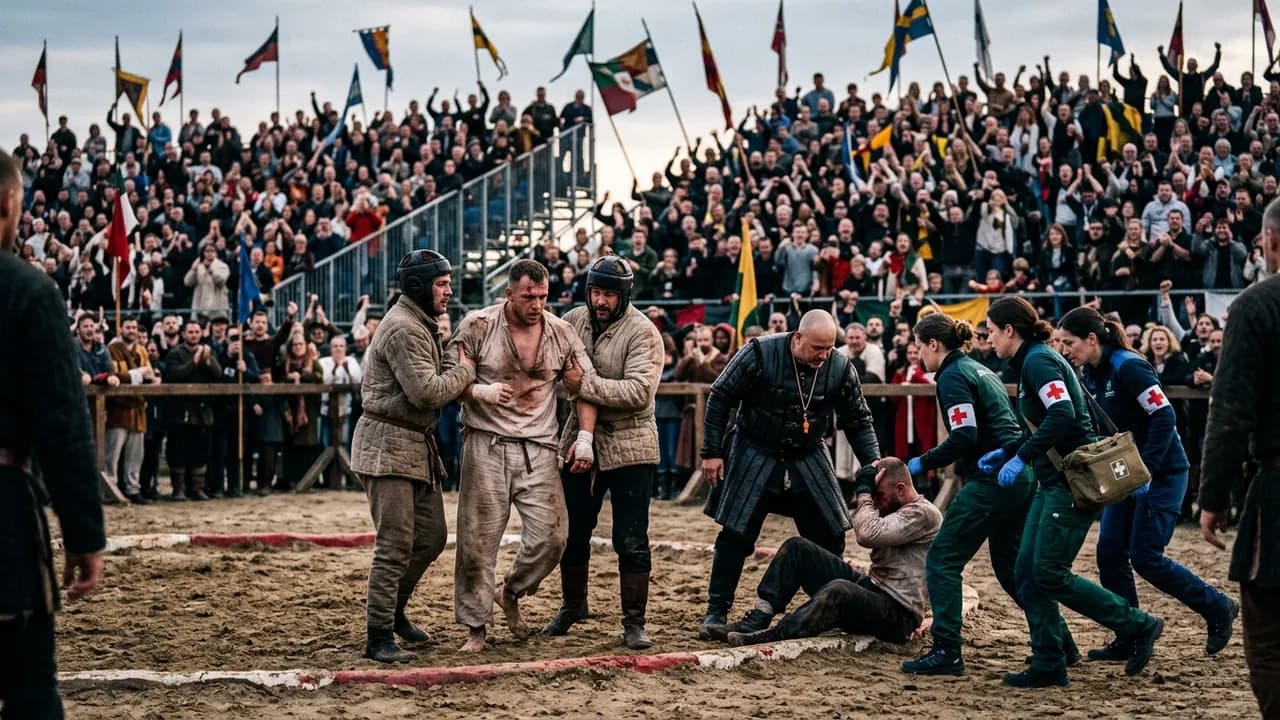
Holmgang Fighting is a German-rooted combat subculture built around medieval armor and blunted replica weapons, taking its name from the old Norse formalized duel. It keeps no verified, continuously maintained public roster, so this list does not name individual fighters, assign records, or cite purses. Instead it frames the subculture's most notable figures and participant types by documented role and archetype, with heavy hedging where the public record is thin — which is most of the time.
How This List Was Built
There is no reliable public archive of Holmgang participants, results, or rankings. Treat every entry below as a description of a documented role within the subculture, not a claim about any specific person. The criteria are:
- Role — organizer, recurring participant, or notable archetype.
- Documented context — what can be said about the subculture's structure without naming individuals.
- Format fit — how a participant type suits armored, blunted-weapon combat.
- Hedging — where the record is unknown, that is stated outright.
Nothing here invents a name, a win-loss record, or a payout. Holmgang is closer to a participatory subculture than a promotion with a tracked roster, and this list reflects that.
What Holmgang Actually Is
The historical holmgang was a Norse legal duel, often fought on a small marked-off ground or island, to settle disputes under agreed rules. The modern German-rooted version borrows the name and the ceremonial framing, substituting blunted replica weapons and protective medieval armor for live blades. It sits closer to historical combat reenactment and full-contact armored fighting than to the bare-knuckle promotions elsewhere on this site. For the wider tradition, see the list of traditional fighting sports.
5. The Single-Event Participants
Subcultures like this draw people who turn up once, fight, and are never documented again. With no public roster, these participants cannot be named or credited with results — and inventing them would betray the whole point of this list. They are acknowledged here as a real and large part of the scene, ranked last only because nothing verifiable can be said about them individually.
4. The Armorers and Equipment Makers
A combat form built on medieval armor and replica weapons depends on the people who build and maintain that equipment. In armored-fighting subcultures generally, the armorer is a respected figure whose work determines who can safely compete. Within Holmgang specifically, individual armorers are not documented in any verified public source, so they are described as an archetype rather than named.
3. The Recurring Participants
Any sustained subculture has regulars: people who show up repeatedly and become known faces within the local scene. These recurring participants give Holmgang whatever continuity it has. Because no public record tracks them, they are framed here as a documented type of figure rather than identified individuals, and no records are attached.
2. The Organizers
The figures who arrange grounds, set the agreed rules, and coordinate participants are arguably the most consequential in a roster-less subculture, because without them there is no event. In armored-combat scenes the organizer role is well established as a structural necessity. For Holmgang, the specific organizers are not documented in any verified public source, so this entry describes the role, not a person.
1. The Tradition Itself
In the honest absence of a documented roster, the single most notable "figure" in Holmgang is the tradition it revives. The medieval holmgang duel is a genuine historical practice, and the modern subculture's notability comes from reviving that ceremony with blunted weapons and armor rather than from any individual champion. Ranking the tradition first is the most accurate thing this list can do given how little of the modern scene is publicly documented.
The Historical Holmgang
The name carries real weight. In Norse society, the holmgang was a recognized way to settle disputes through single combat under agreed terms — over property, honor, or a contested claim. Sources describe duels fought within a marked area, sometimes a cloak or hide staked to the ground, sometimes a small islet, with rules about weapons, shields, and how a fighter could yield. It was a legal instrument as much as a fight, and it eventually fell out of use as central authority grew and outlawed private dueling. The modern subculture borrows that ceremonial frame deliberately, which is part of why participants treat the practice with more ritual than a casual brawl. Understanding the historical version is the most reliable way to understand what the modern scene is reaching for, precisely because the modern scene itself is so thinly documented.
How Modern Armored Combat Generally Works
Holmgang belongs to a broader family of modern armored-combat and historical-reenactment activities that share common features even where Holmgang's own specifics are unconfirmed. Participants wear protective armor (plate, mail, padding, and a helm) and fight with blunted replica weapons designed to deliver impact without an edge. Safety depends heavily on equipment standards, agreed rules of engagement, and marshals or organizers who can halt a bout. Contact can still be heavy, and conditioning, weapon handling, and the ability to fight while carrying armor weight all matter. These are documented features of armored-combat scenes in general, which is why the organizer and armorer archetypes rank so highly above: in a roster-less, equipment-dependent practice, the people who run the event and build the gear are the structural backbone. None of this requires naming an individual, and this list does not.
A Word on Documentation
Holmgang appears among the most obscure entries in the underground and traditional-combat space — see the roundup of 25 underground fighting orgs you've never heard of. Its closest documented relative on this site is Calcio Storico Fiorentino, another historical combat tradition revived as living practice. Where Calcio Storico has centuries of records, Holmgang's modern scene does not, which is why this list frames figures rather than naming them. If verified rosters or results surface, this page will be updated.
Frequently Asked Questions
What is Holmgang Fighting?
A German-rooted combat subculture using medieval armor and blunted replica weapons, named after the historical Norse formalized duel.
Are there named Holmgang champions?
No verified, continuously maintained public roster exists, so this list frames notable figures by role and archetype rather than naming individuals or assigning records.
Is Holmgang the same as a bare-knuckle promotion?
No. It is closer to historical armored-combat reenactment than to striking promotions, and it is not run as a record-keeping promotion.
Why doesn't this list name specific fighters?
Because doing so would require inventing names or records that cannot be verified, which this list refuses to do.
Where is Holmgang based?
The modern subculture is rooted in Germany; its founding date is unknown.