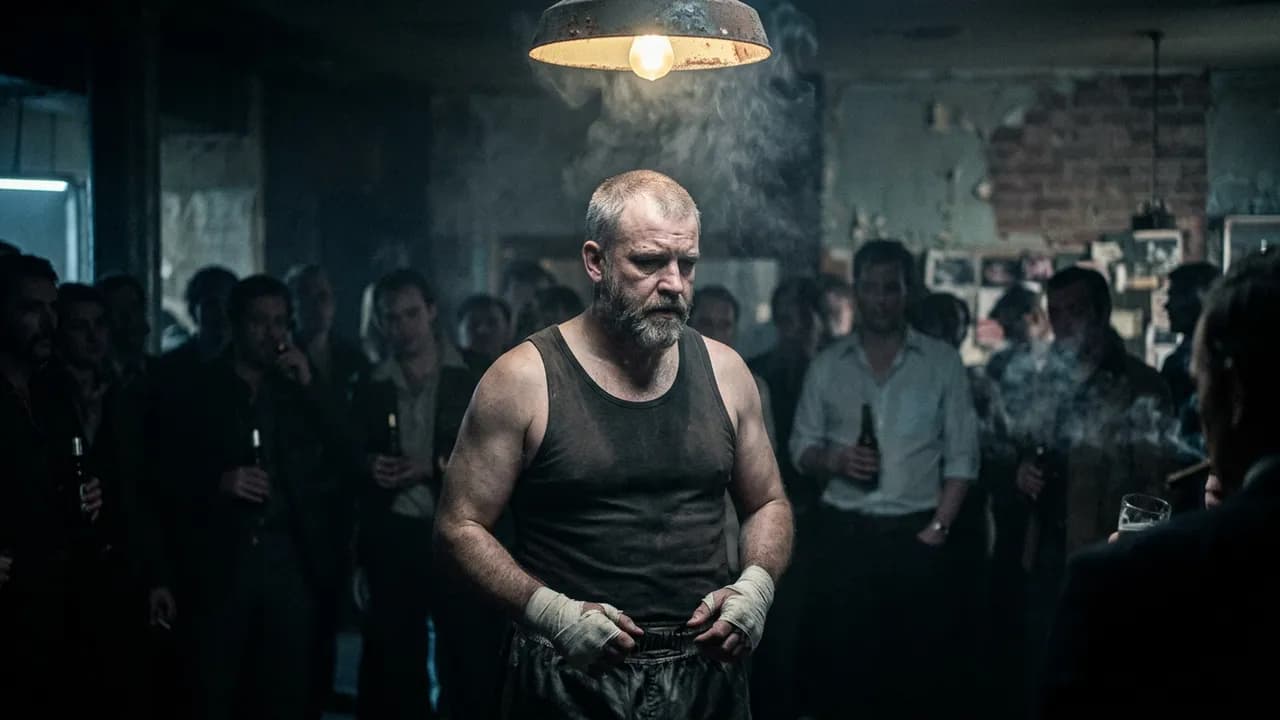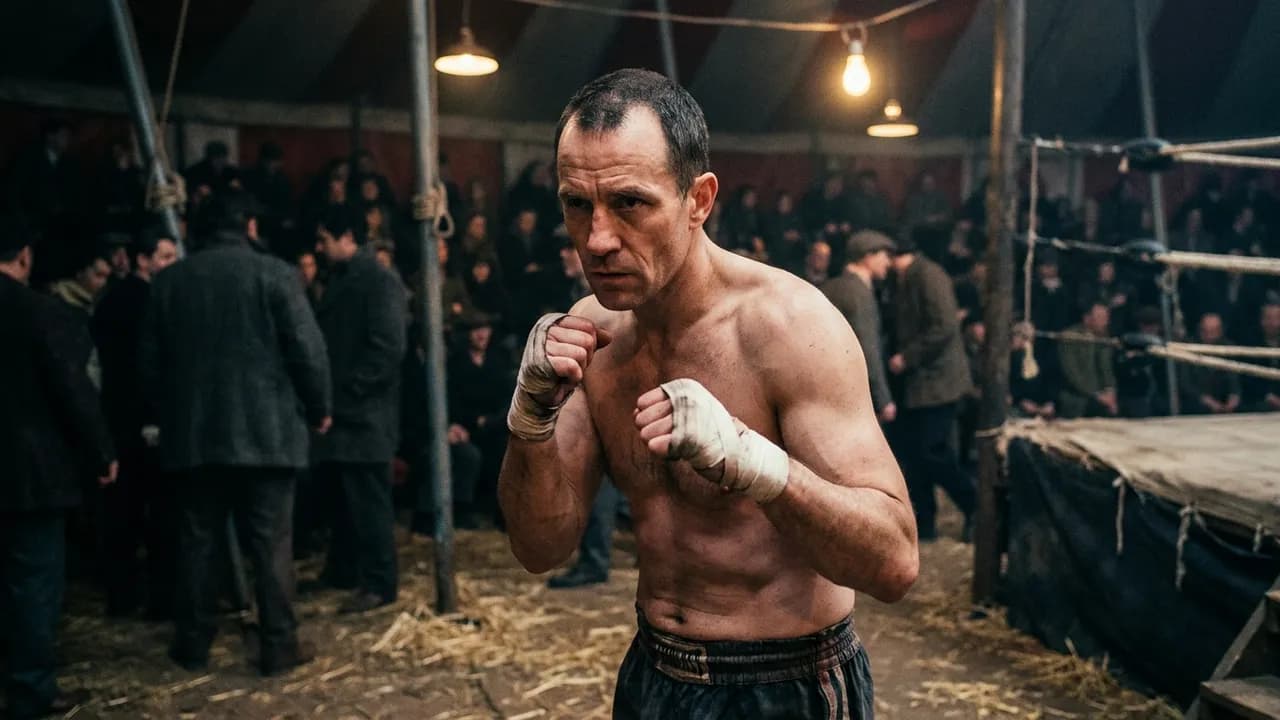
Roy Shaw (1936-2012) was an English unlicensed boxer and former Category A prisoner who, after serving roughly 18 years for an armoured-truck robbery, became one of the headline names of London's underground fight scene in the 1970s. His best-documented achievement is his trilogy with rival Lenny McLean: Shaw won the first bout, then lost the next two.
Quick Facts
| Detail | Info |
|---|---|
| Full Name | Royston Henry Shaw |
| Ring Names | "Pretty Boy," "Mean Machine" |
| Born | 11 March 1936, Stepney, East London |
| Died | 14 July 2012 |
| Discipline | Unlicensed boxing (one early licensed bout under the alias "Roy West") |
| Criminal record | 18-year sentence for an armoured-truck robbery; held in 20-plus prisons and at Broadmoor |
| Defining rivalry | Trilogy with Lenny McLean (Shaw won 1, lost 2) |
| Autobiographies | Pretty Boy and Roy Shaw: Unleashed, both written with Kate Kray |
Overview
Shaw's story splits neatly into two halves: a long criminal career that ended in heavy prison time, and a second act as a paying attraction in unsanctioned boxing. The two are connected. The unlicensed circuit he fought in existed precisely because men with records like his were barred from the licensed sport, and his reputation as a violent prisoner was part of what sold tickets.
That circuit operated outside the British Boxing Board of Control, in nightclub function rooms, theatres, and circus tents. Because no governing body sanctioned or recorded the bouts, much of Shaw's fight history survives only through his own books and contemporary press accounts rather than an official ledger. For that reason, any overall "record" attributed to him should be treated with caution. Published totals commonly cite around nine wins and the two losses to McLean, but these figures come from accounts tied to Shaw himself and cannot be independently verified the way a sanctioned record could.
Career
From Robbery to Broadmoor
Born in Stepney in 1936, Shaw was involved in crime from a young age and moved in the same East End world as the Kray twins. In 1963 he was sentenced to 18 years for what Wikipedia describes as one of England's largest armoured-truck robberies. He served that sentence across more than 20 prisons and proved difficult to hold, reportedly fighting prison staff and being moved repeatedly.
He was eventually sent to Broadmoor, the high-security psychiatric hospital, where by his own account he underwent electroconvulsive therapy intended to control his temper. The exact clinical details are not well documented in independent sources, so the specifics rest largely on his own telling. What is clear is that he emerged from the system in the early 1970s with both a fearsome name and few legitimate options, and turned to fighting for money.
Entering the Unlicensed Scene
The unlicensed shows Shaw fought on were promoted within his own circle. Accounts most consistently name the promoter and associate Joey Pyle as the figure who put him on these cards; some retellings cite other promoters from the period, so the organising side of his early bouts is not perfectly settled. Notably, Shaw had stepped into a licensed ring once before, decades earlier, recorded as a six-round points win over Dennis Wingrove at Wembley Town Hall in November 1956 under the alias "Roy West." His real fame, though, came from the unsanctioned bouts.
Donny "The Bull" Adams, 1975
Shaw's breakthrough was a heavily promoted showdown with Donny "The Bull" Adams, a bare-knuckle fighter who reportedly came in with a long unbeaten run on the cobbles. The fight had been planned for an earlier date and was the subject of legal interference before it went ahead. Accounts place the bout on 1 December 1975 under Billy Smart's circus big top at Windsor, with Shaw winning by a first-round knockout. The win established him as a top name in the underground game; some sources frame it as the point at which he claimed the unofficial "Guv'nor" billing.
The Lenny McLean Trilogy
The defining thread of Shaw's career is his rivalry with fellow unlicensed fighter Lenny McLean, the part of his story that multiple sources describe in broadly similar terms. The two men met three times in the late 1970s.
In the first bout, dated to 1977, Shaw won by stoppage. The rematch, reported in 1978 at Cinatra's nightclub in Croydon, went the other way: McLean overwhelmed Shaw early and knocked him out in the opening round. The third and final meeting, placed later in 1978 at the Rainbow Theatre in Finsbury Park, again went to McLean by an early knockout, giving him the series 2-1.
03 / Up next / Winding Down
Shaw later offered explanations for his defeats, including a much-repeated claim that he had accidentally taken too much ginseng before one fight. Those rationalisations are part of the lore rather than verified fact, and the outcomes themselves stand in most accounts.
Winding Down
Shaw continued to fight intermittently before leaving the unlicensed game around 1981, in his mid-forties. He spent his later years as a businessman, author, and property investor, reportedly building real wealth through land. In 2009 he won a court judgment after a woman was found to have fraudulently obtained a large sum from him. He died in July 2012 at the age of 76.
Legacy
Shaw's significance is less about a verifiable win-loss record and more about what he represented. The Adams fight and the McLean trilogy gave 1970s unlicensed boxing its first marquee names and helped turn a fringe activity into a paying spectacle with a recognisable cast of characters. The narrative of the hardened ex-prisoner fighting in tents and nightclubs became a template that the British true-crime publishing trade would mine for decades.
His autobiographies, Pretty Boy and Roy Shaw: Unleashed, both written with Kate Kray, helped fix that image in print. They are valuable as primary accounts of how Shaw saw himself, but they are also self-authored and should be read with the same caution as any fighter's own version of an unrecorded career. Alongside Lenny McLean, Shaw remains one of the two figures most associated with the era, and his name still appears in discussions of British underground fighting that stretch from the Romani prizefighting tradition of Bartley Gorman to the modern bare-knuckle revival.
FAQ
Did Roy Shaw beat Lenny McLean? Yes, once. Shaw won their first bout in 1977 by stoppage, but McLean won the next two fights in 1978, taking the trilogy 2-1.
Was Roy Shaw a real criminal? Yes. He was sentenced to 18 years for an armoured-truck robbery in 1963 and was held as a Category A prisoner across more than 20 prisons, including time at Broadmoor.
What was Roy Shaw's record? There is no official record, because unlicensed boxing was unsanctioned. Published figures often cite around nine wins and two losses to McLean, but these come from accounts linked to Shaw and cannot be independently verified.
External Links
- Roy Shaw — Wikipedia
- Don Adams (boxer) — Wikipedia
- Pretty Boy by Roy Shaw with Kate Kray (autobiography)
Related Content on UNSANCTIONED FIGHTS
- Lenny McLean — Shaw's defining rival, who won their trilogy 2-1
- Bartley Gorman — the bare-knuckle "King of the Gypsies" from the same British prizefighting world
- Bobby Gunn — a modern bare-knuckle figure who carries the unsanctioned tradition forward
- Paddy Doherty — Irish Traveller bare-knuckle name within the same lineage