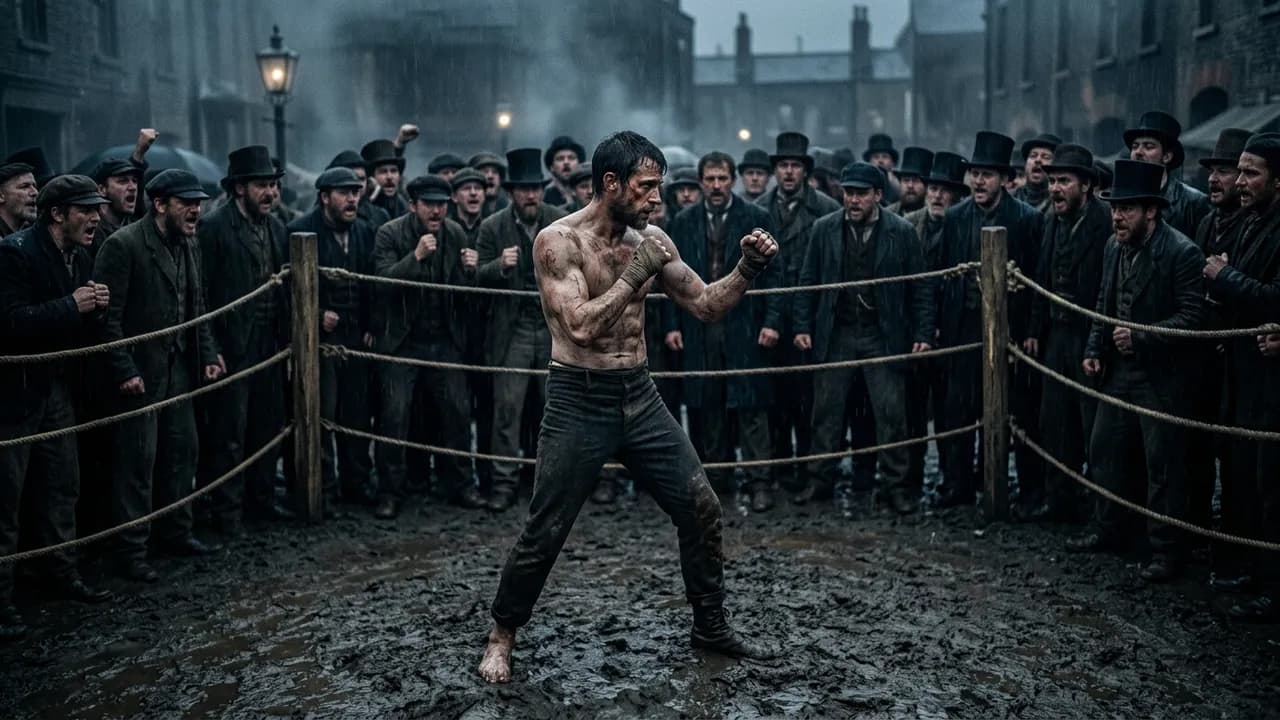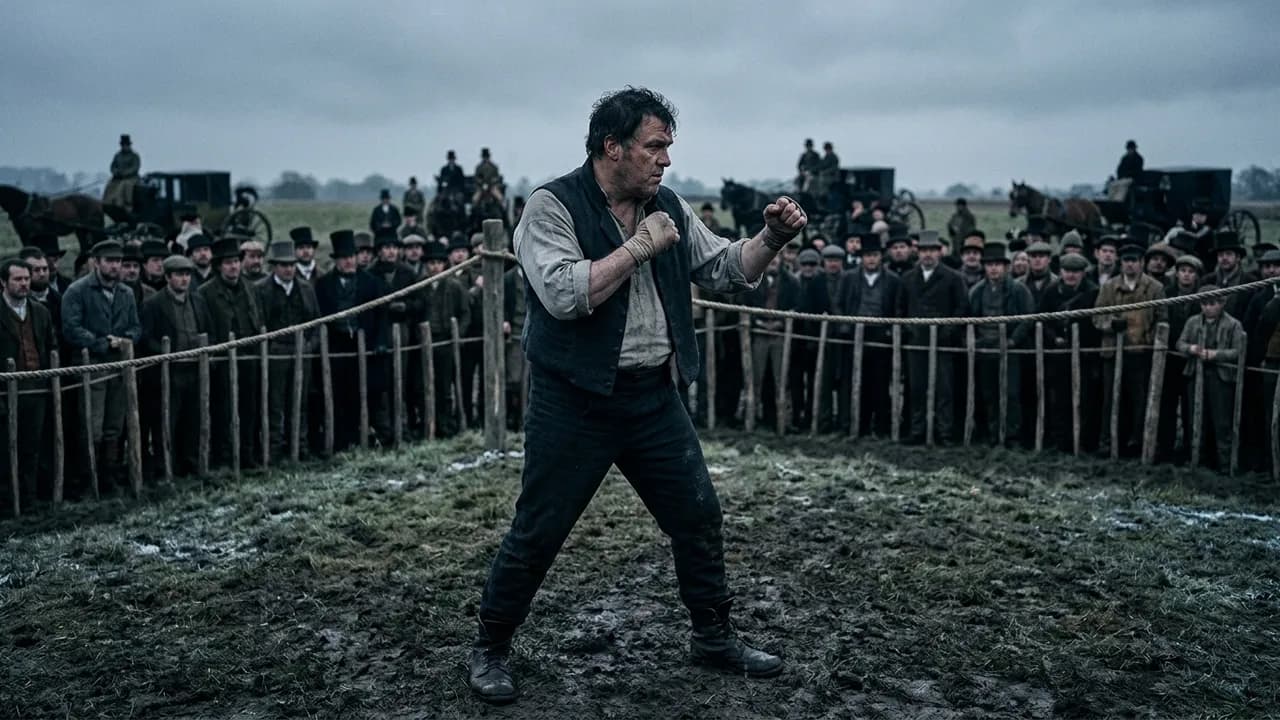
John Lawrence Sullivan (October 15, 1858 - February 2, 1918), known as the Boston Strong Boy, was the last man to hold a heavyweight championship won with naked fists. His 75-round victory over Jake Kilrain in 1889 was the last world heavyweight title bout fought under the bare-knuckle London Prize Ring rules. Three years later he lost the gloved title to James J. Corbett, closing the bare-knuckle era. He was also a figure of the sport's color line, refusing to face Black challengers.
Quick Facts
| Field | Detail |
|---|---|
| Full name | John Lawrence Sullivan |
| Nickname | The Boston Strong Boy |
| Born | October 15, 1858, Boston, Massachusetts |
| Died | February 2, 1918 (age 59), Abington, Massachusetts |
| Background | Irish immigrant family |
| Era | London Prize Ring → Queensberry transition |
| Title won | American/world heavyweight championship, February 7, 1882 (def. Paddy Ryan) |
| Last bare-knuckle title bout | July 8, 1889, vs. Jake Kilrain, 75 rounds |
| Title lost | September 7, 1892, vs. James J. Corbett, KO 21 (gloved) |
| Hall of Fame | International Boxing Hall of Fame, inducted 1990 (inaugural class) |
Overview
Sullivan was the first American athlete to become a national celebrity through sport. Born in Boston to Irish immigrant parents, he built a reputation in the late 1870s and early 1880s by touring with the offer that would define him: that he could, in his own widely reported phrasing, lick any man in the house. He won the heavyweight championship of America by knocking out Paddy Ryan in nine rounds at Mississippi City, Mississippi, on February 7, 1882.
What followed was less a title reign than a touring spectacle. Sullivan crossed the country and crossed the Atlantic, fighting exhibitions and a relatively small number of serious contests. He drank heavily, spent freely, and lived in public. Several biographers, including Christopher Klein in Strong Boy, describe him as the first American athlete to earn more than a million dollars across his career, though the figure reflects total earnings over many years rather than a single purse, and most of it did not survive his lifestyle.
His standing as "champion" carries a caveat that the historical record makes plain. Sullivan drew a color line, declining to meet Black contenders. The Australian heavyweight Peter Jackson, widely rated among the best of the era, was never given the fight. Sullivan's refusal was explicit, and it kept the title's claim to settling who was best an open question for decades.
Career
Winning the title: Ryan, 1882
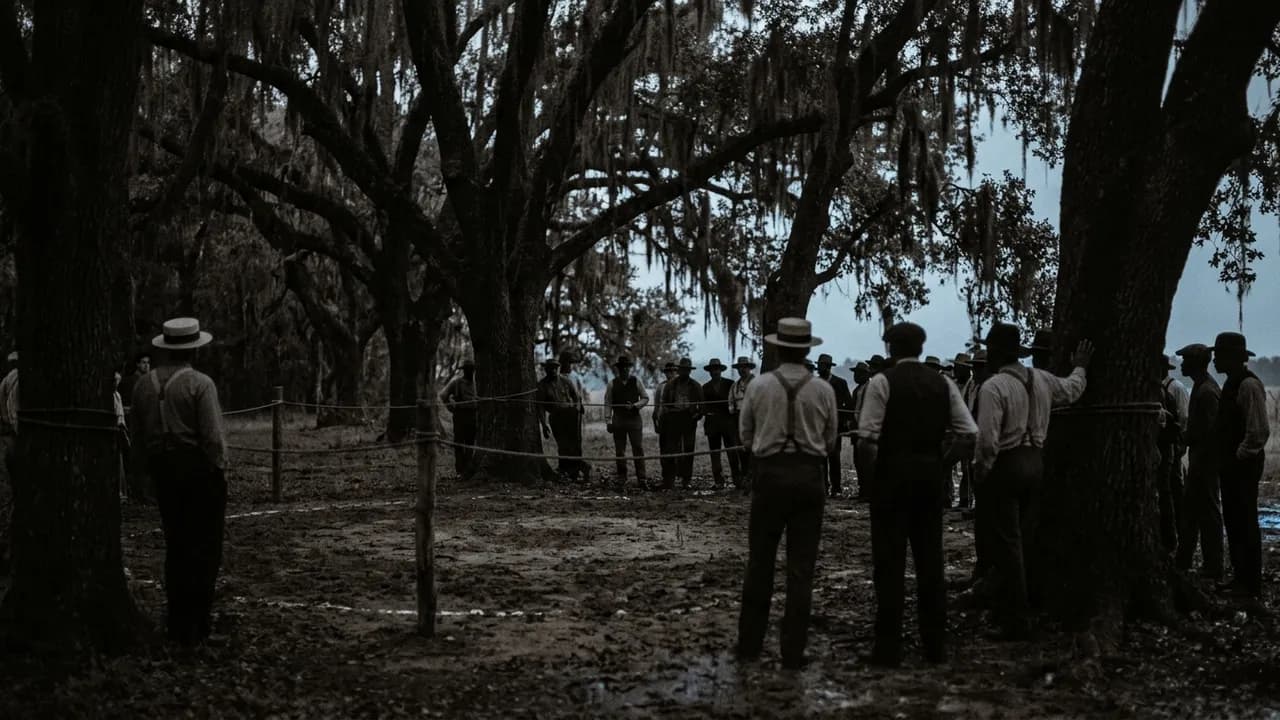
Sullivan took the American heavyweight championship from Paddy Ryan in front of the Barnes Hotel at Mississippi City on February 7, 1882, ending it in the ninth round. The win established him as the dominant heavyweight of his day. Notably, Sullivan preferred gloved contests under Queensberry rules where he could get them, and he fought bare-knuckle only a handful of times. Prizefighting was illegal across the United States in this period, which pushed major bouts to secret rural sites and complicated the records that survive.
The last bare-knuckle title fight: Kilrain, 1889
On July 8, 1889, near Richburg in Lamar County, Mississippi, Sullivan met Jake Kilrain in what became the last world heavyweight championship contested under London Prize Ring rules, which permitted wrestling throws and counted a round as ending whenever a man went down. The fight ran 75 rounds over roughly two hours and sixteen minutes in heavy summer heat. Kilrain's corner, advised that their man's life was at risk, conceded before the 76th round. Both fighters were later arrested and prosecuted, since the bout was illegal.
The Kilrain fight is the historical marker for the end of bare-knuckle title boxing in the United States. It is the bout cited when modern sanctioned bare-knuckle promotions trace their lineage; the era it closed would not reopen with state sanction until Bobby Gunn and others pushed the form back into legal rings more than a century later.
Losing the crown: Corbett, 1892
On September 7, 1892, at the Olympic Club in New Orleans, Sullivan defended against James J. "Gentleman Jim" Corbett under Marquess of Queensberry rules, with padded gloves and timed three-minute rounds. Corbett, faster and a more deliberate boxer, wore the older champion down and knocked him out in the 21st round. The result made Corbett the first heavyweight champion crowned under Queensberry rules and made Sullivan, by that fact, the last bare-knuckle heavyweight champion.
The bare-knuckle-to-gloved transition
Sullivan sits on the hinge between two sports. The London Prize Ring rules he fought Kilrain under belonged to the older bare-knuckle tradition carried by figures such as English champions Tom Cribb and Jem Mace, the latter often credited with bridging toward the gloved, scientific style. By the time Corbett beat him, the Queensberry code, gloves, weight classes, and timed rounds, had become the championship standard. Sullivan competed across the divide and lost his title precisely at the point the divide closed.
Legacy
Sullivan's importance is partly athletic and partly cultural. He was boxing's first mass-market star, a fighter whose name traveled further than his fists, and a template for the celebrity athlete that American sport would later mass-produce. The International Boxing Hall of Fame inducted him in its inaugural 1990 class.
The honest account also records the color line. By refusing Black challengers, Sullivan helped institutionalize an exclusion that would not be broken at heavyweight until Jack Johnson won the title in 1908, well after Sullivan's retirement. A profile that treats him only as a pioneer leaves out the part of the record that shaped who was allowed to compete for what he held.
He died on February 2, 1918, at age 59 in Abington, Massachusetts, reportedly of heart disease, having spent his later years on the stage and the lecture circuit.
FAQ
Was John L. Sullivan really the last bare-knuckle champion? He was the last to hold a world heavyweight title decided under bare-knuckle London Prize Ring rules. His 1889 win over Kilrain was that last title bout; his 1892 loss to Corbett was fought with gloves.
Did Sullivan refuse to fight Black opponents? Yes. He drew a color line and declined to meet Black contenders, including Peter Jackson. This is documented in his own statements and is part of the historical record.
Was he the first athlete to earn a million dollars? Several biographies state he was the first American athlete to earn more than a million dollars over his career. This is a lifetime-earnings claim, not a single purse, and figures from the era should be read with caution.
External Links
- John L. Sullivan — Wikipedia
- John L. Sullivan — International Boxing Hall of Fame
- John L. Sullivan — Encyclopaedia Britannica
Related Content on UNSANCTIONED FIGHTS
- Tom Cribb — English bare-knuckle champion from the era Sullivan's London Prize Ring rules descended from.
- Jem Mace — the fighter often credited with bridging bare-knuckle toward the gloved, scientific style that displaced Sullivan.
- Bobby Gunn — modern bare-knuckle figure tied to the form's return to sanctioned competition after the 1889 Kilrain bout ended the original era.