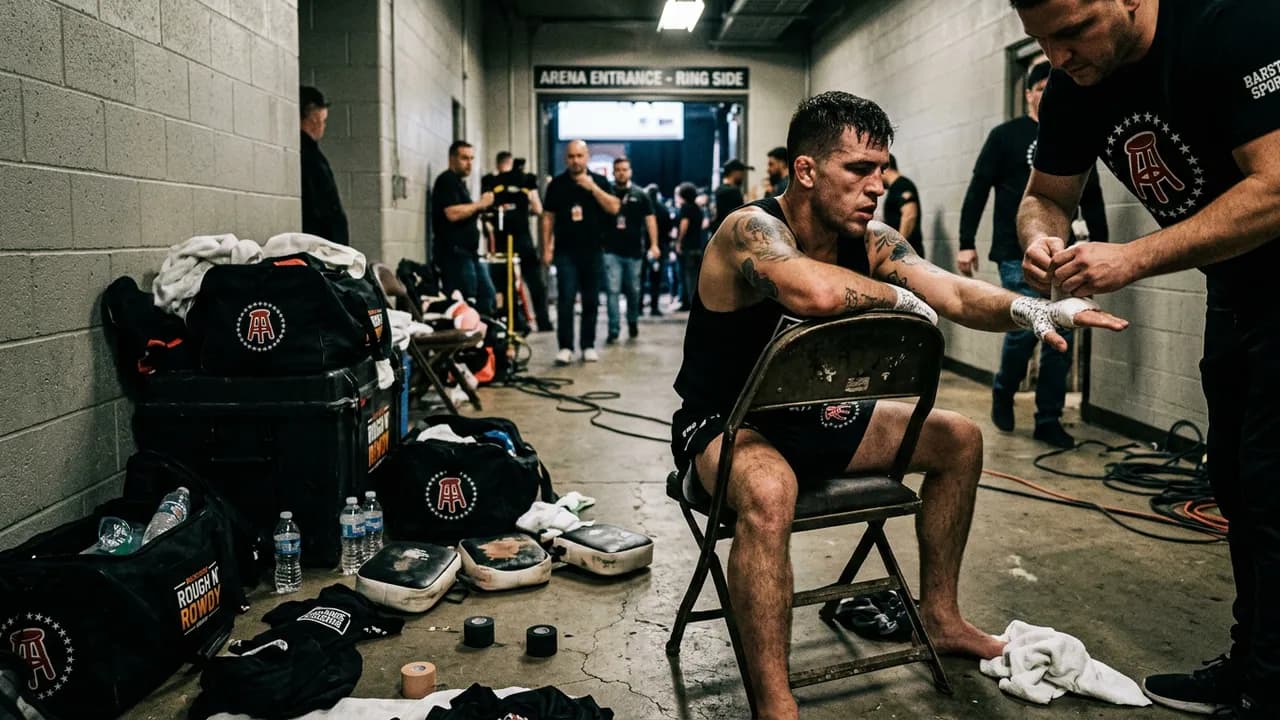
The most brutal Rough N' Rowdy fights are the short-fuse 3x1-minute slugfests where untrained amateurs swing for an early finish before the clock runs out. Headgear and gloves cap the long-term damage, but the no-pacing format rewards reckless aggression, which is why the card produces frantic exchanges and frequent stoppages rather than measured boxing.
Rough N' Rowdy was founded in 2014 in Wheeling, West Virginia, and became a national draw after Barstool Sports acquired it in 2017. The pitch is simple: ordinary people, amateur boxing rules, gloves and headgear, three one-minute rounds, broadcast live on pay-per-view. That structure is the whole story behind the brutality. When a fighter has only 60 seconds per round and no professional conditioning, there is no incentive to feel an opponent out. The bell becomes a starting gun.
This ranking does not invent fighter names, dates, or results. Instead it ranks the types of fights the format reliably produces, ordered by how much controlled violence each one delivers. The criteria are three: how directly the matchup encourages a finish, how often the bout type ends early, and how much of the viral footage from the promotion comes from that category.
Ranking Criteria
- Finish incentive — does the format or matchup push fighters to swing for a stoppage?
- Stoppage frequency — how often this fight type ends before the final bell.
- Footage pull — how heavily the category shows up in the clips that travel beyond the pay-per-view audience.
Headgear and amateur gloves matter here. They are the reason Rough N' Rowdy can stage hundreds of bouts featuring people who have never boxed competitively without the medical outcomes of a bare-knuckle promotion like BKFC. The "brutal" label is about chaos and intensity inside a regulated amateur shell, not about unprotected damage.
7. The Friend-Group Filler Bout
Many cards are padded with bouts between casual entrants who answered an open call. These rarely produce technique, but the lack of skill is exactly what makes them swing-heavy. Two people with no defense and one minute on the clock tend to throw until someone drops or the round ends. The brutality here is accidental rather than designed, which keeps it at the bottom of the list.
6. The Conditioning Collapse
A recurring Rough N' Rowdy phenomenon: a fighter empties the tank in round one, then survives rounds two and three on instinct. The 1-minute round disguises how fast untrained cardio fails, and the late rounds become exhausted brawls where both fighters are too tired to defend. The footage is ugly in a specific way, all heavy arms and open chins.
5. The Size-Mismatch Spectacle
Amateur matchmaking sometimes pairs fighters whose builds differ more than a sanctioned card would allow. The smaller, faster entrant against the heavier, slower one is a staple. When the bigger fighter lands clean inside that 60-second window, the stoppage is abrupt. These bouts trade fairness for drama, which is part of the promotion's open-entry identity.
4. The First-Round Blitz
The single most common brutal outcome on the card. A fighter who senses an opening sprints forward in the opening seconds and tries to end it before the bell. Because there is no round-management strategy worth pacing for, the blitz is rational. Many of the promotion's most-shared clips are blitz finishes inside the first 30 seconds.
3. The Crowd-Favorite Grudge Match
Rough N' Rowdy leans into rivalry framing, and grudge bouts carry an emotional charge that ordinary matchups lack. When two entrants genuinely dislike each other, the one-minute structure removes any cooling-off period. These fights are brutal because the motivation is personal, not athletic, and the aggression reflects that. Grudge bouts are a recurring theme across the biggest upsets in underground fighting, where emotion overrides skill gaps.
2. The Bloody Standing War
Despite headgear, facial cuts and nosebleeds are common, and the broadcast does not look away. A "bloody war" — two fighters who refuse to back up, trading through three full rounds — is the format's signature. The brutality is cumulative rather than from a single shot. These are the bouts that build the promotion's reputation and feed its highlight reels alongside the heavier finishes catalogued in the top 10 bare-knuckle knockouts.
1. The Walk-Off Stoppage
The most brutal Rough N' Rowdy fight type is the clean walk-off: a fighter lands a flush shot, the opponent's legs go, and the bout is waved off on the spot. In a 1-minute round there is no recovery time and no standing eight that lets the fight settle. When it happens, it happens fast and total. These finishes are the category most likely to escape the pay-per-view bubble and circulate as standalone clips, and they sit at the top because they combine maximum finish incentive, maximum stoppage rate, and maximum footage pull.
How the Format Shapes the Violence
Every fight on this list is brutal for the same structural reason. Rough N' Rowdy compresses combat into 1-minute rounds and fills the card with people who have no reason to box conservatively. There is no title to protect, no record to manage, and often no second fight to save energy for. The result is a promotion that manufactures intensity by design while keeping the protective gear that separates it from the bare-knuckle world.
For the people who deliver these performances most reliably, see the best Rough N' Rowdy fighters of all time, and for the organizational background, the Rough N' Rowdy profile covers its history and ruleset.
FAQ
Are Rough N' Rowdy fights bare knuckle? No. Rough N' Rowdy uses boxing gloves and headgear under amateur boxing rules. That gear is what separates it from bare-knuckle promotions and is the main reason the brutality stays inside a regulated shell.
Why do Rough N' Rowdy fights look so wild? The 3x1-minute round structure removes any reason to pace. Untrained entrants swing for early finishes, so most footage is high-volume exchanges rather than technical boxing.
Who owns Rough N' Rowdy? Barstool Sports acquired the promotion in 2017. It was originally founded in Wheeling, West Virginia in 2014 by C. M. Smith.
Do fighters get hurt seriously? Cuts, nosebleeds, and knockdowns are common, but the gloves, headgear, and short rounds reduce the severity compared with unprotected formats. Bouts are stopped quickly when a fighter is in trouble.