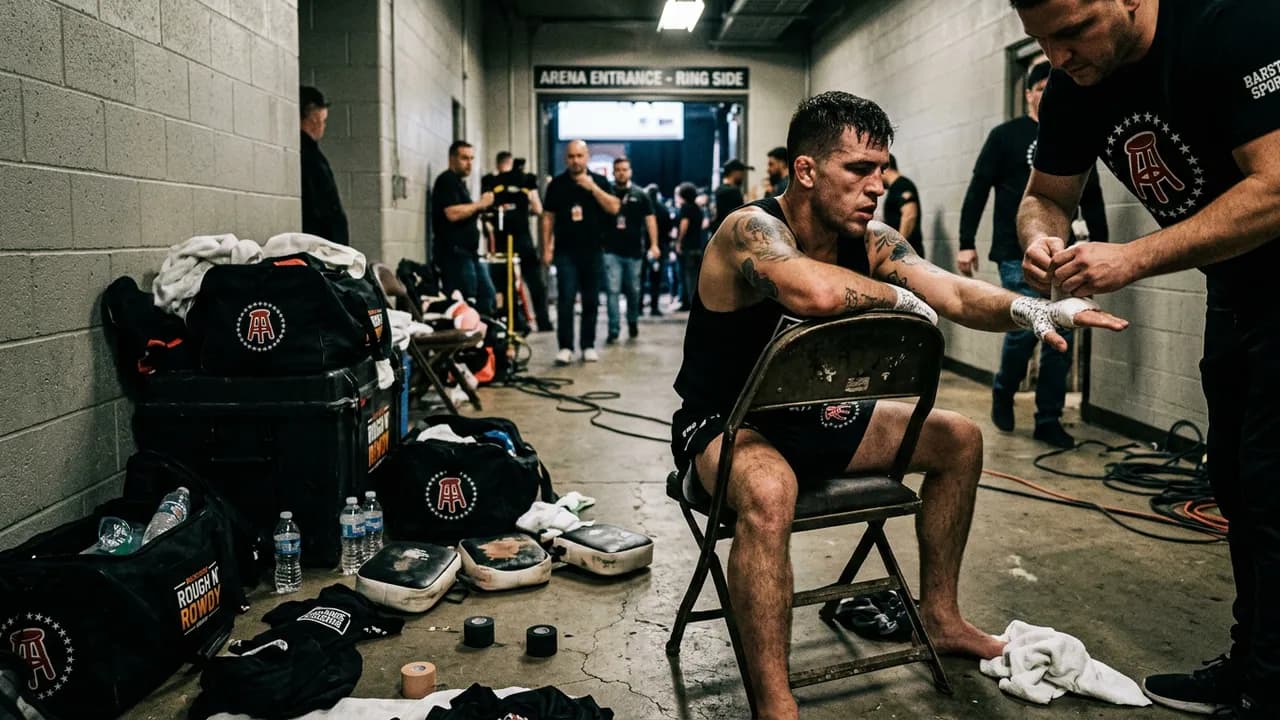
The best Rough N' Rowdy fighters are ranked here by knockout impact, viral reach, and the moments that defined the event, not by career records. Rough N' Rowdy is structurally different from a fight league: most entrants are everyday amateurs who step in the ring once, swing for the fences over three one-minute rounds, and never compete again. That makes a traditional best-of list impossible, so this ranking weighs the roles people played and the standouts the event actually produced.
Rough N' Rowdy started in Wheeling, West Virginia in 2014 and was acquired by Barstool Sports in 2017, which turned a regional toughman show into a national pay-per-view property. The format is amateur boxing: three one-minute rounds, gloves, and headgear, with fighters often recruited from social media as untrained locals, internet personalities, or feuding amateurs. The appeal is not technique. It is the unpredictability of two people who barely know how to box throwing everything they have for three minutes.
A note on names: RNR fighters are largely anonymous amateurs or internet figures. Where a competitor is publicly documented, the role is described in plain text. No win-loss records or biographies are invented.
How This List Was Built
Because almost no RNR fighter has a meaningful "career" to rank, this list weighs:
- Knockout impact — how decisive and replayed the finish was.
- Viral reach — whether the moment escaped Barstool's audience and spread.
- Spectacle — how much the bout embodied the event's chaos-over-craft appeal.
- Recurrence — the rare fighters who came back across multiple cards.
Pay is part of the appeal narrative: RNR has historically offered modest cash prizes to winners rather than career purses, which fits its everyman framing. For the broader money picture across underground events, see how much underground fighters make.
10. The One-Round Sluggers
The most common RNR archetype, and the foundation of the event. These are the untrained locals who gas out within a single one-minute round but throw with full commitment until they do. They rank because they define what RNR is: not boxing, but a controlled bar fight. Their footage is the raw material of every RNR highlight reel, even when their names never stick.
9. The Feud Settlers
RNR has long leaned on personal beef — two people who genuinely dislike each other agreeing to settle it in the ring. The feud-settler bouts are among the event's most-watched because the stakes feel real to the participants. They rank here for supplying the narrative tension that separates RNR from a generic toughman card.
8. The Influencer Entrants
Once Barstool owned the property, RNR began drawing internet personalities and social-media figures looking to test themselves or settle online disputes in person. These entrants rank for their reach: their fanbases pull eyes to the event that a purely local card never could. The crossover between online celebrity and amateur boxing is a recurring RNR storyline, related to the broader pattern of celebrities who fought underground.
7. The Women's Division Standouts
RNR runs women's bouts that have repeatedly produced some of the card's most-shared finishes. The standout female competitors rank here for proving that the event's chaos formula does not depend on a particular division. Their fights regularly anchor the viral clips that spread well beyond the pay-per-view audience.
6. The "Internet Famous" Knockouts
A specific RNR phenomenon: a single knockout, often involving a recognizable online figure, that becomes a meme. These moments rank because their reach is enormous relative to the obscurity of the participants. They are frequently among the most-watched underground fights on YouTube despite featuring fighters with no athletic background.
5. The Repeat Competitors
Most RNR entrants fight once. The rare few who come back across multiple cards earn a higher slot simply for treating it as more than a one-off dare. Recurrence in an event built on novelty is unusual, and the handful of fighters who built a small reputation across appearances stand out against a roster designed to churn.
4. The Crowd-Igniters
Some RNR fighters are remembered less for winning than for the reaction they generated — the entrants whose bouts sent a packed, beer-fueled arena into a frenzy. In an event where atmosphere is the product, the crowd-igniters rank highly for delivering exactly what the ticket promised. The footage of the crowd is sometimes more shared than the footage of the fight.
3. The Clean Finishers
A small group of RNR entrants actually had some boxing ability and used it to produce clean, fast stoppages against overmatched opponents. The clean finishers rank in the top tier because, in a sea of wild swinging, genuine competence stands out. Their bouts are the closest RNR gets to real boxing, and they tend to be the ones combat-sports fans single out.
2. The Viral Faces
RNR's biggest moments belong to the fighters whose bouts broke containment entirely — clips reposted across sports media, embedded in compilations, and discussed far outside the Barstool ecosystem. These viral faces rank near the top because reach is the truest measure of impact for an event built on going viral. Their individual fights did more for RNR's profile than any title ever could, because RNR has no titles to win.
1. The Event-Definers
The top slot belongs to the handful of entrants whose bouts are inseparable from RNR's identity — the fights people cite when they explain what Rough N' Rowdy is. Whether through a perfect storm of feud, knockout, and crowd reaction, or a moment that defined a specific card, these competitors gave the event its signature. In a format that erases most participants the moment the final bell rings, being unforgettable is the highest achievement available.
Why RNR Defies a Traditional Ranking
A normal best-of list rewards sustained excellence. Rough N' Rowdy is built on the opposite premise: one night, one fight, no future. Ranking its fighters by record would be meaningless because most have a record of exactly one. The honest measure is impact — who delivered a moment that outlived their three minutes in the ring. Every entry above is ranked on that, and that alone.
For the event's full history, format, and Barstool ownership, see the Rough N' Rowdy organization profile.
FAQ
Who is the best Rough N' Rowdy fighter ever? There is no career-based answer, because RNR fighters typically compete once. The strongest cases belong to the event-definers whose single bouts became inseparable from RNR's identity through a mix of feud, knockout, and crowd reaction.
Are Rough N' Rowdy fighters professionals? No. RNR is an amateur boxing event that recruits everyday people, internet personalities, and feuding amateurs. Bouts run three one-minute rounds with gloves and headgear, prioritizing spectacle over technique.
Does Rough N' Rowdy pay its fighters? RNR has historically offered modest cash prizes to winners rather than career-level purses, consistent with its everyman framing. It is not a livelihood the way commission-regulated boxing can be.