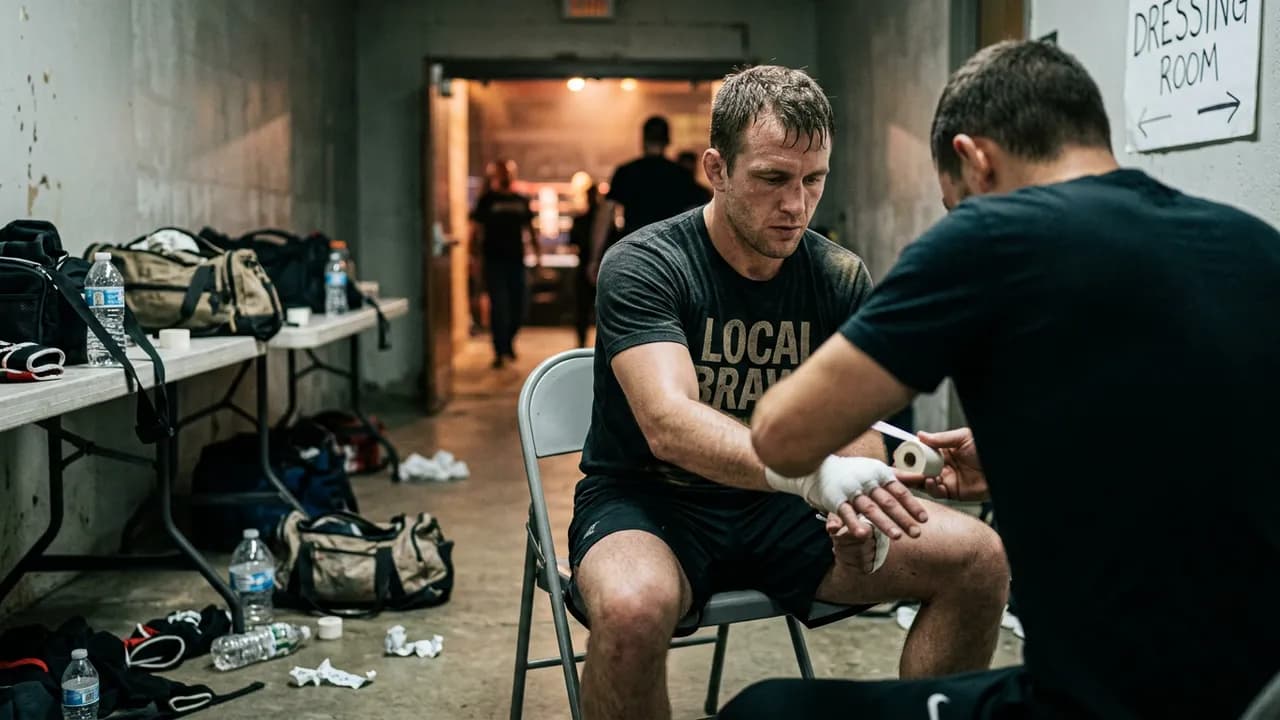
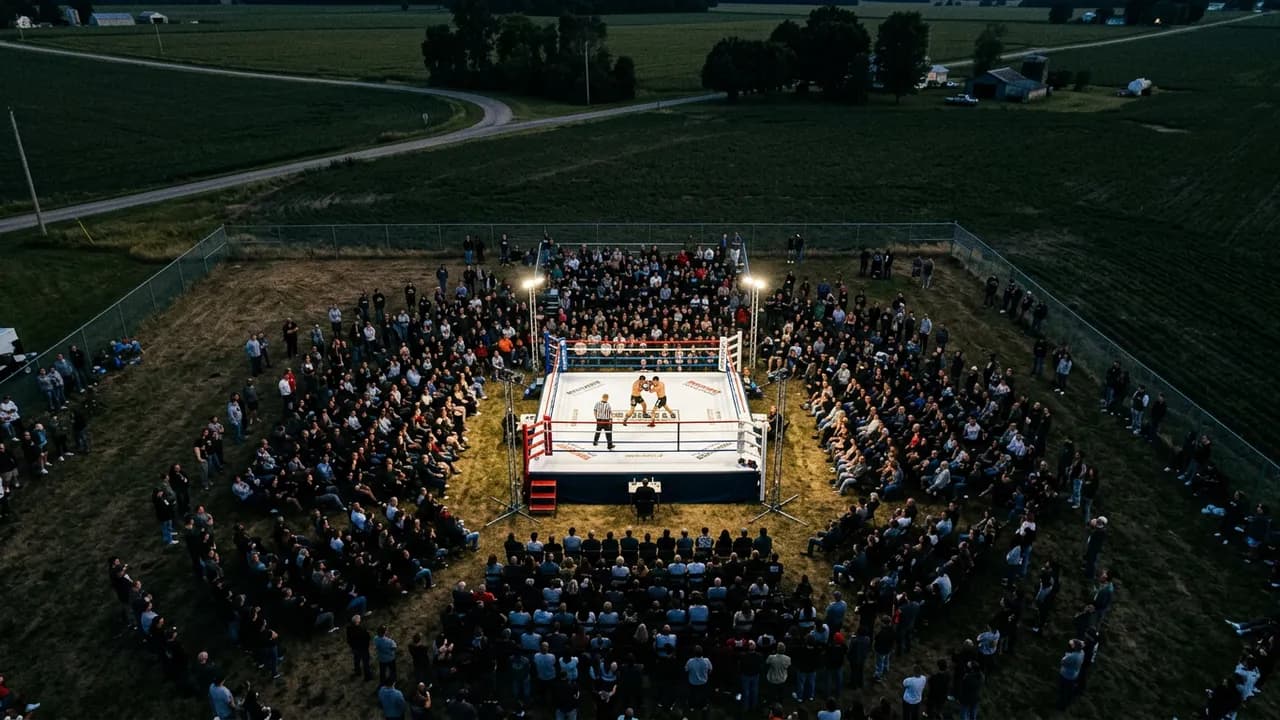
Streetbeefs has never been a stepping stone. That was never the point. When Christopher "Scarface" Wilmore built a ring in his Harrisonburg, Virginia, backyard and started uploading fights to YouTube in 2008, the mission was violence prevention -- "Fists Up, Guns Down." Fighters were not paid. There were no contracts. Nobody was supposed to become famous.
But with over 4.2 million subscribers, 1.4 billion total views, and more than 3,600 videos on the main channel, Streetbeefs became one of the largest combat sports platforms on the internet. And when something gets that big, it produces stars whether it intends to or not. Some of those stars moved on to professional fighting careers. Others disappeared from the scene entirely. A few are still scrapping in the same backyard where they started.
This is where the most notable Streetbeefs fighters are now.
ATrain (Alan Stephenson): The Best to Ever Do It
If you ask longtime Streetbeefs viewers who the greatest fighter in the organization's history is, the answer that comes back most often is ATrain. Alan Stephenson arrived at the Streetbeefs backyard with a physicality and fighting IQ that separated him from the typical walk-on competitor. His striking was sharp, his cardio was relentless, and his ability to impose his will on opponents made him appointment viewing on the channel.
ATrain was widely considered the most complete fighter Streetbeefs had ever produced. His performances drew attention from viewers and fighters alike, and it was only a matter of time before the professional world came calling. Stephenson transitioned to sanctioned MMA, compiling a 6-5 professional record across regional promotions. While that record is not spectacular on paper, the jump from unregulated backyard bouts to licensed professional competition is enormous. The training infrastructure, the officiating, the caliber of opponents -- everything changes. That ATrain managed to win more than he lost in the professional ranks speaks to the raw talent he brought to Scarface's ring.
As of 2026, Stephenson has stepped back from active competition. His Streetbeefs legacy remains intact as one of the fighters who proved the organization could produce legitimate talent, not just compelling content.
Shinigami (Daniel Uribe): The Karate Kid Goes West
Daniel Uribe, fighting under the name Shinigami, brought something to Streetbeefs that the organization rarely sees: a genuine martial arts background. A karate specialist with sharp technical striking and evasive footwork, Shinigami compiled an 8-2 record in the backyard and quickly became one of the most popular fighters on the channel. His fights were not brawls -- they were demonstrations of timing, distance management, and precision.
Uribe relocated to Lancaster, California, where he began training at The Lab BJJ, expanding his ground game to complement his striking. The move signaled serious intent. Fighters who leave Streetbeefs and invest in formal gym training are positioning themselves for professional careers, and Shinigami appeared to be doing exactly that.
His Streetbeefs highlights continue to circulate on YouTube and social media, where his clean striking and composed demeanor in chaotic backyard settings earned him a devoted following. Whether a sanctioned fighting career materializes remains to be seen, but Uribe represents the type of technical fighter that Streetbeefs can attract when its platform reaches millions.
Delvin Hamlett: The Unbeaten Heavyweight Champion
Delvin Hamlett occupies a rare position in Streetbeefs history: a fighter who dominated his weight class so thoroughly that he ran out of meaningful opponents. Fighting at 205 pounds, Hamlett compiled a perfect 8-0 record and captured the Streetbeefs heavyweight championship with a blend of power, aggression, and surprising tactical awareness.
In a division where most fighters rely on size and brute force, Hamlett showed genuine boxing fundamentals and the composure to pick his shots rather than simply swinging for the fences. His championship reign was never seriously threatened, and his fights became some of the most-viewed heavyweight contests on the channel.
Hamlett's unbeaten record in the backyard raised an obvious question: could he replicate that success in sanctioned competition? As of early 2026, Hamlett has not made the transition to professional fighting, but his dominance within the Streetbeefs ecosystem remains one of the most impressive runs in the organization's history.
Memnon Warrior: Signed and Searching for the Next Level
Of all the fighters who have come through the Streetbeefs system, Memnon Warrior may have made the most decisive move toward professional legitimacy. After building a reputation as one of the more dynamic and marketable fighters on the channel, Memnon caught the attention of professional management and was signed to representation.
Memnon's management team saw the same thing that millions of YouTube viewers had -- a fighter with genuine potential and a built-in fan base.
The signing was significant because it represented a formalization of the pipeline that Streetbeefs had inadvertently created. A fighter could build an audience through backyard bouts, demonstrate enough skill and charisma to attract industry attention, and then leverage that into professional opportunities. Memnon's management team saw the same thing that millions of YouTube viewers had -- a fighter with genuine potential and a built-in fan base.
Details about Memnon's post-Streetbeefs competitive career have been limited, but the fact that professional management identified value in a backyard fighting resume speaks to how much the landscape has changed since Kimbo Slice first proved the concept two decades ago.
Beach: The Most Skilled Fighter Nobody Talks About
Among hardcore Streetbeefs viewers, Beach holds a special status. Consistently cited as the most technically skilled fighter to compete in the organization, Beach brought a level of fluidity and fight awareness that seemed to belong in a professional gym, not a Virginia backyard. His standup was clean, his movement was crisp, and he had an ability to make experienced opponents look outmatched.
What made Beach particularly interesting was his ground game. Despite reportedly being a white belt in Brazilian jiu-jitsu, his grappling instincts were sharp enough to dominate exchanges on the mat -- a reminder that natural athleticism and fight IQ can sometimes compensate for formal credentials.
Beach's current status is not well documented. Like many Streetbeefs fighters, he competed for the experience and the outlet rather than any professional ambition. In a world of aspiring professionals using the backyard as a launchpad, Beach was a throwback to the original Streetbeefs ethos: show up, fight, leave.
The Fighters Who Came Back to Civilian Life
For every ATrain or Shinigami who pursued fighting beyond the backyard, there are dozens of Streetbeefs competitors who fought a handful of times and returned to their regular lives. This is not failure. This is exactly how the organization was designed to function.
Streetbeefs was built as an outlet -- a place for people with aggression, grudges, or simply a desire to test themselves in a controlled environment. Many fighters arrived with no training background, fought one or two bouts, and never returned. Some used the experience to process personal demons. Others settled disputes with rivals and moved on. The absence of contracts and payment means that there is no obligation to continue, and that freedom is one of the reasons the organization has endured.
Wilmore has spoken publicly about the role Streetbeefs plays in the lives of ex-convicts, recovering addicts, and young men with few constructive outlets. Not every fighter is supposed to become a professional. Some are supposed to throw hands once, shake hands after, and go home.
The Streetbeefs West Coast Expansion
The original Harrisonburg operation spawned a West Coast branch, Streetbeefs West Coast, which expanded the organization's geographic footprint and introduced new fighters to the format. The satellite operation maintained the same rules and philosophy as the original -- amateur competition, no payment, violence prevention at its core -- while tapping into a new pool of competitors.
The West Coast expansion brought its own set of notable fighters, though the main channel and the Virginia backyard remain the center of gravity for the Streetbeefs brand. The expansion did, however, demonstrate that the model is replicable and that demand for this type of outlet exists far beyond the Shenandoah Valley.
What Streetbeefs Fighters Prove About the Underground Scene
The careers of ATrain, Shinigami, Delvin Hamlett, Memnon Warrior, and Beach illustrate a broader truth about the relationship between underground fighting and the professional combat sports world. The backyard is not a dead end. For fighters with genuine talent and ambition, platforms like Streetbeefs can serve as the first rung on a ladder that extends all the way to professional promotions.
At the same time, most Streetbeefs fighters are not climbing any ladder. They are fighting because it is Tuesday and Scarface has a card. That is the beauty of the model -- it serves professionals and amateurs, aspirants and one-timers, with equal indifference to their long-term plans.
The fighters who have left the backyard have gone in every conceivable direction: professional MMA, gym training, management deals, and quiet civilian life. The fighters who stayed keep showing up, keep fighting, and keep feeding the most-watched backyard fighting channel in the world.
Wherever they are now, every one of them can say they fought in the most famous backyard in combat sports history. That is its own kind of credential.
Watch: Streetbeefs Fighter Highlights
The best performances from the most famous backyard fighting channel in the world.
- Streetbeefs Official Channel -- The main Streetbeefs YouTube channel with over 4.2 million subscribers and 3,600+ fights from Scarface's Virginia backyard.
- ATrain Best Fights -- Streetbeefs Highlights -- Fight footage of Alan Stephenson, widely considered the greatest fighter in Streetbeefs history.
- Shinigami (Daniel Uribe) -- Streetbeefs Fights -- The karate specialist who compiled an 8-2 backyard record with clean striking and evasive footwork.
- Streetbeefs Heavyweight Championship Fights -- Delvin Hamlett's dominant run through the heavyweight division, finishing 8-0 undefeated.
- Best Streetbeefs Knockouts Compilation -- The hardest hits and most dramatic finishes from the Streetbeefs backyard ring.
- Scarface Explains "Fists Up, Guns Down" -- Chris Wilmore explaining the philosophy behind Streetbeefs and why he opened his backyard to fighters.
For more on Streetbeefs' history and impact, see our profile of Chris "Scarface" Wilmore and our guide to Streetbeefs' Biggest Events.