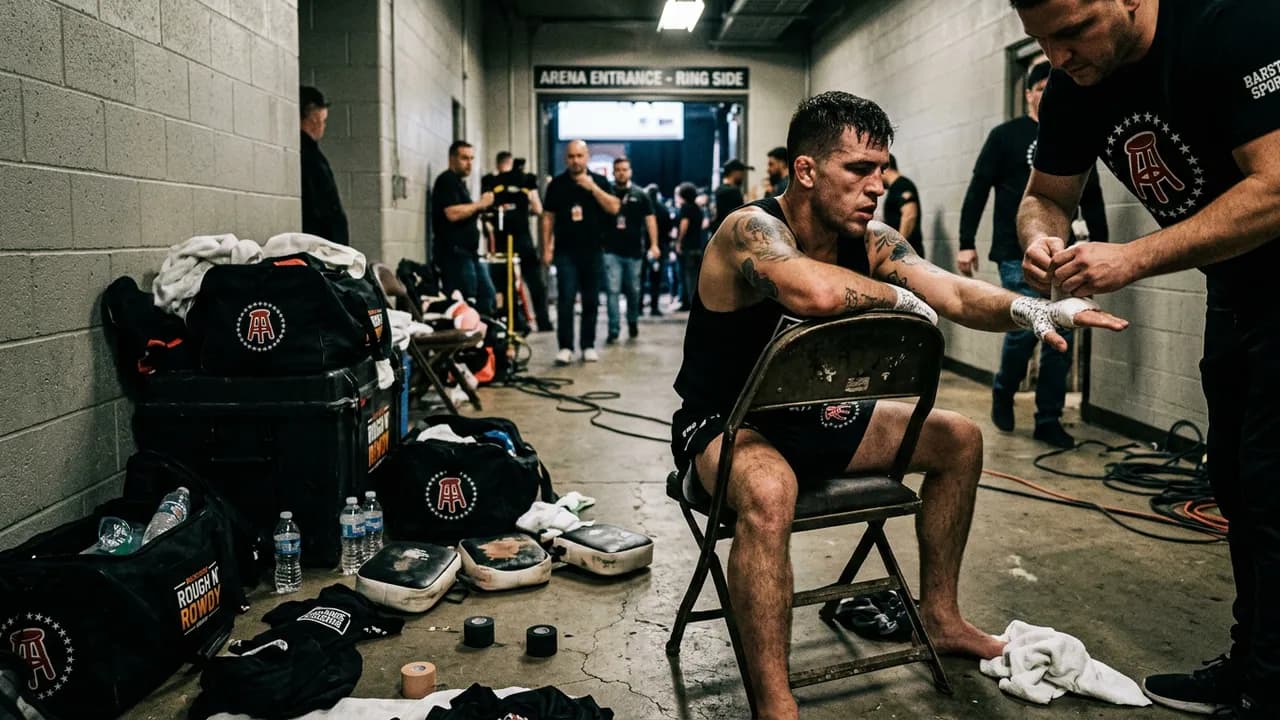
Rough N' Rowdy was never supposed to produce stars. The concept -- amateur boxing events featuring untrained fighters competing in one-minute rounds -- was entertainment first, sport second. When Barstool Sports acquired and popularized the format, the appeal was the spectacle: regular people with fighting names like "Lights Out Layla" and "Hillbilly Hellboy" throwing wild punches in front of a pay-per-view audience that was buying a party, not a boxing card.
But spectacle has a way of producing legitimate moments. Over the course of dozens of events, certain Rough N' Rowdy fighters transcended the novelty and became genuine attractions. They developed followings, won multiple bouts, and in some cases demonstrated enough talent to raise the question: could they fight for real?
This is where those breakout stars ended up after their fifteen minutes in the Rough N' Rowdy ring.
The Repeat Champions: Building Careers in One-Minute Rounds
The most successful Rough N' Rowdy fighters were the ones who came back. In a promotion where most participants fought once -- treating it as a bucket-list experience rather than a career move -- the fighters who returned for multiple events became the connective tissue between shows. Audiences recognized them, followed their progress, and invested in their outcomes.
These repeat champions developed actual boxing skills over the course of their RNR careers. One-minute rounds reward aggression over technique, but fighters who competed in five, ten, or more events began to show genuine improvement. Their footwork tightened. Their punch selection became more deliberate. Their ring awareness -- the ability to control space, set traps, and manage the clock -- improved in ways that were visible from fight to fight.
Several of these repeat champions explored amateur boxing outside of Rough N' Rowdy, entering Golden Gloves tournaments and local amateur cards. The transition was jarring. Golden Gloves rounds are three minutes, not one. The competition is trained, not recruited from bars and comment sections. But the RNR veterans who made the jump found that their experience -- however unorthodox -- gave them at least a foundation to build on.
As of 2026, most of these fighters have settled into one of two paths: they either committed to boxing as a serious pursuit, joining gyms and pursuing amateur or professional careers, or they retired from the RNR circuit and returned to their regular lives, their fighting days preserved in pay-per-view archives and YouTube compilations.
The Viral Sensations: Famous for a Fight
Rough N' Rowdy's business model depended on viral moments, and certain fighters delivered them in spectacular fashion. A single knockout, a dramatic entrance, or an unexpectedly skilled performance could generate millions of views across Barstool's media platforms, transforming an anonymous amateur into an internet celebrity overnight.
The fighters who experienced this viral fame had widely varying responses to it. Some embraced the attention, building social media followings and leveraging their RNR notoriety into content creation careers, brand partnerships, or appearances at other events. Others were overwhelmed by the sudden visibility and retreated from public life as quickly as the attention had arrived.
The viral economy is notoriously short-lived. A fighter who generates ten million views on a knockout clip has approximately two weeks of relevance before the algorithm moves on to the next sensation. The RNR fighters who understood this -- who used their viral moment as a launching pad rather than a destination -- fared better in the long run than those who expected the attention to sustain itself.
The West Virginia Originals: Where It All Started
Before Barstool Sports got involved, Rough N' Rowdy was a West Virginia tradition -- amateur boxing events staged in small venues throughout the state, drawing local fighters who competed for bragging rights and small cash prizes. The Barstool acquisition brought national attention and pay-per-view distribution, but the West Virginia originals were the ones who established the format's identity.
These original fighters -- miners, mechanics, bartenders, and blue-collar workers from throughout the Mountain State -- brought an authenticity to Rough N' Rowdy that the later, Barstool-era fighters sometimes lacked. They were not performing for cameras. They were fighting because fighting was what you did on a Saturday night in rural West Virginia when the options were limited.
Many of these original fighters have continued to compete in local amateur boxing in the years since RNR went national.
Many of these original fighters have continued to compete in local amateur boxing in the years since RNR went national. Others have retired from competition but remain connected to the West Virginia fighting community through training, coaching, and attendance at local events. The national spotlight came and went, but the local tradition that gave birth to Rough N' Rowdy continues.
The Celebrity Crossovers: Influencers in the Ring
As Rough N' Rowdy grew under Barstool's umbrella, the events increasingly featured celebrity and influencer participants -- social media personalities, Barstool employees, and minor internet famous figures who entered the ring for content rather than competition. These crossover fighters drew viewers but diluted the format's connection to its amateur boxing roots.
The celebrity crossover fighters are the easiest to track in 2026, precisely because they were already public figures before their RNR appearances. Most returned to their primary careers -- content creation, podcasting, social media -- with an RNR fight on their resume as a talking point rather than a career credential. A few parlayed their ring experience into further combat sports content, hosting fight-related shows or commentating on boxing and MMA events.
What the celebrity crossovers revealed about Rough N' Rowdy is that the promotion's appeal was never really about the fighting. It was about the spectacle of ordinary -- or slightly famous -- people getting into a ring and discovering what happens when you are actually in a fight. The result was sometimes athletic. More often, it was entertaining. Rarely was it boring.
The Women of Rough N' Rowdy
The women's divisions at Rough N' Rowdy produced some of the promotion's most compelling fighters and memorable moments. Female participants often brought more intensity and determination to their bouts than their male counterparts, perhaps because the stakes felt higher. In a format where most male fighters were performing a version of masculinity they had rehearsed since childhood, the women were doing something genuinely new -- and they took it seriously.
Several female RNR fighters went on to pursue amateur and professional boxing careers after their appearances. The promotion provided a low-barrier entry point into combat sports for women who might never have walked into a boxing gym but were willing to try a one-minute fight in front of a pay-per-view audience.
As of 2026, former female RNR fighters are represented across the amateur boxing world, in CrossFit and fitness communities, and in the growing ecosystem of women's combat sports content. Their RNR experience was, for many, the first time they had been hit and the first time they had hit back. What came after was their own story.
The Business of Being a Rough N' Rowdy Fighter
Rough N' Rowdy fighters were not well compensated for their participation. The pay structure -- modest purses for amateur fighters, larger guarantees for celebrity crossovers -- reflected the promotion's priorities: content first, fighter welfare second. The real compensation, such as it was, came in the form of exposure -- the opportunity to be seen by the hundreds of thousands of pay-per-view buyers who tuned in to each event.
For fighters who could convert that exposure into other opportunities -- social media followings, content deals, invitations to other events -- the economics worked. For fighters who could not, the RNR experience was essentially volunteer labor performed in front of a paying audience. The promotion profited. The platform profited. The fighters got a story and a bruise.
This economic reality has shaped where RNR fighters ended up. The ones with business instincts leveraged their appearances into broader careers. The ones without returned to their day jobs, slightly more famous and slightly more bruised than before. Neither outcome is tragic. Both are honest.
After the Bell: The RNR Legacy
Rough N' Rowdy occupies an unusual position in the underground fighting landscape. It is not technically underground -- the events are legally sanctioned amateur boxing cards. But the spirit is unmistakably underground: untrained fighters, chaotic matchmaking, a party atmosphere that prioritizes entertainment over athletic achievement.
The fighters who became breakout stars in this environment proved that charisma and willingness to fight can create careers, however brief, in combat sports. They also proved the limits of that approach -- very few RNR fighters successfully transitioned to serious competitive boxing, and the ones who did succeeded because of talent and training, not because of their RNR resume.
07 / Up next / Watch: Rough N' Rowdy Fight Highlights
Wherever the Rough N' Rowdy breakout stars are now, they share a common experience: they stood in a boxing ring in front of thousands of paying viewers and discovered what they were made of. For some, the answer was encouraging. For others, it was humbling. For all of them, it was real -- and in a media landscape increasingly dominated by the artificial, that counts for something.
Watch: Rough N' Rowdy Fight Highlights
Barstool Sports' amateur boxing spectacle -- where regular people strap on gloves and discover what fighting feels like.
- Rough N' Rowdy Best Knockouts Compilation -- The most devastating moments from RNR events, where untrained fighters produce genuine highlight-reel finishes.
- Rough N' Rowdy -- Full Event Highlights -- The complete RNR experience: wild entrances, one-minute rounds, and the party atmosphere that made it a pay-per-view phenomenon.
- RNR Women's Division -- Best Fights -- The female fighters who brought more intensity than their male counterparts and produced some of RNR's most compelling bouts.
- West Virginia Original RNR Events -- The pre-Barstool era Rough N' Rowdy events in West Virginia, where miners and mechanics fought for bragging rights.
- Rough N' Rowdy -- Celebrity Crossover Fights -- Barstool personalities and influencers stepping into the ring and discovering the gap between watching and fighting.
- How Rough N' Rowdy Works -- Behind the Scenes -- The matchmaking, production, and chaos behind Barstool's most successful live event franchise.
For more on Rough N' Rowdy's history and format, see our Rough N' Rowdy organization profile. For fighters who made the leap to professional careers, read Where Are They Now: Backyard Fighters Who Went Pro.