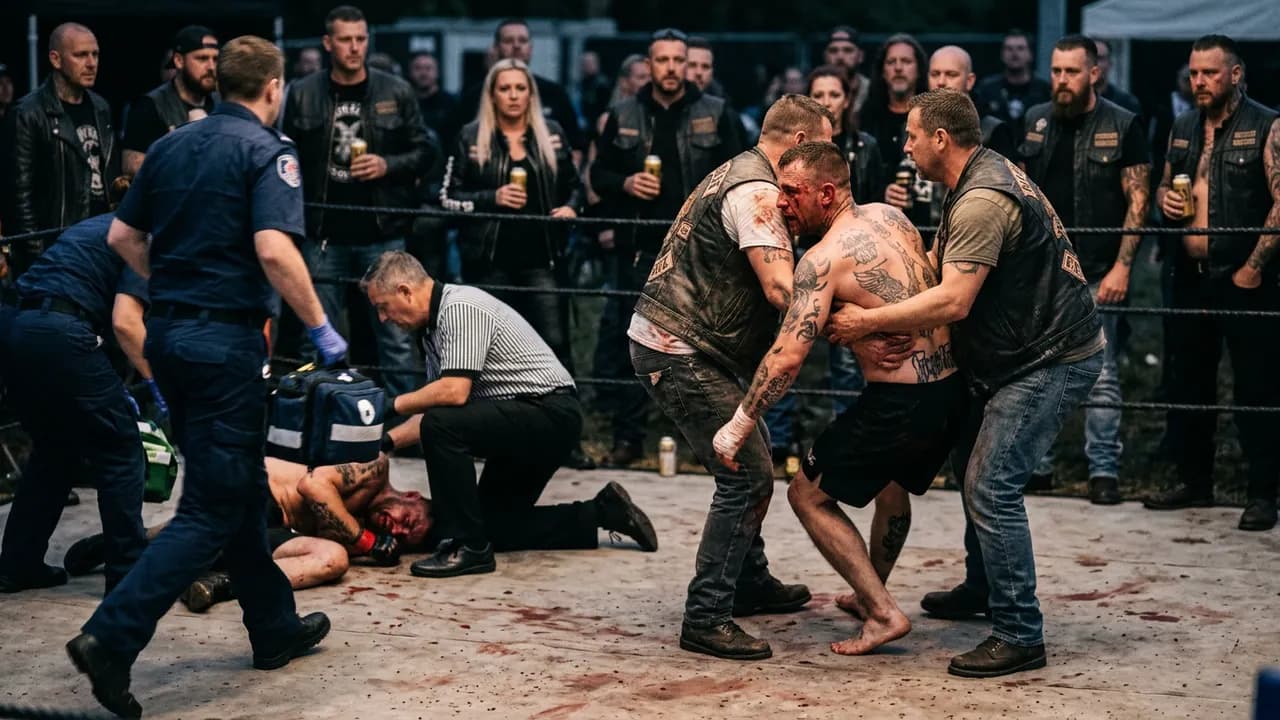
The East Bay Rats motorcycle club has operated out of Oakland, California, since the early 2000s, and for nearly as long, the club has been hosting Fight Night -- an underground boxing event staged in the club's warehouse headquarters that became one of the most iconic underground fighting events in America.
The format was straightforward. Two participants, boxing gloves, a makeshift ring inside a warehouse packed with bikers, punk rockers, artists, and anyone else who could find the address and pay the door charge. No official sanctioning. No professional judges. No television cameras -- at least not initially. What East Bay Rats Fight Night offered was an experience: the chance to box in front of a rowdy, beer-fueled crowd in one of Oakland's most storied underground venues.
The fighters who competed at these events came from every corner of Oakland's diverse community and beyond. Some were trained boxers looking for ring time. Others were complete novices looking for a rush. A few became regulars whose Fight Night careers spanned years. This is where they ended up.
The Regulars: Oakland's Underground Boxing Circuit
Every Fight Night had its regulars -- fighters who came back month after month, building reputations within the East Bay Rats community. These were not professional boxers in any formal sense, though some had gym training. They were people who discovered that they liked fighting, that they were reasonably good at it, and that the East Bay Rats warehouse was a place where that particular talent was valued.
The regulars formed the backbone of Fight Night's appeal. Audiences came back because they recognized the fighters, knew their styles, and had opinions about upcoming matchups. It was a local boxing scene in the truest sense -- grassroots, community-driven, and sustained by personal relationships rather than promotional contracts.
As of 2026, many of these regulars have aged out of active competition. Boxing -- even amateur, unsanctioned boxing -- is a young person's endeavor, and the body eventually vetoes what the spirit wants to continue. Former regulars are scattered across the Bay Area and beyond, many still connected to the East Bay Rats community through social events, club functions, and the occasional return visit to Fight Night as spectators rather than participants.
The Trained Boxers: Testing Ground for Bay Area Talent
Oakland has a deep boxing tradition. The city has produced world champions and Olympic medalists, and its network of boxing gyms -- from King's Boxing Gym to the countless smaller operations throughout East and West Oakland -- ensures a steady supply of trained fighters looking for competitive outlets.
For some of these trained boxers, East Bay Rats Fight Night served as an informal proving ground. Young fighters could test their skills against live opponents in a high-pressure environment without the bureaucratic requirements of sanctioned amateur boxing -- no USA Boxing registration, no medical clearances, no official records. The trade-off was the absence of official protection: no ringside physician, no mandatory standing eight counts, no state athletic commission oversight.
Several trained boxers who competed at East Bay Rats Fight Night went on to sanctioned amateur and professional careers. The Fight Night experience gave them ring time and confidence, while the atmosphere -- louder, more chaotic, and more unpredictable than any sanctioned venue -- prepared them for the psychological demands of performing under pressure.
These fighters are now scattered across the boxing world. Some compete professionally at the regional level. Others have become trainers, working in the same Oakland gyms where they first learned to throw a jab. A few have left boxing entirely, carrying their Fight Night experience as a story rather than a career credential.
The Novices: One Night and Done
The majority of East Bay Rats Fight Night participants were not fighters at all. They were civilians -- people from the crowd who volunteered, were volunteered by friends, or simply got caught up in the energy of the event and decided to strap on gloves. These one-time participants are the silent majority of the Fight Night alumni.
Their experiences varied wildly. Some discovered a natural aptitude for boxing and returned for more. Others discovered, quickly and painfully, that getting punched in the face by someone who knows what they are doing is not as glamorous as it looks from the crowd. The attrition rate among novice participants was enormous, which is exactly how it should be -- fighting is not for everyone, and the East Bay Rats warehouse was an efficient mechanism for sorting who could handle it and who could not.
03 / Up next / The Culture Carriers: Fight Night's Artistic Legacy
Where are these novices now? Everywhere. They are bartenders, teachers, software engineers, construction workers, and artists living throughout the Bay Area and beyond. For most of them, their East Bay Rats Fight Night appearance is an anecdote -- a story they tell at dinner parties, usually accompanied by a scar or a slightly crooked nose. It was a single night, a single experience, and it is remembered fondly precisely because it was not repeated.
The Culture Carriers: Fight Night's Artistic Legacy
East Bay Rats Fight Night existed at the intersection of underground fighting and Oakland's art and music scene. The events drew filmmakers, photographers, musicians, and writers who were as interested in the cultural experience as the fighting itself. Several documentary projects were filmed at Fight Night, and the events were featured in publications ranging from underground zines to national media outlets.
The fighters who became subjects of this documentation occupy a unique position. Their Fight Night appearances are preserved in film, photography, and print, giving them a visibility that most underground fighters never achieve. Some of these documented fighters have embraced this legacy, participating in interviews and retrospectives about the East Bay Rats scene. Others prefer to leave their fighting in the past, uncomfortable with the attention that documentation brings.
The artistic community that surrounded Fight Night has largely moved on as well, as Oakland's rapid gentrification in the 2010s and 2020s displaced many of the artists, musicians, and cultural figures who gave the East Bay Rats scene its distinctive character. But the documentation they created ensures that the Fight Night era is preserved for future reference.
The Oakland Factor: Gentrification and the Fight Scene
Any discussion of where East Bay Rats Fight Night veterans are now must account for the massive changes Oakland has undergone since the events began. The city's rapid gentrification -- driven by the tech industry's expansion across the Bay from San Francisco -- has transformed neighborhoods, displaced communities, and fundamentally altered the cultural landscape that made Fight Night possible.
Many former Fight Night participants have been priced out of Oakland entirely. The warehouse district where the East Bay Rats operate has seen property values skyrocket, and the surrounding neighborhoods have been reshaped by development. The community that sustained Fight Night -- a mix of blue-collar workers, artists, bikers, and immigrants -- has been scattered by economic forces that have nothing to do with boxing.
This displacement means that the Fight Night community exists in diaspora. Former fighters are now in Richmond, Vallejo, Sacramento, Portland, and beyond -- pushed out of the city where they built their fighting identities by the same economic forces that are reshaping urban America.
Fight Night's Enduring Legacy
Despite the changes to Oakland's landscape, East Bay Rats Fight Night has endured. The format has proven remarkably durable, surviving gentrification, pandemic shutdowns, and the constant churn of participants. New fighters continue to step into the warehouse, strap on gloves, and discover what it feels like to box in front of a screaming crowd.
The veterans who built Fight Night's reputation -- the regulars, the trained boxers, the one-timers, and the culture carriers -- can look at the current events and see the continuation of something they helped create. The warehouse is the same. The energy is the same. The fundamental proposition -- come fight, no excuses, no credentials required -- has not changed.
Wherever the Fight Night alumni are now, they share a common experience that is increasingly rare in American life: they stepped into a ring with another human being and found out something about themselves that could not be learned any other way. The East Bay Rats gave them that opportunity. What they did with the knowledge was up to them.
Watch: East Bay Rats Fight Night Footage
Oakland's iconic warehouse boxing events -- where bikers, artists, and civilians step into the ring.
- East Bay Rats Fight Night -- Full Event Footage -- Cameras inside the East Bay Rats warehouse capturing the atmosphere of Oakland's most famous underground boxing event.
- East Bay Rats MC -- Fight Night Documentary -- A documentary look at the motorcycle club and the Fight Night events that became an Oakland cultural institution.
- East Bay Rats -- Oakland Underground Boxing -- The energy, the crowd, and the fights from the warehouse where novices and trained boxers share the same ring.
- Oakland's Underground Boxing Scene -- How the East Bay Rats Fight Night fits into Oakland's broader boxing tradition, from King's Boxing Gym to the warehouse.
- Fight Night Knockouts -- East Bay Rats -- The most dramatic moments from the warehouse ring, where one-time participants and regulars produce genuine spectacle.
For more on the East Bay Rats and their Fight Night events, see our East Bay Rats organization profile. For stories of underground fighters who transitioned to professional careers, read Where Are They Now: Backyard Fighters Who Went Pro.