For most of its history, underground fighting was an exclusively male domain. The backyard brawls, the parking lot scraps, the concrete fights in Scandinavian warehouses -- all of it was staged by men, fought by men, and watched by an audience that was overwhelmingly male. Women existed in the ecosystem as spectators, romantic partners of fighters, or occasional presences in the comment sections debating whether any of this was morally acceptable.
That has changed. Not gradually, not theoretically, but measurably and dramatically. Women are now championship contenders in BKFC's professional bare-knuckle divisions, headliners of pay-per-view events, and participants in the backyard and underground operations that feed the broader fighting ecosystem. The transformation from total exclusion to growing prominence has happened in less than a decade, and it has produced fighters, stories, and competitive products that have reshaped the entire landscape of underground and bare-knuckle combat.
This is the story of that transformation -- the pioneers who made it possible, the fighters who proved it viable, and the cultural shifts that continue to accelerate women's participation in the rawest form of combat sport.
The Pioneers: Opening the Door
Britain Hart: The First Through the Wall
The history of women in sanctioned bare-knuckle fighting begins with Britain Hart. When BKFC staged the first sanctioned women's bare-knuckle bout in the United States in 2018, Hart was one of the two fighters who stepped into the ring. That fight -- the first of its kind since the sport was legalized in Wyoming earlier that year -- was not a milestone that Hart could have appreciated in the moment. She was too busy fighting.
Hart's journey to that pioneering bout was paved with hardship rather than privilege. A professional boxer with a 4-4-3 record, Hart had experienced the financial realities of women's boxing -- meager purses, limited opportunities, and periods of living out of her car. Bare-knuckle fighting was not a glamour move. It was an economic decision made by a woman who needed to fight and was willing to do it without gloves if that was what the opportunity required.
What Hart brought to BKFC was something that no amount of marketing could have manufactured: legitimacy through willingness. She showed up, fought, and kept showing up. She lost her BKFC debut. She lost a flyweight title fight. She kept coming back. And eventually, she built a run of dominance at strawweight that made her the undisputed champion of the division, with four consecutive title defenses and more main events than any other fighter in BKFC history.
Hart's significance extends beyond her record. She proved that women's bare-knuckle fighting could be competitive, compelling, and commercially viable at a time when none of those things were certain. Every woman who has fought in BKFC since -- every champion, every contender, every debutant -- walks through a door that Britain Hart opened.
Christine Ferea: The Division Becomes Elite
If Hart opened the door, Christine Ferea kicked it off its hinges. "Misfit" Ferea arrived in BKFC with an undefeated amateur Muay Thai record (13-0) and a level of striking skill that immediately elevated the women's division from interesting to elite.
Ferea's BKFC career has been one of sustained, almost monotonous dominance. Five consecutive defenses of the Women's Flyweight Championship. An additional title at 135 pounds as the inaugural Queen of Violence Champion. A record of 10-1, with her only loss coming to Helen Peralta. She has beaten Britain Hart twice, beaten Bec Rawlings twice, and finished opponents with the kind of clinical precision that makes the word "misfit" seem ironic -- she fits the bare-knuckle format so perfectly that it appears the sport was designed for her.
What Ferea demonstrated was that women's bare-knuckle fighting could produce genuine greatness -- not "good for a woman" or "surprisingly competitive" but genuinely, objectively great fighting. Her performances are as technically refined and dramatically compelling as anything in the men's divisions, and her dominance has provided the women's bare-knuckle scene with its first true star.
The Crossover: Paige VanZant and the Mainstream Spotlight
What PVZ Brought to Bare Knuckle
Paige VanZant's signing with BKFC in 2020 was the most significant crossover event in bare-knuckle fighting history. VanZant -- a former UFC flyweight contender, Dancing with the Stars runner-up, and social media personality with millions of followers -- brought mainstream visibility that the women's division had never experienced.
VanZant's BKFC record (0-2) has been a source of criticism from fight purists who view her as a celebrity signing rather than a competitive addition.
VanZant's BKFC record (0-2) has been a source of criticism from fight purists who view her as a celebrity signing rather than a competitive addition. But that criticism misses the larger point. VanZant's value to women's bare-knuckle fighting was never measured in wins and losses. It was measured in media coverage, social media impressions, and the number of people who heard the words "women's bare-knuckle fighting" for the first time because VanZant was involved.
When VanZant signed with BKFC, the story was covered by ESPN, Sports Illustrated, TMZ, and mainstream news outlets that had never mentioned bare-knuckle fighting before. Her fights were covered on sports media platforms that would not have sent a reporter to a women's bare-knuckle bout without a mainstream name on the card. The coverage introduced the sport to demographics -- women, casual sports fans, entertainment media consumers -- who were not part of bare-knuckle's existing audience.
VanZant's presence also raised the economic profile of women's bare-knuckle fighting. Her per-fight compensation -- reported to be significantly higher than the average women's bare-knuckle purse -- established a new ceiling for what female fighters could earn in the sport. While the gap between VanZant's star-power-driven compensation and the average fighter's purse remained enormous, the existence of a six-figure payday for a women's bare-knuckle bout represented a milestone that elevated the economic aspirations of every female fighter in the sport.
The Emerging Generation
Valinda Hernandez and the Next Wave
Beyond the established names, a new generation of female fighters is entering both bare-knuckle and underground fighting, expanding the talent pool and competitive depth of women's divisions.
Valinda Hernandez represents the emerging class of female fighters who have come to bare-knuckle and underground fighting not as crossovers from other combat sports but as fighters who chose this path directly. Her presence in the BKFC ecosystem illustrates how the women's talent pipeline has matured -- from a handful of willing participants in 2018 to a competitive field deep enough to support multiple weight classes, title contenders, and meaningful rivalries.
The emerging generation benefits from the infrastructure that the pioneers built. Hart, Ferea, and VanZant established that women's bare-knuckle fighting was viable, compelling, and commercially valuable. The fighters who follow them do not need to prove that the concept works. They only need to prove that they belong in the ring, and the growing depth of women's divisions suggests that many of them do.
Women in the Underground Scene
The growth of women's participation extends beyond sanctioned bare-knuckle into the broader underground fighting ecosystem. Streetbeefs has featured women's bouts, with female fighters competing in boxing, kickboxing, and MMA formats in "Satan's Backyard." These fights attract significant viewership -- often outperforming men's bouts of comparable skill level -- suggesting that the YouTube audience's appetite for women's fight content is as robust as the live event audience's.
Women's participation in underground fighting is more complicated than in the sanctioned bare-knuckle space. The safety concerns that apply to all underground fighters are amplified for women, who may face physiological vulnerabilities that male fighters do not. The lack of medical oversight, professional cornermen, and post-fight medical evaluation in most underground settings creates risks that are difficult to quantify and impossible to eliminate.
Nevertheless, women continue to enter the underground fighting space, drawn by the same motivations that attract male participants: the desire to test themselves, the appeal of the competition, and the visibility that YouTube-native fight channels provide. The gender barrier in underground fighting is not gone, but it is thinner than it has ever been.
The Business Case: Why Women's Fighting Grows
Pay-Per-View Power
The commercial evidence for women's bare-knuckle fighting is now substantial. BKFC has headlined pay-per-views with women's fights, and the buy rates for those events have demonstrated that female fighters can sell at levels comparable to male headliners. The Ronda Rousey precedent -- which showed that women's combat sports could drive mainstream commercial numbers -- has been validated in the bare-knuckle context.
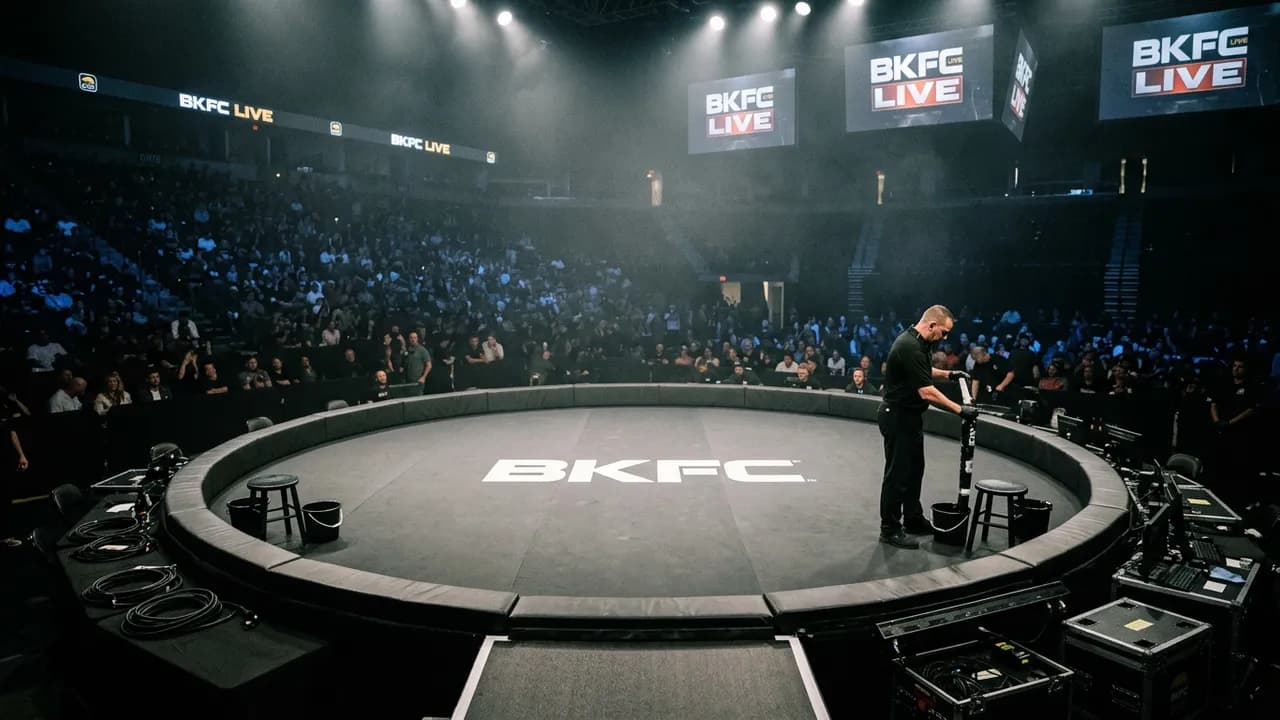
BKFC now operates three women's weight classes (strawweight, flyweight, and featherweight), each with its own champion and contender rankings. The women's divisions are not afterthoughts or marketing exercises. They are structural pillars of the promotion's competitive framework, producing content that the algorithm rewards, sponsorships that advertisers value, and narratives that fans follow with genuine investment.
Social Media and Audience Development
Women's bare-knuckle fighting has proven particularly effective at driving social media engagement. Female fighters often generate higher per-follower engagement rates than their male counterparts, and their fights attract viewer demographics -- including female viewers and casual sports fans -- that the men's divisions alone cannot reach.
04 / Up next / The Talent Pipeline Deepens
This audience diversification is commercially valuable. Advertisers targeting female demographics are more willing to sponsor content featuring female athletes. Media outlets covering women's sports are more likely to cover women's bare-knuckle bouts. And the expansion of the audience beyond the core male fight fan demographic increases the total addressable market for bare-knuckle content.
The Talent Pipeline Deepens
The most important indicator of long-term growth is the talent pipeline. In 2018, BKFC struggled to find women willing to fight bare-knuckle. By 2026, the promotion receives regular applications from female fighters across multiple combat sports backgrounds -- boxing, MMA, Muay Thai, kickboxing, and even amateur wrestling. The pipeline has deepened to the point where competitive matchmaking is possible at multiple weight classes, creating the kind of depth that produces compelling cards and sustained audience interest.
The pipeline extends beyond BKFC. BKB Bare Knuckle Boxing features women's divisions in its patented Trigon ring. International bare-knuckle promotions in Europe and Asia are building women's rosters. The underground scene, from Streetbeefs to smaller YouTube channels, features increasing numbers of women's bouts. Each new platform that offers women's fights expands the total ecosystem and attracts fighters who might not have considered bare-knuckle or underground fighting as options.
Cultural Shifts: Why This Is Happening Now
The Post-Rousey Effect
The growth of women in underground and bare-knuckle fighting cannot be understood without reference to Ronda Rousey's transformation of women's MMA. Rousey's rise in the UFC from 2012 to 2015 did not just create a women's division in one promotion. It changed the cultural conversation about women in combat sports, demonstrating that female fighters could be main-event attractions, pay-per-view sellers, and cultural icons.
That cultural shift percolated through every level of combat sports, from professional MMA to amateur boxing to bare-knuckle to underground fighting. The generation of women entering bare-knuckle and underground fighting in the 2020s grew up in a world where female combat sports athletes were visible, respected, and economically rewarded. The question "Can women fight?" was answered definitively by Rousey and her successors. The remaining question -- "Will women fight bare knuckle?" -- has been answered by Hart, Ferea, VanZant, and the growing roster of fighters who followed.
Social Media as Equalizer
Social media platforms have served as equalizers for women in combat sports, providing direct audience access that does not depend on the gatekeeping decisions of predominantly male promoters and media executives. Female fighters can build followings, generate engagement, and demonstrate commercial viability through their own platforms, creating leverage that translates into opportunities in the ring.
This dynamic is particularly powerful in the underground fighting space, where YouTube viewership is the primary measure of commercial value. A female fighter whose bouts generate high view counts on Streetbeefs or other YouTube channels has demonstrated market value that promoters cannot ignore. The algorithm does not discriminate by gender -- it recommends content based on engagement metrics, and women's fights that generate high watch time, click-through rates, and shares receive the same algorithmic boost as men's fights.
What Comes Next
The Professionalization Trajectory
The trajectory of women's bare-knuckle and underground fighting points toward continued professionalization. BKFC's women's divisions will likely expand to include additional weight classes as the talent pool deepens. Purse structures will continue to rise as the commercial value of women's fights is proven through pay-per-view numbers and sponsorship revenue. And the competitive quality will continue to improve as more skilled athletes enter the sport.
The underground scene will follow a parallel but distinct path. Women's participation in backyard and unsanctioned fighting will grow as cultural barriers continue to erode, but the safety concerns inherent in unregulated combat will remain a limiting factor. The most talented female fighters who emerge from the underground pipeline will eventually migrate to sanctioned platforms that offer better compensation, medical oversight, and competitive structure.
The Unfinished Revolution
The transformation of women's role in underground and bare-knuckle fighting is far from complete. Women remain a small minority of participants in most fighting organizations. Female fighters still earn less than their male counterparts at comparable skill levels. The cultural resistance to women fighting -- particularly fighting without gloves -- has diminished but not disappeared. And the safety infrastructure that women in combat sports deserve is still inadequate in many contexts.
But the direction is unmistakable. From zero sanctioned women's bare-knuckle bouts in the history of the sport to multiple title fights on every BKFC card. From no female participation in underground fighting to growing representation on the most-watched fight channels on YouTube. From invisible to undeniable.
The revolution is not finished. But it is no longer deniable. The women who started it -- Hart, Ferea, VanZant, and the fighters who came before the cameras were rolling -- did not wait for permission. They fought their way in. And the door they opened is not closing.