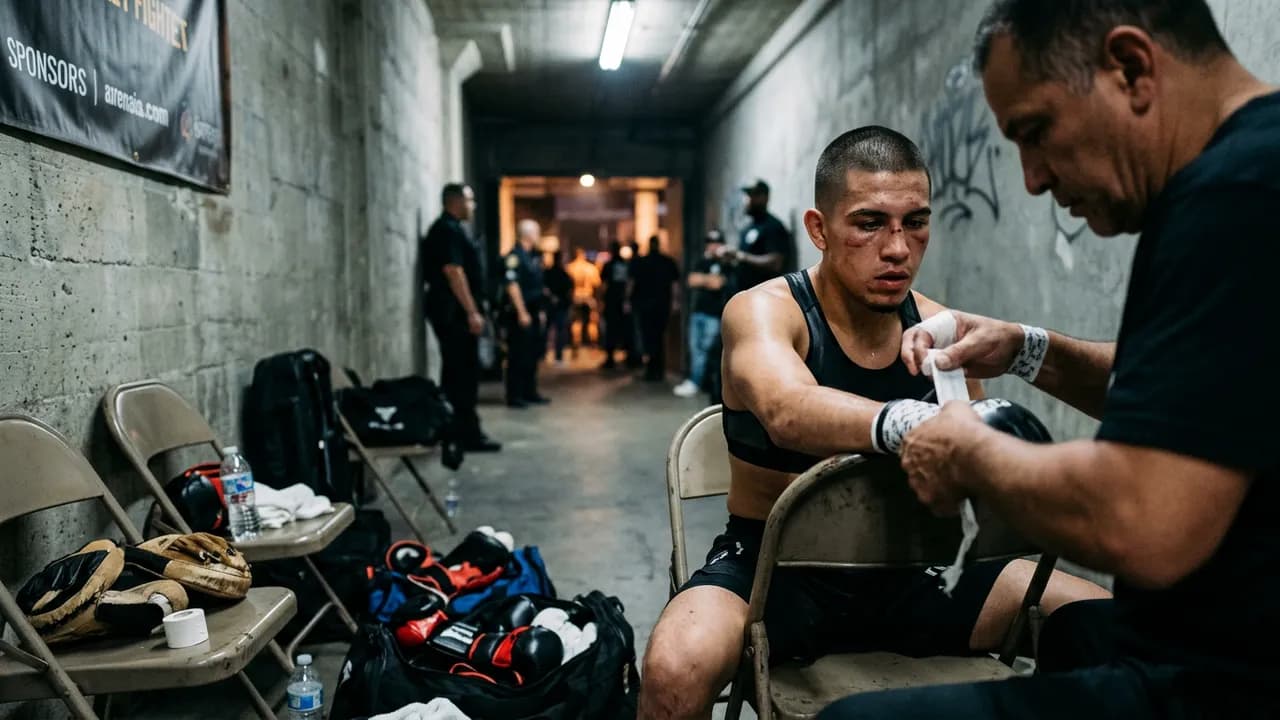
The East Bay Rats Fight Night does not publish a fighter roster, win-loss records, or rankings. It never has. Founded in Oakland in 1996 by Trevor Latham as a motorcycle-club-adjacent social experiment, the Rats run volunteer boxing-style bouts in a clubhouse courtyard, where anyone willing to put on the gloves can step in. That structure makes a conventional "best fighters" list impossible to verify. So this ranking is organized differently: by the roles and eras that define who matters at the Rats, not by fabricated stats.
How This List Was Built
There is no commission, no sanctioning body, and no official record-keeping at the East Bay Rats. Because of that, anyone claiming a specific fighter's exact record is guessing. This list ranks notable participant types and eras by four things that are actually documented or reasonably observable: the organizer role within the club's history, the volunteer ethos the club is known for, the recurring presence of repeat brawlers, and the courtyard format itself. Every name below is described in plain text. No fighter profiles are linked, because no verified individual profiles exist for this club.
If you want the verified facts about the organization, start with the East Bay Rats organization profile.
Why "best" is the wrong word for the Rats
Most fight promotions exist to crown a winner. The East Bay Rats grew out of a motorcycle-club social world in West Oakland, and the fight night was always closer to a rite of passage than a competition. Participants sign waivers, glove up, and box another willing volunteer for a few rounds. There is no belt to defend, no purse to chase, and no ranking to climb. When the goal is the experience rather than the title, "best" stops meaning "most decorated" and starts meaning "most central to what the club is." That is the lens used here. The ranking weights founder-era importance, the volunteer ethos, recurring presence, and the courtyard format itself — the four things that can actually be observed rather than invented.
1. The Founder-Organizer (Trevor Latham era)
The single most important figure in any honest account of the East Bay Rats is the founder himself. Trevor Latham started the club in 1996, and the club's identity — volunteer fighters, a clubhouse courtyard, a refusal to commercialize into a pay-per-view product — flows directly from that founding choice. He is not "ranked" as a fighter in the competitive sense; he is the reason the format exists. Any list that ignores the organizer in favor of invented champions is selling fiction. The Rats are a club first and a fight promotion a distant second, and that distinction starts with Latham.
2. The Repeat Volunteer Brawler
The closest thing the Rats have to a recurring "fighter" archetype is the volunteer who keeps coming back. These are not professionals. They are local Oakland regulars, bikers, and walk-ins who agree to box another willing volunteer for the experience rather than a purse. Because the club has run for nearly three decades, a small population of repeat brawlers has cycled through, and they form the backbone of the club's actual fighting reputation. Their value is consistency and willingness, not a verified knockout record.
3. The Charity-Card Headliner
The East Bay Rats have historically tied fight nights to charity and community fundraising rather than prize money. The participants who anchor those benefit cards — the ones the small courtyard crowd shows up to see — are notable for drawing attention to the cause, not for a sanctioned title. In a club with no published purse, the headliner's role is reputational. That makes the charity-card draw one of the more meaningful "rankings" the Rats actually produce.
4. The First-Timer Who Survives the Round
A defining East Bay Rats moment is the walk-in who has never fought, signs up on the night, and makes it through a full courtyard bout. The club's volunteer model means a large share of its most talked-about participants are one-time fighters. They are not building careers. They are testing themselves once, in front of a crowd, on packed dirt. This archetype is central to why the Rats matter culturally, even if it produces no records to rank.
5. The Cross-Discipline Visitor
Oakland's combat-sports scene includes boxers, kickboxers, and grapplers, and the Rats' open-door courtyard occasionally draws trained visitors testing themselves against the club's volunteer format. These cross-discipline participants stand out because their technique contrasts with the raw, willing-amateur baseline of the club. Their exact identities and results are not formally published, so they are named here only as a type — the trained outsider who steps into an untrained-friendly environment.
6. The Long-Tenure Regular
Across nearly 30 years, a handful of participants have returned to East Bay Rats fight nights again and again, becoming fixtures rather than one-off entrants. The long-tenure regular is notable for the same reason longevity matters anywhere in fighting: surviving a format repeatedly is harder than surviving it once. In a club with no records to point to, the regular's reputation is built on familiarity — the crowd knows the name, knows the style, and knows roughly how the night will go. That recognition is the club's organic version of a ranking, formed by memory rather than by a scorecard.
7. The Crowd Itself
It is unusual to include spectators in a fighter list, but at the East Bay Rats the line between crowd and competitor is thin. Many participants come up out of the audience, and the courtyard's tight, fence-lined geometry means the crowd is part of the event in a way it never is in an arena. The willing audience-turned-fighter is so central to the Rats' identity that ignoring it would misrepresent the club. This entry stands in for the dozens of unnamed people who have stepped from the sidelines into the ring over the years.
How the East Bay Rats Compare
Unlike commercialized underground promotions, the Rats sit much closer to a true fight club than a fight league. Compare them to the amateur-card structure of Backyard Squabbles in Los Angeles, the shock-content model of Felony Fights, or the ranked, edited-for-YouTube product behind the best KOTS fighters of all time. The Rats produce no rankings because rankings were never the point — survival, charity, and community were.
FAQ
Does the East Bay Rats publish a fighter ranking?
No. The club has never published a roster, win-loss records, or official rankings. Its bouts are volunteer boxing-style matchups, often tied to charity, with no sanctioning body keeping score.
Who founded the East Bay Rats?
Trevor Latham founded the club in Oakland, California, in 1996. The club's volunteer, courtyard-based format reflects his founding intent more than any individual fighter.
Are East Bay Rats fighters paid?
There is no published purse structure. The club operates on a volunteer model, and fight nights have historically been tied to community and charity rather than prize money.
Can anyone fight at the East Bay Rats?
Historically the club has relied on willing volunteers and walk-ins who agree to box another consenting participant. There is no verified professional roster, which is why this list ranks roles and eras rather than named champions.