In 2011, a group of men set up a makeshift ring filled with sand in an open space somewhere in St. Petersburg, Russia. Two fighters stepped in. Someone pressed record. When the fight ended, the footage was uploaded to YouTube. Within a few years, that crude beginning had grown into the largest fight club on the planet -- an organization with more than 10,000 active participants across Russia and the CIS nations, a virtual roster exceeding 40,000 fighters worldwide, and a YouTube channel with over 2.45 million subscribers and 1.5 billion views that ranks second only to the UFC in combat sports viewership.
This is the story of Strelka -- a name that translates roughly to "arrow" or "meeting point" in Russian -- and how a local fight club from Russia's cultural capital became a global phenomenon that redefined what underground fighting could be.
The Roots: Russia's Fighting Culture
A Country Built on Fists
Understanding Strelka requires understanding Russia's relationship with fighting, which is unlike that of any other country in the world. Russia has a centuries-old tradition of organized, communal fist combat that predates modern boxing by hundreds of years.
The stenka na stenku -- literally "wall against wall" -- was a form of mass fist combat practiced in Russian villages dating back to at least the 13th century. Entire communities would line up and charge at each other, settling disputes, celebrating festivals, or simply proving collective toughness through organized group brawling. These events were community fixtures, tolerated by authorities and celebrated in folklore. They continued in various forms well into the Soviet era and have never entirely disappeared.
This tradition established a cultural norm: fighting, conducted under informal but mutually understood rules, was an acceptable and even admirable activity for Russian men. It was not deviance. It was tradition. When Strelka emerged in 2011, it was tapping into something that had been part of Russian culture for seven centuries.
The more immediate precursor to Strelka was the hooligan fight culture surrounding Russian football. Beginning in the 1990s and accelerating through the 2000s, Russian football firms adopted the arranged-fight model from English hooliganism -- opposing crews meeting at agreed locations for group combat. By the 2010s, Russia had one of the most active and organized hooligan fight scenes in Europe, producing fighters with genuine combat skills and a cultural infrastructure that valued physical confrontation.
The St. Petersburg Scene
St. Petersburg, Russia's second city, was a natural birthplace for Strelka. The city had a thriving martial arts community, an active hooligan scene, and a youth culture defined by physical toughness. It also had something that Moscow, with its greater wealth and more cosmopolitan character, lacked: the kind of working-class grit that makes men willing to fight strangers in a sand ring for no money and no title.
The city's geographic position -- on the Gulf of Finland, with cultural and logistical connections to both Western Europe and the Russian heartland -- also positioned it as a bridge between Russia's domestic fighting culture and the broader European fight content ecosystem that was emerging simultaneously.
The Founding: 2011 - 2013
The First Events
Strelka's first events were modest affairs, held outdoors in parks, vacant lots, and other open spaces around St. Petersburg. The founders -- who have remained relatively anonymous compared to their organization's fame -- recognized from the beginning that video would be the key to growth. Every fight was filmed, edited, and uploaded to YouTube.
The format was established early and has remained remarkably consistent: an outdoor ring filled with sand, approximately four to five meters in diameter. No rounds. No time limits. No weight classes in the earliest events. Amateurs only -- professional fighters were excluded to maintain the democratic character of the events. Two fighters enter and fight until one surrenders, is knocked out, or can no longer continue.
The sand ring was Strelka's most consequential design decision. Unlike King of the Streets, which fights on concrete, or Streetbeefs, which uses grass or dirt, Strelka's sand surface provides meaningful cushioning for takedowns and falls. This is not a soft surface by any reasonable standard -- fighters still hit the ground hard -- but it meaningfully reduces the risk of catastrophic head injuries from impact with the fighting surface. The sand ring made Strelka safer than concrete-surface operations while maintaining the raw, outdoor aesthetic that defined the brand.
The only reward was the fight itself and the footage that would be uploaded for the world to see.
The early events drew participants from the local fighting community -- martial artists, hooligans, boxers, wrestlers, and ordinary men who wanted to test themselves. There were no prizes, no titles, no monetary compensation. The only reward was the fight itself and the footage that would be uploaded for the world to see.
Finding the YouTube Sweet Spot
Strelka's early YouTube growth was driven by the same algorithmic dynamics that powered the broader underground fighting content explosion, but with characteristics that made its content particularly effective.
Visual distinctiveness: The sand ring created an instantly recognizable visual signature. In a YouTube sidebar full of generic street fight thumbnails, a Strelka thumbnail -- two fighters in a sand circle, surrounded by spectators -- stood out immediately. This visual brand recognition drove higher click-through rates, which the algorithm rewarded with more recommendations.
Narrative unpredictability: Because Strelka used amateur fighters with widely varying skill levels, the outcomes were genuinely unpredictable. A 60-kilogram boxer might face a 100-kilogram wrestler. A Muay Thai practitioner might encounter a street brawler with no formal training. This unpredictability created the kind of compelling uncertainty that kept viewers watching to the end, driving the high completion rates that YouTube's algorithm interprets as a quality signal.
Volume: Strelka events produced multiple fights per session, and the organization uploaded prolifically. Consistency of upload schedule is one of the strongest signals to YouTube's recommendation system, and Strelka delivered.
The Growth Phase: 2014 - 2018
Expanding Beyond St. Petersburg
By 2014, Strelka had outgrown its St. Petersburg origins. The YouTube channel was gaining subscribers rapidly, and the organization began receiving applications from fighters across Russia. The founders made a strategic decision that would define Strelka's trajectory: rather than remaining a local operation that drew increasing attention, they would expand into a decentralized network of events across the country.
This expansion followed a specific model. Local organizers in cities across Russia and the CIS nations were authorized to stage Strelka-branded events under the organization's format and rules. These events were filmed and submitted to the central YouTube channel, which curated and published the content. This franchise-like structure allowed Strelka to scale rapidly without requiring the core team to travel constantly.
By the mid-2010s, Strelka events were being held in Moscow, Novosibirsk, Yekaterinburg, Krasnodar, Kazan, and cities across Kazakhstan, Belarus, and Ukraine. Each new market brought new fighters, new audiences, and new content for the YouTube channel. The subscriber count climbed past one million.
The Democratic Fight Club
Strelka's defining characteristic during this growth phase was its radical accessibility. In an era when combat sports was increasingly professionalized -- when even amateur boxing required club memberships, coaching, and sanctioning body registration -- Strelka offered something remarkably simple: show up and fight.
The roster reflected this openness. Truck drivers fought sushi chefs. Longshoremen fought hawkers. University students fought construction workers. There were no physical prerequisites beyond basic health, no training requirements, no credentials. The only qualification was willingness. This democratization created a fighter pool of extraordinary diversity and produced the kind of mismatched, unpredictable bouts that YouTube audiences found irresistible.
It also created a pipeline for genuine talent discovery. Some fighters who entered Strelka's sand ring as untrained amateurs demonstrated natural ability that attracted the attention of professional gyms and promotions. Strelka became, inadvertently, one of the largest informal talent identification systems in Russian combat sports -- a place where raw potential could be identified and redirected toward professional development.
The 2018 World Cup: Peak Cultural Relevance
Strelka achieved its maximum cultural visibility during the 2018 FIFA World Cup in Russia. International media attention turned to the country's social and cultural landscape, and Strelka -- along with the broader Russian hooligan and fighting subculture -- became a subject of fascination for foreign journalists.
Coverage in outlets like the South China Morning Post profiled Strelka as a constructive channel for the aggressive energies of Russia's fighting community. The narrative framed the organization as a positive alternative to street violence and hooliganism -- a place where men could earn respect through skill and courage in a controlled environment rather than through random street violence or football-related disorder.
This media coverage introduced Strelka to audiences that would never have found it through YouTube's algorithm alone. The 2018 period represented the convergence of algorithmic growth and traditional media attention, and it pushed the channel past the two-million subscriber mark.
The Format That Built an Empire
Why the Strelka Format Works
The Strelka format has remained almost unchanged since 2011, which is itself a testament to its effectiveness. The core elements are simple:
04 / Up next / What the Format Produces
The sand ring: A circle filled with sand, enclosed by ropes or barriers, approximately four to five meters in diameter. The sand provides cushioning while maintaining an outdoor, raw aesthetic.
No rounds: Fights continue without interruption until conclusion. There are no rest periods, no corner advice between rounds, no opportunity to recover. This format rewards cardio, toughness, and the ability to perform under escalating fatigue.
Fight to finish: Victory comes by knockout, submission, or the inability of one fighter to continue. There are no judges, no scorecards, no decisions. Every fight has a definitive ending, which is both a competitive feature and a content advantage -- viewers always see a conclusion.
Amateurs only: Professional fighters are excluded. This ensures that the skill gap between participants remains within bounds that produce competitive fights rather than one-sided beatdowns, and it maintains the organization's identity as a platform for ordinary people to test themselves.
Multiple bouts per event: A typical Strelka event features eight to fifteen bouts, creating a card-style format that produces content volume and allows the YouTube channel to upload individual fights as standalone videos.
What the Format Produces
The Strelka format consistently produces a specific type of fight that has proven to be algorithmically and culturally resonant. Because fights have no rounds and no time limits, they tend to follow a dramatic arc: initial feeling-out, escalation, a crisis point where one or both fighters are exhausted, and a conclusion that is often dramatic. The absence of rounds means there are no artificial breaks in the action, creating continuous engagement for viewers.
The amateur-only rule ensures that fights are relatable. Viewers see themselves in Strelka fighters in a way they do not see themselves in professional athletes. The participants are ordinary people -- visibly nervous, sometimes overweight, often undertrained -- stepping into a genuinely dangerous situation and facing whatever comes. This relatability is a powerful driver of emotional engagement, which in turn drives the comments, shares, and repeat views that the YouTube algorithm values.
Going International: 2019 - Present
The Global Roster
Strelka's international expansion began organically through its YouTube audience. As the channel's viewership grew beyond Russian-speaking audiences -- driven by the universal appeal of fight content, which transcends language barriers -- the organization began receiving applications from fighters outside Russia and the CIS nations.
By the early 2020s, Strelka's virtual roster had expanded to include fighters from over 40 countries. The organization began staging events specifically designed to feature international matchups: Russian fighters versus foreign challengers, creating a nationalist narrative element that resonated with the domestic audience while introducing the international fighters' home audiences to the Strelka brand.
The virtual roster -- a database of fighters who have registered through Strelka's online platforms and expressed willingness to compete -- reportedly exceeded 40,000 by the mid-2020s. This number is almost certainly inflated by registrations that never convert to actual participation, but even a fraction of that figure represents an extraordinary pool of potential competitors.
The Trademark Play
A significant signal of Strelka's international ambitions came when the organization registered the Strelka trademark in the United States. This move -- unusual for a Russian fight club -- indicated that the founders were thinking beyond the domestic market and wanted legal protection for their brand in the world's largest combat sports market.
Whether the US trademark will be leveraged for American events, merchandise sales, licensing deals, or simply brand protection remains to be seen. But the registration itself represents a level of strategic thinking that sets Strelka apart from most underground fighting operations, which rarely consider intellectual property protection.
The Content Empire
Strelka's YouTube numbers tell the story of a content operation that has achieved scale rivaling professional sports media companies. Over 2.45 million subscribers. More than 1.5 billion total views. Thousands of individual fight videos, each representing a discrete piece of content that continues to generate views and revenue long after the original event.
The channel's view count places it among the top combat sports channels globally, behind only the UFC's official presence. For an organization that stages amateur fights in sand rings -- with no television deals, no pay-per-view infrastructure, and no corporate sponsorship at the level enjoyed by professional promotions -- this is a remarkable achievement.
05 / Up next / Strelka's Influence on Russian Combat Sports
The content library also represents an appreciating asset. Unlike a television broadcast that airs once and diminishes in value, YouTube content generates revenue in perpetuity as long as the platform exists and the videos remain monetized. Strelka's archive of thousands of fights represents a content catalog that continues to attract new viewers through algorithmic recommendation years after the original upload.
Strelka's Influence on Russian Combat Sports
Spawning an Ecosystem
Strelka did not just build a fight club. It built an ecosystem. The organization's success demonstrated to Russian entrepreneurs that fight content was a viable business, and the years following Strelka's rise saw a proliferation of Russian fighting organizations that drew directly on its model.
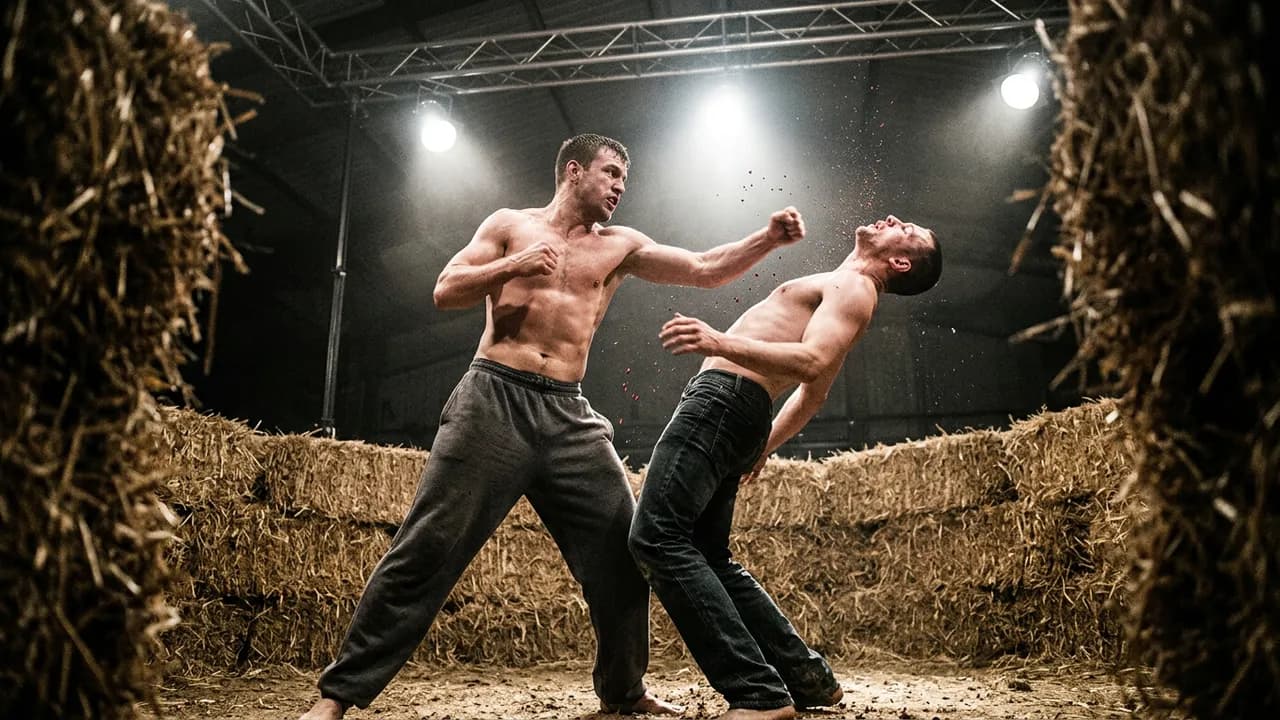
Top Dog Fighting Championship, founded by Danil "Regbist" Aleyev in 2020, is the most prominent example. Top Dog took the core insight of Strelka -- that raw, unpadded fighting generates massive online audiences -- and applied it with higher production values, a professional roster, and a structured championship format. Top Dog's hay bale ring is a conscious counterpart to Strelka's sand ring, and the promotion's growth from parking lot fights to CSKA Arena shows follows a trajectory that Strelka pioneered.
Mahatch FC offered another variation: smaller ring, more structured rules, and a focus on dramatic knockouts. Other operations, from small YouTube channels filming fights in provincial Russian cities to organized events in Moscow nightclubs, all owe a debt to the proof of concept that Strelka provided.
The result is that Russia has arguably the most robust fight content ecosystem in the world. The combined viewership of Russian fight content channels -- Strelka, Top Dog, Mahatch, and dozens of smaller operations -- exceeds that of any other national market. And it all traces back to a sand ring in St. Petersburg.
The Talent Pipeline
Strelka has also served as an informal talent development pipeline for Russian professional combat sports. Fighters who demonstrated exceptional ability in Strelka's amateur bouts attracted the attention of professional gyms, managers, and promotions. Some transitioned to professional MMA, boxing, or bare-knuckle competition, carrying with them a toughness and raw fighting experience that gym-trained fighters often lack.
This pipeline operates without formal structure -- there is no Strelka development program or official feeder relationship with professional promotions. But the sheer volume of fighters who pass through Strelka's events ensures that talent is regularly identified and redirected toward professional opportunities.
Challenges and Controversies
The Safety Question
Strelka's format, despite the cushioning provided by the sand ring, carries inherent risks. Fights with no rounds and no time limits can continue long past the point where one or both fighters should stop. The amateur-only rule means many participants have limited understanding of defensive technique, increasing the risk of accumulative damage. And the outdoor venues used for most events do not provide the medical infrastructure -- ringside physicians, ambulance access, emergency protocols -- that sanctioned combat sports require.
The organization has addressed safety concerns to some degree by employing referees who can stop fights and by implementing basic medical screening. But these measures fall short of what professional combat sports require, and the potential for a serious injury or death remains a constant shadow over the organization's operations.
Platform Dependency
Like every YouTube-native fighting organization, Strelka faces the existential risk of platform dependency. The channel's 2.45 million subscribers and 1.5 billion views exist on a platform owned by Google, which can change its content policies, adjust its algorithm, or terminate the channel at any time. Strelka has not diversified its distribution infrastructure to the degree that organizations like BKFC -- which has broadcast deals with DAZN and other networks -- have achieved.
The channel has so far avoided the repeated takedowns that have plagued King of the Streets, likely because Strelka's content, while violent, is presented within a sporting context that YouTube's content moderation systems are more likely to classify as permissible. But the risk remains, and a single channel termination could devastate an operation that has no equivalent distribution alternative.
From Sand Ring to Global Brand
The Strelka story is, at its core, a story about scale. A local fight club grew into a national operation, then an international brand, then a global content empire -- all without television deals, corporate investment, professional marketing, or any of the conventional infrastructure of sports promotion. It accomplished this through the combination of a compelling format, a massive cultural tradition of fighting, and a technology platform that turned raw combat footage into a globally accessible product.
08 / Up next / Essential Strelka Videos
With 10,000 active participants, 40,000 registered fighters, 2.45 million subscribers, and 1.5 billion views, Strelka is the biggest fight club in the world by virtually any metric. It is bigger than its imitators, bigger than its competitors, and bigger than its founders could have imagined when they filled a ring with sand in St. Petersburg fifteen years ago.
The sand ring is still there. The fights are still happening. The cameras are still rolling. And the algorithm is still recommending. As long as those conditions hold, Strelka's story is still being written -- one fight at a time, in the sand.
Essential Strelka Videos
The viral clips that turned a St. Petersburg fight club into a global phenomenon with 1.5 billion views.
- Strelka: Petrantsov — Viral KO: One of Strelka's most viral moments -- the kind of dramatic, unpredictable knockout that made the channel algorithmically irresistible.
- Top Dog FC: Best Knockouts Compilation: Strelka's most successful offspring, Top Dog FC, delivers the devastating knockouts that the Russian bare-knuckle format produces. The hay bale ring, the street clothes, the trained fighters hitting without gloves.
- Strelka — Official YouTube Channel: The full Strelka catalog -- over 2.45 million subscribers, 1.5 billion views, and thousands of fights from the sand ring that changed Russian combat sports.
- Strelka: Amateur vs Professional — Size Mismatch Fights: The mismatched, unpredictable bouts that define Strelka's "anyone can fight" philosophy -- truck drivers versus martial artists, students versus construction workers.
- Russia's Underground Fight Club — Documentary: International media coverage of Strelka during the 2018 World Cup period, when the organization reached peak cultural visibility and was profiled as an alternative to Russian football hooliganism.