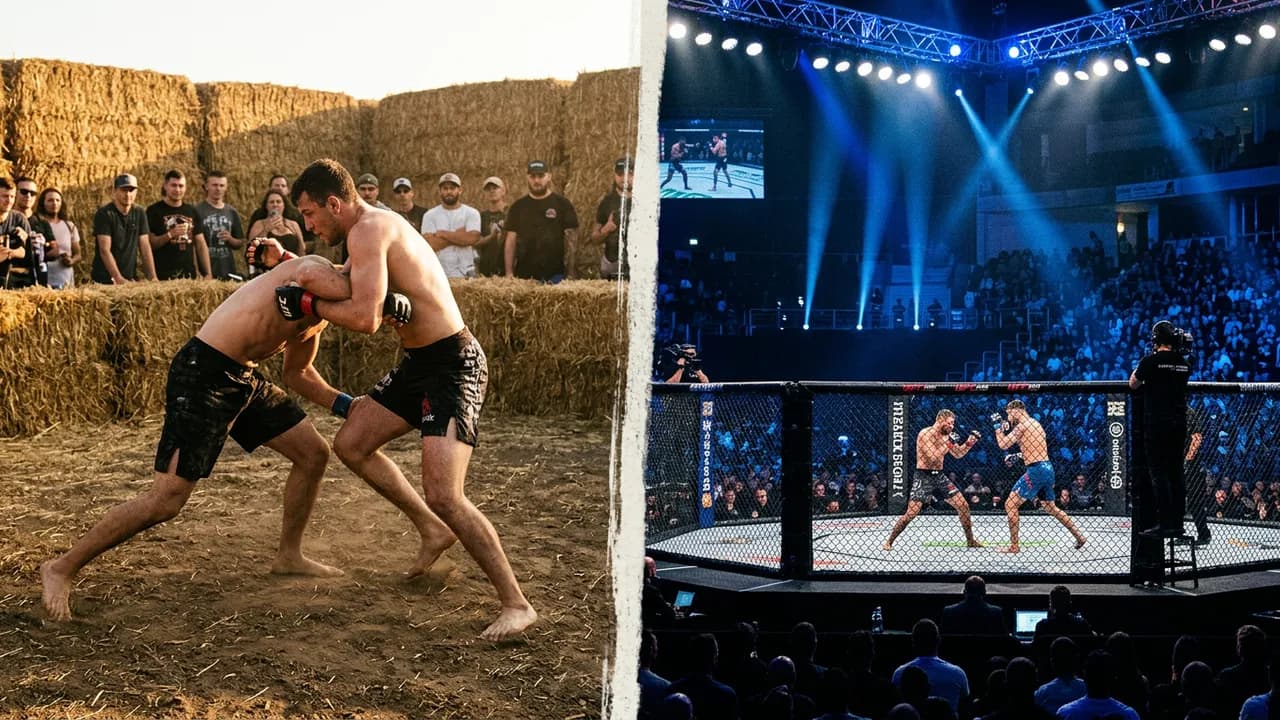
It sounds counterintuitive. How could fighting without gloves be safer than fighting with them? Yet a growing body of research suggests that bare knuckle fighting, while producing more visible injuries like cuts and hand fractures, may actually result in fewer serious brain injuries than gloved boxing. The data challenges fundamental assumptions about fighter safety and raises important questions about how we protect combat athletes.
Is Bare Knuckle Boxing Safer Than Boxing?
For the brain, the evidence points to yes. Research into professional bare knuckle events reports a 2.8% diagnosed concussion rate against 7% to more than 15% in professional boxing, depending on how the study defines a concussion. For everything else, the answer is no: bare knuckle fighters cut more, break their hands more, and leave the ring looking considerably worse.
The mechanism is not mysterious. An unpadded fist is a fragile weapon, so fighters throw fewer and less committed shots at the hardest target on the body. Gloves remove that constraint and lengthen the contact time of each punch, which increases the rotational acceleration now understood to drive most combat sports brain trauma.
Two caveats matter. Bare knuckle injury datasets are small and cover short careers, so cumulative exposure is not comparable to boxing's decades of longitudinal data. And "safer than boxing" is a low bar — it does not make the sport safe.
The Key Statistics
The most significant research into bare knuckle fighting injuries has produced striking findings:
- Overall injury rate: 36.6% of bare knuckle fighters sustain some form of injury during competition
- Concussion rate: Only 2.8% of bare knuckle fighters experience diagnosed concussions
- Facial laceration rate: Significantly higher than in gloved boxing
- Hand and wrist injuries: More common due to the absence of protective padding
For comparison, studies of professional boxing have documented concussion rates ranging from 7% to over 15% depending on the methodology and definition used. MMA concussion rates fall somewhere in between.
The headline finding — that bare knuckle fighting produces fewer concussions despite the absence of gloves — demands explanation.
Why Fewer Concussions?
Several mechanisms explain the lower concussion rate in bare knuckle fighting:
The Self-Regulating Fist
Without gloves, the human fist is a fragile instrument. The small bones of the hand, particularly the metacarpals, are vulnerable to fracture when they strike a hard target like the skull. Fighters instinctively know this, and it changes their behavior:
- Fewer punches are thrown to the head
- Punches that are thrown tend to be less forceful
- Body shots become proportionally more common
- Fighters are more selective about when and how they punch
This self-regulation is absent in gloved boxing, where the padding protects the hand and allows fighters to throw full-power shots to the head repeatedly throughout a fight.
The Padding Paradox
Boxing gloves were originally introduced not to protect the opponent but to protect the fighter's hands. This protection had an unintended consequence: it allowed fighters to hit harder and more frequently to the head, dramatically increasing the cumulative brain trauma experienced over a fight and a career.
A 10-ounce boxing glove transforms the fist into a cushioned battering ram that can be driven into the skull hundreds of times per fight without damaging the hand. The same volume of head strikes with bare fists would result in broken hands long before the same level of brain damage accumulated.
Impact Distribution
Research suggests that bare knuckle strikes and gloved strikes produce different types of impact on the brain:
- Bare knuckle: Higher peak force but shorter duration, more likely to cause cuts
- Gloved: Lower peak force but longer duration, more rotational acceleration
- Rotational forces: The primary mechanism behind concussions and CTE
Gloves increase the contact time of a punch, which can amplify the rotational forces on the brain. These rotational forces, rather than linear impact, are now understood to be the primary cause of traumatic brain injury in combat sports.
The Trade-Off: Visible vs. Invisible Injuries
Bare knuckle fighting's injury profile can be summarized as a trade-off between visible and invisible damage:
More Common in Bare Knuckle
- Facial lacerations and cuts
- Hand fractures (boxer's fracture, metacarpal breaks)
- Nasal fractures
- Swelling and bruising
- Wrist injuries
More Common in Gloved Boxing
- Concussions
- Subconcussive brain trauma
- Long-term neurological damage
- CTE (Chronic Traumatic Encephalopathy)
- Cumulative cognitive decline
The irony is stark: the injuries that look worse — bloody faces and broken hands — are generally less dangerous long-term than the injuries that are invisible — repeated brain trauma that accumulates over years.
What the Research Says
The Loosemore Study
One of the most cited studies on bare knuckle injury rates examined professional BKFC events and found the 36.6% overall injury rate and 2.8% concussion rate cited above. The study noted that while cuts and hand injuries were common, the pattern of brain injury was notably different from gloved boxing.
Boxing Brain Injury Research
Decades of research into boxing brain injuries have established:
- Professional boxers have elevated rates of neurodegenerative disease
- The number of rounds fought correlates with brain damage
- Even subconcussive blows (hits that do not cause a diagnosed concussion) cause cumulative damage
- Heavier gloves may actually increase brain injury risk by allowing more head strikes
Historical Evidence
Before the introduction of the Marquess of Queensberry rules and mandatory gloves in the late 19th century, bare knuckle boxing deaths were relatively rare despite the sport's brutal reputation. The introduction of gloves coincided with an increase in ring deaths, as fighters could deliver more sustained punishment to the head.
Implications for Fighter Safety
These findings have significant implications:
For Organizations
Events like BKFC operate with full medical protocols, including pre-fight MRI requirements, ringside physicians, and mandatory medical suspensions after knockouts. These protocols, combined with bare knuckle's inherently lower concussion rate, may create a safer overall environment than some boxing commissions.
For Fighters
Fighters considering bare knuckle competition should understand both the reduced brain injury risk and the increased risk of hand and facial injuries. Proper hand conditioning and taping can mitigate some hand injury risk, while understanding facial laceration treatment helps fighters prepare for cuts.
For Regulators
The research challenges regulators to reconsider assumptions about gloves and safety. If gloves increase brain injury risk, then mandating gloves in the name of safety may be counterproductive.
Limitations of the Research
It is important to acknowledge limitations:
- Sample sizes: Bare knuckle research involves smaller sample sizes than boxing research
- Career length: Bare knuckle fighters generally have shorter careers, reducing cumulative exposure
- Bout length: Bare knuckle bouts are often shorter, with more stoppages due to cuts
- Detection: Some concussions may go undiagnosed in any combat sport
- Confounding factors: Fighter age, experience, and training vary across studies
The research is suggestive rather than conclusive. More long-term studies tracking bare knuckle fighters over their careers and into retirement are needed to draw definitive conclusions about comparative brain safety.
The Broader Context
The bare knuckle vs. boxing safety debate sits within larger conversations about fighter health:
- Post-fight recovery protocols that prioritize brain health
- Concussion protocol comparisons across organizations
- The case for regulating underground fighting to improve safety standards
- Fighter mental health and the psychological costs of combat sports
Whatever the conclusion about gloves and brain safety, the overarching principle is clear: fighter safety requires comprehensive approaches that address all types of injury, both visible and invisible, both immediate and long-term.
Conclusion
The science suggests that bare knuckle fighting may indeed be safer than boxing when it comes to brain injuries. The self-regulating nature of the ungloved fist, the reduced volume of head strikes, and the biomechanics of bare knuckle impact all point toward lower concussion and CTE risk.
However, "safer" does not mean "safe." Bare knuckle fighting carries its own significant risks, and any combat sport involves inherent danger. The most honest conclusion is that bare knuckle and gloved fighting present different risk profiles — and that understanding these differences is essential for fighters, organizations, and regulators making informed decisions about combat sports safety.