Quick Facts
| Detail | Info |
|---|---|
| Full Name | Artem Lobov |
| Nickname | The Russian Hammer |
| Born | August 11, 1986 |
| Hometown | Nizhny Novgorod, Russia (based in Dublin, Ireland) |
| Weight Class | Middleweight |
| MMA Record | 14-15-1 |
| BKFC Record | 2-1 |
| Mahatch FC | Featured competitor |
| Notable Achievement | Main-evented Mahatch FC's biggest event |
Overview
Artem Lobov's career has been defined by an extraordinary willingness to fight anyone, anywhere, in any format. The man known as "The Russian Hammer" built his reputation in the UFC as Conor McGregor's closest training partner, then transitioned to bare knuckle fighting in BKFC where he defeated former boxing world champion Paulie Malignaggi in one of the sport's most significant crossover moments. But Lobov's fighting journey did not end in America. It took him to Ukraine, where Mahatch Fighting Championship staged what remains the biggest event in the promotion's history -- and Lobov was the headliner.
This profile covers Lobov's Mahatch FC chapter specifically. For his full career overview, including his UFC and BKFC careers, see Artem Lobov: The Bare Knuckle Pioneer.
Lobov's appearance at Mahatch FC was a watershed moment for Ukrainian bare knuckle fighting. It brought international credibility, mainstream attention, and a genuine star to a promotion that had been building its identity in the shadow of larger organizations. Lobov came to Ukraine as one of the most recognizable names in bare knuckle fighting, and his presence elevated Mahatch FC from a regional curiosity to a promotion capable of staging events that the global combat sports community took notice of.
The Mahatch FC Chapter
Why Mahatch?
Mahatch Fighting Championship operates in a unique space within bare knuckle fighting. Based in Ukraine, the promotion draws inspiration from BKFC but adds its own distinctive elements -- including fights on hard surfaces, in everyday clothing, and with an aesthetic that emphasizes raw, unproduced violence. For Lobov, who had already fought in the UFC and BKFC, Mahatch represented something genuinely different: a format that was even less regulated, even more primal, and even closer to actual street fighting than anything he had experienced.
The decision to fight in Mahatch was consistent with Lobov's career-long willingness to accept challenges that other fighters would decline. He did not need Mahatch for money or fame. He went because the challenge interested him, because the format was different from what he had done before, and because he believed that a fighter's legacy is built by testing himself in every available arena.
The Main Event
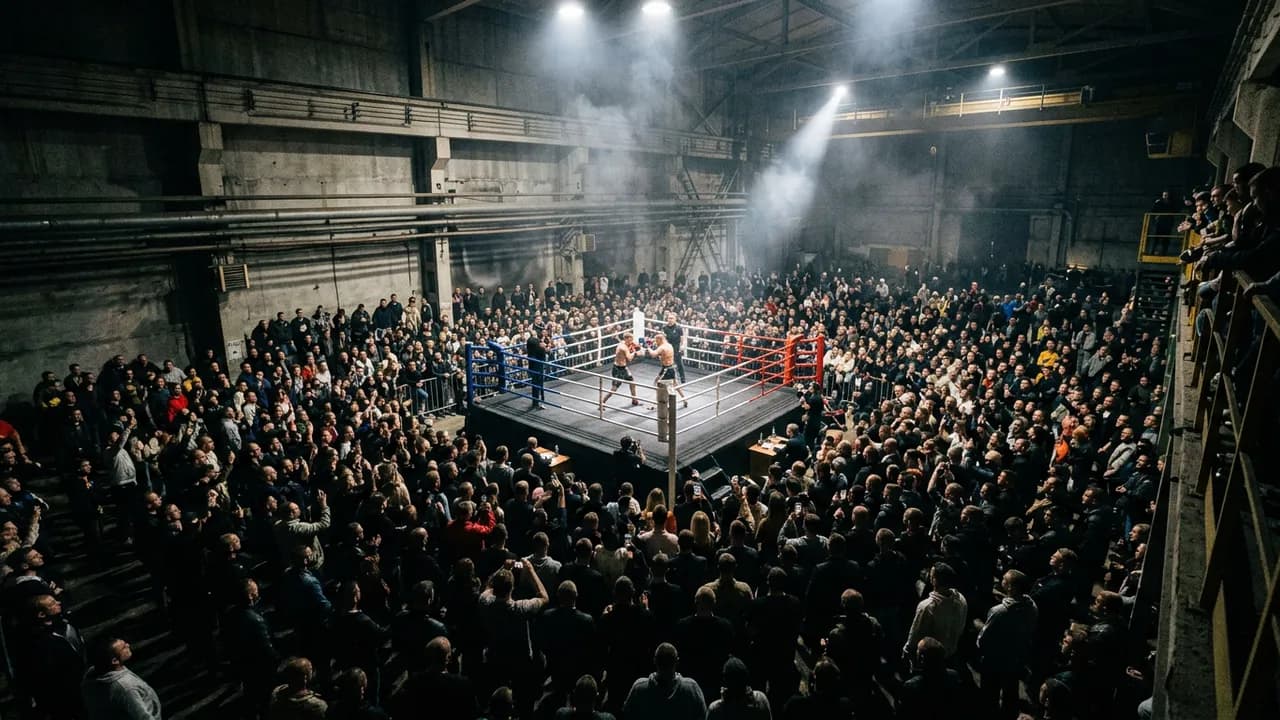
Lobov's headlining appearance at Mahatch FC was staged at Kyiv's Palace of Sports in front of more than 2,000 fans -- a massive crowd by Ukrainian bare knuckle standards. The event was positioned as the biggest in Mahatch history, and Lobov's name was the primary draw. His opponent, Denys Berinchyk, was a credentialed Ukrainian fighter with a boxing background who represented the best of what the domestic scene had to offer.
The fight was contested under Mahatch's distinctive conditions -- a harder surface, a more open fighting area, and rules that differed from the regulated bare knuckle competition Lobov was accustomed to in BKFC. Berinchyk won the bout, using his boxing pedigree and home-court advantage to outwork Lobov over the course of the fight. The result was a setback for Lobov but a triumph for Mahatch FC, which proved it could attract international stars and stage events of genuine significance.
For Lobov, the loss to Berinchyk was a reminder that bare knuckle fighting punishes complacency regardless of pedigree. He had entered the fight as the bigger name, the more decorated fighter, and the man with international experience. Berinchyk was the local favorite with something to prove. In Mahatch's unforgiving format, motivation and preparation trumped reputation.
Fighting Style at Mahatch
Artem Lobov brought the same fighting style to Mahatch FC that had defined his career across MMA and bare knuckle: relentless forward pressure, heavy hands, and an iron chin. "The Russian Hammer" fights on the front foot, walking opponents down with methodical aggression and looking to land the power shots that have always been his primary weapons.
In the Mahatch format, Lobov's style required adjustments. The harder fighting surface changed the dynamics of footwork, making the kind of forward pressure he relies on slightly more challenging. The open fighting area provided opponents more space to retreat and circle, which required Lobov to cut off angles rather than simply walking straight ahead. And the general atmosphere of a Mahatch event -- rawer, louder, more chaotic than a BKFC show -- added an environmental element that affected every aspect of the competition.
Despite these adjustments, Lobov's fundamental approach remained unchanged. He came forward, he threw heavy punches, and he took shots with the same granite chin that had absorbed punishment from UFC-level fighters for years. His toughness was never in question. In Mahatch, as in every promotion he has competed in, Lobov demonstrated that whatever else might happen, he would never be the first man to quit.
Notable Fights
| Date | Opponent | Event | Result |
|---|---|---|---|
| Jul 2021 | Denys Berinchyk | Mahatch FC (Palace of Sports, Kyiv) | L - Decision |
Career Highlights (Mahatch Chapter)
- Main-evented Mahatch FC's biggest event at the Palace of Sports, Kyiv
- Brought international credibility to Ukrainian bare knuckle fighting
- Fought in front of 2,000+ fans in Kyiv
- Demonstrated willingness to compete across multiple bare knuckle formats
- Elevated Mahatch FC's global profile through his participation
Legacy at Mahatch
Artem Lobov's Mahatch FC legacy is defined less by his result and more by what his presence meant for the promotion and for Ukrainian bare knuckle fighting. When a fighter of Lobov's international stature agrees to compete in a promotion, it validates that promotion in the eyes of the global combat sports community. Lobov's decision to fight at Mahatch told the world that Ukrainian bare knuckle was real, it was competitive, and it was worth taking seriously.
The fact that Lobov lost to Denys Berinchyk actually enhanced Mahatch's credibility rather than diminishing it. It proved that Mahatch was not a showcase for visiting stars to collect easy wins. It was a genuine competition where the best fighter won, regardless of name recognition. Berinchyk's victory over Lobov remains the most significant result in Mahatch FC history, and it would not have been possible without Lobov's willingness to put himself in that position.
For Lobov personally, the Mahatch chapter is one more entry in a career-long pattern of accepting challenges that other fighters would refuse. From the UFC to BKFC to Mahatch FC, "The Russian Hammer" has never said no to a fight, and that willingness is the core of his legacy across all the promotions that have been fortunate enough to feature him.
Watch Artem Lobov at Mahatch FC
Lobov's landmark Mahatch FC bout against Denys Berinchyk is available through the official channels:
- Mahatch FC YouTube Channel: youtube.com/@MahatchFC
- Official PPV Replay: TrillerTV -- Mahatch FC: Lobov vs. Berinchyk
FAQ
Did Artem Lobov fight in Mahatch FC?
Yes. Lobov headlined Mahatch FC's biggest event at the Palace of Sports in Kyiv, Ukraine, in July 2021, facing Denys Berinchyk in the main event.
Did Artem Lobov win at Mahatch?
No. Lobov lost to Denys Berinchyk by decision in the main event. Berinchyk used his boxing skill and local support to outwork Lobov over the course of the fight.
What is the difference between this profile and the legacy Artem Lobov profile?
This profile covers Lobov's Mahatch FC career specifically. For his full career overview including UFC and BKFC, see Artem Lobov: The Bare Knuckle Pioneer.
Why did Artem Lobov fight at Mahatch FC?
Lobov's career has been defined by accepting challenges across multiple promotions and formats. He fought at Mahatch because the format was unique, the challenge was genuine, and his willingness to compete anywhere is central to his identity as a fighter.