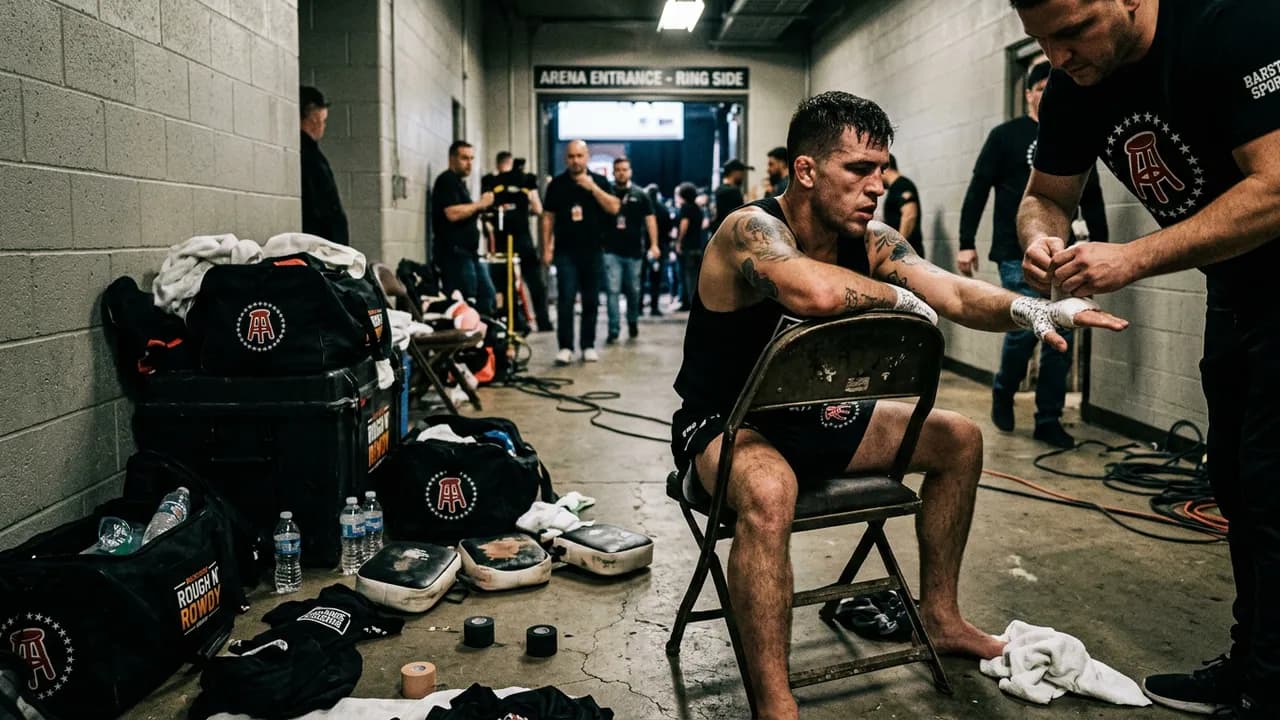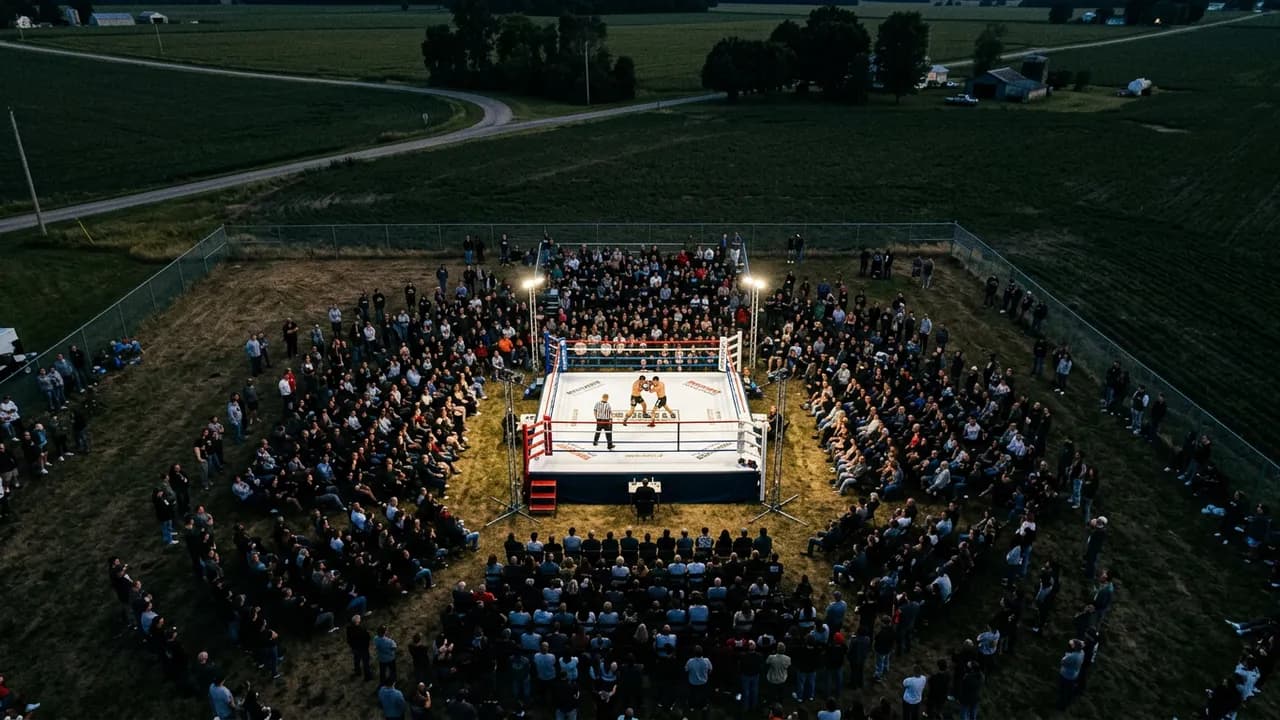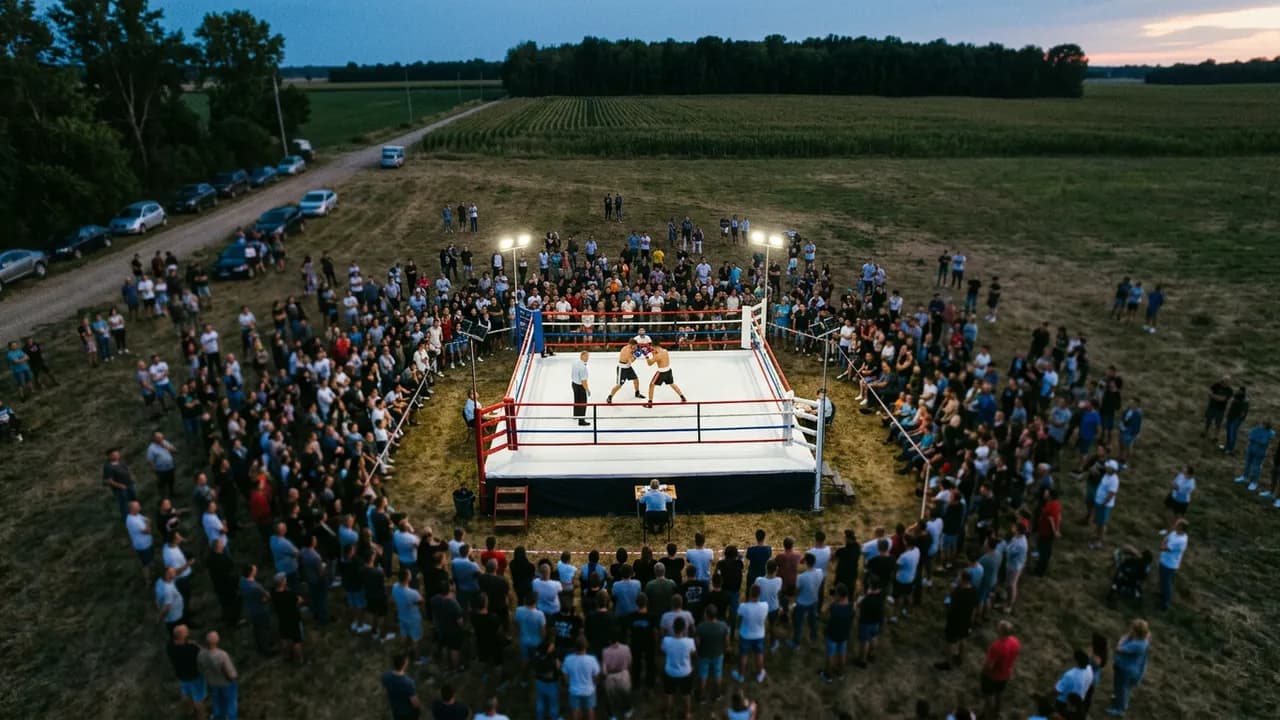
Rough N Rowdy is not supposed to work. The concept -- untrained amateurs boxing three one-minute rounds with no headgear -- sounds like a recipe for a liability nightmare, not a pay-per-view franchise. The fighters are bartenders, coal miners, college students, and, as the promotion's own marketing cheerfully describes them, "bar room brawlers and couch potatoes." There is no pretense of elite athleticism. There is no pathway to a professional career. There is only a ring, a crowd, and the unshakable American appetite for watching regular people punch each other in the face.
And yet, Rough N Rowdy has become one of the most commercially successful fighting brands in the country, selling upwards of 41,000 pay-per-view buys per event and planning 12 or more shows annually. The marriage of Appalachian toughman culture and Barstool Sports' media machine has produced something that traditional combat sports promoters could never have designed on purpose.
Origins: Coal Country Boxing Before Barstool
Rough N Rowdy did not begin as a Barstool Sports property. The events originated in West Virginia, rooted in the toughman competition tradition that has thrived in Appalachian communities for decades. Christopher MacCorkle Smith created the Rough N Rowdy brand as an amateur boxing show that leaned into the blue-collar, no-frills ethos of its regional audience.
The format was simple: three rounds of one minute each, no headgear, minimal training requirements, maximum entertainment. Fighters signed up from the local community -- from the bars, the gyms, the mines, and the tailgates. The crowd was loud, the beer was flowing, and the fights were exactly what the brand promised: rough and rowdy.
These early events were regional affairs, drawing crowds from the surrounding communities but generating no national attention. They were the combat sports equivalent of a county fair -- entertaining, unpretentious, and firmly rooted in local culture. What made them special was their authenticity. The fighters were genuinely untrained. The outcomes were genuinely unpredictable. The crowd was genuinely invested because they knew the fighters personally.
The Barstool Sports Acquisition: Everything Changes
The transformation of Rough N Rowdy from a regional curiosity into a national brand began when Barstool Sports entered the picture. Dave Portnoy's media company acquired the rights to Rough N Rowdy and turned it into a pay-per-view product distributed through the Barstool ecosystem.
The Barstool acquisition changed everything about the presentation while changing nothing about the substance. The fights were still three rounds of one minute. The fighters were still amateurs. The venue was still a converted barn or arena in a small town. But now the events had professional camera crews, commentary from Portnoy and Dan "Big Cat" Katz, ring card holders recruited from Barstool's social media universe, and the full weight of Barstool's audience pushing the pay-per-view numbers.
The result was a product that felt simultaneously professional and amateur -- polished enough to justify a $19.99 price tag, raw enough to maintain the toughman spirit that made the original events compelling. It was a balancing act that most media companies would have failed at. Barstool, with its deep understanding of internet culture and its willingness to embrace the absurd, nailed it.
The PPV Model: 41,000+ Buys and Growing
Rough N Rowdy's pay-per-view numbers are among the most remarkable in combat sports. The events consistently draw over 41,000 PPV buys at $19.99 each, generating gross revenue in excess of $800,000 per show before accounting for sponsorships, merchandise, and ancillary revenue streams.
To put those numbers in context: many professional boxing cards struggle to reach 41,000 PPV buys. Regional MMA promotions would consider those numbers a fantasy. Rough N Rowdy achieves them with fighters who have, in many cases, never thrown a proper jab before entering the ring.
The PPV model works because of Barstool's audience. The Barstool Sports ecosystem -- spanning podcasts, social media, a sports betting platform, and a loyal, highly engaged fan base -- provides a built-in marketing infrastructure that traditional fight promotions would spend millions to replicate. When Portnoy promotes a Rough N Rowdy card on his personal social media accounts, he reaches an audience of millions who already trust his entertainment recommendations.
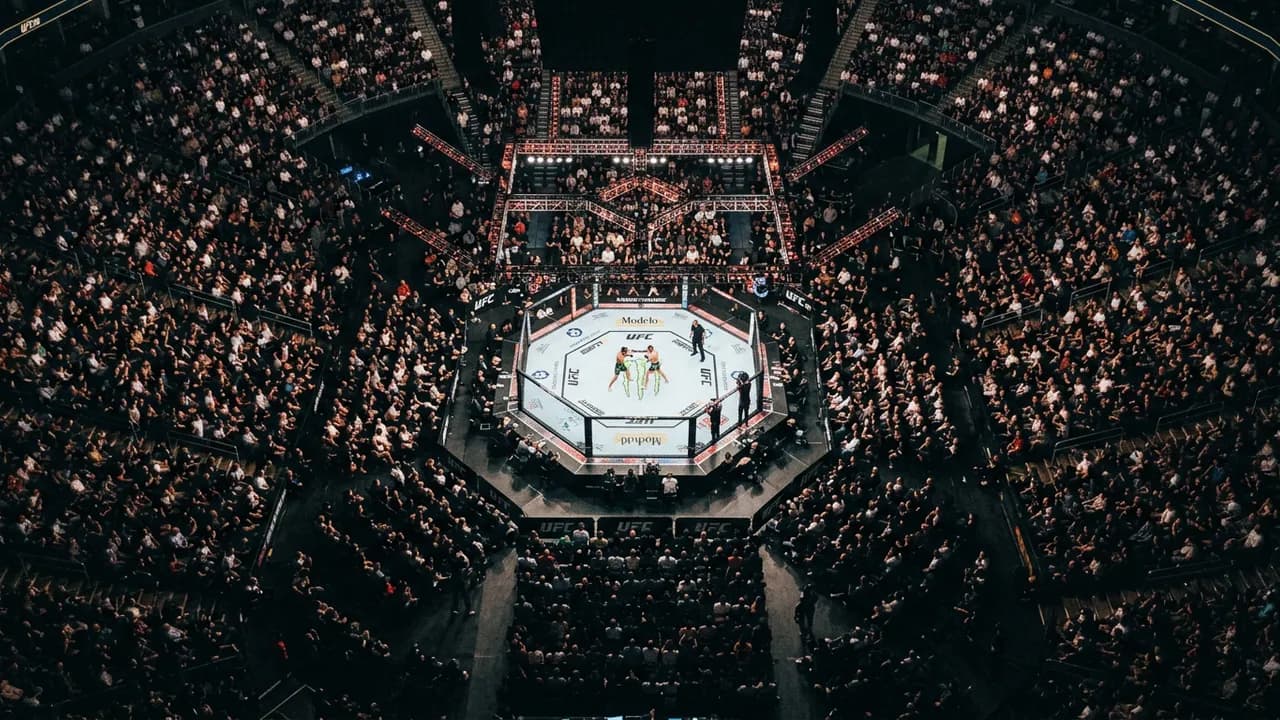
The pricing is also critical. At $19.99, a Rough N Rowdy PPV is positioned as an impulse purchase rather than a considered investment. It costs less than a dinner out, less than a movie for two, and significantly less than the $79.99 price tag on a major boxing or UFC pay-per-view. The low barrier to entry converts casual curiosity into paying customers.
The Commentary Team: Portnoy and Big Cat at the Mic
One of the key differentiators between Rough N Rowdy and other amateur fighting promotions is the commentary. Dave Portnoy and Dan "Big Cat" Katz -- Barstool's two biggest personalities -- provide commentary that is equal parts genuine excitement and self-aware comedy.
04 / Up next / Notable Events and Milestone Moments
Portnoy and Katz do not pretend that the fighters are elite athletes. They acknowledge the chaos, laugh at the absurdity, and react with genuine surprise when a fight produces an unexpectedly skilled exchange or a dramatic knockout. Their commentary style has more in common with sports talk radio than with traditional fight broadcasting, and it perfectly matches the tone of the product.
The commentary team also provides narrative continuity between events. Recurring characters -- fighters who return for multiple Rough N Rowdy cards -- are given storylines and nicknames that Portnoy and Katz develop across events. This serialized storytelling transforms individual fights into ongoing sagas that the audience follows from card to card.
Notable Events and Milestone Moments
Rough N Rowdy's Earliest Barstool PPVs
The first Rough N Rowdy events under the Barstool banner established the template: a full card of amateur bouts staged in West Virginia, with Barstool personalities providing commentary and social media promotion. The early PPV numbers validated the concept and convinced Barstool to commit to a regular event schedule.
The National Expansion
As the brand grew, Rough N Rowdy began staging events outside West Virginia, touring to venues across the country. The expansion brought the toughman format to new markets and new fighter pools, introducing audiences in different regions to a brand that had been synonymous with Appalachian culture.
The touring model created logistical challenges -- recruiting local fighters, finding appropriate venues, building audience awareness in new markets -- but it also provided fresh content and prevented the brand from becoming stale. Each new market brought new fighters, new stories, and new audience segments.
Celebrity and Influencer Involvement
As Rough N Rowdy's profile grew, the events began attracting fighters from beyond the traditional toughman demographic. Social media influencers, Barstool employees, and minor celebrities began appearing on cards, bringing their own audiences and adding a cross-promotional dimension to the events.
This celebrity involvement mirrors trends seen across combat sports, from the rise of influencer boxing to BKFC's recruitment of UFC veterans. The formula is consistent: a recognizable name draws casual viewers, and the quality of the undercard converts those viewers into repeat customers.
The Ring Card Holders: An Unexpected Marketing Engine
One of Rough N Rowdy's most distinctive marketing innovations is its ring card holders. Rather than hiring professional models, the promotion recruits ring card holders through social media campaigns that generate enormous engagement. The selection process -- which involves public voting and Barstool audience participation -- becomes a promotional event in its own right, driving awareness and ticket sales before a single punch is thrown.
The ring card holder campaigns are a masterclass in user-generated marketing. They cost virtually nothing to execute, they generate massive social media engagement, and they create a sense of audience ownership over the event. The Barstool audience feels invested in the show before it even begins.
Rough N Rowdy vs. Traditional Amateur Boxing
It is worth noting how Rough N Rowdy differs from traditional amateur boxing. Sanctioned amateur boxing requires headgear (in most jurisdictions), is overseen by state athletic commissions, and operates under a framework designed to protect fighter safety. Rough N Rowdy operates under its own rules, with minimal protective equipment and a format (three one-minute rounds) that barely allows fighters to warm up before the fight is over.
The three-round, one-minute format is actually a safety feature masquerading as entertainment. By limiting the total fighting time to three minutes, Rough N Rowdy reduces the cumulative damage that fighters sustain. An untrained fighter who goes three minutes is significantly less likely to suffer a serious injury than one who goes nine or twelve rounds. The brevity of the bouts is both a limitation and a protection.
Critics argue that permitting untrained people to box without headgear is inherently irresponsible, regardless of the round structure. Supporters counter that Rough N Rowdy provides a controlled environment for something that would otherwise happen in parking lots and bar fights. The debate mirrors similar discussions around Streetbeefs and other organizations that provide structured outlets for violence.
The Economics of Amateur Brawling
Rough N Rowdy's financial model is unusual in combat sports. The fighters are not the revenue drivers -- the brand is. Traditional fight promotions depend on star power to sell pay-per-views. Rough N Rowdy depends on the Barstool brand, the commentary team, and the promise of chaotic entertainment.
08 / Up next / What Rough N Rowdy Represents
This model is more sustainable than the star-dependent approach. If a boxing promotion loses its champion to injury or retirement, its PPV numbers collapse. If Rough N Rowdy loses a fighter, it simply recruits another bartender. The talent is, by design, replaceable. The brand is not.
The economics have allowed Rough N Rowdy to plan for 12 or more events annually, a schedule that would be unsustainable for a promotion dependent on a limited roster of professional fighters. With an effectively unlimited pool of willing amateurs and a marketing machine that can generate 41,000 PPV buys regardless of who is on the card, the model scales in ways that traditional promotions cannot.
What Rough N Rowdy Represents
Rough N Rowdy occupies a unique space in the fighting world. It is not underground in the way that King of the Streets or the UCL were underground. It is not professional in the way that BKFC is professional. It is something else entirely: a commercialized celebration of amateur violence, wrapped in media-savvy branding and distributed through one of the most powerful digital media companies in sports.
The events are spectacle first and sport second. That is not a criticism -- it is the business model. And as the PPV numbers demonstrate, it is a business model that works.
Watch on YouTube
Watch the best of Rough N' Rowdy across all events:
- Rough N' Rowdy: Top 10 Moments of All Time -- The wildest, funniest, and most brutal moments across all RNR events
- RNR Best Knockouts Compilation -- Amateur boxing haymakers and dramatic finishes
- Rough N' Rowdy: Full Events Playlist -- Complete PPV events available on the RNR YouTube channel
- RNR Weigh-Ins: Greatest Moments -- The infamous Four Loko weigh-in highlights
Subscribe to the Rough N' Rowdy YouTube channel for full events, highlights, and weigh-in content.
For other amateur and semi-professional fighting events, see our coverage of Streetbeefs' Biggest Events. For the professional bare knuckle scene, read our BKFC Major Events guide.