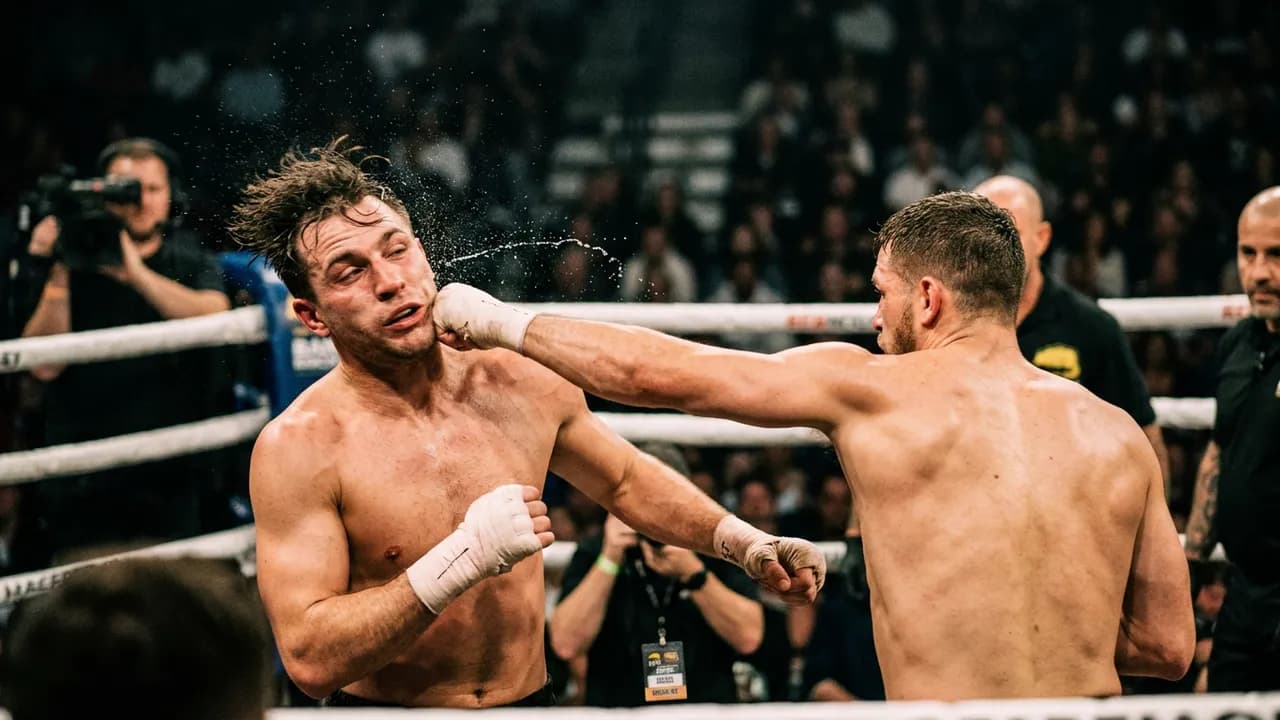
Power Slap has faced intense scrutiny from the medical community since its launch. The central question is straightforward: is a sport where competitors willingly absorb full-force strikes to the head without any defensive option fundamentally too dangerous to exist? The answer is more nuanced than either side of the debate typically acknowledges.
The Core Medical Concern
Every slap delivered in Power Slap generates rotational acceleration of the brain inside the skull. This rotational force is the primary mechanism behind concussions and, over time, chronic traumatic encephalopathy (CTE).
Key medical facts:
- Open-hand slaps generate different force patterns than closed-fist punches
- Slaps produce more surface area contact, distributing force across the face
- However, the whipping motion can generate significant rotational force on the neck and skull
- There is no safe threshold for concussive impacts—every significant blow carries risk
- Cumulative sub-concussive impacts are believed to be a primary driver of CTE
The critical distinction between Power Slap and other combat sports is the absence of defense. In boxing, MMA, or even bare knuckle fighting, competitors use head movement, blocking, and distance management to reduce the number and force of impacts absorbed. In Power Slap, every competitor absorbs every strike at full force by design.
What Neurologists Say
The medical community has been largely critical of Power Slap. Several notable positions:
Against Power Slap:
- On 25 June 2025 the American Association of Neurological Surgeons and the Congress of Neurological Surgeons issued a joint position statement that "unequivocally denounce[s] adult and pediatric participation in slap fighting" and asks governing authorities to reconsider promoting it "given the risk for permanent and devastating brain injury"
- A 2024 research letter in JAMA Surgery from University of Pittsburgh neurosurgery, with Dr. Nitin Agarwal as senior author, found that 44 of 56 televised competitors (78.6%) showed at least one visible sign of concussion — the full citation and what it does and does not establish are set out in what the medical evidence actually says about slap fighting
- Individual neuroscientists, including Dr. Bennet Omalu and Chris Nowinski, have been vocal about the format's specific risks
Measured perspectives:
- Some sports medicine physicians note that Power Slap competitors absorb fewer total impacts per event than boxers (3-5 slaps vs. hundreds of punches in a boxing match)
- The regulated medical protocols (pre-fight screenings, post-KO suspensions, imaging requirements) are more comprehensive than many amateur boxing programs
- Short competitive careers (most Power Slap fighters compete far fewer total bouts than professional boxers) may limit cumulative exposure
Comparing Risk to Other Combat Sports
Context matters when evaluating Power Slap's danger level:
| Sport | Impacts Per Event | Defense Available | Career Length | Regulation |
|---|---|---|---|---|
| Power Slap | 3-5 (all full force) | None | Short (typically) | NSAC regulated |
| Boxing (12 rounds) | 200-400 | Yes (extensive) | 10-20 years | Fully regulated |
| MMA (3 rounds) | 50-150 | Yes (extensive) | 5-15 years | Fully regulated |
| Bare Knuckle (BKFC) | 100-300 | Yes | 3-10 years | State regulated |
| Football (1 season) | 500-1,500+ sub-concussive | Limited | 3-6 years (NFL) | League regulated |
The data creates an interesting paradox: Power Slap delivers fewer total head impacts than almost any other combat sport, but those impacts are absorbed without any mitigation. Whether concentrated, undefended impacts are more or less dangerous than a higher volume of partially defended impacts is a question that current medical research cannot definitively answer.
Power Slap's Medical Safety Measures
To their credit, Power Slap has implemented medical protocols that exceed many combat sports:
Pre-fight requirements:
- Complete physical examination including neurological assessment
- Brain imaging (MRI/CT) for all competitors
- Blood work and cardiac screening
- Medical history review including prior concussions
During competition:
- Ringside physician with authority to stop any match
- Referee trained in concussion recognition
- Mandatory recovery periods between rounds with medical monitoring
- Immediate medical attention available for all competitors
Post-fight protocols:
- Medical examination for all competitors regardless of outcome
- Mandatory medical suspension after knockouts (30-90 days)
- Brain imaging required before clearance to compete after significant KOs
- Tracking of cumulative fight history and medical incidents
These measures represent a genuine effort to mitigate risk. Critics argue, however, that no amount of medical protocol changes the fundamental physics of an undefended open-hand strike to the head.
The CTE Question
CTE (Chronic Traumatic Encephalopathy) can only be definitively diagnosed post-mortem through brain tissue examination. This means:
- No current Power Slap competitor can be tested for CTE while alive
- Long-term studies on slap fighting specifically do not yet exist
- Researchers must extrapolate from data on other forms of repetitive head trauma
- The true impact of Power Slap on brain health may not be understood for decades
What we know about CTE risk factors:
- Total number of head impacts over a lifetime (more impacts = higher risk)
- Force of individual impacts (harder hits = higher risk)
- Frequency of impacts (less recovery time between impacts = higher risk)
- Age of exposure (younger athletes may be more vulnerable)
- Genetic factors (some individuals are more susceptible than others)
Power Slap reduces factor #1 (total impacts) but maximizes factor #2 (force per impact) and eliminates all defensive mitigation. Whether this trade-off results in more or less CTE risk than traditional combat sports remains unknown.
The Ethical Debate
Beyond the medical data, Power Slap raises ethical questions that medical science alone cannot answer:
Autonomy argument: Supporters argue that adult competitors who understand the risks have the right to choose to participate. This is the same principle that allows boxing, MMA, and other combat sports to exist.
Informed consent question: Critics counter that the long-term risks of slap fighting are not yet understood, making truly informed consent impossible. Competitors cannot consent to risks that have not been quantified.
Regulatory legitimacy: The Nevada State Athletic Commission's decision to sanction Power Slap in October 2022, followed by California's 6-0 approval in December 2023, lends it institutional legitimacy. Other state commissions have refused to regulate it, reflecting genuine disagreement among regulatory bodies. The documented positions are mapped in which states have banned slap fighting.
Entertainment vs. exploitation: Does the spectacle of watching someone absorb devastating strikes without defense cross a line that traditional combat sports do not? Reasonable people disagree.
The Bottom Line
Power Slap is dangerous. So is boxing. So is MMA. So is football. The question is not whether Power Slap carries risk—it definitively does—but whether the specific risk profile is acceptable given the existing framework of regulated combat sports.
The honest answer is that we do not yet have enough data to make a definitive medical judgment. What we can say:
- Every open-hand strike to the head carries concussion risk
- The absence of defense makes each impact maximally forceful
- Fewer total impacts per event partially offsets the lack of defense
- Current medical protocols provide meaningful (though imperfect) safety measures
- Long-term outcomes for slap fighting competitors are unknown
If you are considering competing, understand these risks fully. Read the complete rules to understand what you are signing up for. Review the application process and talk to competitors who have experienced it firsthand. And consult with a sports medicine physician who can evaluate your individual risk factors before making a decision.